
Uniswap v2 Review: How the OG DEX Still Works in 2026
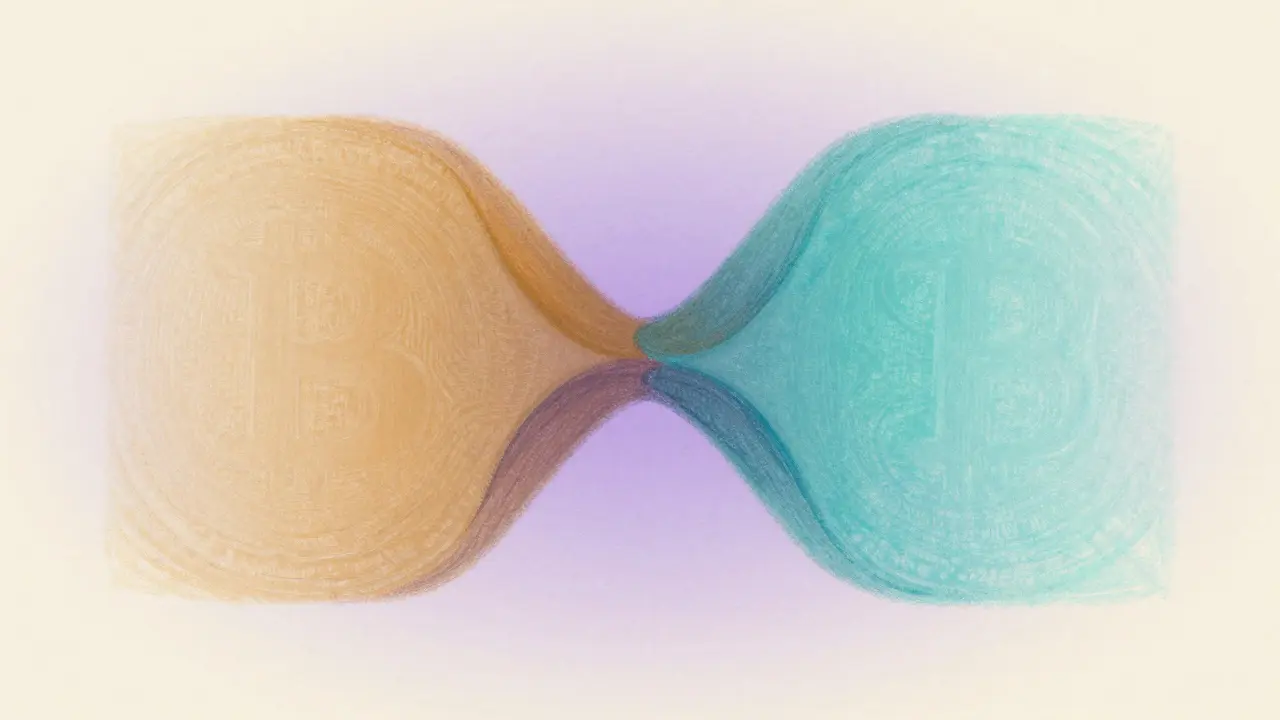
Imagine trying to trade Bitcoin for Ethereum on a platform where you have to sell your Bitcoin for dollars first, then use those dollars to buy Ethereum. That was the reality of early crypto trading. Now, imagine doing that same swap instantly, without an intermediary, directly between two digital assets. This is the magic that Uniswap v2 is a decentralized exchange protocol launched in May 2020 that allows direct ERC-20 to ERC-20 token swaps using an automated market maker model. It revolutionized how we think about trading by removing the need for order books and centralized intermediaries.
It has been six years since Uniswap v2 launched on May 17, 2020. You might wonder why anyone would still care about it when newer versions like v3 exist. The answer lies in its enduring utility. While it may not be the flashiest tool in the shed anymore, Uniswap v2 remains a critical piece of infrastructure for thousands of obscure tokens that haven't migrated to newer protocols. If you are looking to trade a niche project or understand the foundations of decentralized finance (DeFi), understanding v2 is non-negotiable.
The Core Innovation: Direct Token Swaps
To appreciate what Uniswap v2 did, you have to look at what came before it. Uniswap v1 required every trade to go through ETH. If you wanted to swap DAI for USDC, the system forced you to convert DAI to ETH, and then ETH to USDC. This double-hop process wasted gas fees and increased slippage-the difference between the expected price of a trade and the price at which the trade executes.
Uniswap v2 changed the game by introducing direct ERC-20 to ERC-20 pools. This meant you could swap DAI directly for USDC if a liquidity pool existed for that pair. According to analysis from Coinspot, this change reduced transaction costs by approximately 35% for cross-token swaps because it eliminated the unnecessary second hop through ETH. It smoothed out the user experience significantly, making DeFi accessible to people who didn't want to manage multiple ETH balances for simple stablecoin trades.
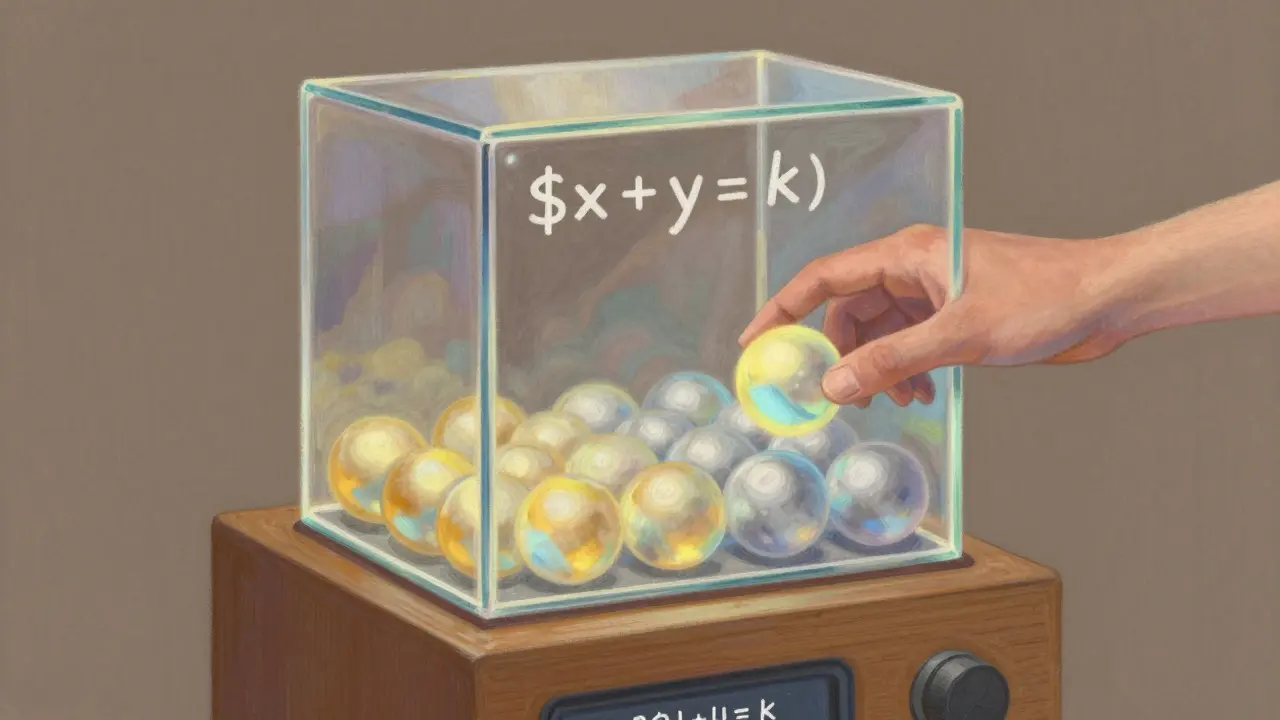
This innovation relied on a new contract structure called 'pair' contracts. Each token pair has its own independent liquidity pool governed by the constant product formula ($x * y = k$). This mathematical formula ensures that as the amount of one token in the pool decreases, the price of that token increases relative to the other, maintaining balance without human intervention.
How the Automated Market Maker Works
Unlike traditional exchanges like Binance or Coinbase that use order books (where buyers and sellers place bids and asks), Uniswap uses an Automated Market Maker (AMM). Think of it like a vending machine. You don't negotiate with the machine; you put money in, press a button, and get a snack. The price is determined by the inventory levels inside the machine.
In Uniswap v2, liquidity providers (LPs) deposit pairs of tokens into these pools. For example, someone deposits $1,000 worth of ETH and $1,000 worth of DAI. When you want to buy ETH with DAI, you pull ETH out of the pool and push more DAI in. The smart contract automatically adjusts the price based on the ratio of assets remaining. This model allows trading to happen 24/7 without needing a counterparty to agree to the trade at that exact moment.
The standard fee for most trades on Uniswap v2 is 0.3%. This fee goes entirely to the liquidity providers, compensating them for the risk they take. This 0.3% structure became the industry standard, copied by hundreds of other decentralized exchanges that forked the Uniswap codebase, including Sushiswap and PancakeSwap.
| Feature | Uniswap v2 | Uniswap v3 | Curve Finance |
|---|---|---|---|
| Liquidity Model | Full Range (0-∞) | Concentrated Liquidity | Stableswap Algorithm |
| Best For | Niche/Obscure Tokens | Major Pairs & Efficiency | Stablecoins |
| Capital Efficiency | Low | High (up to 4,000x better) | Medium-High |
| Standard Fee Tier | 0.3% | 0.05%, 0.3%, 1% | 0.04% - 0.4% |
| Complexity | Low | High | Medium |
Why Use Uniswap v2 in 2026?
You might ask, "Why not just use v3?" Uniswap v3, launched in 2021, introduced concentrated liquidity, allowing providers to allocate capital within specific price ranges. This made v3 vastly more efficient for major pairs like ETH/USDC. However, this efficiency comes with complexity. Managing concentrated positions requires active monitoring and rebalancing.
Uniswap v2 remains relevant for three key reasons:
- Long-tail Tokens: Many small-cap projects never migrated their liquidity to v3 due to the technical barrier or lack of sufficient volume to justify concentrated positions. If you hold a random meme coin or a new experimental token, it likely only exists on v2.
- Simplicity: For users who want to set it and forget it, v2's full-range liquidity is easier to understand. You deposit once, and your position works across all possible prices until you withdraw.
- Fallback Option: During network congestion or bugs in newer interfaces, v2 often remains operational because its code is simpler and battle-tested over six years.
Data from Milkroad shows that despite being older, Uniswap v2 still processes approximately $150 million in daily trading volume as of Q1 2025. While this is a fraction of its peak, it represents significant activity in the world of high-frequency, low-value micro-trades.
The Cost of Trading: Gas Fees and Slippage
Let's talk about the elephant in the room: cost. Uniswap v2 operates on the Ethereum mainnet. This means every swap requires a gas fee paid in ETH to miners/validators. In 2021, during the bull market, gas fees spiked to over $50 per transaction, making small trades unprofitable. By Q1 2025, average non-peak gas fees dropped to around $1.50, but they can still surge unpredictably.
If you are swapping $10 worth of tokens, paying $1.50 in gas is a 15% loss before you even account for the 0.3% protocol fee. This makes Uniswap v2 unsuitable for small, frequent trades unless you are using Layer 2 solutions like Arbitrum or Optimism, though native v2 pools are primarily on Ethereum L1.
Slippage is another factor. Because v2 uses a constant product formula, large trades against illiquid pools cause significant price impact. If you try to sell $100,000 worth of a token with only $50,000 in total pool liquidity, you will crash the price. Users typically set a slippage tolerance of 0.5% to 2% in their wallet settings to prevent failed transactions or bad deals.
Security and Risks
Decentralization brings freedom, but also responsibility. On Uniswap v2, anyone can create a liquidity pool for any token. This permissionless nature is great for innovation but terrible for security. According to CertiK's 2024 security report, roughly 1 in 200 token pairs on v2 contained malicious or scam tokens.
When you swap on v2, you approve a smart contract to spend your tokens. If you interact with a fake token contract, you could lose everything. Always verify the contract address from official sources like CoinMarketCap or the project's verified website. Never click links from random social media posts.
Another risk is impermanent loss. As a liquidity provider, if the price of one token in your pool diverges significantly from the other, you end up with less value than if you had just held the tokens in your wallet. Dan Robinson, a well-known DeFi researcher, noted that Uniswap v2's 50/50 pools suffer from up to 90% capital inefficiency compared to order book models for volatile assets. This doesn't mean you lose money permanently, but your returns may underperform simple holding during volatile markets.
Step-by-Step: How to Swap on Uniswap v2
Using Uniswap v2 is straightforward if you have the right setup. Here is how you do it:
- Get a Wallet: Install MetaMask or another Ethereum-compatible wallet. 87% of v2 users rely on MetaMask. Ensure you have some ETH in your wallet to pay for gas fees.
- Connect to Uniswap: Go to the official Uniswap interface. Look for the version selector in the top left corner and choose "v2". Connect your wallet by clicking "Connect Wallet".
- Select Tokens: Choose the token you want to sell and the token you want to buy. If the token isn't in your list, paste its contract address carefully.
- Set Slippage: Click the settings gear icon. Set your slippage tolerance. For stablecoins, 0.1% is fine. For volatile tokens, 1-2% is safer to ensure the transaction goes through.
- Review and Swap: Check the estimated output amount. Confirm the details in your wallet popup. Pay the gas fee and wait for confirmation. Transactions usually take 15 seconds to 2 minutes depending on network congestion.
The Future of Uniswap v2
Uniswap Labs has moved on. With the launch of Unichain, a new Layer 2 solution designed for fast blocks and cross-chain interoperability, the focus is clearly on the future. Industry analysts at Delphi Digital project that v2's market share will decline further, dropping from 18% to 8% of Uniswap's total volume by the end of 2025.
However, "legacy" does not mean "dead." Uniswap v2 serves as the bedrock for many forks and alternative chains. Its code is open-source, meaning it will continue to run as long as there is demand for simple, permissionless trading of obscure assets. For the average user, it is a tool to keep in your back pocket for those rare moments when you need to move a token that hasn't caught up with the rest of the ecosystem.
Is Uniswap v2 safe to use?
Yes, the core Uniswap v2 smart contracts are highly audited and secure. However, the tokens you trade may not be. Always verify contract addresses and be wary of unknown tokens, as scammers frequently create fake pools on v2 due to its permissionless nature.
Why should I use Uniswap v2 instead of v3?
Use v2 for simplicity and for trading obscure tokens that do not have liquidity on v3. V3 is better for major pairs like ETH/USDC due to higher capital efficiency and lower slippage, but it requires more active management from liquidity providers.
What are the fees for trading on Uniswap v2?
The standard protocol fee is 0.3% per swap. Additionally, you must pay Ethereum gas fees, which vary based on network congestion. In 2026, off-peak gas fees average around $1.50, but can spike significantly during high traffic periods.
Can I provide liquidity on Uniswap v2?
Yes, you can add liquidity to any existing pair or create a new one. You need equal value of both tokens in the pair. You will earn a portion of the 0.3% trading fees, but you are exposed to impermanent loss if the token prices diverge.
Does Uniswap v2 require KYC?
No, Uniswap v2 is fully decentralized and anonymous. There is no Know Your Customer (KYC) requirement. You only need a cryptocurrency wallet and ETH for gas fees to access the protocol.