

Tokenized Securities and Bonds: How Blockchain Is Changing Investing
Jonathan Jennings
Cryptocurrency Regulation
When working with Cryptocurrency Regulation, the collection of laws, guidelines, and enforcement measures that control crypto assets, exchanges, and related services, you quickly see why it matters for anyone in the space. Cryptocurrency regulation isn’t just paperwork – it determines who can launch a token, how banks can handle crypto, and what penalties apply for non‑compliance.
One of the biggest forces behind any rule set is the Central Bank, a nation’s monetary authority that monitors financial stability and enforces anti‑money‑laundering policies. When a central bank issues a ban, like Iraq’s total crypto prohibition, it instantly reshapes market access and pushes users toward alternative channels. In short, central bank oversight drives the scope of cryptocurrency regulation.
Another key player is the CBDC, a digital version of a sovereign currency issued by a central bank, often built on blockchain technology. Countries adopting a CBDC, such as Iraq’s planned state‑run digital coin, use the same regulatory framework that governs private crypto, blending public and private digital finance. This creates a direct link: regulation requires CBDC integration to ensure legal consistency.
Licensing is where the rubber meets the road for exchanges and service providers. The Crypto Licensing, the formal approval process that grants crypto businesses the right to operate under local laws sets the baseline for compliance. The UAE’s fast‑track licensing, for instance, has turned the nation into a major hub, showing that clear licensing rules attract investment and boost market activity.
Tax policy shapes behavior just as powerfully as licensing. Crypto Tax, the fiscal rules that dictate how crypto transactions, mining income, and capital gains are reported and taxed can either incentivize mining operations or drive them away. Sweden’s sudden removal of a 98% tax break turned a thriving mining sector into an exodus, proving that tax decisions are a core component of cryptocurrency regulation.
In some jurisdictions, the only way to interact with crypto is to dodge the ban. China’s strict prohibition has spawned a whole market of VPN legal risks, where users face heavy penalties if caught. Understanding those enforcement nuances is part of the broader regulatory landscape, reminding us that regulation often extends beyond finance to technology access.
Energy crises add another layer. Kosovo’s mining ban, driven by power shortages, evolved into a conditional allowance for green‑energy miners. Sweden’s steep energy tax hike and similar moves elsewhere show that regulation can be triggered by non‑financial concerns like sustainability. These examples illustrate how policy, environment, and finance intersect.
Why regulation matters today
All these pieces—central bank oversight, CBDC rollout, licensing frameworks, tax rules, and even energy policies—form a web that defines the operating environment for crypto projects. Whether you’re a trader, miner, or startup founder, grasping this web helps you navigate risks, spot opportunities, and stay compliant.
Below you’ll find a curated collection of deep‑dive articles that break down each of these themes, from Iraq’s ban to the UAE’s licensing boom, Sweden’s tax reversal, and more. Dive in to see how real‑world regulation shapes the crypto landscape and what you can do about it.

UK crypto firms face stricter sanctions compliance after OFSI's 2025 warning about under-reported breaches. Learn why passive screening fails, how to upgrade blockchain analytics, and what recent enforcement cases mean for your business.
Jonathan Jennings Sep 10, 2026
Discover how Canada's launch of Solana ETFs offers tax-advantaged, staking-enabled crypto exposure. Learn why Canadian regulations beat the US on altcoin access.
Jonathan Jennings Sep 6, 2026
Real estate NFTs offer faster, cheaper property transactions, but face fragmented global regulations. Learn how MiCA, SEC rules, and local land registries impact your investment strategy in 2026.
Jonathan Jennings Aug 28, 2026
Iceland's national power company is tightening restrictions on crypto mining due to grid strain. Learn how energy allocations, government policy, and contract terms have changed for miners in 2026.
Jonathan Jennings Aug 27, 2026
Discover why Kosovo banned crypto mining in 2022 due to an energy crisis. Learn about enforcement methods, current legal status, and what this means for investors.
Jonathan Jennings Aug 20, 2026
Discover how Egyptians navigate strict banking rules to trade crypto using P2P platforms like Bybit and Binance. Learn the risks, payment methods, and regulatory nuances of the underground market.
Jonathan Jennings Aug 19, 2026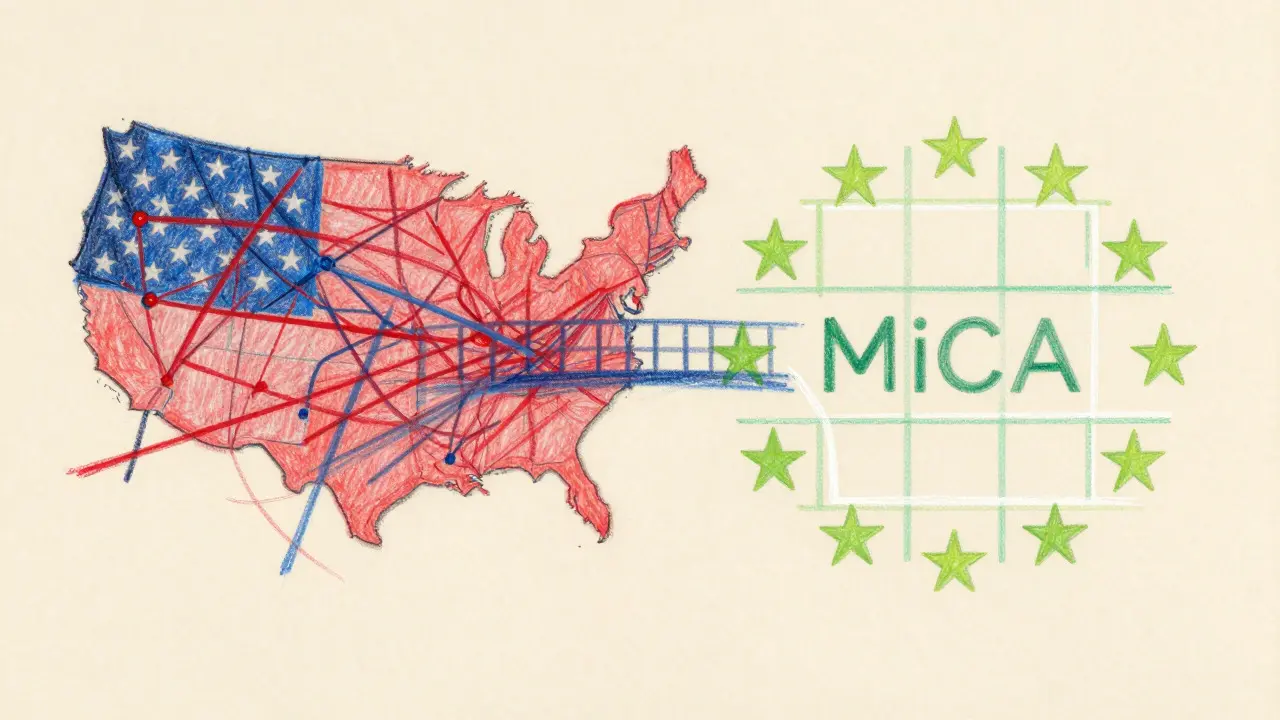
Compare US and EU crypto trading regulations, including MiCA, SEC/CFTC roles, and the impact of the GENIUS Act on stablecoins.
Jonathan Jennings Aug 18, 2026
Explore how EU MiCA regulations have restricted and reshaped the Cyprus crypto sector. Learn about strict governance rules, the Travel Rule, and why market consolidation is happening.
Jonathan Jennings Aug 15, 2026
Explore Zug's crypto hub policies, tax incentives, and regulatory framework. Learn why Switzerland's Crypto Valley attracts major blockchain foundations and how it compares to global rivals.
Jonathan Jennings Aug 14, 2026
Explore the latest Thailand SEC crypto regulations for exchanges, including the 2025 bans on Bybit and OKX, licensing requirements, and how the Digital Asset Business Act impacts traders.
Jonathan Jennings Aug 5, 2026
The Central Bank of Brazil has tightened crypto rules with a $10k transfer cap, mandatory DeCripto reporting, and stablecoin restrictions. Learn how these 2025-2026 policies impact traders.
Jonathan Jennings Jul 29, 2026
Vietnam's 2025-2026 crypto laws separate trading from payments. Learn how Resolution 05/2025 and the Digital Technology Industry Law impact investors, businesses, and exchanges.
Jonathan Jennings Jul 28, 2026