

ByteNext (BNU) Airdrop Details: How to Claim, Token Utility & Current Market Risks
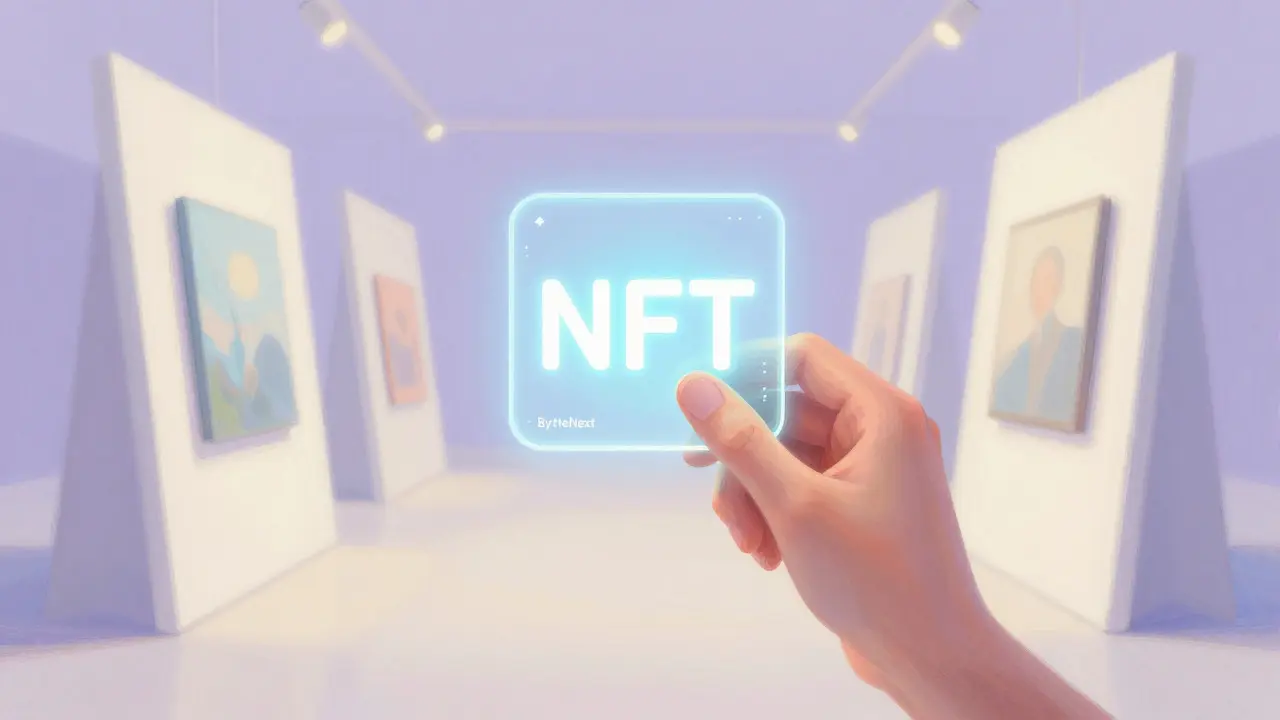
Imagine receiving free cryptocurrency tokens just for participating in a community program. That is the promise of an airdrop. For many crypto enthusiasts, the ByteNext (BNU) Community Airdrop Program sounds like an easy win. The project claims to offer 25,000 $BNU tokens to its community. But before you rush to claim them, you need to know what these tokens actually do and whether they hold any real value right now.
The reality of the ByteNext ecosystem in mid-2026 is complex. While the concept behind the project-empowering artists through blockchain-is solid, the market data tells a different story. Trading volumes are near zero, and major exchanges have paused listings. This article breaks down exactly how the airdrop works, what the BNU token is supposed to be used for, and the serious risks you face if you decide to participate.
What Is ByteNext (BNU)?
To understand the airdrop, you first need to understand the asset itself. ByteNext is a cryptocurrency token designed to power the AvatarArt platform, an NFT marketplace built on the Binance Smart Chain that enables artists worldwide to convert their artworks into NFTs and participate in global exhibitions and auctions. The ticker symbol for this token is BNU.
The project was developed to create a comprehensive ecosystem supporting art creators through blockchain technology. It positions itself as a bridge between traditional artists and the digital world. Instead of just selling JPEGs, the goal is to allow artists to exhibit work in 3D virtual reality environments and participate in dynamic auctions. The BNU token is the fuel that keeps this engine running. Without it, the platform’s features would not function.
The total supply of BNU tokens is fixed at 200 million. This means no new tokens can be created, which theoretically helps prevent inflation. However, a fixed supply only matters if there is demand for the token. Currently, the circulating supply matches the total supply, meaning all tokens are technically available, but finding buyers is another matter entirely.
ByteNext Airdrop Program: The Details
The specific campaign in question is known as the "ByteNext 25,000 $BNU tokens Community Airdrop Program." This initiative aims to distribute a portion of the token supply to early adopters and community members. Here is what we know about the structure:
- Total Allocation: 25,000 BNU tokens are set aside for this specific community drop.
- Target Audience: Active community members, likely those engaged on social media platforms like Twitter or Facebook.
- Distribution Mechanism: Typically, these drops require users to connect a wallet, follow social accounts, or join a Discord server to verify eligibility.
- Timeline: Specific start and end dates for this particular drop are not publicly pinned down in recent updates, suggesting it may be an ongoing or phased rollout.
Participation usually requires holding a compatible wallet, such as MetaMask, connected to the BNB Smart Chain network. You will need a small amount of BNB (Binance Coin) in your wallet to pay for gas fees when claiming the tokens. This is a standard requirement for most BSC-based airdrops.
Token Utility: What Can You Do With BNU?
Airdropped tokens are worthless if they have no use case. ByteNext defines six primary functions for the BNU token within the AvatarArt ecosystem. Understanding these helps you evaluate whether the token has long-term potential.
- Payment Method: BNU serves as the main currency for buying and selling NFTs on the AvatarArt platform. If you want to buy art, you need BNU.
- Transaction Fees: All trading fees on the platform are paid in BNU. This creates constant demand from traders.
- Advertising: Artists can spend BNU to promote their work in 3D virtual reality exhibitions. This is crucial for visibility in a crowded market.
- Author Compensation: When an NFT is sold, a portion of the proceeds goes back to the original creator in BNU, ensuring ongoing royalties.
- Staking and Farming: Users can stake their NFTs or provide liquidity using LP tokens to earn BNU rewards. This incentivizes long-term holding.
- Governance and Voting: Holders can vote on platform changes and evaluate NFT works. This gives the community a say in the project's direction.
On paper, this utility model is robust. It covers buying, selling, promoting, earning, and governing. However, utility only translates to value if people are actually using the platform. Low user activity means low demand for these services, which keeps the token price suppressed.
Current Market Status and Risks
This is the most critical section for anyone considering the airdrop. As of August 2026, the market conditions for ByteNext are concerning. Let’s look at the hard numbers.
| Metric | Data Source | Value / Status |
|---|---|---|
| Price | Coinbase | $0.000603 |
| Market Cap | Coinbase | $120,584 |
| 24h Volume | CoinGecko / Coinbase | $4.84 - $6.36 |
| All-Time High | Coinbase | $0.000741 |
| Decline from ATH | Calculated | 99.90% |
| Trading Status | CoinGecko | Stopped on listed exchanges (~15 days ago) |
The data shows a dramatic decline. The token has dropped 99.9% from its all-time high. More worrying is the liquidity crisis. CoinGecko reported that trading stopped on all listed exchanges approximately two weeks prior to this update. Coinbase still lists a price, but with a daily volume of less than $7, it is nearly impossible to sell large amounts without crashing the price further.
Why does this matter for an airdrop participant? If you claim 25,000 BNU tokens, you might think you have assets. But if there is no active market to buy them, those tokens are stuck in your wallet. You cannot easily swap them for USDT or ETH. This is known as being "bag-holding" illiquid assets.
Technical Infrastructure and Security
Before connecting your wallet, verify the technical details. ByteNext operates on the BNB Smart Chain (formerly Binance Smart Chain), a popular network for NFT projects due to low transaction fees. The contract address is listed as 0x4954...0a7b77 on CoinMarketCap.
Always double-check the contract address directly from the official website, bytenext.io, before interacting with any dApp. Scammers often copy legitimate airdrop pages and change the contract address to drain wallets. Official channels include:
- Website: bytenext.io
- Twitter: twitter.com/bytenextio
- GitHub: github.com/bytenext
The presence of a GitHub repository is a positive sign, indicating some level of code transparency. However, check the commit history. Are developers pushing updates regularly? Or is the last commit from months ago? Inactive repositories often signal abandoned projects.
Should You Participate in the ByteNext Airdrop?
Deciding whether to claim the 25,000 BNU tokens depends on your risk tolerance. Here is a balanced view.
Reasons to Participate:
- Zero Financial Cost: Aside from minimal gas fees, you are not investing capital. If the project revives, you gain upside.
- Ecosystem Support: If you believe in the mission of helping traditional artists transition to NFTs, holding the token supports that vision.
- Governance Rights: Holding BNU gives you a vote in the platform’s future, allowing you to influence development.
Reasons to Avoid:
- Liquidity Risk: With trading halted on major exchanges, selling your tokens could be difficult or impossible.
- Price Decline: A 99.9% drop from ATH suggests severe loss of investor confidence.
- Opportunity Cost: Time spent engaging with a stagnant project is time not spent on more active, promising crypto opportunities.
If you choose to proceed, keep the amount of BNB in your wallet minimal to cover only the necessary gas fees. Use a separate "burner" wallet rather than your main holdings to mitigate security risks.
Conclusion
The ByteNext (BNU) airdrop offers a glimpse into a niche NFT ecosystem focused on artist empowerment. While the token utility is well-defined across payments, staking, and governance, the current market reality is harsh. Near-zero liquidity and halted trading present significant barriers to realizing any monetary value from the airdropped tokens. Treat this opportunity as speculative research rather than an investment strategy. Always verify contract addresses and monitor official channels for signs of renewed development activity before committing any resources.
How much is the ByteNext (BNU) token worth in 2026?
As of August 2026, the BNU token is trading at approximately $0.000603 according to Coinbase data. However, trading volume is extremely low, and prices vary significantly across platforms, with some showing $0 USD due to lack of active markets.
Is the ByteNext airdrop still active?
The "ByteNext 25,000 $BNU tokens Community Airdrop Program" exists, but specific timelines and eligibility criteria are not clearly defined in recent public updates. Participants should check the official ByteNext website and social media channels for the latest status.
What blockchain is ByteNext built on?
ByteNext operates on the BNB Smart Chain (formerly Binance Smart Chain). This allows for low-cost transactions and compatibility with wallets like MetaMask and Trust Wallet.
Why is ByteNext trading volume so low?
Trading volume has dropped drastically because major exchanges have paused listings. Combined with a 99.9% price decline from its all-time high, investor interest has waned, leading to near-zero liquidity.
Can I sell my airdropped BNU tokens easily?
Selling may be difficult. With trading halted on many exchanges and very low volume on others, finding a buyer for a significant amount of BNU tokens could take time or result in slippage (getting a lower price than expected).

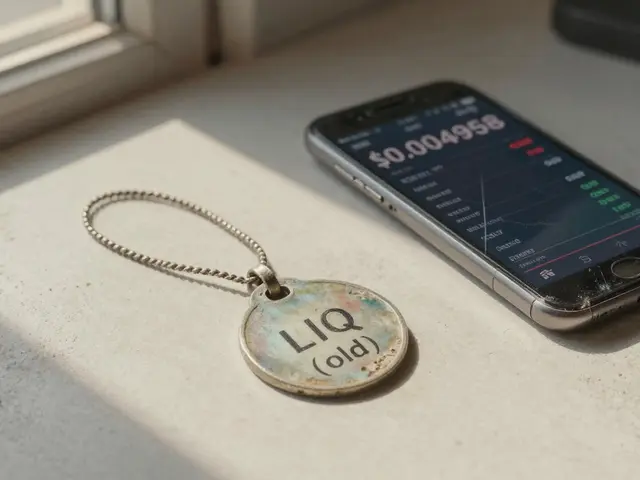

The sheer audacity of the market to dismiss this as mere 'illiquid trash' is a testament to the collective short-sightedness of our financial epoch. We are witnessing the birth pangs of a new artistic paradigm, where the soul of the creator is encoded in immutable ledgers, yet we squabble over pennies like common thieves in a burning library. The value here is not in the immediate liquidity, which is a vulgar metric for true worth, but in the philosophical alignment with the avant-garde movement of digital expression. To claim these tokens is to stake one's identity in the future of human creativity, a gamble that transcends the petty concerns of balance sheets and exchange listings. It is a declaration of faith in the unseen potential of the blockchain to democratize beauty itself.
One must ask oneself: do you wish to be remembered as a cautious spectator or a bold patron of the digital renaissance? The silence of the exchanges is merely the calm before the storm of recognition. Those who wait for green candles are missing the point entirely; they are trading meaning for money, a transaction that leaves the spirit bankrupt. Embrace the chaos, embrace the uncertainty, for it is in the void that true value is forged. This is not an investment; it is an act of cultural preservation.
Hey folks! :D Just wanted to drop a quick tip for anyone feeling overwhelmed by all this jargon. It’s totally normal to feel confused when looking at charts with zero volume! Don’t let the big words scare you away from learning something new. :)
LISTEN UP!! If you want to make real money, you need to look at the fundamentals!!! The community is strong!!! Do not listen to the haters!!! They are just jealous!!! Join the discord now!!! Follow the twitter!!! Engage with the content!!! Success comes to those who hustle hard!!! Never give up on your dreams!!! The moon is waiting for us!!! 🚀🚀🚀
They paused the listings for a reason 🤨. CoinGecko knows something we don't. The 'artists' are just fronts for a deeper agenda. Wake up sheeple 👁️. The contract address changes every time you blink. It's all rigged by the central bankers trying to control the art supply chain. Don't touch it unless you want your wallet drained by the algorithmic overlords. Trust no one. Especially not the 'official' website. It's a honeypot disguised as charity. Stay paranoid. Stay safe. 🕵️♂️💸
It is fundamentally erroneous to assume that liquidity is a prerequisite for value in such a nascent ecosystem. The contrarian view suggests that the lack of trading volume is actually a feature, not a bug, serving as a filter for only the most dedicated stakeholders. One must consider the intricate mechanics of the BNB Smart Chain and how gas fees interact with the staking rewards in a vacuum of external market pressure. The governance rights alone provide a theoretical framework for immense influence, provided one has the fortitude to navigate the bureaucratic labyrinth of token holder voting. Furthermore, the assertion that the project is 'dead' ignores the subtle nuances of developer activity on GitHub, which often precedes market movements by months. To dismiss this based on current price action is to exhibit a profound misunderstanding of long-term asset accumulation strategies in illiquid markets.
Hey there! I see everyone is pretty intense about this. Let me break it down simply. The utility is cool, right? Artists get paid. That's good. But yeah, the volume is super low. So if you grab the airdrop, maybe just keep it in a burner wallet. No rush to sell. Just enjoy the ride! Hope that helps clear things up a bit for y'all!
Liquidity is king. Without volume, it is dust. Check the contract. Verify the audit. Do not FOMO. The decline is 99%. This is a death spiral. Avoid. Run. Save your capital. Invest in blue chips. Not this garbage. Simple logic. Complex emotions cloud judgment. Stick to facts. Facts say run.
i mean its free basically so why not? i got some other shitcoins that did nothing for years then boom. might be worth a shot if u dont mind losing a few bucks on gas. chill out guys.
Oh wow, what a disaster! 😱 Look at that chart! It’s flatlining! Is this a joke? Are we really discussing tokens worth less than a penny? 😂 But hey, if you love pain, go ahead! Just don’t come crying to me when your wallet is empty! 🙄 Good luck with that ‘investment’! 📉💀
it seems like people are reacting emotionally. perhaps the value is subjective. if you believe in the art, hold it. if you want profit, leave. simple as that.
yo just claimed mine. easy process. dont forget to have bnb for gas tho. lets see what happens. hope it goes up lol.
Ugh, reading all these comments makes my head hurt. Everyone is so negative or so blindly positive. Can't we just appreciate the aesthetic of the NFTs? The artists deserve support regardless of the market cap. It's sad how much we care about numbers instead of beauty. Anyway, I'm keeping my tokens because I like the vibe. Deal with it.
hmm interesting read. i am from india and we see many such projects. usually they fade away. but sometimes surprises happen. i will watch from sidelines. no rush to buy or sell. patience is key. hope for the best but prepare for worst. take care everyone :)
morality dictates we support creators. yet greed dictates we abandon them when profits vanish. this contradiction defines our era. the token is worthless financially but valuable ethically if held with intent. judge yourself by your actions not your portfolio. act with integrity. ignore the noise.