
Underground Crypto Adoption in Morocco Despite Ban: The Real Story
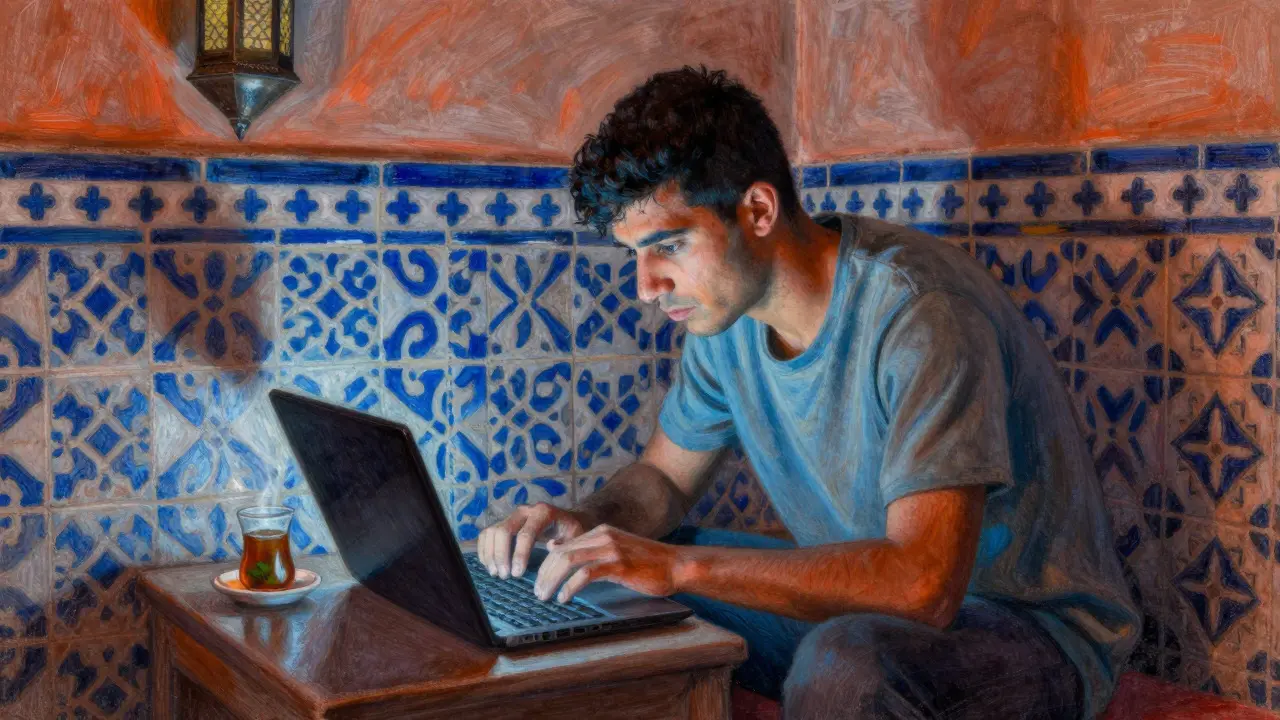
Imagine trying to buy something that is officially illegal in your country. You can't just walk into a store or click 'buy' on a local app. Instead, you join a secret WhatsApp group, use a VPN to hide your location, and trust a stranger with your cash. This isn't a scene from a spy thriller; it is the daily reality for over 1.2 million people in Morocco.
Since November 2017, the government has banned all cryptocurrency activities. Yet, instead of disappearing, the market went underground and exploded. By 2026, this hidden economy is projected to hit nearly $300 million. How does a nation suppress a digital asset that lives on the internet? It doesn't. It creates a paradox where prohibition fuels innovation, risk, and a massive shadow market.
The Origin of the Ban: Why Morocco Said No
To understand why Moroccans are risking legal trouble to trade Bitcoin, we first need to look at why the ban exists. On November 21, 2017, two powerful bodies-the Office de Changes (Exchange Office) and Bank Al-Maghrib (Central Bank)-jointly declared cryptocurrencies illegal. They didn't do this out of thin air. Their concerns were rooted in protecting the national economy.
The central bank feared losing control over monetary sovereignty. If people moved their money into Bitcoin, the government couldn't track capital flight. In fact, 37% of the cited reasons for the ban focused on this loss of control. Another 28% worried about threats to central banking authority from decentralized systems. There were also fears about money laundering (22%) and lack of consumer protection (13%).
At the time, the logic seemed sound: block the technology, stop the risk. But they underestimated how hard it is to ban code. While the law prohibited Bitcoin, NFTs, mining, and DeFi, it couldn't prohibit human desire for financial freedom or better returns. This disconnect created what analysts call the "Crypto Paradox"-a situation where official prohibition coexists with rapid underground growth.
How the Underground Market Actually Works
If you can't use a licensed exchange, how do you trade? The answer lies in adaptation. The Moroccan crypto ecosystem has evolved into a complex web of peer-to-peer (P2P) networks and over-the-counter (OTC) deals. Most users don't have direct access to global exchanges like Binance or Bybit due to geo-blocking. So, they rely on workarounds.
Here is the typical setup for an underground trader:
- Virtual Private Networks (VPNs): About 82% of users access crypto apps through VPNs. Popular choices include NordVPN and ExpressVPN, costing around MAD 120-180 per month. Without this, many international platforms simply won't load.
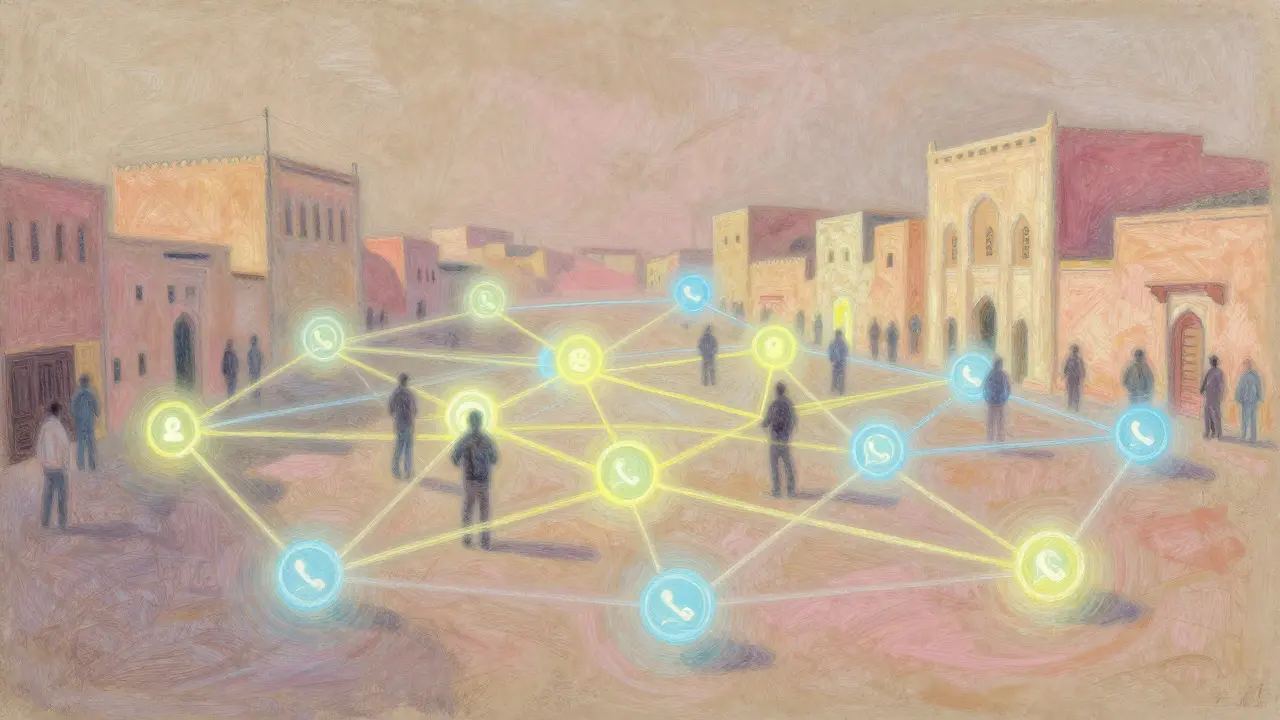
- Messaging Apps as Exchanges: With 68% of transactions coordinated via WhatsApp and Telegram, these apps have become informal exchanges. Users join groups with 50-200 members to find buyers and sellers.
- Trusted Intermediaries: Since there is no escrow service provided by a regulated entity, users rely on reputation. Experienced traders act as middlemen, charging a "network fee" of 1.5-2.5% per transaction to ensure both parties deliver their end of the deal.
This system works, but it is slow and expensive. Transaction fees average between 3.8% and 5.2%, compared to less than 1% in regulated markets. Settlement times can take up to 72 hours because every step requires manual verification. It is a high-friction environment built on necessity.
The Human Cost: Risks and Rewards
Trading in the shadows comes with significant risks. You might be wondering if it is worth it. For many, the answer is yes, but the journey is fraught with danger. According to data from the r/CryptoMorocco community, which has over 12,400 members, fraud is rampant.
Consider the experience of a user known as u/CryptoDarija. Over three years, they completed 147 trades via local OTC groups. They made a profit of 22,000 MAD. Sounds good, right? But they also lost 3,500 MAD in a single scam when a seller disappeared after receiving payment. This story is not unique. A survey found that 32% of users encounter fraud attempts, primarily non-delivery scams. Another 27% face payment delays exceeding four days.
Despite these losses, the demand persists. Why? Because for many, crypto offers solutions traditional banking cannot. International remittances are the primary use case, accounting for 44% of transactions. Families receiving money from abroad often find crypto faster and cheaper than Western Union or bank wires, even with the added hassle of going underground. Speculative trading makes up 31% of activity, driven by younger demographics eager to participate in the global digital economy.
Who Is Trading Crypto in Morocco?
You might assume crypto is for tech-savvy teenagers only. While age is a factor, the demographic picture is more nuanced. Data from a September 2025 survey of 2,147 respondents reveals specific patterns in who participates in this underground market.
| Demographic Factor | Statistic | Context |
|---|---|---|
| Age Group | 68% aged 18-35 | Younger users drive speculative trading and tech adoption. |
| Location | 83% in cities >500k residents | Urban centers like Casablanca and Rabat have higher connectivity and anonymity. |
| Income Level | 72% earn above MAD 10,000/month | Higher income brackets can afford the risks and fees associated with underground trading. |
| Primary Use Case | 44% for remittances | Cross-border payments remain the strongest driver of adoption. |
Most users are urban, young, and relatively well-off. This makes sense. Rural areas lack the digital infrastructure and anonymity needed for safe P2P trading. Higher-income individuals can absorb the occasional scam or high fee, whereas lower-income users might view the volatility as too risky. Interestingly, only 8% use crypto for domestic transactions. Merchant acceptance is virtually non-existent because businesses fear legal repercussions.
The Shift: From Ban to Regulation
For years, the strategy was pure prohibition. But by 2024, it became clear that the ban was failing. Underground activity had grown by an estimated 140% since 2017. The government realized that pushing crypto further underground increased financial risks for consumers without stopping the flow of capital.
In November 2024, Bank Al-Maghrib Governor Abdellatif Jouahri announced a major pivot. A draft law to regulate cryptocurrency was in the final stages of adoption. This marked a strategic shift from suppression to oversight. The goal? To bring the shadow market into the light, tax it, and protect users.
The proposed regulatory framework includes five key components:
- AML/CFT Compliance: Mandatory anti-money laundering checks and suspicious activity reporting.
- KYC Protocols: Know Your Customer verification for all transactions to prevent anonymity abuse.
- Licensing: Exchanges must obtain licenses from Bank Al-Maghrib, with application costs estimated between MAD 150,000 and 200,000.
- Taxation: A 15% capital gains tax on crypto profits.
- Oversight: The Moroccan Capital Market Authority (AMMC) will oversee ICOs and security tokens.
Dr. Fatima Zahra El Moudni, a professor of financial regulation at Mohammed V University, noted that this shift reflects a pragmatic recognition of reality. Prohibition failed to kill demand; it only made it messier. By regulating, the government hopes to address the original concerns about illicit activities-which actually accounted for only 4.3% of crypto-related crimes according to internal assessments.
What Comes Next for Moroccan Crypto?
The transition to regulation is not seamless. The new framework maintains one critical restriction: cryptocurrency cannot be used for commercial payments or settlements. Businesses must still use traditional banking channels for international trade. This means crypto remains an investment asset or a remittance tool, not a replacement for the Dirham in daily commerce.
However, the impact could be profound. Industry analysts project that formal regulation could increase the market size by 35-40% within 18 months. By bringing exchanges and custodial services under oversight, consumer risk exposure could drop by an estimated 62%. Imagine trading on a licensed platform with instant settlement and low fees, rather than trusting a stranger on WhatsApp.
Morocco aims to become a regional fintech hub in North Africa. Its neighbors are watching closely. Egypt launched a regulatory sandbox in late 2023, while Algeria and Tunisia maintain strict bans. Morocco's move positions it as a leader in balancing innovation with stability. If implemented correctly, the country could transform its underground $292 million market into a transparent, taxable, and secure industry.
For the average Moroccan user, this means the end of the VPN-dependent, high-risk era. But until the laws are fully enforced and local infrastructure catches up, the underground market will likely persist in some form. Change takes time, especially when rebuilding trust in a system that operated in the shadows for nearly a decade.
Is cryptocurrency completely illegal in Morocco in 2026?
As of early 2026, the status is transitioning. Historically, since 2017, all crypto activities were banned. However, following announcements in late 2024, a draft law for regulation is being adopted. While the ban on using crypto for commercial payments remains, trading and holding are moving toward a regulated framework. Until the new laws are fully enacted and enforced, many users still operate in a gray area, relying on P2P networks.
How do Moroccans buy Bitcoin without local exchanges?
Most users rely on peer-to-peer (P2P) platforms like Binance P2P or LocalBitcoins, combined with VPNs to bypass geo-blocking. Transactions are often coordinated through WhatsApp or Telegram groups where trusted intermediaries facilitate the exchange of fiat currency (MAD) for crypto. This method avoids direct bank transfers that might trigger alerts.
What are the biggest risks of underground crypto trading in Morocco?
The primary risks are fraud and technical issues. Approximately 32% of users report encountering scams, such as sellers taking payment and disappearing. Other risks include high transaction fees (up to 5.2%), long settlement times (up to 72 hours), and potential legal scrutiny, although enforcement against individual small-scale traders has been inconsistent.
Will the new regulations allow businesses to accept crypto?
No. The emerging regulatory framework explicitly prohibits the use of cryptocurrency for commercial payments and settlements. Businesses must continue to use traditional banking channels for international trade. Crypto will remain an investment asset and a tool for personal remittances, overseen by Bank Al-Maghrib.
How does Morocco's crypto market compare to its neighbors?
Morocco represents about 18.7% of North Africa's total crypto activity, second only to Egypt, which has a regulated market accounting for 52.3%. Unlike Algeria and Tunisia, which maintain strict bans, Morocco is moving toward regulation, positioning itself as a potential fintech hub in the region.