
Coinut Crypto Exchange Review: Is It Right for Canadian and Singaporean Traders?

When you're looking for a crypto exchange that actually works with your local currency-like CAD or SGD-Coinut stands out. But is it the right pick in 2025? With over 350 exchanges out there, most pushing hundreds of coins and flashy features, Coinut does something quieter but more practical: it focuses on a few major cryptocurrencies, strong regulation, and real fiat access. If you live in Canada, Singapore, or Switzerland and want a no-nonsense platform that doesn’t try to be everything to everyone, Coinut might be worth your time.
What Is Coinut, Really?
Coinut, also known as COIN Ultimate Trading, launched in 2013-way before most people had heard of Binance or Coinbase. It was founded by Xinxi Wang, a Litecoin Core developer, and Tao Huang. Unlike many exchanges that popped up during the 2017 crypto boom, Coinut never shut down. It’s still running. That alone says something.
It’s based in Singapore but operates legally in Canada and Switzerland. In Canada, it’s registered with FINTRAC as a Money Services Business. In Switzerland, it’s overseen by VQF, a recognized self-regulatory body. That’s not the same as full licensing, but it’s real oversight. Most smaller exchanges don’t even have that.
It’s not backed by venture giants like Sequoia or a16z. But it does have support from Bitmain, Boost VC, and the National University of Singapore Enterprise. That’s not flashy, but it’s solid. This isn’t a startup trying to go viral-it’s a steady, regulated player trying to do one thing well.
What Coins Can You Trade?
Coinut doesn’t have 300+ coins. It has six: Bitcoin, Ethereum, Litecoin, Bitcoin Cash, Ripple (XRP), and Dogecoin. That’s it.
For most people, that’s enough. If you’re just starting out or you only care about the top coins, you won’t miss anything. But if you’re hunting for Shiba Inu, Solana, or some new memecoin, you’ll need to go elsewhere. Coinut isn’t for speculators chasing the next moonshot. It’s for people who want to trade Bitcoin and Ethereum without jumping through hoops.
Each coin pairs with nine fiat currencies: USD, CAD, SGD, EUR, CHF, AUD, NZD, GBP, and JPY. That’s rare. Most exchanges offer USD and EUR, maybe CAD. Coinut gives you direct access to Singapore dollars and Swiss francs. If you’re in Singapore and want to deposit SGD without converting through a third party, Coinut is one of the few places that lets you do it cleanly.
Fees: Low, But Not the Lowest
Coinut claims to have the lowest fees. That’s misleading.
Here’s what it actually charges: 0.10% for taker trades. Maker trades? No fee. That’s standard. But exchanges like Bybit and Kraken now offer 0.02% taker fees and even pay you 0.01% as a maker. So Coinut isn’t the cheapest.
But here’s the catch: it’s still reasonable. At 0.10%, you’re not getting ripped off. And there are no hidden fees for deposits or withdrawals in fiat. No surprise charges when you move money in or out. That’s more than some exchanges can say.
Minimum trade size is $10. That’s low. You don’t need thousands to start. That makes it accessible for beginners or people just testing the waters.
Leverage: Up to 10x
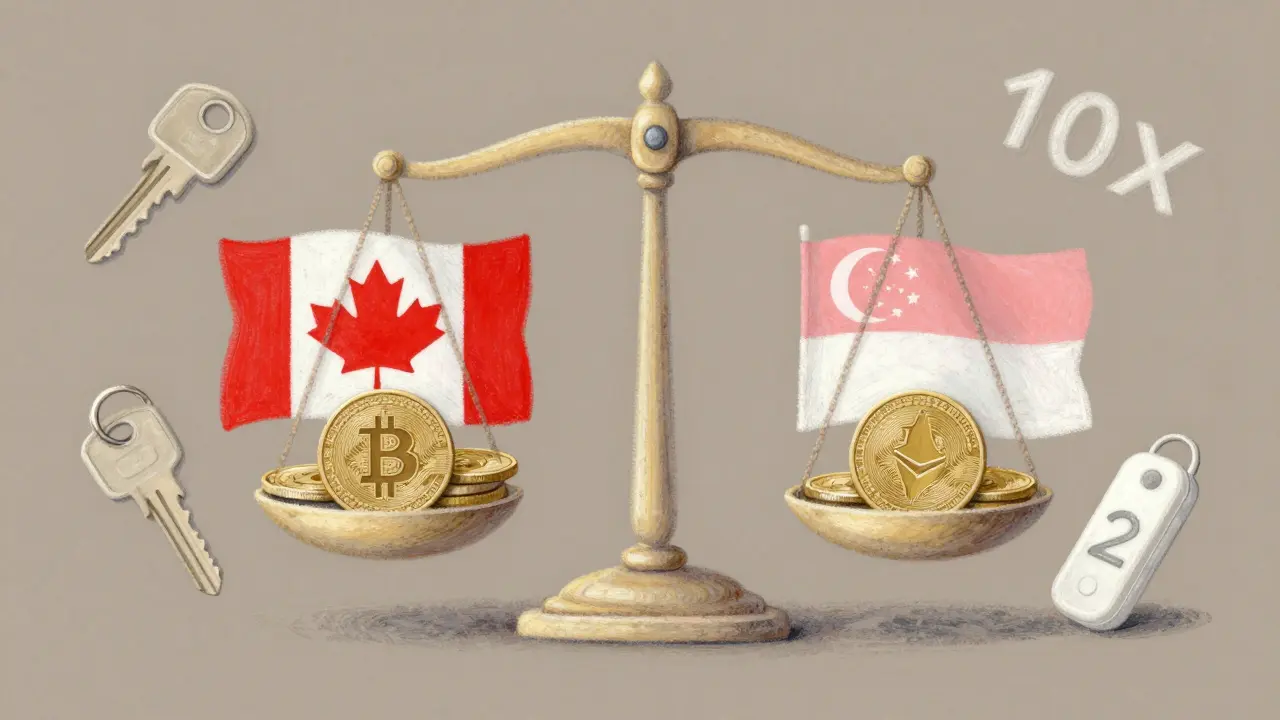
One thing Coinut does better than most regulated exchanges is leverage. You can trade with up to 10x leverage. That’s high. Kraken only offers 5x for most users. Binance gives 125x-but only if you’re not in a regulated jurisdiction.
For Canadian and Singaporean traders, 10x is a big deal. It’s rare to find a platform with that kind of leverage that’s actually licensed. If you’re using leverage to hedge or to amplify a short-term move, Coinut gives you the tools without the wild risk of unregulated platforms.
Just remember: leverage doubles your gains-and your losses. Don’t use it unless you understand how it works.

Security: No Hacks, Cold Storage, 2FA
Coinut has never been hacked. That’s not luck. It’s discipline.
95% of user funds are stored in cold wallets. That means they’re offline, disconnected from the internet, and out of reach of hackers. The rest is kept hot for fast withdrawals, but it’s a tiny slice.
Two-factor authentication (2FA) is required. You can use Google Authenticator or Authy. No SMS-based 2FA-good. SMS can be intercepted.
There’s no investor protection fund like OKX has. If the exchange somehow failed, you wouldn’t get reimbursed. That’s a risk. But Coinut’s regulation and cold storage make that scenario unlikely.
Traders Union gave it a 9.75/10 for security. That’s higher than Kraken and on par with OKX. For a smaller exchange, that’s impressive.
Platform and Usability
The website is clean. No clutter. No pop-ups. The interface is simple: charts, order book, trade panel. It’s not as advanced as TradingView-powered platforms, but it’s enough for spot and leveraged trading.
There’s a mobile app for iOS and Android. It’s not perfect-sometimes it lags-but it works. You can check balances, place trades, and manage 2FA on the go.
Default language is Chinese. But there’s a toggle in the top-right corner. Switch it to English, and everything works fine. No translation errors. No broken menus. That’s rare.
There’s an education center with video tutorials and a glossary. If you’re new to crypto, you’ll find basic guides on how to buy Bitcoin, what an order book is, and how leverage works. It’s not as deep as Coinbase’s learning hub, but it’s enough to get you started.
Deposits and Withdrawals
Depositing fiat? You can use bank transfer (SEPA, SWIFT, Interac) for CAD, SGD, EUR, and others. Crypto deposits are instant.
Withdrawals take 1-3 business days for fiat. That’s slower than local banks, but normal for regulated exchanges. Some users in Singapore report 3-5 days, especially during holidays. Crypto withdrawals are faster-usually under 30 minutes.
There’s no credit card or PayPal option. No Apple Pay. No Google Pay. If you want to deposit, you need a bank account. That’s a downside if you’re used to quick, easy top-ups. But it’s also a security feature. Fewer payment methods mean fewer ways for fraud to creep in.
Customer Support
This is the weak spot.
Coinut only offers email and live chat. No phone support. No WhatsApp. No Twitter DMs. If you have a problem, you’re stuck waiting for a reply.
Response times vary. Sometimes you get an answer in 4 hours. Other times, it takes 24-48 hours. That’s not terrible for a small exchange, but it’s frustrating if you’re locked out of your account or need help with a failed withdrawal.
There’s no knowledge base with searchable FAQs. No community forum. No Reddit page. You’re on your own after the signup process.
Who Is Coinut For?
Coinut isn’t for everyone. But it’s perfect for three types of people:
- Canadians who want to deposit CAD directly and trade Bitcoin or Ethereum with regulation behind them.
- Singaporeans who need SGD deposits and want to avoid converting through PayPal or Wise.
- Swiss traders who want a platform that respects Swiss financial standards.
If you’re in the U.S., you can still sign up-but you’re on your own legally. Coinut doesn’t have U.S. licensing. Some states might block you. Check your local laws.
If you want to trade 200+ altcoins, Coinut isn’t for you. If you need 24/7 phone support, look elsewhere. If you’re looking for the absolute lowest fees, go with Bybit or Kraken.
But if you want a simple, secure, regulated platform that works with your local currency and doesn’t try to overwhelm you with noise? Coinut delivers.
The Bottom Line
Coinut is a niche exchange. It doesn’t have the brand power of Binance or the user base of Coinbase. But it doesn’t need to. It’s built for a specific group: regulated-market traders who value safety over variety.
Its strengths? Regulation in Canada and Switzerland, 9 fiat currencies, 10x leverage, no hacks, and a clean interface. Its weaknesses? Limited coins, slow support, and no phone line.
For Canadian and Singaporean users who want to trade Bitcoin and Ethereum without jumping through hoops or risking their money on unregulated platforms, Coinut is one of the best options left.
It’s not flashy. It’s not the biggest. But in 2025, that might be exactly what you need.
Is Coinut a safe crypto exchange?
Yes, Coinut is considered safe by industry standards. It stores 95% of user funds in cold wallets, requires two-factor authentication, and has never been hacked. It’s also regulated by FINTRAC in Canada and VQF in Switzerland, which means it follows anti-money laundering rules and undergoes audits. While it doesn’t have an investor protection fund like some larger exchanges, its security practices are strong for a mid-sized platform.
Can I deposit SGD or CAD on Coinut?
Yes, Coinut supports direct deposits in both Singapore dollars (SGD) and Canadian dollars (CAD), along with seven other fiat currencies including USD, EUR, and CHF. You can deposit via bank transfer (SWIFT or Interac), and there are no hidden fees. This makes it one of the few exchanges that offers seamless fiat on-ramps for users in Singapore and Canada.
Does Coinut offer leverage trading?
Yes, Coinut offers up to 10x leverage on major cryptocurrency pairs like BTC/USD and ETH/CAD. This is higher than what regulated platforms like Kraken offer (5x), making it attractive for traders in Canada and Singapore who want amplified positions without using unregulated offshore exchanges. Leverage trades carry higher risk, so only use it if you understand how margin trading works.
What cryptocurrencies does Coinut support?
Coinut supports six cryptocurrencies: Bitcoin (BTC), Ethereum (ETH), Litecoin (LTC), Bitcoin Cash (BCH), Ripple (XRP), and Dogecoin (DOGE). It does not list altcoins like Solana, Polkadot, or Shiba Inu. This limited selection is intentional-it targets users who want to trade the most established coins without the noise of hundreds of low-liquidity tokens.
Are there any hidden fees on Coinut?
No, Coinut doesn’t have hidden fees. The trading fee is 0.10% for taker orders and 0% for maker orders. Deposits in fiat and crypto are free. Withdrawals in crypto have a small network fee (paid to the blockchain), but there are no platform charges. Withdrawals in fiat take 1-3 business days and are also free. The only cost is the trading fee-no surprise charges.
Is Coinut available in the United States?
Coinut allows U.S. users to sign up, but it is not licensed to operate in the United States. This means you’re using the platform at your own legal risk. Some U.S. states may block access, and you won’t have the same consumer protections as users in Canada or Singapore. If you’re in the U.S., check your state’s crypto regulations before using Coinut.
How long does verification take on Coinut?
Verification typically takes 24 to 48 hours after submitting your ID and proof of address. It’s not instant like some exchanges, but it’s faster than many regulated platforms. You’ll need a government-issued photo ID and a recent utility bill or bank statement. Facial recognition is not required, which makes the process simpler but slightly less secure than exchanges like OKX.
Does Coinut have a mobile app?
Yes, Coinut has official mobile apps for both iOS and Android. The app lets you check balances, place trades, and manage your 2FA settings. It’s not as polished as Binance’s app, but it’s reliable. You won’t find advanced charting tools, but for spot and leveraged trading, it works well on the go.