
Nepal Crypto Ban: How the Foreign Exchange Act 1962 Enforces a Total Prohibition
Imagine trying to buy Bitcoin in a country where simply holding it can land you in jail. For millions of people in Nepal is a landlocked nation in South Asia known for its Himalayan peaks and strict financial regulations, this isn't a hypothetical scenario-it's daily reality. As of June 2026, Nepal remains one of only three countries globally, alongside China and Algeria, that maintains a total prohibition on all cryptocurrency activities.
If you are a Nepali citizen looking to invest, or an expat wondering about the legal risks, understanding the backbone of this ban is crucial. The enforcement doesn't come from a new, flashy digital law. Instead, it relies on a decades-old statute: the Foreign Exchange (Regulation) Act, 1962 is the primary legislation governing foreign currency transactions and capital movement in Nepal. This article breaks down exactly how this old law applies to modern crypto, what the penalties really look like, and why the government refuses to budge despite global trends.
The Legal Foundation: Why the 1962 Act Bans Crypto
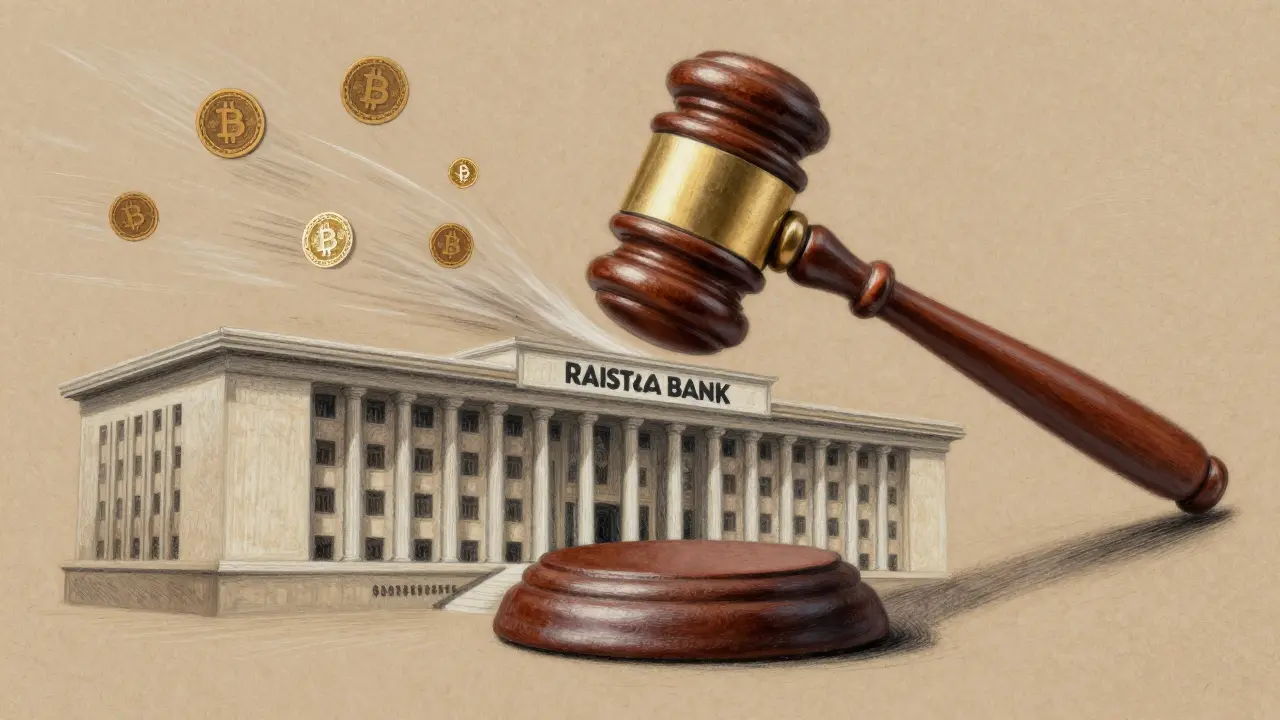
To understand the ban, you have to look at the logic of the Nepal Rastra Bank (NRB) is the central bank of Nepal responsible for issuing currency and regulating monetary policy. In August 2017, NRB issued Notice No. 37/074/075, which formally prohibited Bitcoin transactions. They didn't create a new criminal code; they pointed to Section 12 of the Foreign Exchange (Regulation) Act, 1962.
The core argument is simple but rigid. The Act requires that all foreign exchange transactions be conducted through authorized dealers-essentially, licensed banks. Since cryptocurrencies like Bitcoin is a decentralized digital currency not issued by any central authority are not issued or approved by any central bank, they cannot be used as legal tender or traded for foreign exchange. The NRB views crypto as an unregulated channel for moving money out of the country, bypassing state controls.
This interpretation was reinforced in September 2021 when the Government of Nepal expanded the ban to include mining, trading, and promotion. By January 2022, the Department of Revenue Investigation started filing cases against individuals for "foreign exchange misappropriation." If you trade crypto using Nepali Rupees (NPR), the authorities argue you are violating the Act because you are exchanging local currency for an unauthorized asset.
What Is Actually Illegal? A Breakdown of Activities
Many people think the ban only applies to buying coins on exchanges. That’s a dangerous misconception. Under the current legal framework, almost every interaction with cryptocurrency is prohibited:
- Trading and Investing: Buying or selling crypto on international platforms (like Binance or Coinbase) using NPR is illegal. Even if you use a VPN to access these sites, the transaction itself violates the Foreign Exchange Act.
- Mining: Operating mining rigs in Nepal is banned. This includes both individual miners and large-scale operations. Despite the ban, reports suggest some underground mining continues due to cheap hydroelectric power, but participants risk severe penalties.
- Promotion and Advertising: You cannot legally promote crypto services, run educational workshops on trading, or advertise crypto businesses. This extends to social media influencers and tech blogs.
- Facilitating Transactions: Helping someone else buy or sell crypto, even peer-to-peer (P2P), is considered facilitating a violation of foreign exchange laws.
- Holding Assets: While owning crypto purchased abroad exists in a technical gray area, the NRB considers any possession of virtual currency as suspicious activity. Banks are required to report accounts linked to crypto wallets.
The scope is comprehensive. There is no "safe" way to participate in the crypto market while residing in Nepal without risking legal action.
Penalties and Real-World Enforcement
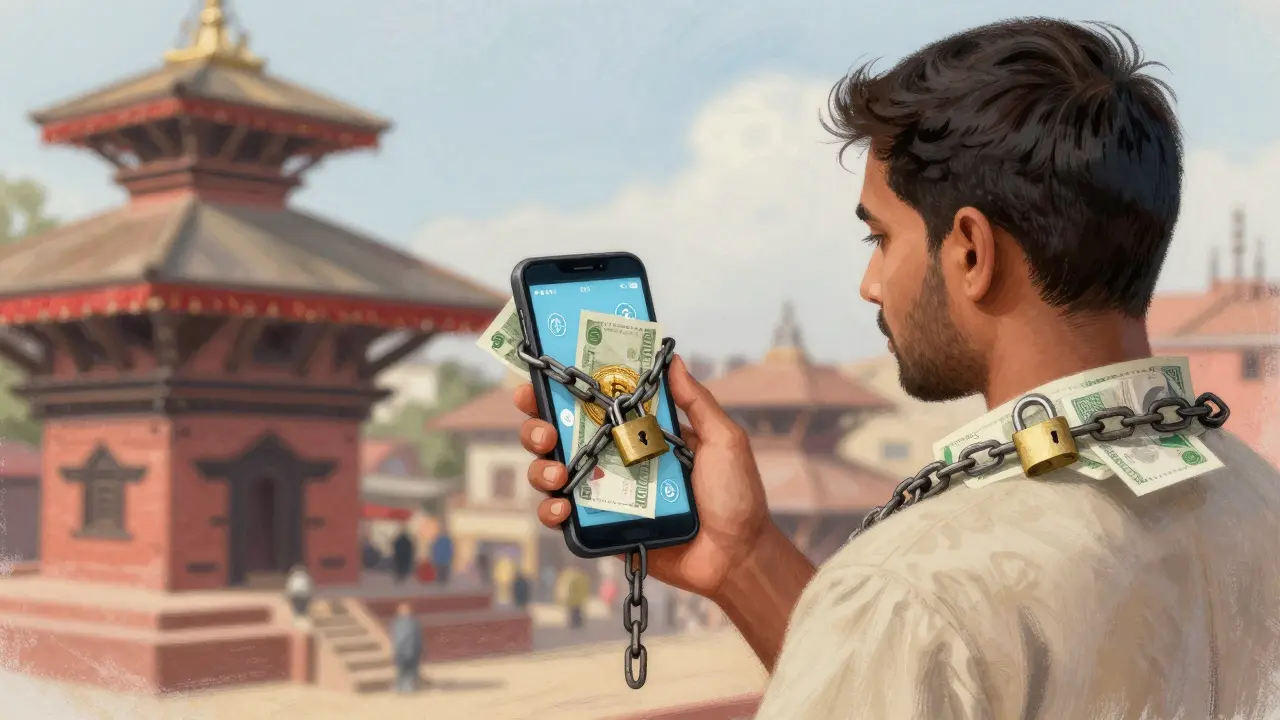
So, what happens if you get caught? The consequences are severe. Under the Foreign Exchange (Regulation) Act, violations can lead to imprisonment for up to three years. Additionally, fines can amount to three times the value of the transaction involved.
Consider this real-world example: In February 2022, the Kathmandu District Court heard a case against four individuals accused of misappropriating Rs376.41 million (approximately $2.8 million USD at the time) through illegal cryptocurrency investments. These weren't small-time traders; they were significant players whose actions drew national attention. The case highlighted that the government is actively pursuing high-value targets.
For everyday users, the risk often comes from banking surveillance. The NRB mandates that all commercial banks monitor for suspicious transactions. If your bank account shows regular transfers to entities linked to crypto exchanges-or even unusual patterns that resemble P2P trades-your account could be frozen pending investigation. Circular No. 12/078, issued in January 2022, requires banks to implement stricter monitoring protocols for transactions exceeding Rs500,000.
| Country | Status of Cryptocurrency | Key Regulatory Body | Penalties for Violation |
|---|---|---|---|
| Nepal | Total Ban | Nepal Rastra Bank | Up to 3 years prison + 3x fine |
| India | Legal but Taxed | Reserve Bank of India | 30% tax on gains + reporting requirements |
| Bangladesh | Banned | Bangladesh Bank | Fines and imprisonment under Money Laundering Act |
| Pakistan | Restricted/Registered | Securities and Exchange Commission | Exchanges must register; unregistered trading penalized |
Why Does Nepal Maintain Such a Strict Ban?
You might wonder why Nepal stays so isolated when most of the world is embracing blockchain technology. The reasons are rooted in economic stability and capital control.
First, foreign exchange reserves are critical for Nepal. Between July and December 2021, Nepal's forex reserves dropped by 14.7%, falling to $10.03 billion. The NRB directly linked part of this decline to capital flight via cryptocurrency. Dr. Shanker Sharma, former Governor of NRB, argued that allowing crypto would destabilize the economy by enabling rapid, unmonitored outflows of capital.
Second, there is concern over remittance flows. Remittances make up roughly 22.6% of Nepal's GDP. Prakash Kumar Shrestha, Chief of Economic Research at NRB, noted in 2022 that investing in crypto contributed to a 7.3% drop in remittance income during the first five months of fiscal year 2021-22. The government fears that if people send money home in crypto instead of traditional channels, they lose visibility into these funds, making it harder to manage the national budget.
Third, there is the issue of consumer protection. Without regulation, citizens are vulnerable to scams. Forums like Hamro Patro have documented numerous cases of Nepalis losing thousands of dollars in unregulated P2P trades. The government argues that a ban protects inexperienced investors from volatile markets and fraudulent schemes.
The Underground Market: Reality vs. Law
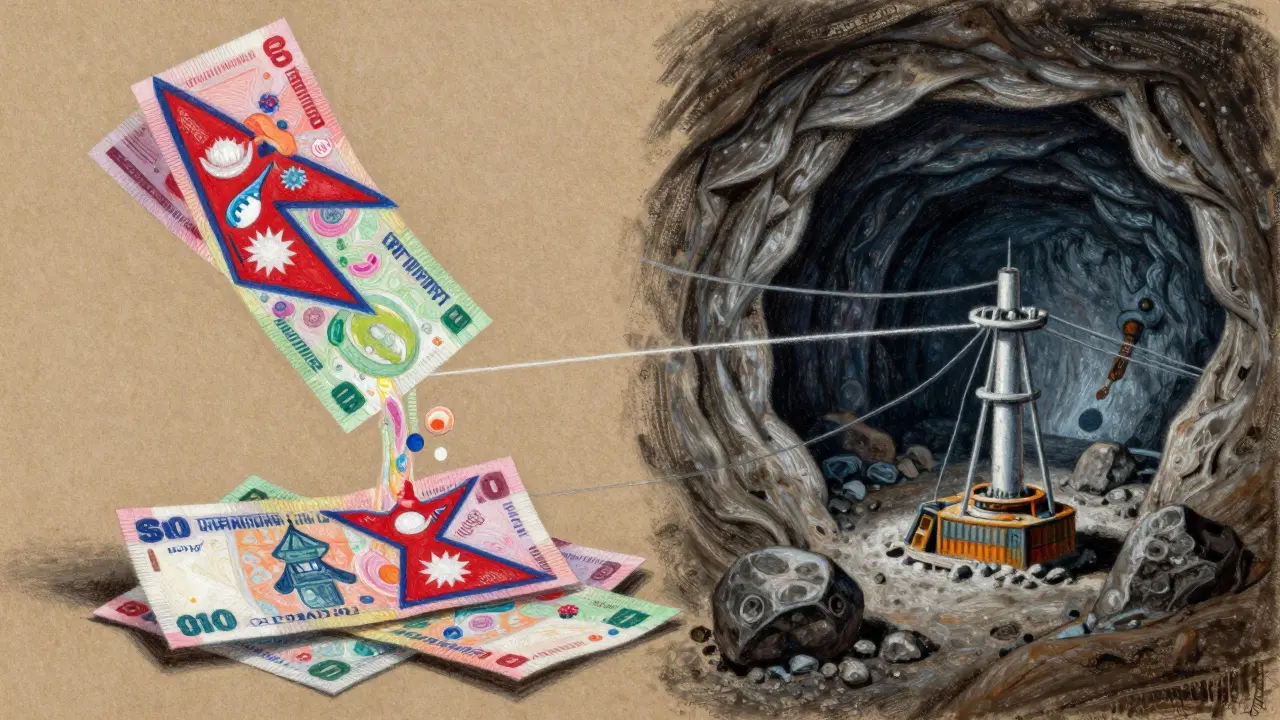
Despite the strict laws, demand persists. A 2023 survey by Young Innovations Nepal found that 18.7% of tech-savvy Nepalis aged 18-35 had engaged in crypto transactions. Most used foreign exchanges via VPNs (63.2%) or participated in P2P trades (27.8%).
There is also a hidden mining sector. Due to abundant hydropower, electricity costs in districts like Kavrepalanchok average just Rs5.50 per kWh. This has led to rumors of underground mining operations, with estimates suggesting 15-20% of the country's mining activity continues illegally. However, these operators live with constant fear of raids and disconnection.
The challenge for enforcement is real. The NRB admitted in its 2022 annual report that it had limited technical capacity to monitor blockchain transactions. To address this, they partnered with Chainalysis in 2022 to train officials. Yet, only 12 officials received certification initially, highlighting the gap between ambition and capability.
Future Outlook: Will the Ban Lift?
As we move through 2026, signs of change are subtle but present. In July 2023, NRB Governor Maha Prasad Adhikari announced that Nepal was exploring a Central Bank Digital Currency (CBDC). He emphasized that any digital currency would maintain full central bank control, distinguishing it from decentralized cryptos like Bitcoin.
A 12-member committee established by the Ministry of Finance in 2022 studied global regulations, though no public recommendations have been made. International bodies like the IMF have criticized the ban as counterproductive, arguing it drives activity underground rather than eliminating it.
However, don't expect a sudden reversal. The NRB's 2023 Financial Stability Report stated that "the ban will remain essential for at least five more years." The World Bank suggests regulatory adaptation might occur within 2-3 years, but likely starting with blockchain technology separate from cryptocurrencies, perhaps focusing on secure cross-border remittances.
For now, the status quo holds. The Foreign Exchange Act, 1962, remains the sword hanging over anyone interested in digital assets in Nepal. Until the political will shifts toward liberalization, the risk of imprisonment and heavy fines makes crypto participation a gamble few can afford.
Is it illegal to own cryptocurrency in Nepal?
Yes, effectively. While there is a technical gray area for crypto purchased abroad, the Nepal Rastra Bank treats any possession of virtual currency as suspicious. Banks are required to monitor and report such activities, and owning crypto can lead to account freezes or legal investigation under the Foreign Exchange Act.
What are the penalties for trading crypto in Nepal?
Under the Foreign Exchange (Regulation) Act, 1962, penalties for illegal crypto trading include imprisonment for up to three years and fines equal to three times the value of the transaction. Authorities have actively prosecuted high-value cases involving millions of rupees.
Can I mine Bitcoin in Nepal?
No, mining is strictly prohibited. The government banned all cryptocurrency activities, including mining, in 2021. Although some underground operations exist due to cheap electricity, participants face significant legal risks, including confiscation of equipment and prosecution.
Why does Nepal ban cryptocurrency?
The primary reasons are to protect foreign exchange reserves, prevent capital flight, and maintain control over remittance flows. The government views unregulated crypto as a threat to economic stability and a vector for money laundering and fraud.
Will Nepal legalize cryptocurrency in the future?
It is unlikely in the short term. The NRB has stated the ban will remain for at least five more years. However, Nepal is exploring a Central Bank Digital Currency (CBDC), which may indicate a shift toward regulated digital finance rather than decentralized cryptocurrencies.
How does Nepal enforce the crypto ban?
Enforcement relies on banking surveillance. Commercial banks must monitor for suspicious transactions and report them to the NRB. The Department of Revenue Investigation prosecutes major cases, and the NRB uses blockchain analysis tools to track illicit flows.