

Norway Ends Crypto Mining Tax Breaks: What It Means for Miners in 2026

For years, Norway was one of the most attractive places in the world to mine cryptocurrency. Cheap, renewable electricity from hydropower and wind made it possible to run massive mining farms at a fraction of the cost seen in the U.S. or China. But things changed in 2025. The Norwegian government quietly ended the tax deductions that made mining profitable for small operators and family-run operations. It wasn’t a ban. It wasn’t a sudden crackdown. It was a slow, deliberate shift - and now, miners are feeling the pinch.
What Actually Changed?
There was no big announcement. No press conference. No headline-grabbing law passed in parliament. Instead, the Norwegian Tax Administration (Skatteetaten) quietly updated its guidance in early 2025 to remove the ability to fully offset mining equipment costs against income. Before 2025, miners could depreciate their ASIC rigs and GPUs at 30% per year. That meant if you spent 100,000 NOK on mining hardware, you could deduct 30,000 NOK from your taxable income each year. That deduction is now capped at 15% per year.That might sound small, but for a miner running a 50-kilowatt setup, it’s a 50% increase in annual tax burden. Let’s say you earned 400,000 NOK in Bitcoin rewards last year. Under the old rules, you could deduct 45,000 NOK in equipment depreciation and another 120,000 NOK in electricity - leaving you with 235,000 NOK taxable income. Now, with the depreciation cut in half, your taxable income jumps to 280,000 NOK. That’s an extra 9,900 NOK in taxes - nearly $900 USD - just from one change.
Why Did Norway Do This?
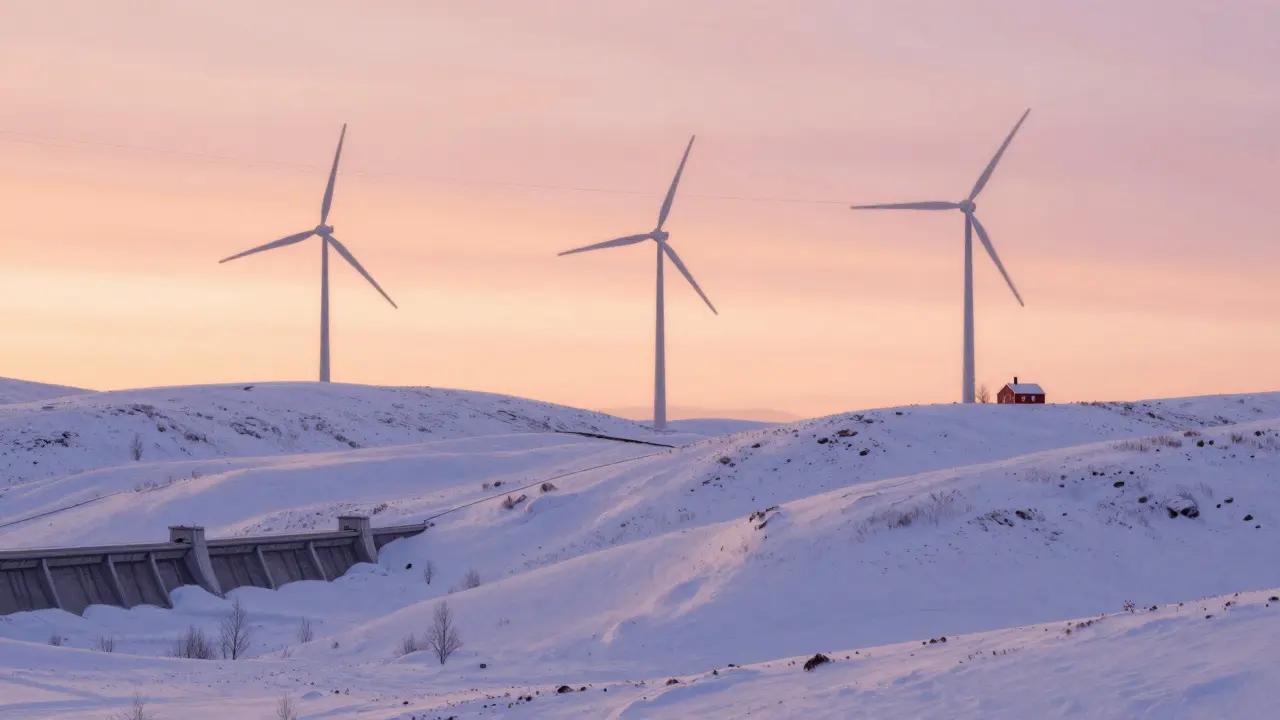
Norway’s energy grid runs on 98% renewable power. That’s a point of national pride. But crypto mining, even at just 1% of total energy use, started drawing criticism. Environmental groups pointed out that while the energy was clean, it was being used for speculative digital assets instead of homes, hospitals, or electric vehicle charging. In 2024, the government commissioned a study that found mining operations were growing at 37% per year - faster than the country’s population growth.Politicians didn’t want to ban mining outright. Norway still wants to be seen as tech-friendly. But they also didn’t want to be seen as giving away cheap energy to foreign investors. So they went after the tax breaks - the one thing that made mining profitable for small operators. Big industrial farms with access to institutional capital and low-interest loans still survive. But the mom-and-pop miners? Many have shut down.
Who Got Hit the Hardest?
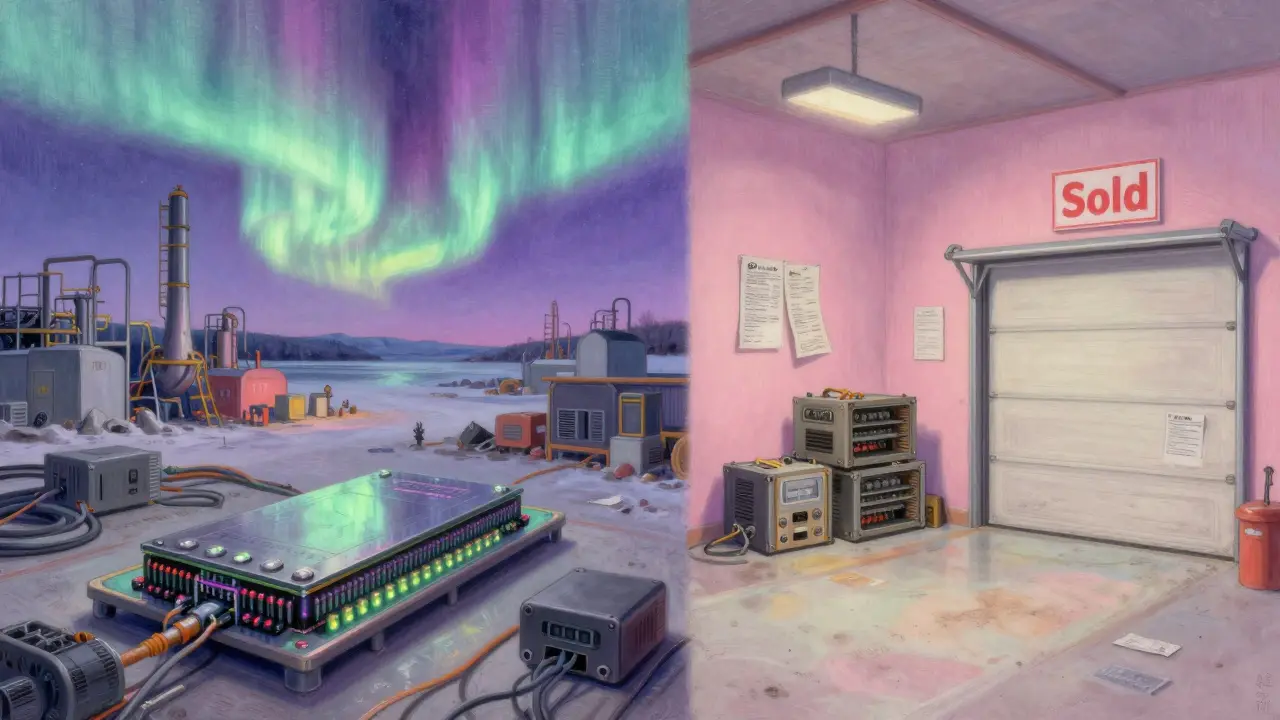
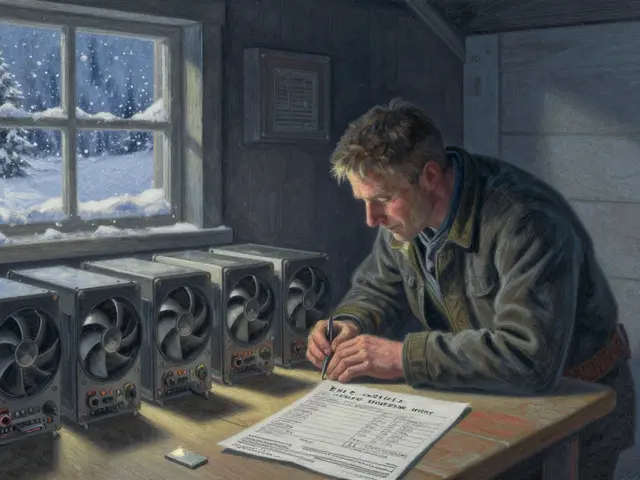
The real losers were individual miners and small co-ops. Think of a guy in Trondheim who ran five ASICs in his garage. He bought them in 2022 when Bitcoin was at $30,000. He used his home electricity, which cost him about 0.15 NOK per kWh. He claimed 30% depreciation each year. He broke even in 18 months.Now? His depreciation deduction is cut. His electricity rates rose 12% in 2025 due to grid balancing fees. And Bitcoin’s price hasn’t moved enough to compensate. He’s now paying more in taxes than he’s making in mining rewards. He sold his rigs last fall and switched to staking - which, by the way, is taxed the same way. No escape.
Even cooperative mining pools felt the blow. Before, if five people pooled their hardware, they could each claim 20% of the equipment cost as a deduction. Now, that’s halved. The administrative burden went up. The profit margin vanished. Two major co-ops in Bergen and Stavanger dissolved in late 2025.
What’s Still Allowed?
Mining isn’t illegal. You can still do it. You just can’t write off your hardware like you used to. Here’s what’s still in place:- You still pay a flat 22% income tax on mining rewards - no change there.
- You can still deduct electricity costs, but only if you have a separate meter and can prove it’s used solely for mining.
- You can still claim software and cooling system expenses as business costs.
- You must report your cryptocurrency holdings as of December 31 every year - same as before.
- Capital gains on selling mined coins are still taxed at 22% - no new rate, just less room to reduce your taxable income.
The key difference? Before, you could use depreciation to turn a loss into a profit on paper. Now, you’re paying tax on real income, not theoretical gains. The government isn’t taxing you more - it’s just stopping you from hiding your income behind old equipment.
What About Big Mining Companies?
Large operators didn’t feel the same pain. Companies like NorMiner AS and ArcticHash have long-term power purchase agreements with state-owned utilities. They get rates below 0.10 NOK/kWh. They also use tax loss carryforwards from earlier years. And they’ve shifted to using newer, more efficient hardware - which means they depreciate less each year anyway.One company in Tromsø told Bloomberg they’ve cut their energy use by 40% since 2024 by switching to 5th-gen ASICs. They’re still profitable. But they’re not hiring. They’re not expanding. They’re just holding steady.
How Does This Compare to Other Countries?
Norway isn’t alone. Germany tightened its rules in 2024, limiting deductions for home mining. Canada started taxing staking rewards the same as mining in 2023. The U.S. still allows full depreciation under Section 179 - but electricity costs are five times higher than in Norway.What makes Norway unique is that it never offered special tax breaks. It just let miners use normal business deductions - and then pulled back on one of them. Other countries banned mining outright. Norway just made it less attractive. And that’s often more effective.
What Should Miners Do Now?
If you’re still mining in Norway, here’s what you need to do:- Re-calculate your depreciation schedule. Use 15% per year, not 30%.
- Install a separate electricity meter if you haven’t already. You need proof to claim usage.
- Track every coin you mine - record the NOK value at the exact time you received it.
- Keep receipts for all hardware, cooling, and software purchases.
- Consider switching to staking or running a node. The tax treatment is identical, but you don’t need expensive hardware.
And if you’re thinking about starting? Don’t. Not unless you have access to industrial-scale power and a 10-year business plan. The math doesn’t work anymore.
What’s Next?
The Norwegian government has signaled this might be just the first step. A draft bill in late 2025 proposed capping mining operations at 50 kW per facility - effectively banning large home setups. It’s still under review, but the direction is clear: Norway wants to keep its clean energy for people, not profit.Some miners have moved to Iceland, where tax rules are still favorable. Others have gone to Georgia or Kazakhstan. But those places don’t have Norway’s stability, rule of law, or infrastructure. You’re trading tax savings for risk.
The era of easy crypto mining in Norway is over. It wasn’t a ban. It was a quiet adjustment - one that changed everything.
Are crypto mining taxes in Norway still low compared to other countries?
The 22% flat income tax rate is still lower than countries like the U.S. (up to 37%) or Germany (up to 45%), but Norway’s removal of equipment depreciation deductions has made it less competitive. Miners now pay more in real taxes than before, even if the headline rate hasn’t changed.
Can I still mine crypto legally in Norway?
Yes, mining is still legal. But the tax benefits have been reduced. You must report all mining income, pay 22% income tax on rewards, and can no longer deduct 30% of equipment costs annually - only 15%. Electricity costs must be separately metered to qualify for deduction.
What happens if I don’t report my crypto mining income?
The Norwegian Tax Administration (Skatteetaten) now cross-references blockchain data with utility bills and bank transfers. Failing to report mining income can lead to fines of up to 25% of the unreported amount, plus interest. In serious cases, criminal charges for tax fraud are possible.
Is staking taxed the same as mining in Norway?
Yes. Both mining and staking rewards are treated as regular income and taxed at 22%. The tax treatment is identical - you report the NOK value of the coins received at the time of receipt. No special exemptions exist for staking.
Can I deduct electricity costs for crypto mining in Norway?
You can deduct electricity costs only if you have a separate meter installed that measures power used solely for mining. Shared household meters are not accepted. You must also keep detailed logs showing usage hours and power draw per device.
Are there any new tax rules for 2026?
A draft bill in late 2025 proposed limiting individual mining operations to 50 kW of power. While not yet law, it signals that further restrictions are likely. Miners should assume the current rules are the new baseline and plan accordingly.
What’s the best alternative to mining in Norway now?
Running a full node or participating in staking pools are the most viable alternatives. Both require less hardware and avoid the depreciation and electricity deduction issues. You still pay the same tax, but your upfront costs are lower and your operational risks are reduced.

So let me get this straight: Norway didn't ban mining, they just made it so you can't write off your gear anymore? That's not a tax increase, that's a tax trick. You're telling me a guy in Trondheim who bought ASICs in 2022 is now paying $900 more in taxes because the government changed the depreciation rate? This isn't policy-it's revenge. And don't even get me started on how they're now cross-referencing blockchain data with utility bills... I mean, what's next? GPS trackers on your miners?
Look i know this sounds harsh but hear me out Norway did the right thing clean energy is for people not for people running rigs in their garages we cant keep letting crypto eat up resources that could power hospitals schools or electric buses this isnt about being anti crypto its about being pro future if you want to mine go somewhere with coal power this is about responsibility not profit
I mean i get why they did it but honestly it's kind of sad. I know a guy who ran a 10-kW rig out of his basement in Bergen. He was making enough to pay his rent and save for his daughter's college. Now he's working two jobs and staking on the side. The government didn't even give them a grace period. Just... poof. No warning. No transition. Just a spreadsheet update and boom. You're broke.
This is why America needs to stop being soft on crypto! Norway did what the U.S. should've done YEARS ago! You let these tech bros run around with their ASICs in their basements thinking they're some kind of digital cowboys? And now they're whining because they can't write off their $10,000 rigs like it's a tax write-off for their Tesla? Get real. The U.S. is drowning in crypto scams and tax evasion. Norway just cut the fat. I'm not saying ban it-I'm saying stop pretending it's a business when it's just gambling with electricity. And don't even get me started on how these guys move to Iceland like it's some kind of crypto paradise-pathetic.
The shift from 30% to 15% depreciation is a significant fiscal adjustment, but it’s not inherently punitive. It aligns Norway’s tax treatment of mining hardware with standard business asset depreciation norms. The key distinction is that prior policy allowed for accelerated write-offs that effectively subsidized speculative activity. The current framework requires miners to report income based on actual economic gain rather than paper losses. This is not anti-crypto-it’s pro-fiscal integrity.
I live in India and we have no crypto mining tax rules at all. But reading this makes me think: maybe we should be careful. Norway didn't ban it, they just made it fair. That's smarter than banning. In India, if we let people mine without rules, we'll have entire neighborhoods with generators running 24/7 and no one paying taxes. This is a quiet revolution. No screams, no protests, just math. And math doesn't lie.
Let’s be brutally honest here: the entire premise of home crypto mining was always a Ponzi scheme disguised as entrepreneurship. You’re not a ‘miner’-you’re a gambler who bought expensive hardware based on FOMO and a YouTube video. The fact that Norway allowed you to deduct 30% depreciation for five years was a systemic error. Now they’re correcting it. The real tragedy isn’t the tax hike-it’s that people thought this was a sustainable business model. If you can’t turn a profit without a government subsidy, you were never a business-you were a liability.
They’re lying. They didn’t do this for the environment. They did it because they’re scared. Bitcoin is decentralized. It can’t be controlled. And Norway’s government? They love control. So they took away the tax break to make it harder for people to opt out of the system. And now they’re pushing that 50kW cap? That’s not about energy-it’s about surveillance. They know if you can mine at home, you can bypass banks. And that terrifies them. This isn’t climate policy. This is financial authoritarianism. And it’s coming to your country next.
I live in Canada and I'm watching this with my eyes wide open. Norway didn't ban crypto mining, they just made it so only the rich can afford it. That's the whole point. The mom-and-pop guys are gone. The big firms? They still get power at 0.10 NOK/kWh. That's not fair competition. That's corporate capture. And now they're talking about capping rigs at 50kW? Who's going to enforce that? Cameras on every garage? License plates for ASICs? This isn't policy-it's the beginning of a digital police state. And they're calling it 'sustainability'.
So Norway just killed the dream so the rich could keep their power deals. Brilliant. I mean, I get it-no one wants their neighbor running a 50kW rig in their garage. But the solution isn’t to punish the little guy. It’s to tax the big guys. The industrial farms? They’re still sucking down power like it’s free. And they’re not even paying the same taxes. This isn’t a win for the people. It’s a win for the corporations who had lobbyists in Oslo before the first ASIC was even built.
I used to mine. Just a few rigs. Made enough for gas and coffee. I sold them last fall. Didn’t regret it. The electricity bill was killing me anyway. Staking now. Less stress. Less noise. Less math. And I still get the same tax hit. So why fight it?
so norway just made mining unprofitable but still taxed it like its a business?? lmao who thought this was a good idea i mean sure i get it but like its just not worth it anymore stake or get out
Honestly? This is a good thing. I know it sounds harsh, but crypto mining was never meant to be a side hustle for your garage. It was always meant to be industrial. Norway just cut the noise and let the real players stay. And honestly? If you’re still mining at home, you’re not an entrepreneur-you’re a hobbyist with a power bill. Time to move on.
Here’s what no one’s talking about: the electricity deduction requirement. If you’re mining at home and your meter isn’t separate, you can’t deduct anything. That’s a huge hidden cost. Most people don’t realize you need a dedicated meter, and installing one can cost $800–$1,500. So now you’re paying for the meter, paying higher taxes, and still getting hit with rising electricity rates. It’s a triple whammy. And don’t even get me started on the paperwork-keeping logs of every device’s power draw? That’s not tax compliance-that’s a full-time job.
If you’re still mining in Norway, you’re either a masochist or you’ve got a corporate backdoor. For the rest of us? Staking is the new mining. You don’t need ASICs. You don’t need to worry about heat. You don’t need to file 17 forms to prove you didn’t use your home’s electricity. And you still pay the same 22%. It’s not glamorous, but it’s sustainable. And honestly? It’s way less stressful than listening to your GPU scream at 3 a.m.
Norway’s approach is textbook smart regulation. No bans. No hysteria. Just a recalibration of incentives. They preserved their renewable energy for essential needs while still allowing crypto activity to exist-just not as a tax-advantaged loophole. Compare that to the U.S., where Section 179 lets anyone turn a $50,000 rig into a $50,000 write-off. That’s not innovation-that’s exploitation. Norway didn’t kill mining. They just made it real. And real businesses don’t need subsidies to survive.