

Saudi Arabia Crypto Ban: What Financial Institutions Must Know in 2026
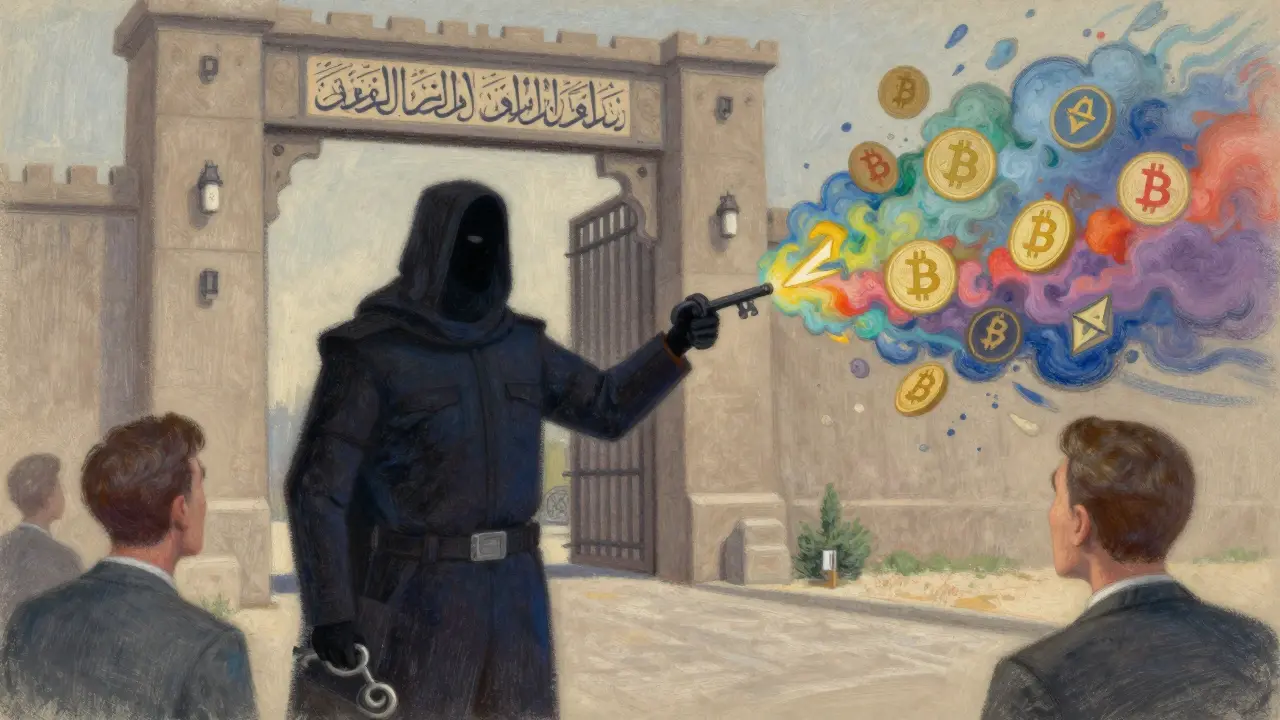
If you are a bank executive or a fintech operator looking to expand into the Middle East, the situation in Saudi Arabia is not just confusing-it is dangerous. You might hear rumors that the Kingdom is secretly embracing blockchain while publicly frowning on it. The reality is sharper: for traditional financial institutions, dealing with retail cryptocurrencies like Bitcoin or Ethereum is effectively prohibited. Yet, simultaneously, the central bank is building one of the world’s most advanced digital currency infrastructures. This dual track creates a minefield where one wrong step can lead to legal action, while missing out on institutional innovation leaves you behind.
As of mid-2026, the regulatory stance remains rigid for public-facing crypto services but increasingly sophisticated for backend financial technology. Understanding this distinction is the difference between compliance and catastrophe. Here is exactly what the warnings mean, who issued them, and how the landscape has evolved since the initial bans.
The Core Warning: Why Banks Are Barred from Crypto
The prohibition isn't a vague suggestion; it is a series of explicit directives. The primary regulator, SAMA (Saudi Arabian Monetary Authority), has made its position clear since 2017. SAMA views virtual currencies as high-risk assets that lack intrinsic value and pose significant threats to financial stability and monetary policy.
In December 2018, a coalition of regulators-including SAMA, the Capital Market Authority (CMA), and the General Authority of Insurance-issued a joint statement declaring that virtual currencies are "illegal and unlicensed" within the Kingdom. This wasn't just advice for individual investors. It was a direct order to licensed entities. Any financial institution facilitating the trading, exchange, or custody of these assets faces severe penalties. The Ministry of Finance reinforced this in 2019, stating that cryptocurrencies are neither legally recognized nor regulated by any official entity.
Why such harshness? Two main drivers:
- Monetary Sovereignty: SAMA fears that widespread adoption of decentralized currencies could undermine the peg of the Saudi Riyal to the US Dollar.
- Financial Crime Risks: Regulators worry about money laundering and terrorist financing through opaque digital channels, despite global AML standards evolving to cover crypto.
For a bank manager, this means your compliance team must block any transaction involving known crypto exchanges or wallets. There is no gray area for retail services. If your platform allows users to buy Bitcoin using their Saudi bank account, you are violating SAMA’s directives.
The Institutional Exception: Project Aber and Tokenization
Here is where the narrative gets complex. While retail crypto is banned, Saudi Arabia is aggressively pursuing blockchain technology at an institutional level. This is not a contradiction; it is a strategic separation of concerns. The government wants the efficiency of distributed ledger technology without the volatility and anonymity of decentralized coins.
The flagship initiative is Project Aber. Launched in 2019 in partnership with the UAE’s Central Bank Digital Currency project (khEWA), Project Aber explores the use of a Central Bank Digital Currency (CBDC) for cross-border payments. Unlike Bitcoin, which operates outside state control, a CBDC is issued and backed by the central bank. It offers instant settlement, lower costs, and full transparency for regulators.
SAMA has actively invited major global players like Goldman Sachs and Rothschild to participate in tokenization pilots. These projects do not involve trading speculative tokens. Instead, they focus on asset tokenization-converting real-world assets like government bonds, trade finance instruments, or real estate deeds into digital tokens on a private blockchain. This makes assets easier to trade, more liquid, and fully traceable.
| Feature | Retail Cryptocurrencies (BTC, ETH) | Institutional Blockchain (Project Aber) |
|---|---|---|
| Legal Status | Illegal / Unlicensed | Permitted under strict supervision |
| Regulatory Body | Banned by SAMA/CMA | Supported by SAMA |
| Primary Use Case | Speculation, P2P transfers | Cross-border settlements, Asset tokenization |
| Anonymity | Pseudonymous (High Risk) | Fully Identifiable (KYC/AML Compliant) |
| Access for Banks | Prohibited | Encouraged (for approved pilots) |
This distinction is critical. If your business model involves helping retail customers trade Bitcoin, you are blocked. If your proposal involves helping SAMA digitize interbank settlements using permissioned ledgers, you are welcome. The key differentiator is control. Does the state have oversight? If yes, it’s likely acceptable. If no, it’s illegal.

The Grassroots Reality: Youth Adoption vs. Official Stance
Despite the ironclad rules for banks, the ground reality tells a different story. Saudi Arabia has one of the youngest populations in the world, with over 63% of citizens under the age of 35. This demographic is digitally native and globally connected. According to analyses from the Carnegie Endowment for International Peace (2025), Saudi Arabia is the region’s second-largest and fastest-growing crypto market by volume.
How is this possible if it’s illegal? Most retail activity happens offshore. Saudis use international exchanges based in Dubai, Europe, or Asia. They bypass local banking restrictions by using peer-to-peer (P2P) networks or cash-based on-ramps. This creates a tension for regulators. They cannot easily stop individuals from holding digital assets on foreign platforms, but they can-and do-punish local intermediaries who facilitate these transactions.
This grassroots demand puts pressure on the system. As more young professionals seek exposure to digital assets, the gap between regulation and behavior widens. However, SAMA has shown little sign of softening its stance on retail access. Instead, they are doubling down on education campaigns warning citizens about scams and volatility. The message remains consistent: protect yourself, because the state will not.
Sharia Compliance: The Religious Dimension
A unique factor in Saudi regulation is Sharia law. Traditional Islamic finance prohibits Riba (interest) and Gharar (excessive uncertainty). Many scholars argue that cryptocurrencies fail both tests. Their price volatility represents excessive uncertainty, and their lack of intrinsic backing makes them suspect.
While some independent religious leaders have issued fatwas suggesting certain crypto activities might be permissible if structured correctly, the official state position leans conservative. The 2018 ban cited Sharia-related concerns alongside financial risks. For financial institutions, this adds another layer of complexity. Even if a regulatory loophole existed, offering a product that conflicts with prevailing religious interpretations could damage brand reputation and trust.
However, tokenized assets that represent real economic value-like a tokenized share of a halal-compliant company-may navigate these hurdles more easily. This is why SAMA favors asset-backed tokenization over speculative coins. It aligns technological innovation with religious and financial prudence.

What This Means for Your Business Strategy
If you are planning to enter the Saudi market, here is your actionable checklist:
- Do Not Offer Retail Crypto Services: Avoid listing Bitcoin, Ethereum, or other altcoins for trading or custody. Assume any service facilitating this is non-compliant.
- Engage with SAMA Early: If you have a blockchain solution for B2B efficiency, reach out to SAMA’s innovation hub. Focus on use cases like supply chain transparency, smart contracts for trade finance, or CBDC integration.
- Implement Strict KYC/AML: Even if you don’t touch crypto, ensure your systems can detect and block transactions linked to known crypto addresses. The Anti-Money Laundering Law (Royal Decree No. M/20) covers "intangible assets," giving regulators broad powers to investigate suspicious flows.
- Monitor Regulatory Updates: The landscape is static on paper but dynamic in practice. Watch for announcements regarding Project Aber’s expansion or new CMA guidelines on digital assets. As of 2026, no comprehensive crypto law exists, so guidance comes via circulars and warnings.
The era of wild west crypto is over in Saudi Arabia. The future is controlled, institutional, and integrated. Align your strategy accordingly, or stay out entirely.
Frequently Asked Questions
Is Bitcoin legal in Saudi Arabia?
Bitcoin is not explicitly criminalized for personal ownership, but it is considered "illegal and unlicensed" for commercial use. Financial institutions are strictly prohibited from facilitating Bitcoin transactions. Individuals can hold it, but they do so at their own risk with no legal recourse if issues arise.
Can banks in Saudi Arabia offer crypto trading services?
No. SAMA and other regulators have issued clear warnings prohibiting licensed financial institutions from engaging in cryptocurrency trading, exchange, or custody services. Doing so violates current directives and risks license revocation.
What is Project Aber?
Project Aber is a joint initiative between Saudi Arabia’s SAMA and the UAE’s Central Bank to develop a Central Bank Digital Currency (CBDC). It focuses on using blockchain technology for secure, fast, and transparent cross-border payments between institutions, distinct from retail cryptocurrencies.
Why does Saudi Arabia ban crypto but support blockchain?
The government distinguishes between the technology (blockchain) and the asset class (cryptocurrency). Blockchain offers efficiency and transparency for financial systems, which SAMA supports. Cryptocurrencies are viewed as volatile, unregulated, and risky for monetary stability, leading to their restriction.
Are there any exceptions for crypto investments in Saudi Arabia?
There are no broad exceptions for retail investors. However, institutional players may engage in tokenization projects under strict regulatory supervision. These involve converting real-world assets into digital tokens on permissioned blockchains, not trading speculative coins.