
Asset Forfeiture and Crypto Seizures by Country: Who’s Seizing What and Why
Jonathan Jennings
Turkish lira: How Turkey's Currency Affects Crypto, DeFi, and Global Markets
When the Turkish lira, the official currency of Turkey, which has lost over 90% of its value against the US dollar since 2021 due to unorthodox monetary policy and runaway inflation. Also known as TRY, it’s no longer just a national currency—it’s a warning sign for how fiat collapse drives people toward decentralized alternatives. Millions of Turks now use crypto not as a speculative asset, but as a survival tool. They trade lira for Bitcoin, USDT, and stablecoins to protect savings, pay for imports, or send money abroad. This isn’t theory. It’s daily life for families, small businesses, and freelancers who watched their wages evaporate while prices for bread, fuel, and medicine doubled in months.
The inflation crypto, the trend of using digital assets as a hedge against currency devaluation, especially in countries with unstable fiat systems movement in Turkey is one of the most visible in the world. Exchanges like Paribu and Binance TR saw record traffic as users rushed to convert lira into stablecoins. Even decentralized exchanges like SundaeSwap and Cube Exchange gained users not because they were flashy, but because they didn’t require KYC—something many Turks avoid after seeing banks freeze accounts or demand proof of income just to withdraw their own money. Meanwhile, fiat to crypto, the process of converting traditional government-issued currency into digital assets, often as a response to economic instability became a routine transaction, not a niche activity. Airdrops like WifeDoge and NUUM started drawing attention in Turkish Telegram groups because they offered free tokens—no bank account needed. And when OFAC sanctions hit Russian exchanges, Turkish traders quietly shifted to platforms with no compliance checks, making Turkey a hotspot for cross-border crypto flows.
What you’ll find in these posts isn’t just about crypto prices. It’s about how people adapt when the system fails. You’ll read about exchanges that work in Turkey (and the ones that don’t), how local traders avoid scams, why running a node matters when banks won’t let you move money, and how DeFi became the only real banking option for many. This isn’t a speculative market. It’s a lifeline. And what’s happening in Turkey isn’t an outlier—it’s a preview of what could happen elsewhere if trust in central banks keeps eroding.
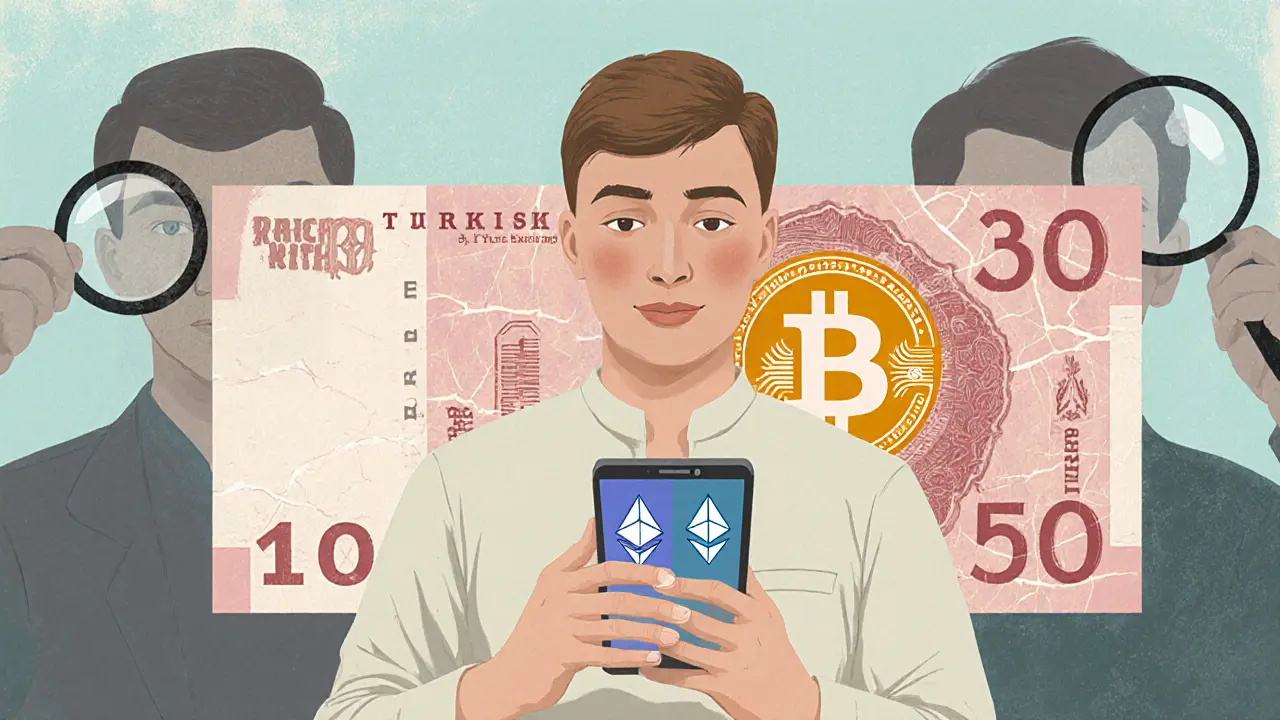
Turkey allows crypto trading but bans payments with digital assets. New 2025 rules require heavy licensing, mandatory KYC, and give authorities power to freeze accounts. Learn how this affects traders and the future of crypto in Turkey.
Jonathan Jennings Nov 19, 2025