

Vietnam's New Crypto Licensing Framework: What You Need to Know

For the average trader or business owner, this means the era of "wild west" crypto in Vietnam is ending. We are moving toward a system where security is guaranteed by massive capital reserves, but at the cost of the diversity and innovation that made Vietnam a global leader in blockchain adoption. If you're operating in this space, you're no longer looking at a suggestion-you're looking at a mandatory blueprint for survival.
The Heavy Cost of Admission: Capital and Ownership
The most striking part of the new framework is the financial barrier. To get a license from the Ministry of Finance, an exchange must hold a minimum charter capital of 10 trillion VND (roughly $379 million). To ensure these aren't just shell companies, at least 65% of that capital must come from institutional investors. This is a staggering requirement when you compare it to neighbors like Thailand, where the threshold is significantly lower.
Ownership is also tightly controlled. Foreign investors can only own up to 49% of a licensed exchange. This means the Vietnamese government is ensuring that the keys to the digital economy remain in domestic hands. For global giants looking to enter the market, this 49% cap is a major hurdle, essentially forcing them into joint ventures with local partners rather than allowing full acquisition or independent operation.
| Country | Minimum Capital Requirement | Foreign Ownership Limit | Primary Currency for Trade |
|---|---|---|---|
| Vietnam | 10 trillion VND (~$379M) | Max 49% | VND only |
| Thailand | ~500 million THB (~$13.7M) | More Permissive | Multiple |
| Singapore | Variable (Based on Scope) | Open/Flexible | Multiple |
Operational Guardrails: VND Only and No Fiat-Backed Stablecoins
If you're used to trading in USD or using stablecoins to hedge against volatility, the new rules will be a shock. Under Article 7 of the resolution, all crypto transactions must be conducted exclusively in Vietnamese dong (VND). Direct foreign currency settlements are strictly prohibited. This move is a clear attempt by the State Bank of Vietnam to stop capital flight and maintain tight control over the national currency.
Even more controversial is the ban on assets backed by fiat currencies or securities. This effectively kills the use of traditional stablecoins like USDT or USDC within licensed platforms. Instead, the government requires assets to be backed by "real underlying assets." This is a massive shift, as stablecoins traditionally make up a huge portion of global crypto volume. Platforms will now have to scramble to develop new, government-approved tokenization solutions to fill this gap.

Technical Standards and the NDAChain Integration
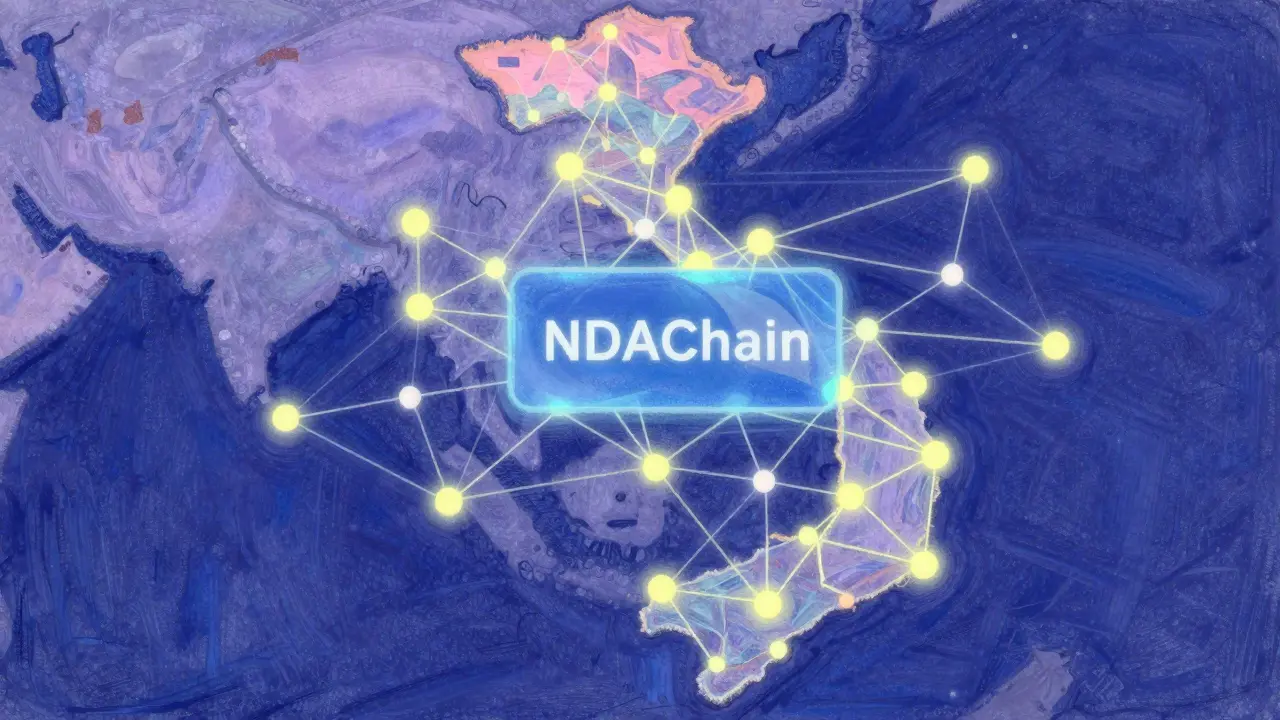
Security isn't just about money; it's about the tech stack. Every licensed exchange must now comply with the National Cryptography Standard (TCVN 13057:2025). This isn't a suggestion-it's a requirement for the blockchain architecture itself. Furthermore, platforms must integrate their systems with NDAChain, the national blockchain platform launched in July 2025.
This integration allows the government to monitor transactions in real-time. Combine this with the mandatory KYC (Know Your Customer) and AML (Anti-Money Laundering) protocols based on the 2023 amendments to the Law on Anti-Money Laundering, and the anonymity of crypto in Vietnam effectively vanishes. While this prevents the "fly-by-night" scams that wiped out thousands of users in previous years, it creates a level of surveillance that might push privacy-conscious users toward offshore, unlicensed platforms.
The Market Shake-up: Who Wins and Who Loses?
The immediate impact is a brutal contraction of the market. While Vietnam has over 21 million active users, only a handful of exchanges-likely between 3 and 5-will be able to meet the 10 trillion VND capital requirement in the first year. We are seeing the birth of a state-sanctioned oligopoly. Large institutional players and well-funded conglomerates win, while the innovative startups that drove Vietnam's early adoption lose.
Consider the plight of the small-scale operator. A small exchange with 5 billion VND in capital might have been profitable and helpful to its users, but under these rules, it is legally obsolete overnight. The World Bank has warned that the six-month grace period following the first license issuance may not be enough for the market to adapt, potentially leaving millions of users stranded on platforms that can no longer legally operate.

Taxation and the Road to 2030
The government isn't just regulating for security; they're regulating for revenue. New tax rules are set to finalize shortly, with capital gains taxed at 0.1% for smaller transactions (under 100 million VND) and 0.3% for larger amounts. This formalizes crypto as a taxable asset class, further integrating it into the national economy.
The bigger picture is Vietnam's goal to have its digital economy make up 20% of its GDP by 2030. By bringing the estimated $1.2 billion crypto market into a regulated fold, the government hopes to contribute an additional 1.2% to 1.8% of the GDP. The pilot program will be reviewed every 12 to 36 months, meaning these strict rules could be loosened if the market proves stable, or tightened if another "crypto winter" hits.
What is the minimum capital needed to open a crypto exchange in Vietnam?
According to Resolution No. 05/2025/NQ-CP, exchanges must have a minimum charter capital of 10 trillion VND (approx. $379 million), with at least 65% coming from institutional investors.
Can I use USDT or other stablecoins on licensed Vietnamese exchanges?
The framework prohibits assets backed by fiat currencies, which includes most common stablecoins. Licensed platforms must use assets backed by real underlying assets and conduct transactions exclusively in Vietnamese dong (VND).
What is the limit on foreign ownership for these exchanges?
Foreign ownership is capped at 49%, meaning at least 51% of the exchange must be Vietnamese-owned and controlled.
How will crypto transactions be taxed in Vietnam?
Capital gains are taxed at 0.1% for transactions under 100 million VND and 0.3% for transactions exceeding that amount.
What happens to users of unlicensed exchanges?
Users of unlicensed platforms may face service disruptions as these platforms are forced to either meet the massive capital requirements or shut down. A six-month grace period exists after the first official license is issued to allow for market transition.






Basically just a way to kill all the small players. Total joke.
Oh sure, "security." That's a funny way of saying they want a total kill-switch on every single transaction.
Integrating everything into a national blockchain just means the government owns your keys and your privacy is dead. It's so obvious they're just prepping for a full social credit system. These "real underlying assets" are probably just a front for state-controlled tokens that they can freeze the moment you think a rebellious thought. Absolutely hilarious that people actually think this is for "investor protection." Wake up, people.
It's definitely a tough climb for the locals, but maybe this pushes everyone to build even more robust systems! I'm sure some really creative joint ventures will pop up to solve that 49% cap issue. Let's see where the innovation goes from here!
The paradox of regulation is that by trying to eliminate risk, you often eliminate the very utility of the asset. Crypto is about decentralization, yet here we have a centralized mandate. It's an ideological clash.
Who actually believes that VND-only trading is going to work? It's a disaster waiting to happen!
I mean, maybe it's about time some of these scammy little exchanges got wiped out anyway. Honestly, most of them were just gambling dens disguised as tech companies. If you can't afford the capital, maybe you shouldn't be playing with people's money, right?
The liquidity constraints here are going to be significant. Moving to a VND-only settlement layer while banning fiat-backed stablecoins creates a massive friction point for arbitrage. We're looking at a highly fragmented liquidity pool that will likely increase slippage for any sizable trade. The integration with NDAChain is a standard regulatory move for real-time auditing, but the technical overhead for smaller firms is just prohibitive.
It's a trap. The 10 trillion VND requirement isn't about money, it's about filtering who is "loyal" enough to the state to get a seat at the table. They want the big conglomerates they can control. This is just the first step toward a total digital curtain.
I really believe that we can find a way to make this work for everyone if we just stay positive and keep talking to each other. It is such a fascinating time to see how a country like Vietnam, which has such a rich and vibrant culture and a people who are so hardworking and tech-savvy, navigates these new digital waters. Even though the rules seem really strict and a bit scary for the little guys, maybe it will lead to a new kind of partnership where big companies mentor the smaller ones to help them grow into these new standards. I've always felt that when people come together with a spirit of inclusivity, they can overcome even the most daunting financial hurdles, and I'm just so excited to see how the global community can support Vietnamese entrepreneurs in finding a middle ground that respects the law but keeps the dream of innovation alive for the next generation of builders!
Typical. They try to copy Western regs but make them way more aggressive. The capital requirement is just insane. No wonder people are moving their funds to offshore wallets. It's an absolute joke to expect startups to have 380 million dollars just to exist.
Imagine thinking this is a "framework." It's a fence. A very expensive, state-funded fence designed to keep the peasants out while the elites feast on the 0.3% tax revenue. How quaint!
One must contemplate the ethical imperative of state stability over individual profit. While the financial barrier is steep, the preservation of the national currency is a higher virtue. 🏛️
It's not that bad.
The sheer audacity of this resolution is breathtaking! It's like a financial guillotine falling on the necks of every hopeful coder in Hanoi. I can almost hear the screams of the venture capitalists as their portfolio companies vanish into the void of regulatory impossibility. Truly a tragedy of Shakespearean proportions!
They probably just want the data. Who cares about the money when you can just track every single person via NDAChain? total surveillance state move.
For those wondering about the transition, you really need to look into hardware wallets now. If your exchange can't meet these capital requirements in six months, your funds are at risk. Don't wait for the official license announcement to move your assets.
This is exactly why you stay with a strong national currency and dont let the world just print tokens out of thin air!! My country does things the right way and Vietnam is finally waking up to the fact that you cant just have any random guy with a laptop running a bank. its about national security and pride in the currency which is something people today just dont get because they want everything for free and fast without any real work or real assets backing it up!!
It is truly an honor to witness such a comprehensive effort to bring order to the digital asset space. I am certain that the collaborative spirit of the industry will prevail, and these guidelines will eventually foster a more sustainable and trustworthy ecosystem for all participants. Let us look forward to the synergy between state oversight and technological progress!
I find it absolutely abhorrent that the government is essentially forcing a monopoly. This is not regulation; it is the systematic erasure of competition through financial attrition!
Sure, because government-approved stablecoins always work out so great.
Hope the people there can find a way to keep their tech dreams alive despite the rules
To the entrepreneurs still in the game: don't give up. Pivot to the tokenization of real assets as the law suggests. This is a chance to build something actually tangible.
The lack of imagination in these policies is simply staggering. They've managed to create a system that is both oppressive and inefficient in one fell swoop.
Seen this movie before in other markets. Usually leads to a massive black market.
It's a tough pill to swallow, but maybe it'll stop the scams. I'm hoping the