

Are Crypto Payments Legal in Russia? 2026 Rules and Risks
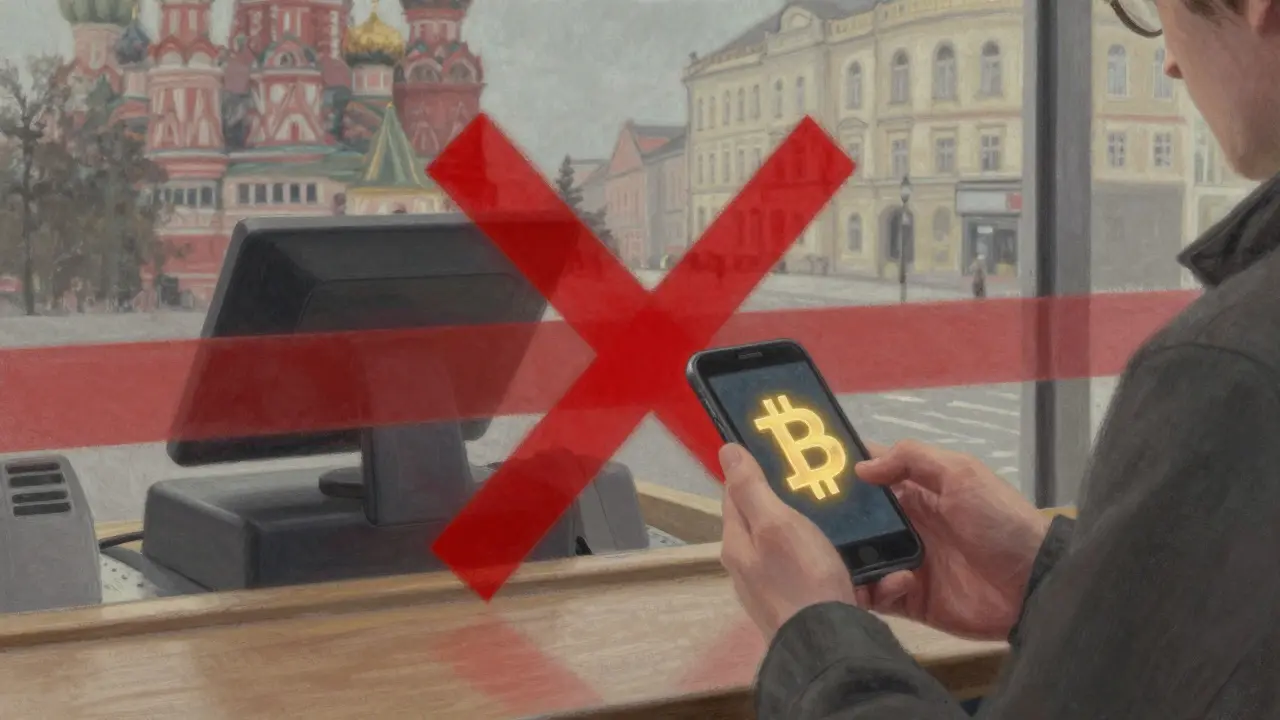
To understand where things stand in 2026, you have to separate owning a digital asset from spending it. Holding coins in a wallet is generally fine, but using them as a currency to buy goods or services within the country is a big no-no. The Central Bank of Russia has spent years fighting against the idea of crypto payments, fearing they could undermine the national currency and fuel the shadow economy. This isn't just a suggestion; it's a strict prohibition that the government is now backing up with some pretty scary penalties.
The High Cost of Breaking the Rules
For a long time, the ban on domestic crypto payments existed on paper, but enforcement was spotty. That changed in 2026. The Russian authorities have stopped playing nice and are now introducing heavy fines to kill off the "grey market" of digital payments. If you're caught using cryptocurrency to pay for something locally, the consequences are immediate and expensive.
According to data from the State Duma's financial market committee, the fines are split based on who is doing the transacting. For an individual, a single violation can cost between 100,000 and 200,000 rubles. If you're a business, the hit is much harder, with fines ranging from 700,000 to 1 million rubles. But the fine isn't the only sting-the government will also confiscate any cryptocurrency used in the illegal payment. Essentially, you lose the money you were spending and then have to pay a massive penalty on top of that.
The Loophole: International Settlements and the ELR
Now, here is where it gets interesting. While domestic payments are banned, the government has created a special "escape valve" called the Experimental Legal Regime (or ELR). This is a regulatory sandbox that allows specific, approved entities to use cryptocurrency for international trade settlements.
Why the double standard? It's all about survival under sanctions. Since Western sanctions have crippled traditional financial channels like SWIFT, Russia needs a way to trade with foreign partners. The ELR allows Russian companies to bypass these restrictions by using digital assets to settle cross-border deals. It's a strategic move: ban crypto at home to protect the ruble, but embrace it abroad to keep the economy moving. For the average person, though, this regime is useless; it's reserved for "highly qualified" investors and large corporations.
| Feature | Domestic Payments (Inside Russia) | International Settlements (Via ELR) |
|---|---|---|
| Legal Status | Explicitly Prohibited | Allowed for approved entities |
| Primary Goal | Protect the Ruble | Bypass Financial Sanctions |
| Risk of Fine | Very High (up to 1M rubles) | Low (if following ELR rules) |
| Accessibility | None (Illegal) | Limited (Qualified Investors/Corps) |

Taxes and the Paper Trail
If you own crypto in Russia, the government doesn't want you to spend it, but they definitely want a cut of your profits. Tax laws are incredibly strict, and the authorities have deployed automated systems to track undisclosed holdings. You can't just hide your gains in a cold wallet and hope for the best.
Every year, individuals must file their cryptocurrency-related income by April 30 and settle their tax bills by July 15. All your activity-whether it's spot trades, staking yields, or even those random airdrops-must be converted into rubles at the official exchange rate to determine the tax. If you're mining, you're exempt from VAT, but the money you make is still subject to income tax.
The penalties for failing to report this income are some of the harshest in the world. If you hide transactions totaling 45 million rubles or more over a couple of years, you're not just looking at a fine. You could face forced labor for up to five years or actual imprisonment from 18 months to five years. Even smaller mistakes can trigger a 50,000 ruble fine and a 40% penalty on the unpaid tax. In short, the state is fine with you getting rich off crypto, as long as they get their share and you don't try to use it to buy a car.
Market Trends: The Paradox of Adoption
You'd think that with all these threats, people would stop using crypto. Surprisingly, the opposite is happening. The Russian Association of Cryptoeconomics, Artificial Intelligence, and Blockchain has noted a steady 15% annual growth in users since 2021. By 2025, the total value of crypto held by Russians was estimated to exceed $40 billion.
This creates a weird paradox. On one hand, Russia's position in the Global Adoption Index has slipped because the lack of legal local exchanges makes it harder to get on-boarded. On the other hand, the actual trade volume facilitated by crypto reached a staggering 1 trillion rubles in 2025. People are using digital assets as a hedge against inflation and as a tool for international movement, even if the legal path is narrow and dangerous.
Since there are no licensed domestic exchanges, most Russians rely on foreign platforms. This adds another layer of risk, as these platforms can freeze accounts based on residency. While some lawmakers are pushing the Central Bank to license local exchanges to bring the activity "into the light," the bank remains stubbornly opposed.
What to Watch Out For in the Future
As we move further into 2026, the tension between the Finance Ministry and the Central Bank will be the thing to watch. The Finance Ministry seems more open to liberalizing the rules to help the economy, while the Central Bank wants a total ban on everything except the ELR.
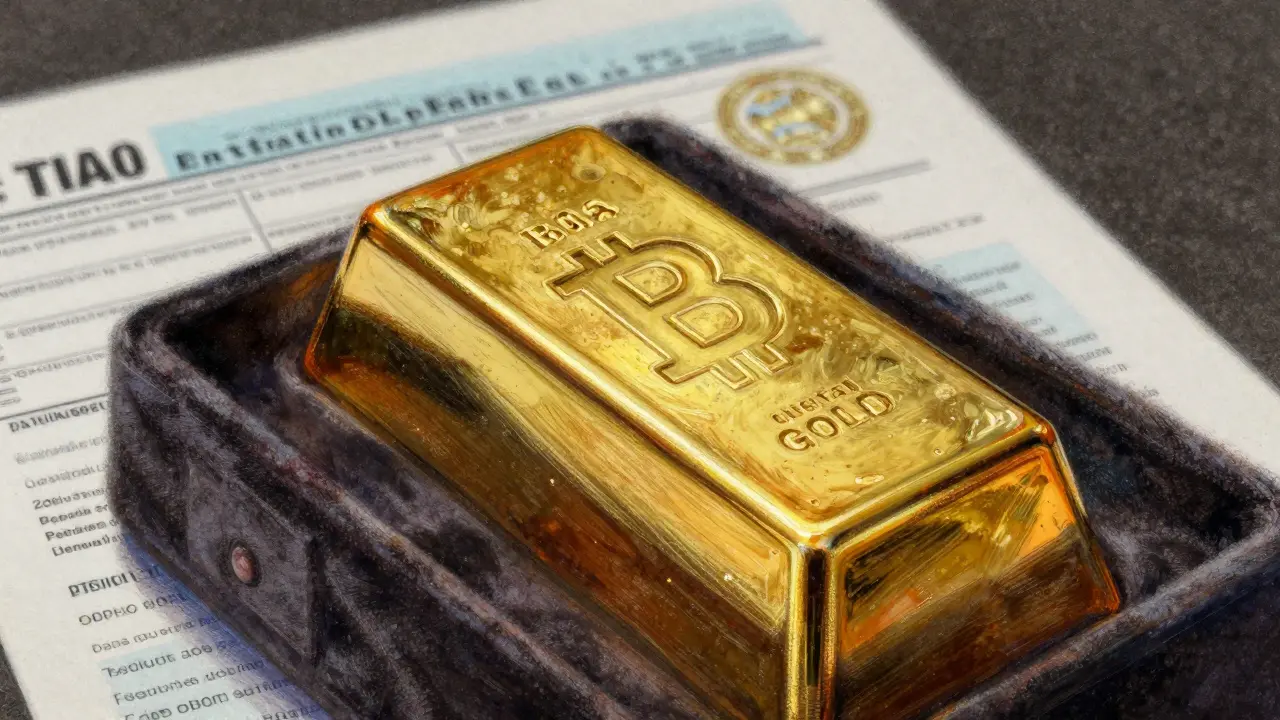
For now, the rule of thumb is simple: Treat cryptocurrency as a digital gold bar-something you hold for investment-not as a digital wallet for daily spending. The moment you try to use it to pay for a service inside the country, you are crossing a line that the Russian state is now monitoring with high-tech precision and heavy fines.
Can I legally own Bitcoin in Russia?
Yes, owning cryptocurrency is not illegal for Russian citizens. The law targets the use of cryptocurrency as a payment method for goods and services, not the possession of the assets themselves as investments.
What happens if I use crypto to pay for something in Russia?
As of 2026, you face severe penalties. Individuals can be fined between 100,000 and 200,000 rubles, and businesses can be fined up to 1 million rubles. Additionally, the authorities will confiscate the cryptocurrency used for the transaction.
What is the Experimental Legal Regime (ELR)?
The ELR is a specialized legal framework that allows certain approved companies to use cryptocurrency for international trade settlements. This is designed to help Russia bypass Western financial sanctions, but it does not allow for domestic payments.
Do I have to pay tax on crypto in Russia?
Yes. All income from crypto activities-including trading, staking, and airdrops-must be reported by April 30 each year. Failure to report significant amounts can lead to massive fines or even imprisonment and forced labor.
Are there any legal crypto exchanges in Russia?
Currently, there are no licensed domestic centralized exchanges due to the Central Bank's opposition. Most users rely on foreign platforms or peer-to-peer (P2P) trading to acquire digital assets.






Absolute joke. The ELR is just a front for the deep state to track global liquidity flows while they pretend to ban it for the plebs. Its all about the CBDC transition, wake up! They want your private keys so they can switch off your wallet the second you stop towing the party line. Total control grid stuff. 🙄
Oh, how convenient that they only allow "highly qualified" investors to use the loophole. I'm sure that has nothing to do with corruption and everything to do with "economic stability." Give me a break. The irony of protecting the ruble while using crypto to dodge sanctions is just... chef's kiss.
OMG the fines are literally insane!! 😱 Imagine losing your coins AND paying a million rubles just for some coffee!! I can't even deal with this level of stress right now, its a total nightmare!!!!
It is profoundly disheartening to observe such a lack of fiscal discipline. One must realize that the state's insistence on the ruble is not merely a legal preference but a moral imperative to maintain societal order. Those who attempt to circumvent these laws by utilizing digital assets for domestic commerce are exhibiting a reckless disregard for the collective well-being and are fundamentally flawed in their understanding of civic duty. It is my firm belief that such individuals deserve the severity of the penalties described, as any deviation from the established monetary law is an affront to the stability of the nation.
I truly believe there is a path toward a harmonious balance between innovation and regulation! While the current rules seem strict, perhaps they are just a stepping stone toward a more integrated system where both the ruble and digital assets can coexist peacefully for the benefit of all citizens. Let's stay positive and hope for a future of collaborative growth!
Imagine thinking a "collaborative growth" is possible with a system that literally threatens you with forced labor if you forget to report an airdrop. How quaint. Only an amateur would think these rules are about "stability" and not just a blatant power grab by an elite circle that's too scared of a decentralized ledger.
Classic government move. Ban it for us, use it for them. ¯\_(ツ)_/¯
I think it's fine. The ruble is better anyway.
The tax deadlines are very strict!!! April 30 is the key date!!!
The Central Bank isn't fighting crypto because of the ruble, they're fighting it because they can't implement backdoors into a decentralized chain. The ELR is just a way for them to launder sanctions-evasion funds through approved shell companies. If you think this is about "economic survival," you've been drinking the Kool-Aid. The real goal is a total surveillance state where every satoshi is tagged to a biometric ID.
It's actually really interesting to see how different countries handle this stuff! Even though the laws in Russia sound scary, the fact that so many people are still using crypto shows that humans have a natural drive for financial freedom and finding new ways to connect with the world, which is honestly such a beautiful thing if you think about it in the long run. I think as long as we keep learning from each other and staying open-minded about how technology can bridge gaps between cultures, we can eventually find a way for everyone to use these tools safely and happily!
Keep your heads up everyone! Just follow the rules and treat it as an investment like the post says. Stay safe out there!
The sheer audacity of the state to threaten forced labor over tax discrepancies is an absolute travesty that demands immediate condemnation. I am utterly appalled by the primitive nature of these penalties in a supposedly modern era!
P2P is the only way there.
Why is the Finance Ministry suddenly playing nice while the Central Bank is still acting like a wall? There has to be a political power struggle happening behind the scenes that this article isn't mentioning.
I'm sure they'll find a compromise eventually. Just gotta be patient.
Just stay in your cold wallets and keep it low key! ❄️🔐 Be smart and stay safe! 🚀
For anyone feeling overwhelmed by these rules, just remember to take it one step at a time and focus on the legal aspects of holding assets rather than the risks of spending them. It's all about managing your risk profile and staying within the boundaries that the law currently provides while waiting for more inclusive regulations to arrive.
My heart is absolutely shattering for the poor souls caught in this bureaucratic nightmare! Imagine the visceral terror of a simple transaction turning into a five-year sentence of forced labor! It's a gothic tragedy of the modern age, a symphony of despair played on a blockchain! The cruelty is just so exquisitely calculated, it's almost artistic in its brutality!