
Smart Grid Management with Blockchain: How Decentralized Ledgers Secure Energy Trading
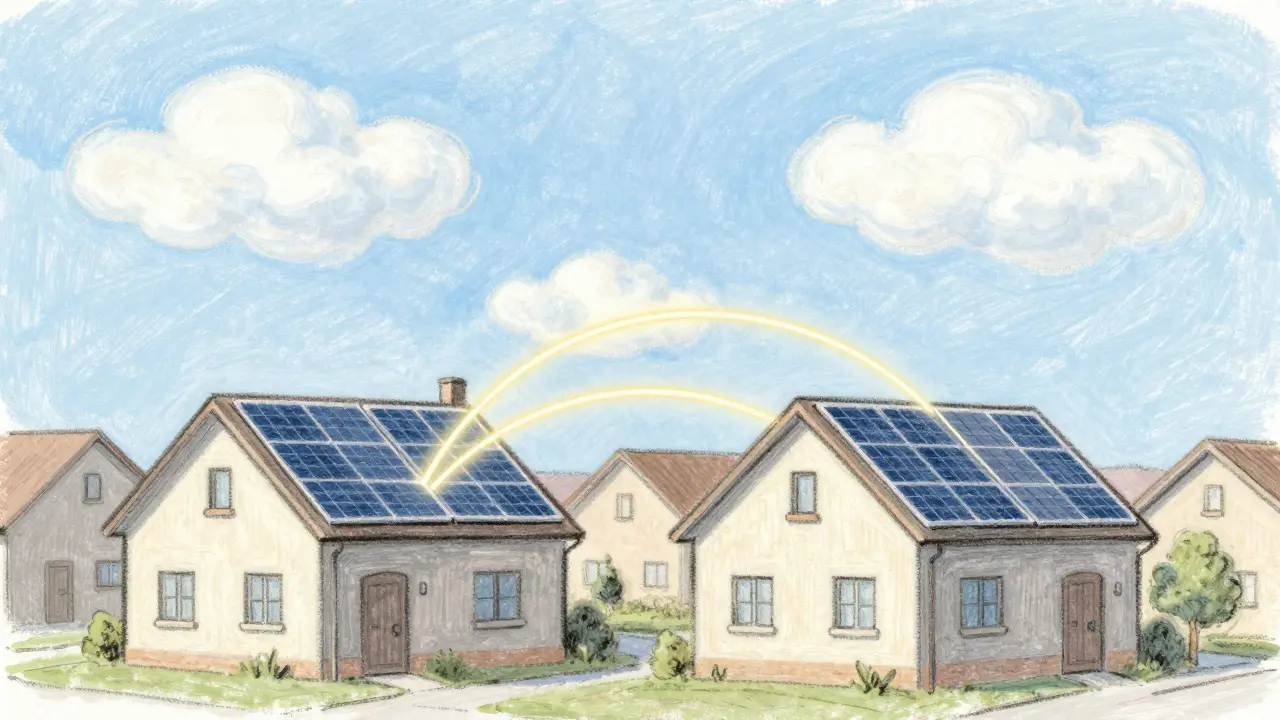
Imagine selling the excess solar power from your roof directly to your neighbor without a utility company taking a cut or managing the ledger. That is the promise of Smart Grid Management with Blockchain, a system that uses distributed ledger technology to handle energy transactions securely and transparently. It sounds like science fiction, but it is already happening in pilot programs across Europe and North America. The traditional electrical grid was built for one-way flow-power plant to home. Today’s grid is messy, decentralized, and vulnerable to cyberattacks. Blockchain offers a way to manage this chaos by creating an immutable record of every kilowatt-hour traded.
The Core Problem: Why Traditional Grids Are Struggling
The old grid infrastructure relies on centralized control systems known as SCADA (Supervisory Control and Data Acquisition). These systems are great for keeping the lights on but terrible at handling the complexity of modern renewable energy sources. When millions of households start generating their own electricity via solar panels or wind turbines, the central utility struggles to track who produced what, when, and where. This leads to inefficiencies and security risks.
Cybersecurity is a major concern. According to IEEE testing in 2021, integrating blockchain solutions can reduce attack surfaces by 63%. Traditional databases are single points of failure; if a hacker breaches the main server, they can manipulate data or launch a blackout. Blockchain distributes this data across many nodes, making it nearly impossible to alter records without detection. This immutability is crucial for maintaining trust in energy markets, especially when dealing with Renewable Energy Certificates (RECs).
How Blockchain Solves Energy Tracking Challenges
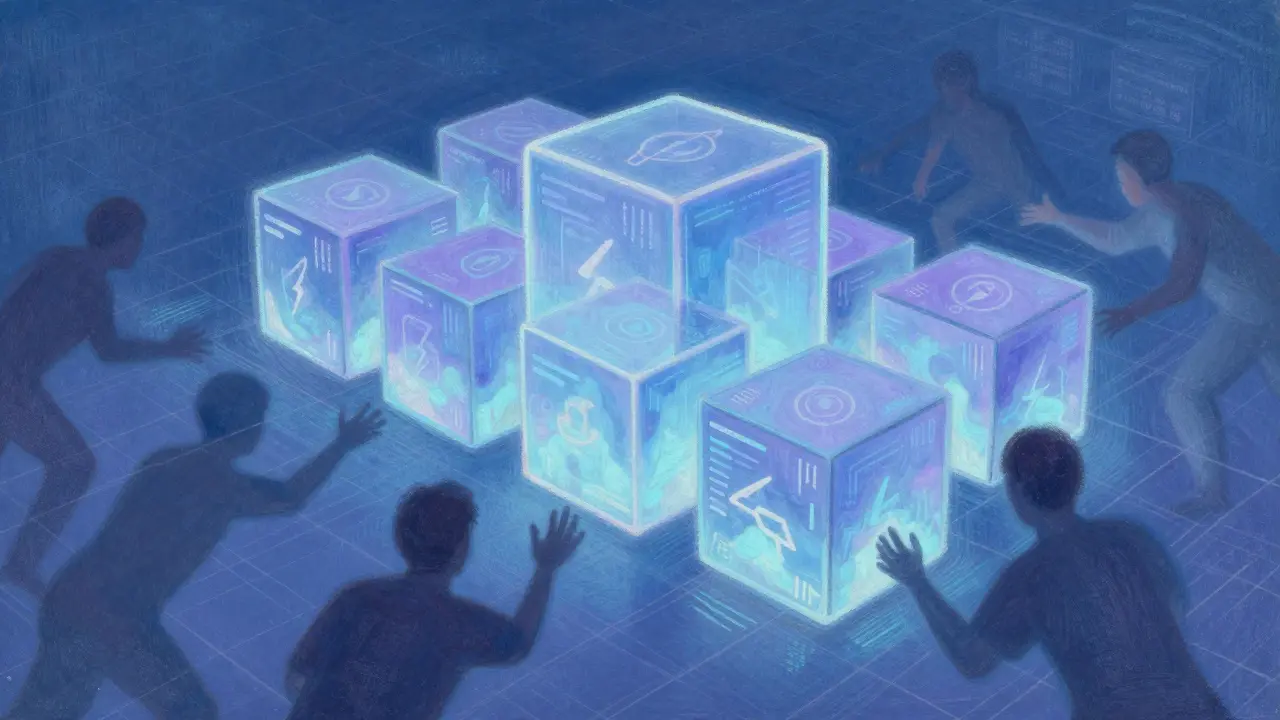
At its heart, blockchain acts as a shared digital notebook that everyone can read but no one can erase. In the context of smart grids, each block contains specific data about an energy transaction. A typical block might include a timestamp, the meter ID of the sender and receiver, the amount of energy transferred, the price agreed upon, and cryptographic signatures verifying the authenticity of the trade.
- Meter ID: Identifies the unique smart meter involved (usually 32 bytes).
- Energy Amount: Records the exact kilowatt-hours exchanged (8 bytes).
- Price: Captures the agreed rate per unit (8 bytes).
- Sender/Receiver Addresses: Digital wallets linked to physical meters (64 bytes each).
- Cryptographic Signatures: Ensures the transaction was authorized by both parties (64 bytes).
This structure ensures that every unit of energy has a verifiable history. Jesse Morris, Principal at the Rocky Mountain Institute, noted that blockchain provides "crypto identity and time stamp, with geolocation" for each energy unit. This prevents double-counting, a significant issue in renewable energy markets where certificates were previously sold multiple times. RMI identified a $400 million annual verification gap due to these errors, which blockchain eliminates by providing a single source of truth.
Permissioned vs. Public Blockchains in Energy
You might assume Bitcoin or Ethereum would power the grid, but that isn’t the case. Public blockchains are too slow and expensive for real-time energy management. Instead, utilities use permissioned blockchains, where access is restricted to verified participants. Hyperledger Fabric is a modular framework for distributed ledger solutions underpinned by a pluggable architecture and composable model of collaboration among organizations in complex ecosystems. It dominates the sector, used in 68% of documented smart grid projects according to IET 2022 analysis.
| Platform | Transaction Speed (TPS) | Privacy Model | Primary Use Case |
|---|---|---|---|
| Hyperledger Fabric | 100-500 TPS | Permissioned/Private Channels | Utility-scale trading & tracking |
| Ethereum Enterprise | 15-30 TPS | Private Networks | Smart contracts for RECs |
| Bitcoin | 7 TPS | Public/Anonymous | Not suitable for grid ops |
Hyperledger Fabric handles 100 to 500 transactions per second (TPS), which is significantly faster than Bitcoin’s 7 TPS or Ethereum’s 15-30 TPS. However, even this speed falls short of the 1,000+ TPS required for high-frequency operational control. This limitation means blockchain is best suited for financial settlements and certificate tracking rather than real-time grid stability adjustments.
Real-World Success Stories and Limitations
The Brooklyn Microgrid project serves as the most famous example of peer-to-peer energy trading. Launched in 2016, it allowed residents to buy and sell local solar power using the LO3 Energy platform. Participants reported 92% satisfaction with transaction transparency. The system achieved 98.7% transaction accuracy compared to 89.3% in conventional systems, and settlement times dropped from 24-48 hours to under five minutes.
However, it wasn’t all smooth sailing. Sixty-eight percent of users complained about the mobile app interface complexity. One user noted that while they loved seeing where their solar power went, the three-step verification for each transaction became tedious. This highlights a key challenge: user experience. If the technology is too hard to use, adoption will stall.
In Germany, TenneT partnered with Sonnen for a larger-scale pilot. They processed 1.2 million transactions in 2021 with 99.2% settlement accuracy. Their Head of Innovation reported a 40% reduction in reconciliation staff time. Yet, the initial integration took 14 months and required 27 specialized developers. This underscores the high barrier to entry for utilities looking to implement blockchain.
Implementation Hurdles: Latency and Legacy Systems
Integrating blockchain into existing infrastructure is not plug-and-play. Most utilities rely on legacy SCADA systems installed decades ago. UK Power Networks spent £280,000 on blockchain integration only to discover their 2015 smart meters couldn’t handle the necessary cryptographic signatures. This incompatibility is the primary barrier cited by 57% of surveyed utilities in an IHS Markit 2022 study.
Latency is another critical issue. Blockchain adds 15-25 milliseconds of latency per transaction. For sub-second grid frequency regulation, this delay is unacceptable. Dr. Jianying Zhou of Singapore University of Technology argued that "the computational overhead of blockchain makes it impractical for real-time grid control applications." Consequently, blockchain is currently limited to customer-facing applications like billing and trading, rather than core operational control.
The Role of the Energy Web Foundation
The Energy Web Foundation (EWF) is a non-profit organization dedicated to advancing the global energy transition through open-source software and standards. Co-founded in 2017 by the Rocky Mountain Institute and Grid Singularity, EWF has become the primary driver of blockchain implementation in energy. They developed the EWF Chain, which incorporates zero-knowledge proofs to allow privacy-preserving transactions while maintaining auditability.
EWF claims their technology reduces energy trading settlement costs by 83% and increases market participation by small producers by 217%. While independent verification of these figures remains limited, their influence is undeniable. They published Technical Specification 62939 in February 2023, establishing the first international standards for blockchain in smart grids. As of early 2023, there were only 1,200 certified Energy Web Developers globally, highlighting the severe talent shortage in this niche field.
Future Outlook: Niche Tool or Mainstream Standard?
The future of smart grid management with blockchain is nuanced. Gartner predicts that 75% of blockchain smart grid pilots will fail to scale beyond proof-of-concept by 2025 due to interoperability challenges. However, they also forecast that blockchain will underpin 25% of distributed energy transactions by 2027. The Electric Power Research Institute concluded in 2023 that blockchain’s role will remain niche, addressing specific transactional problems rather than replacing core grid control systems.
Investment is growing, with global spending reaching $1.34 billion in 2022, up from $87 million in 2018. European utilities lead the charge, accounting for 43% of global implementations. Regulatory frameworks are catching up, with the EU’s MiCA framework establishing requirements for energy blockchain applications. For now, blockchain is a powerful tool for securing transactions and enabling new energy markets, but it is not a magic bullet for all grid management issues.
Can blockchain replace traditional SCADA systems?
No, blockchain cannot fully replace SCADA systems for real-time grid operations. SCADA systems respond in milliseconds, whereas blockchain introduces latency (15-25ms per transaction) that is too slow for sub-second grid stability controls. Blockchain is best used for financial settlements, certificate tracking, and peer-to-peer trading, not for immediate physical grid management.
Which blockchain platform is best for smart grids?
Hyperledger Fabric is currently the dominant platform, used in 68% of documented smart grid projects. It offers higher transaction throughput (100-500 TPS) and better privacy features through permissioned channels compared to public blockchains like Bitcoin or Ethereum. The Energy Web Foundation also promotes its own EWF Chain for energy-specific applications.
What are the main benefits of using blockchain in energy trading?
The main benefits include enhanced security against cyberattacks, elimination of double-counting for renewable energy certificates, reduced settlement times (from days to minutes), and lower transaction costs. It also enables true peer-to-peer energy trading without central intermediaries, allowing consumers to monetize their excess renewable energy.
Why do smart grid blockchain projects often fail?
Common reasons for failure include incompatibility with legacy meter infrastructure, high implementation costs, lack of skilled developers, and poor user experience. Many pilots struggle to scale because they cannot integrate seamlessly with existing utility systems or provide a simple enough interface for everyday consumers.
Is peer-to-peer energy trading legal?
Legality varies by region. In the US, the Federal Energy Regulatory Commission issued Framework Order No. 881 permitting blockchain-based transactive energy, provided it meets reliability standards. The EU’s MiCA framework also establishes guidelines for energy blockchain applications. Always check local regulations before participating in P2P energy markets.