

Birich Crypto Exchange Review: Safety, Features, and Red Flags for 2026

Have you ever stumbled upon a new cryptocurrency platform that promises high leverage and global access, yet feels strangely quiet? That is exactly the vibe surrounding Birich, a cryptocurrency derivatives trading platform serving over 100 countries. In the crowded world of digital assets, silence can be louder than marketing noise. When a major exchange launches, it usually comes with fanfare, partnerships, and clear documentation. Birich, however, operates in the shadows of limited public data.
If you are looking to trade futures or perpetual swaps on Birich, you need to know what you are getting into. This review cuts through the lack of information to give you a realistic picture of the platform's safety, features, and suitability for your portfolio. We will look at the facts, highlight the missing pieces, and help you decide if this obscure platform is worth your risk.
What Is Birich Exchange?
Birich positions itself as a provider of secure cryptocurrency derivatives trading services. Unlike spot exchanges where you buy and hold Bitcoin or Ethereum, derivatives platforms allow you to bet on price movements without owning the underlying asset. This includes futures contracts and perpetual swaps, which often come with leverage.
The platform claims to operate in more than 100 jurisdictions. This broad accessibility suggests they are targeting a global audience, likely including regions where major regulated exchanges might be restricted. However, "global" does not mean "regulated everywhere." In fact, the lack of specific licensing details is one of the first red flags for cautious traders.
Here is what we know about the core identity of the platform:
- Type: Derivatives-focused cryptocurrency exchange.
- Primary Offering: Futures and perpetual swap trading.
- Reach: Claims service in 100+ countries and territories.
- Spot Trading: Not prominently featured; focus is on derivatives.
While many users seek out smaller exchanges for lower competition or unique pairs, Birich does not advertise unique altcoin listings. Instead, it appears to compete directly with established giants like Bybit, BitMEX, and Deribit, but with significantly less brand recognition.
Safety and Security: The Biggest Concern
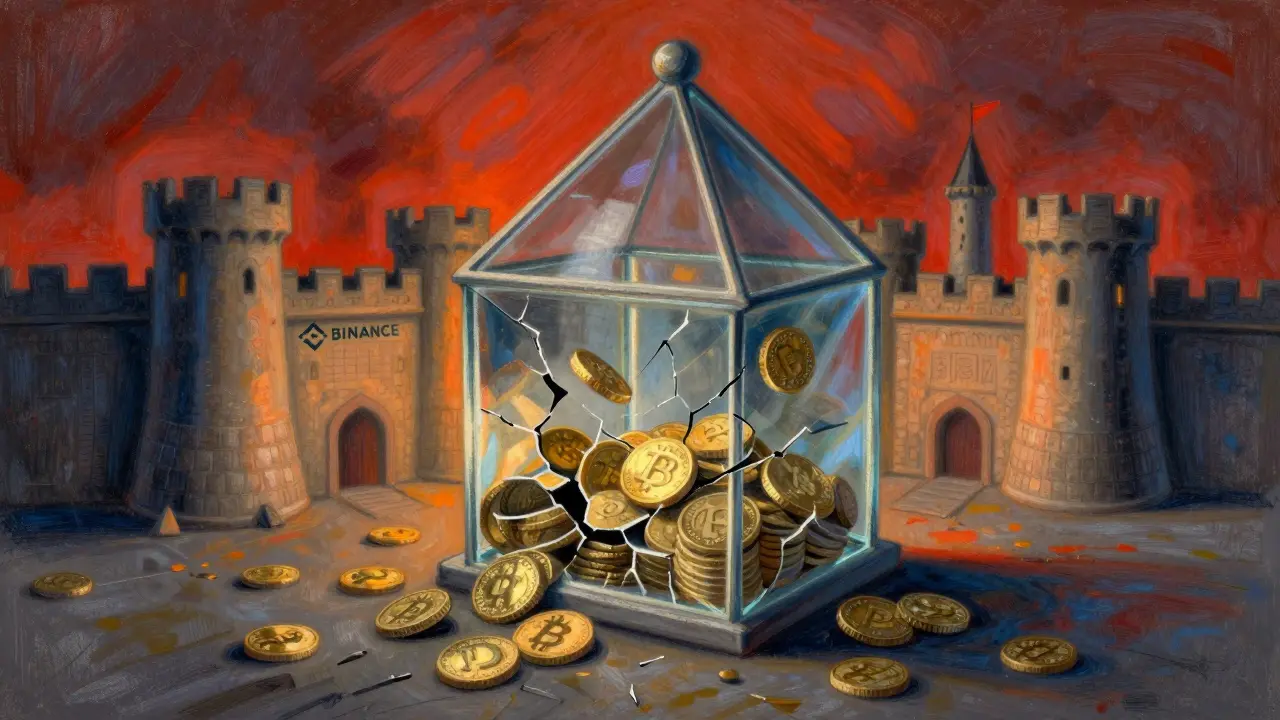
When dealing with financial platforms, security is non-negotiable. You are handing over private keys or fiat currency, so trust must be earned through transparency. Unfortunately, Birich struggles here.
There are no publicly available third-party security audit reports for Birich. Major exchanges regularly publish audits from firms like CertiK, SlowMist, or Trail of Bits to prove their smart contracts and infrastructure are secure. Birich has not disclosed such documents. Without these audits, you have no independent verification that their code is free from critical vulnerabilities.
Furthermore, details about their cold storage practices are scarce. Do they keep 95% of user funds in offline wallets? What insurance coverage do they have against hacks? These are standard questions for any reputable exchange, and Birich provides no clear answers in public sources.
| Security Feature | Birich Status | Industry Standard (e.g., Binance, Bybit) |
|---|---|---|
| Third-Party Audits | Not Publicly Available | Regularly Published |
| Cold Storage Details | Unspecified | Clearly Documented |
| Proof of Reserves | Not Found | Mandatory Monthly/Quarterly |
| Regulatory Licensing | Unclear / Unverified | Licensed in Multiple Jurisdictions |
| Two-Factor Authentication | Presumed (Standard) | Required |
The absence of Proof of Reserves (PoR) is particularly worrying. After the collapse of FTX in 2022, PoR became the baseline for trust. It proves that the exchange actually holds the assets it claims to manage. If Birich does not provide regular PoR attestations, you cannot verify if your funds are backed 1:1.
Fees, Trading Costs, and Leverage
Derivatives trading lives and dies by fees. High leverage amplifies profits, but it also amplifies costs. Every trade incurs maker and taker fees. Maker fees apply when you add liquidity to the order book (limit orders), while taker fees apply when you remove liquidity (market orders).
Specific fee structures for Birich are not detailed in public records. This is a significant drawback. On transparent platforms, you can calculate your break-even point before placing a trade. With Birich, you might face hidden spreads or unexpected withdrawal fees.
Typically, competitive derivatives exchanges offer:
- Maker Fees: Between 0.01% and 0.02%.
- Taker Fees: Between 0.04% and 0.06%.
- Funding Rates: Variable rates paid between long and short positions every 8 hours.
If Birich charges higher-than-average fees, your profitability will suffer quickly, especially if you are scalping or day trading. Without clear disclosure, assume the worst-case scenario: higher fees and potential slippage during volatile market moves.
User Experience and Platform Interface
A clean, intuitive interface is crucial for derivatives trading. One wrong click can liquidate your position. While detailed screenshots or UI reviews of Birich are rare, user expectations for modern exchanges are high.
Key features you should expect from any professional derivatives platform include:
- Advanced Charting: Integration with TradingView for technical analysis.
- Order Types: Limit, Market, Stop-Limit, Take-Profit, and Trailing Stop orders.
- Risk Management Tools: Easy-to-set stop-losses and isolated margin modes.
- Mobile App: A responsive app for iOS and Android to monitor trades on the go.
If Birich lacks these tools, it puts inexperienced traders at a severe disadvantage. Derivatives trading requires precision. A clunky interface or lagging execution engine can cost you thousands in seconds. Given the lack of technical specifications in public sources, there is no guarantee that Birich’s infrastructure can handle high-frequency trading or extreme market volatility without downtime.
Regulatory Status and Compliance
The regulatory landscape for crypto in 2026 is stricter than ever. Exchanges operating in the US, EU, UK, and other major markets must comply with Know Your Customer (KYC) and Anti-Money Laundering (AML) laws.
Birich claims to serve over 100 countries, but it does not clearly state which regulatory bodies oversee its operations. Is it licensed by the SEC? The MiCA framework in Europe? Or is it operating in a regulatory gray zone?
Operating without clear licenses means:
- No Legal Recourse: If the platform disappears or freezes your funds, you have little legal power to recover them.
- Higher Risk of Shutdown: Regulators can block access to unlicensed platforms overnight.
- Privacy Trade-offs: To avoid regulation, some platforms may promise anonymity, but this often correlates with higher fraud risk.
For institutional investors or serious retail traders, regulatory compliance is a dealbreaker. Birich’s ambiguity here makes it unsuitable for anyone who values legal protection.

Birich vs. Established Competitors
Why choose Birich when alternatives like Bybit, Binance, or dYdX exist? Let’s compare the value proposition.
Bybit is a leader in derivatives trading, offering deep liquidity, robust security audits, and clear regulatory stances in multiple jurisdictions. Binance remains the largest exchange globally, with unmatched volume and feature sets. Even decentralized options like dYdX offer self-custody benefits.
Birich’s only apparent advantage is obscurity, which might appeal to those seeking to avoid mainstream scrutiny. However, obscurity also means less liquidity. Low liquidity leads to wider bid-ask spreads and slippage, meaning you get a worse price when buying or selling. For derivatives trading, liquidity is king. If the order book is thin, large trades can move the market against you.
Who Should Avoid Birich?
Based on the current lack of transparency, certain groups should steer clear of Birich entirely:
- Beginners: New traders need educational resources, customer support, and clear fee structures. Birich offers none of these visibly.
- Large Capital Investors: If you are moving significant sums, you need Proof of Reserves and insurance. Birich does not provide these assurances.
- Regulated Entities: Businesses requiring tax compliance and auditable trails may find Birich’s opaque structure problematic.
Final Verdict: Proceed with Extreme Caution
In the world of crypto, trust is built on evidence, not promises. Birich presents itself as a secure derivatives platform but fails to provide the fundamental evidence required for trust: security audits, proof of reserves, clear regulatory status, and transparent fee schedules.
While it may function adequately for small, speculative trades, the risks far outweigh the potential rewards for most users. The lack of community feedback and expert reviews further isolates the platform from accountability. Until Birich releases comprehensive documentation and undergoes independent security audits, it remains a high-risk option.
For now, stick to established exchanges with proven track records. Your capital is too valuable to gamble on a platform that hides its inner workings.
Is Birich a legitimate crypto exchange?
Birich appears to be an operational platform for derivatives trading, but its legitimacy is questionable due to the lack of public security audits, proof of reserves, and clear regulatory licensing. Legitimacy in crypto requires transparency, which Birich currently lacks.
Does Birich require KYC?
The specific KYC requirements for Birich are not publicly detailed. However, most derivatives platforms serving international clients require some form of identity verification to comply with anti-money laundering laws. You should expect to provide ID documents upon registration.
What are the fees on Birich?
Birich does not publicly disclose its fee schedule. This is a major red flag. Typically, derivatives exchanges charge maker/taker fees ranging from 0.01% to 0.06%. Without clear information, you risk paying higher-than-average fees.
Can I lose money on Birich due to hacks?
Yes. Without published security audits or insurance funds, users on Birich bear the full risk of platform hacks or internal theft. Reputable exchanges maintain insurance funds to cover losses; Birich’s stance on this is unknown.
How does Birich compare to Bybit or Binance?
Birich lags significantly behind Bybit and Binance in terms of transparency, liquidity, security verification, and regulatory compliance. Bybit and Binance offer proof of reserves, regular audits, and extensive customer support, making them safer choices for derivatives trading.
Is Birich available in my country?
Birich claims to serve over 100 countries, but it does not list restricted jurisdictions. You should check local regulations regarding crypto derivatives trading before signing up, as using an unlicensed platform may violate local laws.
Does Birich have a mobile app?
Information about a dedicated mobile app for Birich is not readily available. Most modern exchanges offer iOS and Android apps, but without official links or store listings, it is unclear if Birich provides a reliable mobile trading experience.
What cryptocurrencies can I trade on Birich?
Birich focuses on derivatives, likely offering futures and perpetual swaps for major coins like Bitcoin (BTC) and Ethereum (ETH). Specific altcoin listings are not documented, limiting visibility into the full range of tradable assets.






Oh wow, you really think silence is a good sign? That's like saying a bank with no doors is secure because it's quiet! 😂 You gotta be kidding me. The lack of transparency here is massive. I mean, come on, where are the proof of reserves? Where are the audits? It's not exactly reassuring to see a platform that operates in the shadows while promising high leverage. We need facts, not vibes. This feels like a setup for a rug pull waiting to happen. Please tell me you're not putting real money into this based on a 'vibe check'.
It's fascinating how we approach trust in digital spaces 🤔. Historically, institutions built trust through visible infrastructure and regulatory compliance. Birich seems to invert this model by relying on obscurity. While innovation often comes from the fringes, financial security requires robust verification. The absence of third-party audits isn't just a missing feature; it's a fundamental breach of the social contract between an exchange and its users. We must ask ourselves: does efficiency outweigh safety?
One might assume that the average reader possesses the intellectual capacity to discern between a legitimate financial instrument and a thinly veiled scam. However, the enthusiasm surrounding such opaque entities suggests a disturbing decline in critical thinking skills among the general populace. It is truly pathetic that anyone would consider trading derivatives on a platform that cannot even provide basic documentation regarding its liquidity or security protocols. How tedious.
Yeah right. Another fancy review for a platform nobody knows. Probably just another way to make quick bucks off gullible idiots who can't read a balance sheet. Save your time and go trade on Binance if you want to keep your money.
i mean i get why people are worried but sometimes new platforms just take time to build up their reputation and get those audits done right? it's not like they said they were hacked or anything so maybe they are just focusing on building the tech first before worrying about all the paperwork stuff which is super boring anyway and honestly who has time to read all those legal terms when you just want to trade bitcoin and make some money quickly without dealing with the usual red tape everywhere these days?
I hear you Ashley but safety is huge. I wouldn't risk my savings on something unverified. Better safe than sorry!
The UI/UX metrics for Birich are non-existent in public benchmarks. Without latency data or order book depth statistics, any claim of 'professional grade' execution is purely speculative. The market microstructure likely suffers from significant slippage due to low liquidity providers. Until they publish their matching engine specs, it's technically inferior to established venues.
Indian traders know better than to trust foreign shady sites. Stick to local regulated exchanges or big global ones. Don't be foolish :P
its kinda scary how many exchanges pop up and then dissapear overnight. i remember one back in 2021 that looked legit but then poof gone. birich feels like that vibe to me honestly. why take the risk when there are plenty of other options out there that actually show their cards?
We must consider the broader implications of decentralization versus centralization in these platforms. The desire for anonymity is understandable yet the lack of accountability creates a vacuum where fraud thrives. One should reflect on whether the potential gains justify the existential risk to one's capital. History shows us that opacity rarely leads to prosperity for the individual investor rather it benefits those who control the hidden mechanisms.
Ugh, everyone is so dramatic about this. Who cares if they have audits? If the trades work, it works. I'm tired of these paranoid comments ruining the fun. Just trade and move on 🙄💅
They are hiding the truth because the government wants to track every penny you spend. Birich is probably operating offshore to protect your privacy from the surveillance state. Wake up sheeple. The lack of KYC details is a feature, not a bug. They are fighting the system while you worry about fees.
That's a bold take but usually, exchanges do require some ID for AML compliance. If they aren't asking, it might mean they aren't registered anywhere, which makes them vulnerable to shutdowns. I'd recommend checking their Terms of Service carefully before depositing anything substantial. Safety first! 👍
I agree with the caution here. It's hard to trust a platform that doesn't share basic info. I prefer sticking to exchanges that have been around longer and have clear customer support channels.
Typical amateur analysis. You're all missing the point. High leverage means high reward, and if you're too scared to use a new platform, you'll never make it in this game. Stop whining about audits and start trading. The weak hands always lose. 📉
This is nonsense. American traders deserve better than this garbage advice. Support domestic platforms or major global ones. Don't let foreign scams trick you. Stay strong and stick to what works.
I wonder if the lack of information is intentional or just poor management. Either way, it raises questions about their long-term viability. I'd love to see a comparison of their uptime statistics against competitors like Bybit.
Actually Bybit has had issues too. Everyone just follows the herd. Maybe Birich is the next big thing and you're all too late to notice. Typical contrarian view ignored.
It is very important to follow regulations properly. I hope they get licensed soon so we can trade safely. Good luck to everyone trying to figure this out typos aside.
Boring article. Nothing new here. Just another reason to avoid obscure exchanges. Move along.
You dare suggest Birich is safe? Absolutely not. This is financial suicide. The audacity of claiming it's 'suitable' for portfolios is laughable. Get your facts straight before posting such dangerous misinformation.
I understand the frustration but let's keep the discussion respectful. We all want to make smart decisions. Listening to different perspectives helps us grow as traders. Let's focus on learning rather than attacking each other.
Hey guys, just wanted to say that while this looks risky, sometimes the best opportunities are hidden gems. Just do your own research and don't invest more than you can afford to lose. Friendly reminder! 😊
Great points everyone. Let's continue to share our experiences and help each other navigate this complex market. Inclusion and education are key to success in crypto.