

Crypto Adoption in India: How the Nation Leads Global Rankings Despite Strict Restrictions
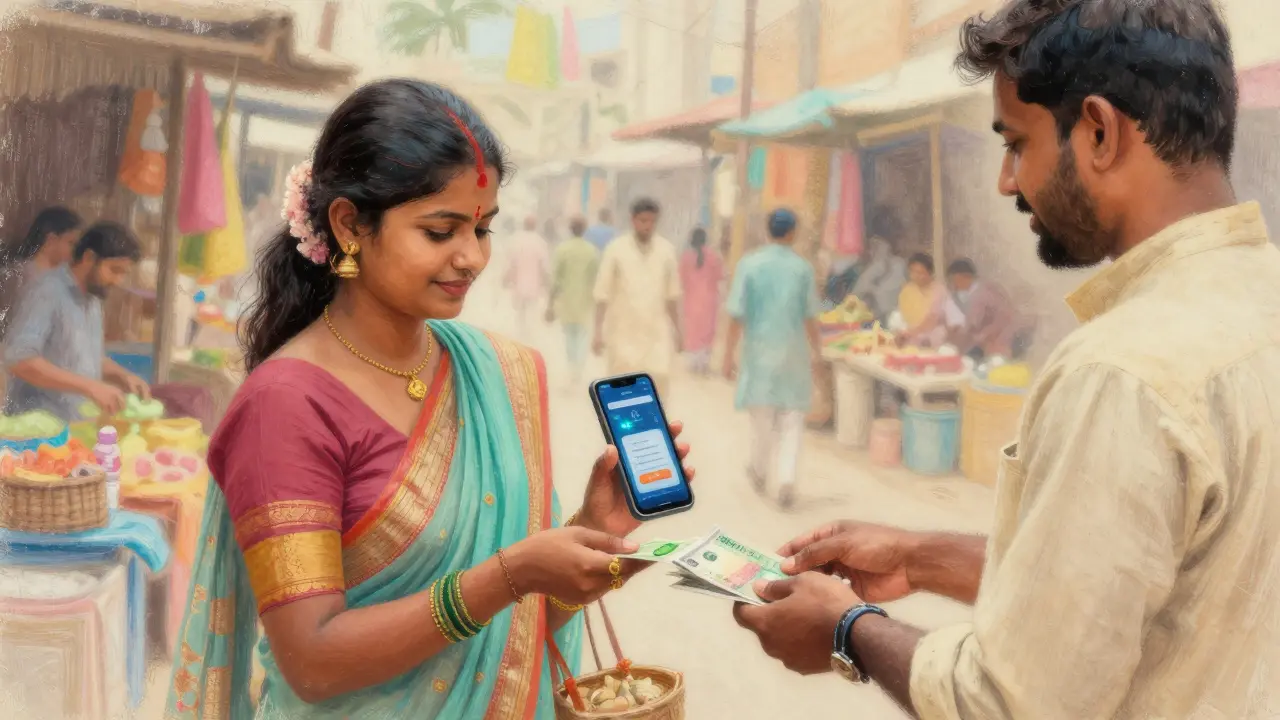
It sounds like a contradiction. You have a country with some of the harshest digital asset tax laws on the planet, yet it just took the number one spot globally for cryptocurrency usage. That is exactly where India stands in mid-2026. According to the latest data from Chainalysis, India has surpassed every other nation in retail, institutional, and decentralized finance (DeFi) adoption. This isn't a fluke; it's a structural shift driven by millions of everyday users who see crypto not as a speculative gamble, but as a practical tool for financial survival and growth.
If you are trying to understand why Indian crypto markets are exploding despite regulatory headwinds, you need to look past the headlines about bans and taxes. The real story lies in how deeply embedded digital payments already are in daily life. When the infrastructure for moving money digitally is seamless, adding another layer of digital currency becomes less of a leap and more of a logical next step.
The Infrastructure Advantage: Why UPI Paved the Way
To understand crypto adoption here, you first have to talk about Unified Payments Interface(UPI). Launched years ago, UPI transformed how Indians handle money. It allowed anyone with a smartphone to send instant payments without needing a traditional bank account or complex wire transfer details. By the time cryptocurrencies entered the mainstream conversation, hundreds of millions of Indians were already comfortable managing their finances entirely on their phones.
This existing comfort level created a unique environment. In many Western countries, people still rely heavily on credit cards or checks. In India, the jump from using UPI for buying groceries to exploring stablecoins for cross-border remittances is much smaller. The friction that usually stops new users-fear of technology-is largely gone. Young students in cities like Bangalore and Hyderabad are coding blockchain applications while small shopkeepers in rural areas use crypto wallets to receive payments from relatives abroad. This widespread familiarity with fintech tools means that when restrictions hit, they didn't stop the behavior; they just pushed it into different channels.
Ranking First Across Every Category
The numbers back up this narrative. In the 2025 Global Crypto Adoption Index released by Chainalysis, India didn't just rank high in one area. It topped the charts in five distinct categories:
- Overall Index Score: Ranked #1 globally.
- Retail Adoption: Highest engagement from individual consumers.
- Centralized Finance (CeFi): Leading volume on exchanges like Binance and local platforms.
- Decentralized Finance (DeFi): Top usage of non-custodial protocols.
- Institutional Adoption: Significant entry from hedge funds and corporate treasuries.
This comprehensive dominance is rare. Usually, a country might lead in retail because of low banking access, or in institutional because of favorable laws. India leads in both. The Asia-Pacific region saw a 69% year-over-year increase in on-chain transaction volume, growing from $1.4 trillion to $2.36 trillion between July 2024 and June 2025. India was the primary engine behind this surge. While North America and Europe had higher absolute volumes due to larger economies, their growth rates lagged significantly at 49% and 42% respectively.

Navigating the Regulatory Maze
Let’s address the elephant in the room: the restrictions. For years, the Indian government has treated cryptocurrency with suspicion. The current tax regime imposes a flat 30% tax on crypto profits, plus a 1% Tax Deducted at Source (TDS) on every transaction. On paper, this makes trading incredibly expensive. If you buy and sell frequently, the TDS alone can eat up your capital, even if you aren't making a profit.
So, why do people keep buying? Because the demand outweighs the cost. For many Indians, especially those earning in rupees but spending in dollars or sending money to family in the US and UK, the exchange rate advantages and speed of crypto outweigh the tax burden. Furthermore, the enforcement of these rules has been uneven. While large exchanges comply strictly, peer-to-peer (P2P) markets have flourished, allowing users to trade directly and often bypass some of the stricter reporting mechanisms.
However, the landscape is shifting. There are credible reports suggesting the government is considering creating a national Bitcoin reserve. This would be a massive pivot, signaling that the state views Bitcoin not just as a risky asset, but as a strategic store of value similar to gold. If implemented, this could legitimize the market further and potentially ease some of the harsher tax interpretations, although no official legislation has passed as of June 2026.
| Country | Overall Rank | Primary Driver | Growth Rate (YoY) |
|---|---|---|---|
| India | 1st | Retail & DeFi | Part of APAC 69% |
| United States | 2nd | Institutional (ETFs) | 49% |
| Pakistan | Top 5 | Remittances | High |
| Vietnam | Top 5 | Retail Trading | High |
The Role of Stablecoins and Remittances
While Bitcoin gets the headlines, stablecoins are the workhorses of Indian crypto adoption. Assets like Tether (USDT) and USD Coin (USDC) dominate daily flows. Why? Because the Indian Rupee has faced volatility over the last few years. Holding dollars in a digital wallet offers a hedge against inflation that traditional savings accounts don't provide.
For freelancers and IT professionals working for global clients, receiving payment in USDC is faster and cheaper than waiting days for SWIFT transfers. Traditional banks often charge hefty fees and take 3-5 business days to process international wires. Crypto transactions settle in minutes, regardless of the day or time. Newer stablecoins like Circle's EURC and PayPal's PYUSD are also gaining traction as institutional infrastructure expands, offering more regulated options for businesses.
Grassroots vs. Institutional Growth
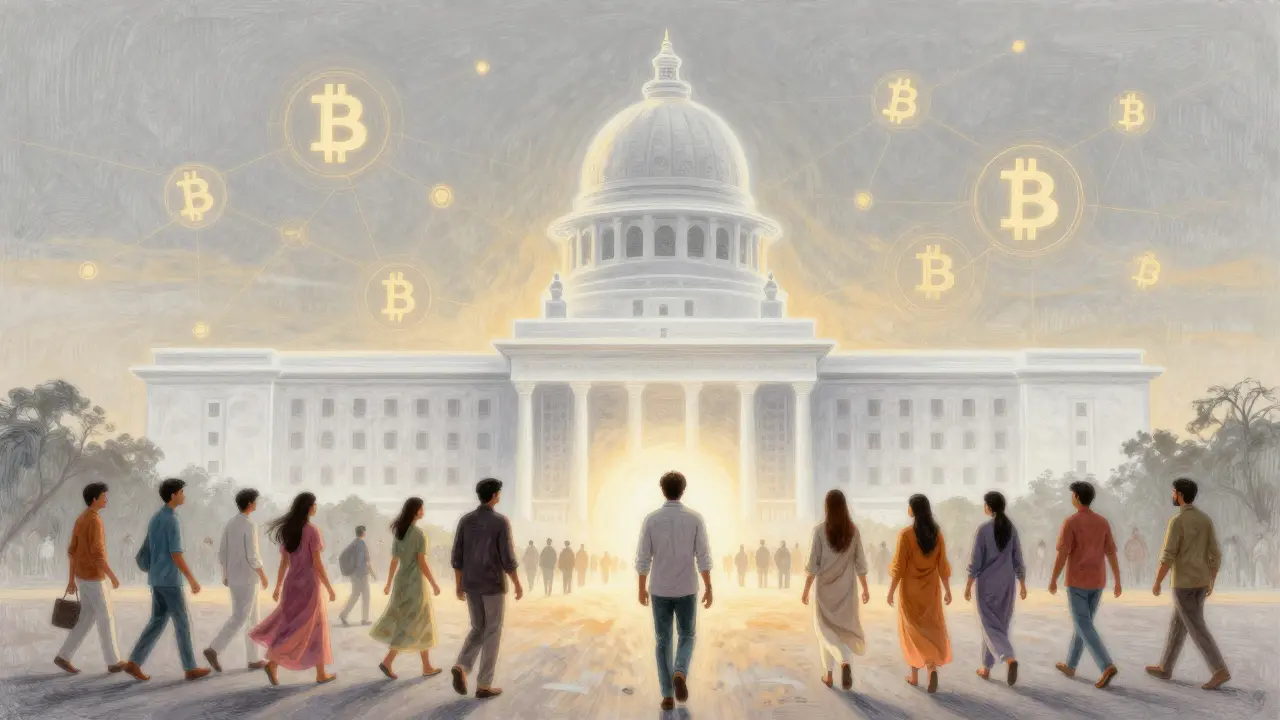
What makes India’s market unique is its dual-engine growth model. Most emerging markets are driven purely by retail investors looking for quick gains. Developed markets like the US are driven by institutions following regulatory approvals. India has both happening simultaneously.
On the grassroots level, you have entire communities using crypto for small-scale income opportunities. Think of college students running Telegram groups to coordinate micro-tasks paid in crypto, or local merchants accepting tokens for goods. This bottom-up pressure creates a resilient user base that doesn't disappear when regulations tighten.
Simultaneously, institutional adoption is accelerating. Hedge funds and family offices are entering the space, attracted by the high yields available in DeFi protocols. Organizations like the Bharat Web3 Association are actively working to normalize cryptocurrency as a legitimate mode of value transfer, lobbying regulators and educating the public. This collaboration between grassroots users and sophisticated investors creates a robust ecosystem that is hard to suppress.
Future Outlook: Will Restrictions Ease?
Looking ahead, the trajectory points toward greater integration rather than isolation. The potential creation of a Bitcoin reserve by the Indian government would be a game-changer. It would signal that the state recognizes the technological merit of blockchain beyond just speculation. Even without a reserve, the sheer volume of activity forces regulators to adapt. You cannot ban what half the economy is using.
We are likely to see more clarity on tax deductions and perhaps specific licenses for crypto businesses, similar to how payment aggregators are regulated today. The goal for the government seems to be control and taxation, not eradication. For users, this means staying informed about compliance requirements is crucial. Ignorance of the 1% TDS rule has led to significant liquidity traps for many traders who couldn't withdraw their funds easily.
As the Asia-Pacific region continues to outpace North America and Europe in growth rates, India remains the bellwether for global trends. Its success proves that strong digital infrastructure and genuine user need can overcome even the most restrictive policy environments. The question is no longer whether crypto will survive in India, but how quickly it will become indistinguishable from traditional banking.
Is cryptocurrency legal in India in 2026?
Yes, cryptocurrency is legal to own and trade in India. However, it is heavily regulated. The government does not recognize it as legal tender (like the Rupee), but it allows private ownership. Users must pay a 30% tax on profits and adhere to a 1% TDS on transactions.
Why is India ranked #1 in crypto adoption despite strict taxes?
India's leadership is driven by its robust digital payment infrastructure (UPI), high demand for remittance services, and a tech-savvy population. The utility of crypto for cross-border payments and inflation hedging outweighs the tax costs for many users, leading to sustained high volume.
What is the impact of the 1% TDS on crypto trading?
The 1% Tax Deducted at Source (TDS) applies to every crypto transaction above a certain threshold. This can significantly reduce liquidity for active traders, as funds are locked until tax returns are filed. It encourages long-term holding over frequent trading.
Are there plans for a Bitcoin reserve in India?
As of mid-2026, there are credible reports and discussions within the government about establishing a Bitcoin reserve. This would mark a significant shift toward recognizing Bitcoin as a strategic asset, though no final legislation has been passed yet.
How does UPI help crypto adoption?
UPI normalized digital payments for millions of Indians. Since users are already comfortable managing money via smartphones and instant transfers, the barrier to entry for crypto wallets and apps is much lower compared to countries reliant on traditional banking methods.




typical western ignorance. you think taxes stop people? lol. we have survived worse than a 30% tax. the system is broken so we fix it ourselves. 🤡
Oh please, do not confuse desperation with innovation. The masses are merely reacting to the devaluation of their currency, not embracing some grand technological paradigm shift as you pretentiously suggest. It is pathetic that you romanticize poverty-driven adoption while ignoring the sheer lack of financial literacy driving these 'retail' numbers. Most of these users are just gambling on leverage because they cannot afford basic healthcare.
There is a profound irony in how resistance breeds creation. When the state tries to contain flow, it only deepens the riverbed. India’s situation reminds me of ancient trade routes that flourished despite imperial edicts against them. The digital rupee may be official, but the soul seeks freedom elsewhere. 🕊️
its really interesting to see how UPI helped this. i agree with the point about infrastructure making it easier for regular people to jump in without fear.
You are completely missing the forest for the trees here. This is not adoption; this is evasion. And frankly, it is disgusting that regulators allow such blatant disregard for fiscal responsibility under the guise of 'innovation.' If you want real growth, you need compliance, not shadow banking networks disguised as DeFi protocols.
I find it inspiring how communities come together to support each other financially when traditional systems fail them. It shows resilience and creativity.
why do you care what indians do with their money anyway? its none of your business. stop projecting your fears onto others. you should worry about your own crumbling infrastructure instead of judging us for finding better ways to move value around
the TDS rule is actually a huge pain point for day traders. most people dont realize they get locked out until they file returns. its a liquidity trap basically. 💸
i heard the P2P markets are getting risky though. lots of scams lately. people need to be more careful then just chasing yields.
It is crucial to understand that the regulatory framework is evolving precisely because of this volume. We cannot ignore the compliance risks associated with high-frequency trading under current tax laws. Users must educate themselves on the implications of TDS before engaging in speculative activities.
HA! Let them rank first in chaos. In America, we have institutions that actually work. This is just another example of why developing nations remain developing-they can’t even regulate their own economy properly. Pathetic.
oh wow, look at you being all superior from across the ocean. maybe if you tried using crypto for remittances instead of complaining about it, youd understand why people use it. sarcasm aside, its pretty cool how tech bridges gaps.
This article is garbage. You fail to mention the environmental impact of proof-of-work chains which many Indian miners still rely on. Also, your data sources are questionable. Do better. 📉
India is eating our lunch in every sector now. First IT services, now crypto. It is infuriating. We need to shut down these offshore exchanges immediately. They are draining wealth from the US economy through arbitrage loopholes that our politicians are too stupid to close.
you guys are so obsessed with control it makes me sick. let the market decide. besides, the US dollar is printing itself into oblivion so who cares about rankings? typical american anxiety. 😒
The potential for a Bitcoin reserve is a massive strategic move. If India executes this correctly, it could redefine global monetary policy. We need to watch this space closely as it develops.
The dual-engine growth model described here is fascinating. It suggests that grassroots adoption can coexist with institutional interest without one necessarily cannibalizing the other, provided the infrastructure supports both layers effectively.
so the jargon heavy part is that CeFi and DeFi are mixing. but simply put, normal people are using apps like Binance while big funds are using smart contracts. its a weird hybrid ecosystem. aggressive expansion indeed.
I believe the key takeaway here is the role of education. As more Indians understand the technology, the reliance on informal channels will decrease, leading to a healthier market structure overall.
Everyone says it's about 'financial survival' but I bet half of it is just FOMO. People love to pretend they're revolutionaries when they're just chasing green candles. Don't buy the hype train narrative.
Wow, just wow! To see a nation overcome such barriers is truly uplifting! It gives me so much hope for the future of decentralized finance worldwide! 🌟
My cousin lost his entire savings because he didn't understand the TDS lockup. He was screaming at the exchange support chat for hours. It was a nightmare. Meanwhile, the government sits there collecting fees. Classic.
thats crazy