

Crypto Mining Regulations in Pakistan: New Laws, Taxes & Electricity Rules
For years, if you tried to mine Bitcoin in Pakistan, you were walking a tightrope. The State Bank of Pakistan said it was illegal. The government seemed unsure. But as of late 2025 and into 2026, the ground has shifted dramatically. The Pakistan Virtual Asset Regulatory Authority (PVARA) is now the law, bringing clarity, structure, and yes, taxes.
This isn't just about permission slips anymore. It’s about how much electricity you can use, what you pay in taxes, and whether your operation survives the scrutiny of international bodies like the IMF. If you are looking to set up a mining rig or expand an existing operation in Pakistan, here is exactly where things stand right now.
The End of the Legal Grey Area
Until July 2025, crypto mining existed in a confusing "legal grey area." The State Bank of Pakistan (SBP) maintained that cryptocurrencies were not legal tender and prohibited banks from dealing with them. Meanwhile, the Pakistan Crypto Council (PCC) pushed for adoption. This contradiction left miners without banking access and operating under constant threat of shutdown.
That changed with the enactment of the Virtual Assets Act, 2025. Passed by the federal government, this law established PVARA as an autonomous regulator. For the first time, mining operations have a clear legal framework. You no longer need to hide your servers in residential garages hoping the power company doesn’t notice the spike in usage. Instead, you apply for a license through PVARA.
However, don’t mistake regulation for total freedom. The SBP still does not recognize digital currencies as legal tender. This means while you can mine legally, moving those funds through traditional Pakistani banking channels remains tricky. Most large-scale operators rely on offshore accounts or peer-to-peer networks to liquidate their earnings.
The 2,000 MW Electricity Allocation
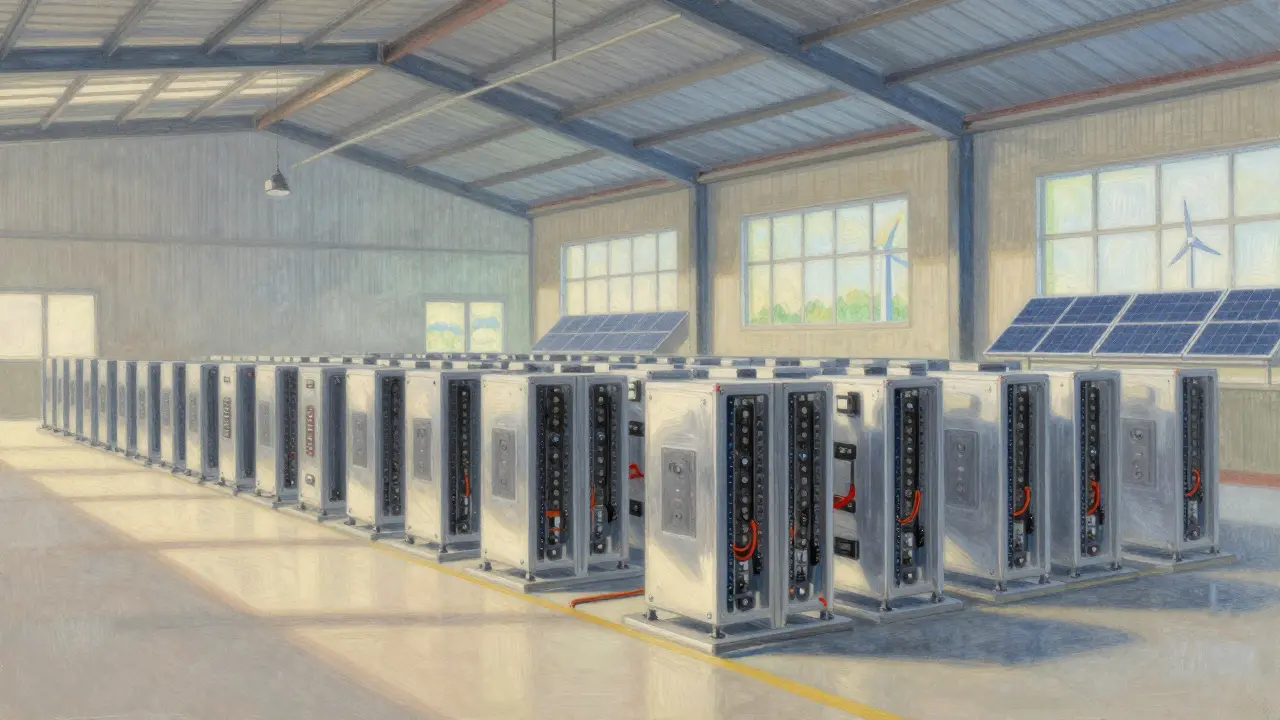
The biggest news for miners isn’t the license-it’s the power. In August 2025, the government announced a massive allocation of 2,000 megawatts (MW) of electricity specifically for Bitcoin mining and AI data centers. This move positions Pakistan to potentially become one of the top five global mining hubs.
Where does this power come from? It’s largely surplus energy. Many coal-based power stations in Pakistan operate below capacity due to economic slowdowns and reduced demand from small businesses switching to solar. By directing this excess power to mining farms, the government aims to monetize otherwise wasted resources.
If fully deployed using modern ASIC miners with efficiency ratings of 30-40 joules per terahash, this 2,000 MW could add over 60 exahashes per second (EH/s) to the global Bitcoin network. That is significant hash rate growth. But there are strict rules on how you can access this power:
- No Residential Rates: You cannot use subsidized residential electricity tariffs for commercial mining. Doing so is considered fiscal leakage and is strictly prohibited.
- Industrial Tariffs Only: All licensed mining facilities must operate on industrial tariffs.
- Minimum Connection Size: Facilities require a minimum connection of 500 kW to qualify for the dedicated mining power grid.
- Renewable Mandate: Draft guidelines released by PVARA in August 2025 require mining operations to utilize at least 70% renewable or repurposed energy sources by 2027.
Taxation: What You Actually Pay
With legalization comes taxation. The Federal Board of Revenue (FBR) has integrated crypto income into the standard tax system. Here is how the math works for miners in Pakistan as of 2026:
| Income Type | Tax Rate | Notes |
|---|---|---|
| Mining Income (Block Rewards) | Progressive (5% - 35%) | Taxed as regular personal/business income based on annual brackets. |
| Capital Gains (Selling Mined Crypto) | Flat 15% | Applied when you sell the mined cryptocurrency for fiat or other assets. |
You must report all mining income on Form IT-1. The annual filing deadline is September 30. Since mid-2025, PVARA has shared transaction data directly with the FBR, making evasion nearly impossible for licensed entities. If you earn less than ₨600,000 annually from mining, you pay 5%. If you earn over ₨12 million, the rate jumps to 35%. When you eventually sell your Bitcoin, you owe an additional 15% capital gains tax on the profit.

Licensing Through PVARA
You cannot just plug in a rig and start hashing. You need a license from PVARA. The application process is rigorous and designed to filter out hobbyists in favor of serious industrial players. Here is what you need to prepare:
- Technology & Security Standards: Detailed documentation of your hardware, cooling systems, and cybersecurity protocols.
- Hash Rate Capacity: Proof of expected output. Phase 1 (Q3-Q4 2025) focused on international firms with hash rates exceeding 1 EH/s. Phase 2 (starting Q1 2026) opens to domestic miners with a minimum capacity of 100 PH/s.
- Energy Consumption Metrics: A clear plan showing how you will source your power, adhering to the 70% renewable/repurposed energy target.
- Compliance Track Record: Evidence of adherence to Financial Action Task Force (FATF) standards and anti-money laundering (AML) procedures.
- Business Model: A Pakistan-specific operational plan addressing environmental impact and local economic contribution.
International firms face an even higher bar. To qualify for PVARA licensing, foreign companies must already be licensed by recognized regulators such as the US SEC, UK FCA, EU VASP framework, UAE's VARA, or Singapore's MAS. This creates a high barrier to entry, prioritizing established global players over local startups.
IMF Concerns and Banking Hurdles
Despite the regulatory progress, challenges remain. The International Monetary Fund (IMF) raised objections in early 2025 regarding subsidized electricity tariffs for miners. They argued that providing cheap power to crypto operations posed fiscal risks and strained the national grid. While the government countered that only surplus power would be used, these concerns influence ongoing consultations.
Furthermore, the banking sector remains hesitant. Even with a PVARA license, many Pakistani banks refuse to service crypto-related accounts due to internal risk policies and lingering interpretations of the State Bank of Pakistan Act. This forces many miners to navigate complex financial workarounds, often relying on cross-border transactions or stablecoin settlements rather than direct PKR deposits.
Shariah Compliance and Local Adoption
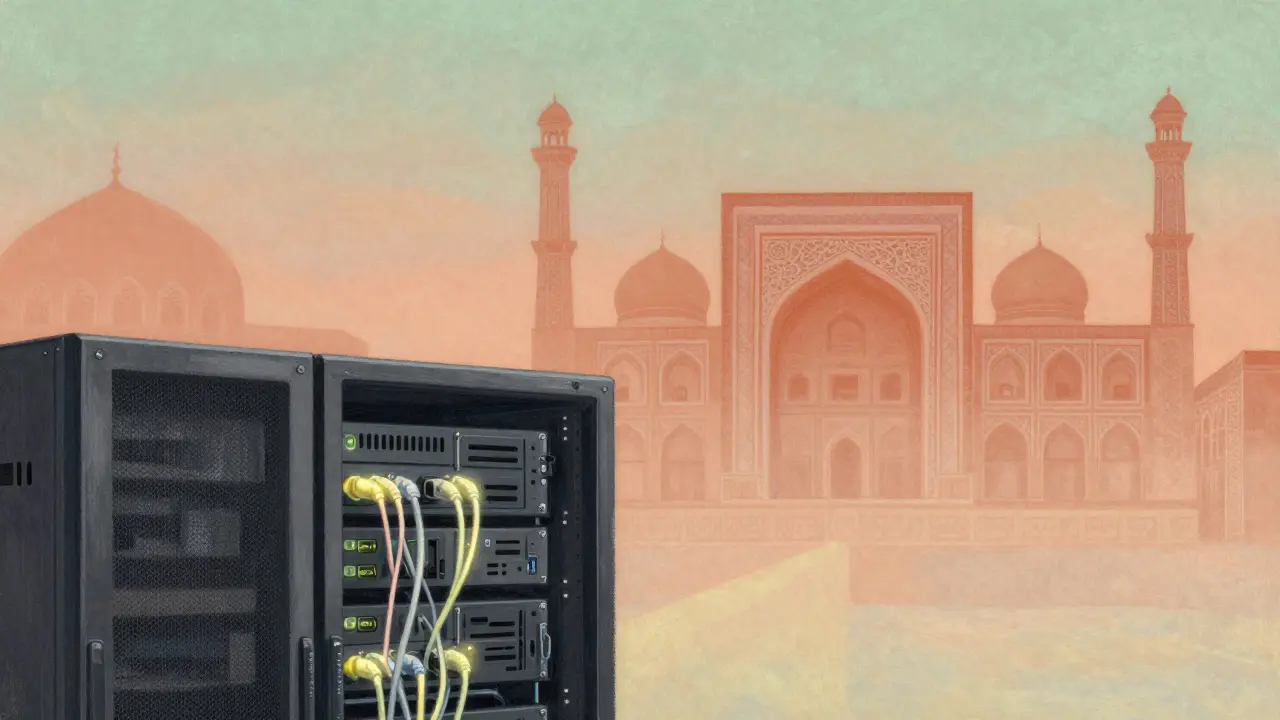
Pakistan is the world’s third-largest crypto adopter by wallet count, with over 40 million users. However, religious concerns have historically hindered institutional participation. To address this, PVARA has introduced regulatory sandboxes for Shariah-compliant mining operations. These frameworks allow Islamic scholars to audit mining practices, ensuring they align with principles of halal investment. This move is crucial for attracting local capital and legitimizing the industry within conservative segments of society.
Future Outlook: 2026 and Beyond
The landscape is evolving rapidly. PVARA Chair Bilal bin Saqib has stated that Pakistan aims to establish its own trends in the digital currency landscape, rather than simply following Western models. With a projected market value of $21 billion, mining is expected to contribute 15-20% of this value within two years if the 2,000 MW allocation is fully implemented.
For miners, the key takeaway is this: the wild west days are over. Success now depends on compliance, efficient energy use, and navigating the tax code. If you can meet the 500 kW minimum, secure industrial power, and pass the PVARA vetting, Pakistan offers a competitive environment with abundant surplus energy. If you cannot, the barriers to entry may be too high.
Is crypto mining legal in Pakistan?
Yes, since the enactment of the Virtual Assets Act, 2025, crypto mining is legal provided you obtain a license from the Pakistan Virtual Asset Regulatory Authority (PVARA). Unlicensed mining remains illegal.
How much tax do I pay on Bitcoin mining in Pakistan?
Mining income is taxed as regular income at progressive rates ranging from 5% to 35% depending on your annual earnings. Additionally, selling mined cryptocurrency incurs a flat 15% capital gains tax.
Can I use residential electricity for mining?
No. Using subsidized residential electricity rates for commercial mining is strictly prohibited. All licensed mining facilities must operate on industrial tariffs with a minimum connection of 500 kW.
What is the minimum hash rate required for a PVARA license?
For domestic applicants in Phase 2 (starting Q1 2026), the minimum capacity is 100 PH/s. International firms in Phase 1 were required to exceed 1 EH/s.
Does the IMF support crypto mining in Pakistan?
The IMF has expressed concerns about subsidized electricity and fiscal risks associated with mining. While they do not explicitly ban it, their objections have influenced regulatory safeguards, such as prohibiting the use of subsidized power.



It is absolutely fascinating how the state attempts to legitimize a fundamentally speculative asset class while simultaneously ignoring the massive environmental degradation caused by this energy consumption. The IMF’s concerns are not just bureaucratic nitpicking; they represent a sober assessment of fiscal responsibility that the local government seems eager to ignore in favor of short-term revenue generation. By allocating 2,000 MW of surplus power to Bitcoin mining, Pakistan is essentially subsidizing a global network with its national resources, creating a moral hazard where private actors reap rewards while the public grid bears the strain. The requirement for 70% renewable energy by 2027 is laughably insufficient given the current infrastructure deficits and should have been a prerequisite for licensing rather than a future target. Furthermore, the reliance on offshore accounts for liquidation highlights the inherent instability of the banking sector’s relationship with crypto, proving that regulation without full financial integration is merely a facade. We must consider the long-term implications of tying national economic stability to the volatile whims of cryptocurrency markets.
You’re missing the bigger picture here. This isn’t about morality, it’s about economics. Pakistan has excess coal capacity that is literally sitting idle because small businesses can’t afford the tariffs or have switched to solar. If you don’t monetize that waste, you lose money. The 2,000 MW allocation is a smart play to turn dead weight into hard currency earnings. Sure, the IMF grumbles, but they always do when countries find innovative ways to bypass traditional debt traps. The key is that this power is SURPLUS. It’s not stealing from hospitals or homes. It’s using what would otherwise be wasted. And let’s be real, the 15-20% contribution to the $21 billion market value is huge for an economy struggling with inflation. The barriers to entry are high for a reason-to keep out the hobbyists who burn cash and leave when the difficulty spikes. Only serious industrial players with proper cooling and security protocols should be touching this grid.
I bet you think you’re so clever pointing out the 'surplus' energy, but you clearly haven’t looked at the actual grid load metrics during peak summer months in Punjab. You’re blindly trusting government press releases that conveniently omit the fact that 'surplus' is often calculated based on outdated demand projections from before the recent industrial boom. My cousin runs a textile factory in Faisalabad and he tells me the voltage drops are getting worse, not better. So tell me, when your precious miners trip the breakers and shut down his production line for three days, who pays? The government won’t. The miners will just claim force majeure and move their rigs to another province. It’s a disaster waiting to happen and people like you cheering it on are part of the problem.
That’s anecdotal garbage and you know it. Industrial zones have dedicated transformers and priority grids that are completely separate from residential or light commercial lines. If your cousin is experiencing voltage drops, it’s because his facility is on an overloaded legacy grid segment, not because of crypto farms which are connected to specific high-voltage substations designed for heavy loads. Don’t conflate general infrastructure decay with targeted industrial policy. The PVARA guidelines explicitly state that mining facilities must adhere to strict connection standards including minimum 500 kW connections which ensures they are on robust infrastructure. Your emotional rant doesn’t change the physics of the grid or the economic reality of monetizing idle assets.
isnt it funny how we try to regulate chaos
like putting a leash on a hurricane
the numbers look nice on paper
but the soul of the thing is wild
we build cages for lightning
i feel like ppl forget that sharia compliance is actually a big deal here
its not just about making money
its about keeping the community together
so if scholars say its halal then maybe we should listen
instead of arguing about volts and watts
its deeper than that i think
Oh, brilliant observation! Truly profound! I mean, really, who could have predicted that religious frameworks might influence financial adoption in a conservative society?! Groundbreaking stuff! But seriously, the Shariah-compliant sandbox is a stroke of genius for PVARA. It bridges the gap between traditional Islamic finance principles-avoiding Riba (interest) and excessive uncertainty (Gharar)-and the digital asset world. By allowing scholars to audit mining practices, they aren't just checking boxes; they're building trust. Trust is the currency of any economy, digital or otherwise. Without that social license to operate, all the 2,000 MW in the world wouldn't matter because local capital would stay away. It’s a nuanced approach that respects cultural roots while embracing technological innovation. Kudos to the regulators for thinking outside the Western-centric box!
yeah right lol
sharia compliant mining
next u will tell me theres halal bitcoin
it's all just hype to get rich quick
typical govt scheme to tax us more
look man i get why ur skeptical but its not just about the coins
its about the process being clean
if the energy is green and the profit is shared fairly then its halal
u gotta see the big picture dude
its a new way of thinking
The assertion that this regulatory framework represents a 'clarity' is, at best, optimistic and, at worst, dangerously misleading. The continued prohibition by the State Bank of Pakistan on recognizing cryptocurrencies as legal tender creates a fundamental contradiction that no amount of PVARA licensing can resolve. One cannot have a regulated industry that is structurally barred from utilizing the primary financial infrastructure of the nation. This bifurcation forces operators into illicit grey markets, thereby defeating the purpose of the Anti-Money Laundering (AML) and Counter-Financing of Terrorism (CFT) measures ostensibly introduced by the Virtual Assets Act. Furthermore, the reliance on offshore accounts for liquidity suggests that the Pakistani state is merely acting as a toll booth for international capital flight, rather than fostering genuine domestic economic growth. The intellectual rigor required to understand these systemic flaws appears to be lacking in the celebratory discourse surrounding this announcement.
Wow, look at Mr. Intellectual over here using words like 'bifurcation' and 'systemic flaws.' Did you read that in a textbook or did you just make it up to sound smart? Let’s cut the pretentious crap. The SBP ban is old news. The real issue is that banks are scared shitless of the FATF. Even with a PVARA license, HBL and UBL are going to treat your crypto account like it’s radioactive until they get explicit cover from the top. That’s not a theoretical flaw; that’s the daily reality for anyone trying to move money. So yeah, you can have your 'license,' but good luck actually getting paid in PKR without jumping through ten hoops. The system is broken, but blaming the 'lack of intellectual rigor' in Reddit comments is a hilarious distraction.
How utterly quaint. The notion that a developing nation can simply 'allocate' surplus energy without considering the macroeconomic distortions is a testament to the sheer arrogance of modern policy-making. The IMF’s objections were not mere 'grumbling' but a precise articulation of the fiscal risks involved in subsidizing speculative activities. To suggest that 'idle' coal plants are truly idle ignores the complex dynamics of baseload power requirements and grid stability. Moreover, the taxation structure, while appearing progressive, fails to account for the volatility of crypto assets, potentially leading to severe cash flow issues for miners who are taxed on unrealized gains or forced to sell during downturns to meet tax liabilities. It is a classic case of regulatory capture masquerading as innovation.
nah bro
just use stablecoins
forget the pkrs
banks are useless anyway
why pay tax if u dont have to?
i mean its interesting to see how things are changing but i worry about the average person who cant afford a 500kw setup
they are left out completely
and the taxes seem pretty high if you earn a lot
i hope it works out for everyone not just the big companies
because if only the rich benefit then its not really progress
just another way for them to get richer
we need to make sure the benefits trickle down somehow
its true
small guys get squeezed
but maybe jobs will come?
tech support maintenance etc
lets hope for the best
Let’s look at the bright side! 🌟 The establishment of PVARA is a massive step forward for transparency. For years, miners operated in the shadows, which made everyone nervous. Now, with clear licensing and tax rules, we’re moving towards a legitimate industry. Yes, the barriers are high, but that ensures quality and security. The focus on renewable energy by 2027 is also a great sign for sustainability. 🌱 It shows that Pakistan is thinking about its future, not just quick profits. And the Shariah compliance angle? Genius! It opens doors for local investment that was previously locked due to religious concerns. This could be a model for other Muslim-majority nations. Progress takes time, but this is definitely moving in the right direction! 💪🚀
Absolutely agree! It’s exciting to see Pakistan positioning itself as a potential top five global hub. The collaboration between tech and traditional energy sectors is key here. If done right, this could boost the entire digital economy, not just mining. Great initiative! 👏