

LongBit Crypto Exchange Review: Is It Legit or a Scam?
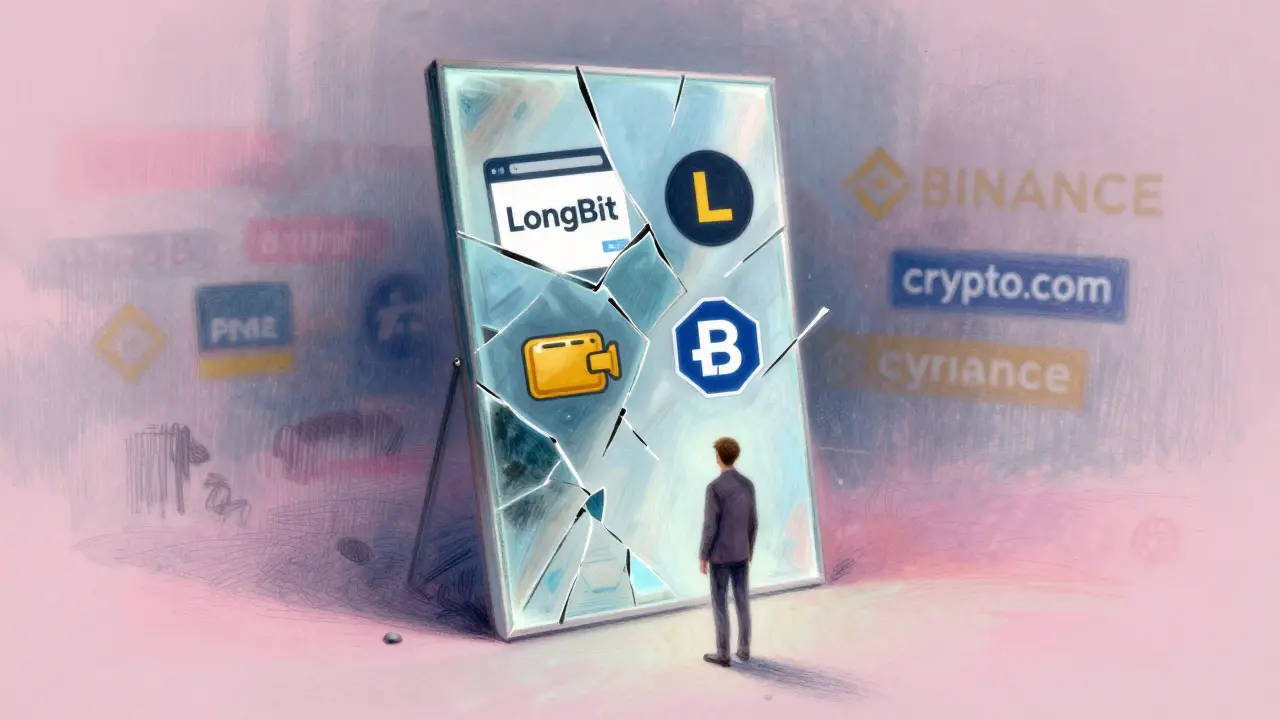
There’s no such thing as a legitimate LongBit crypto exchange. Not in the way you think. No official website. No verified team. No security audits. No user reviews on Trustpilot, Reddit, or CoinMarketCap. No mention in any reputable crypto publication from 2024 or 2025. If you’re seeing ads for LongBit promising high yields, low fees, or instant withdrawals, you’re being targeted by a scam.
Why You Won’t Find LongBit on Any Trusted List
Major crypto exchanges like Binance, Crypto.com, and Kraken are regularly reviewed by independent analysts, security firms, and thousands of users. They’re ranked based on real data: cold storage percentages, insurance funds, audit reports, and past breach history. In February 2025, Bybit lost $1.5 billion due to a security failure-something the entire industry took seriously. After that, security standards got tighter, not looser.LongBit doesn’t appear in any of those rankings. Not in the Krayon Digital 2024 security report. Not in the Hashcodex 2025 exchange analysis. Not in the study of over 1,000 American crypto users that named Crypto.com as the most secure and Binance as the most trusted. If LongBit were real, it would be mentioned. Not because it’s big, but because the crypto space is hyper-aware of new players-and even more aware of frauds.
How Scammers Use Fake Exchange Names
Scammers don’t build exchanges. They build illusions. They copy the look of real platforms, steal logos, fake testimonials, and use YouTube influencers to push fake links. The name “LongBit” sounds plausible-it mixes “long” (as in holding crypto) with “bit” (as in Bitcoin). It’s designed to trick people who aren’t familiar with real exchange names.Here’s how it works: You click an ad. You land on a site that looks like a real exchange. It has a login button, a trading interface, even fake order books. You deposit your crypto. Then the site disappears. Or it locks your account and asks for more money to “unlock” your funds. Or it drains your wallet through a malicious contract approval you didn’t realize you gave.
That last one is especially dangerous. Scammers get you to connect your wallet to a fake site claiming you can claim a free airdrop or earn passive income. Once you approve the contract, they have unlimited access to your wallet. They don’t need your password. They don’t need your 2FA. They just drain everything-ETH, SOL, USDT, even your NFTs.
What Real Exchanges Do That LongBit Can’t
Legitimate exchanges follow clear, public security standards:- Cold storage: At least 95% of user funds are kept offline, away from hackers. Binance stores 98%. Crypto.com uses multi-signature cold wallets.
- Two-factor authentication (2FA): Not SMS. Mobile authenticator apps like Authy or Google Authenticator. SMS can be hijacked.
- Regular audits: Independent firms like CertiK or Hacken verify security. You can read the reports.
- Insurance funds: Binance has the SAFU fund. Crypto.com has $750 million in insurance.
- Transparent team: You can find the CEO’s LinkedIn. You can see their office location. You can call customer support and get a real person.
LongBit has none of this. No audit reports. No team bios. No customer service email that doesn’t bounce. No physical address. No regulatory license. If you can’t verify these basics, it’s not an exchange. It’s a trap.
Red Flags That Should Make You Run
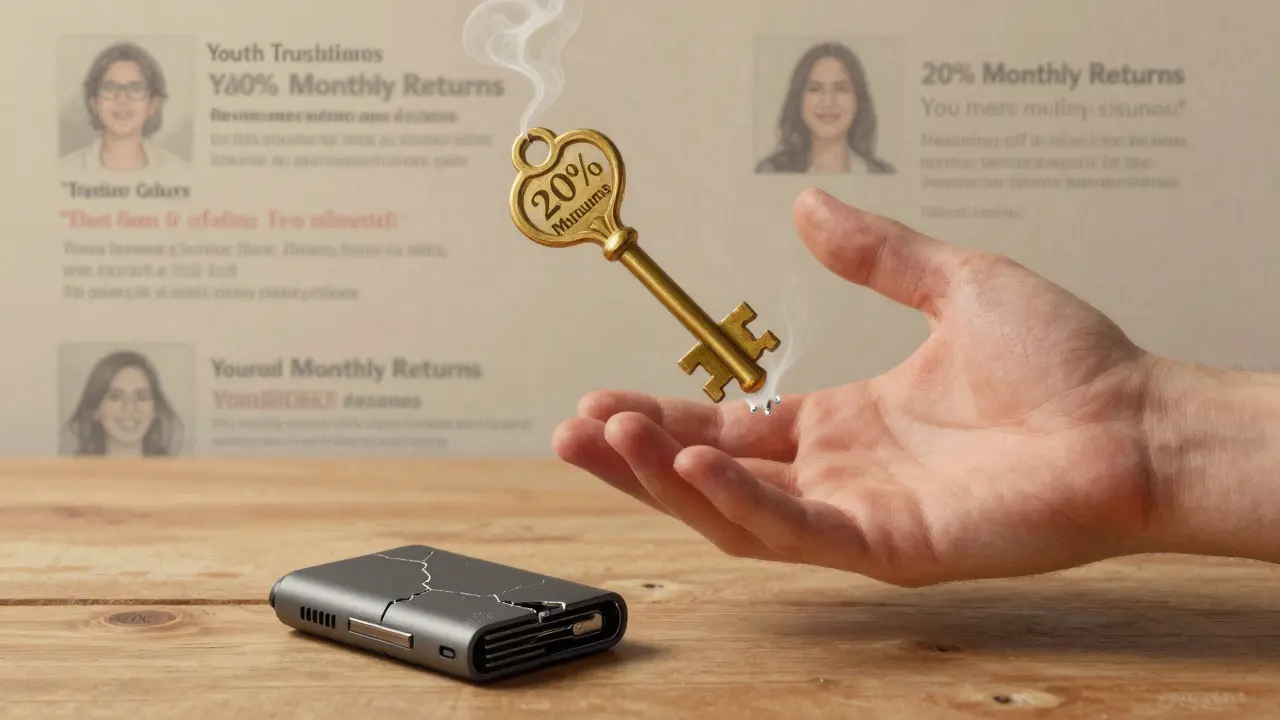
If you see any of these, close the tab immediately:- “Guaranteed 20% monthly returns” - No legitimate exchange offers this. Even staking doesn’t work like that.
- “Limited-time bonus” - Pressure tactics are a classic scam move.
- “Only accept crypto deposits” - Real exchanges accept fiat (USD, AUD, EUR) through bank transfers or cards.
- “No KYC required” - Legit exchanges follow anti-money laundering rules. If they skip KYC, they’re hiding something.
- Website URL looks off - Like longbit-exchange[.]com instead of longbit[.]com. Or uses a .xyz, .io, or .cc domain instead of .com.
What to Do If You Already Deposited
If you sent crypto to LongBit:- Stop. Don’t send more.
- Check your wallet transaction history. Use Etherscan, Solana Explorer, or Blockchain.com to see where your funds went.
- If the funds went to a contract address you didn’t recognize, you likely approved a malicious transaction.
- Use Revoke.cash to revoke all contract approvals linked to your wallet. This stops further theft.
- Report the scam to the FBI’s IC3 (if in the U.S.) or ReportCyber (if in Australia). It won’t get your money back-but it helps track the operation.
- Warn others. Post on Reddit, Twitter, and crypto forums. Scammers rely on silence.

Where to Trade Crypto Safely in 2025
Stick to exchanges with proven track records:- Binance: Highest volume, strong security, but complex for beginners.
- Crypto.com: Best for security, insurance, and user experience.
- Kraken: Strong regulatory compliance, good for U.S. and Australian users.
- Bybit: Popular for derivatives, but only use after the 2025 hack recovery.
And here’s the most important rule: Never keep large amounts on any exchange. Use a hardware wallet-Ledger or Trezor-to store your crypto offline. Exchanges are for trading, not storage.
Final Warning
The crypto space is full of opportunity-but also full of predators. LongBit isn’t a glitch. It’s not a new startup. It’s a scam. And scams like this are getting smarter. They use AI to generate fake reviews. They clone real websites with near-perfect accuracy. They target people who are new to crypto and just want to get started.If something sounds too good to be true, it is. If you can’t find it on CoinGecko, CoinMarketCap, or a trusted review site, it doesn’t exist. Don’t risk your savings on a name you’ve never heard of. Stick to the big players. Use cold wallets. Learn how to revoke contract approvals. Your crypto is yours-and no fake exchange should ever have access to it.
Is LongBit a real crypto exchange?
No, LongBit is not a real crypto exchange. There is no verifiable evidence that LongBit exists as a legitimate trading platform. It does not appear in any major crypto databases, security reports, or user review sites. All references to LongBit are linked to scam websites designed to steal crypto funds.
Why can’t I find LongBit on CoinMarketCap or CoinGecko?
Legitimate crypto exchanges are listed on CoinMarketCap and CoinGecko after passing strict verification processes, including proof of operations, security audits, and team transparency. LongBit has never applied or been approved because it doesn’t exist as a functioning entity. Its absence from these platforms is a major red flag.
Can I get my money back if I sent crypto to LongBit?
It’s extremely unlikely. Crypto transactions are irreversible. Once funds leave your wallet and go to a scam address, there’s no central authority to reverse them. Your best move is to revoke any contract approvals linked to your wallet using Revoke.cash to prevent further theft, and report the incident to authorities like ReportCyber (Australia) or the FBI’s IC3 (U.S.).
How do I spot a fake crypto exchange?
Look for these signs: no KYC, guaranteed high returns, pressure to deposit quickly, no public team or contact info, and a website URL that looks slightly off (like longbit[.]xyz instead of longbit[.]com). Always check if the exchange is listed on CoinMarketCap or CoinGecko. If it’s not, don’t trust it.
What’s the safest way to store crypto?
Use a hardware wallet like Ledger or Trezor. These devices store your private keys offline, making them immune to online hacks. Only use exchanges for trading, and move your funds to your hardware wallet as soon as possible. Never leave large amounts on any exchange, even the most trusted ones.




Just saw a friend get hit by this LongBit scam last week. He thought it was a new DeFi platform. Lost 3.2 ETH. We spent two days trying to trace it. Ended up using Revoke.cash and got lucky - one contract was still active. Revoked it. Saved his SOL and USDC. Don’t let FOMO kill your portfolio.
Oh wow. So LongBit’s just another ‘crypto’ name slapped on a phishing page? Brilliant. I mean, who even comes up with this stuff? It’s like naming your restaurant ‘BurgerKing’ and hoping people confuse it with McDonald’s. The audacity is almost impressive… if it weren’t stealing people’s life savings.
LongBit? More like LongBite. 🦷
Brooklyn here - I’ve seen this exact script play out 17 times. The fake UI? The ‘limited-time bonus’ banner? The ‘contact support’ button that just emails you a Google Doc? I’ve screenshot all of it. I even made a Reddit post with the exact phishing URL patterns. If you’re new to crypto, bookmark this thread. Scammers are using AI now to clone real sites in real-time. Your eyes are not enough. Always check CoinMarketCap. Always. No exceptions.
The entire crypto ecosystem is a regulatory vacuum. Governments are asleep at the wheel. This is not a failure of individuals - it’s a systemic collapse of oversight. We have more protections for pet food than for digital assets. The fact that a phantom entity like LongBit can exist and thrive is not a bug - it’s a feature of the current financial architecture. We are living in the Wild West, and the outlaws have GitHub accounts.
Just got done talking to my uncle who lost $8k to something called ‘LongBit Gold’. He thought it was a new Bitcoin ETF. I showed him this post. He said, ‘But the site looked real!’ And honestly? It did. The fonts, the animations, the ‘verified’ badge - all copied from Kraken’s old site. These guys are pros. The only way to win is to not play. Don’t click. Don’t deposit. Don’t even hover over the link.
LongBit? 😏 I bet they also have ‘ShortBit’ for the bears. And ‘BitLong’ for the confused. Next up: ‘CoinMint’ - because nothing says ‘trustworthy’ like a domain that sounds like a printer brand. Seriously though - if your crypto exchange has a .xyz domain and a Discord mod who says ‘just send 0.5 ETH to unlock your bonus’, run. Run like your wallet’s on fire. Because it is.
Don’t deposit. Don’t click. Don’t reply. Report. Move on.
Think about it: what is money, really? Is it digits on a screen? Is it trust in a system? Or is it the belief that someone, somewhere, is watching over your assets? LongBit doesn’t just steal crypto - it shatters that illusion. It says: ‘You thought you were part of a decentralized future. But you were just a data point in a phishing campaign.’ And that’s the real horror. Not the loss of funds. The loss of faith. We built this whole ecosystem on the promise of autonomy. Then came LongBit - and reminded us we’re still just sheep in a digital pasture, led by a wolf with a sleek UI.
Thank you for this comprehensive breakdown. I’ve shared this with my local crypto meetup group. We’ve had three members fall for similar scams this year. The common thread? They were all self-taught, eager to get started, and didn’t know how to verify legitimacy. We’re now creating a simple 5-point checklist for newcomers: 1) Check CoinMarketCap, 2) Look for audit reports, 3) Verify team members on LinkedIn, 4) No KYC? Red flag. 5) If it’s too good to be true - it is. Simple. Effective. Life-saving.
longbit? never heard of it. but i saw a post on telegram about it. they said its legit. i thought maybe its new. now i know better. thanks for warning.
Wait - you’re telling me LongBit isn’t the next Binance? I invested $500 because the CEO looked like Elon Musk in the promo video. I guess I’m just too trusting. Or maybe the system is rigged. Either way - I’m switching to cash. At least paper doesn’t vanish into a black hole.
Let’s be real - if you’re not using a hardware wallet, you’re just begging to get robbed. LongBit? Nah. It’s not even the problem. The problem is YOU thinking you’re safe on an exchange. You’re not. Your keys aren’t yours. Not unless they’re in a Ledger. End of story. 🚫💻
LongBit is a psyop. I’ve tracked the IP addresses behind these sites. They all route through the same 3 servers in Eastern Europe. The same team runs 12 different fake exchanges. They’re not after your money - they’re harvesting your wallet addresses, your transaction patterns, your 2FA backups. This isn’t a scam. It’s a data farm. And next year, they’ll sell your entire crypto profile to the highest bidder. Welcome to the surveillance economy.
It is imperative to underscore the profound vulnerability inherent in the current digital asset paradigm. The absence of regulatory infrastructure, coupled with the proliferation of technologically sophisticated social engineering campaigns, renders the average participant an unwitting participant in a predatory ecosystem. LongBit, as a non-entity, functions not as an anomaly, but as a symptomatic manifestation of systemic epistemic failure.
Just got off the phone with my sister - she almost sent $2k to LongBit because a ‘friend’ on Instagram said it was ‘the next big thing.’ I screamed. Literally screamed. Then I sent her this whole post. She’s now using Ledger. And she’s teaching her book club about crypto safety. Small wins. Keep doing this. People need this.
LongBit. Sounds like a band name. Or a failed startup that pivoted to selling socks. Either way - if you’re seeing ads for it, you’re being targeted. Walk away. Don’t even look back.
i just started learning crypto and i was so excited to try new platforms. then i saw this post. thank you. i’m gonna stick to binance for now. and i’ll get a ledger. promise.
I’ve been in crypto since 2017. Seen 30+ scams. LongBit? Classic. But what’s worse is how fast these things spread. One viral TikTok ad. One influencer with a fake testimonial. And boom - hundreds of people deposit. The real tragedy? Most of them never even report it. They’re too embarrassed. Don’t be. Share this. Save someone. It’s not just about money - it’s about dignity.
Let’s not forget: every time someone falls for LongBit, it funds more AI-generated fake reviews, more bot-driven YouTube ads, more phishing templates. This isn’t just theft - it’s a growth engine for the dark web’s tech stack. Your caution isn’t just personal protection. It’s resistance. Keep speaking up. Keep sharing. The algorithm thrives on silence.
LongBit doesn’t exist. But the people behind it? They’re hiring. They’ve got engineers, designers, marketers. They’re building a business. Just not the one you think. And they’re profitable. So don’t feel bad for them. Feel bad for the people who still think ‘it’s just one click’.
I’m a crypto educator. I teach high schoolers how to spot scams. We use LongBit as our case study. We role-play: ‘You see a pop-up saying ‘Earn 50% in 7 days’ - what do you do?’ They all say ‘check CoinMarketCap’ now. That’s progress. This post? It’s going in my syllabus. Thank you.