

Iceland Crypto Mining Restrictions: National Power Company Impact
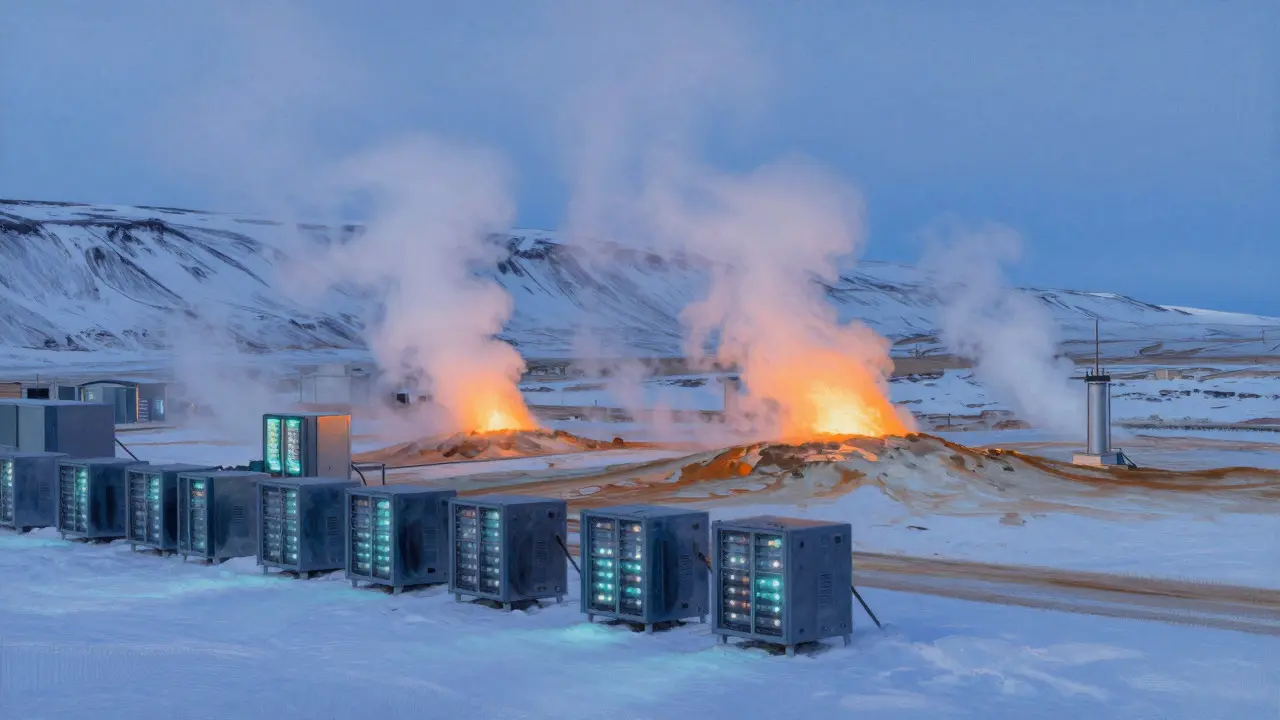
Imagine a country where the air is so cold it acts as a natural air conditioner for your servers, and the electricity comes almost entirely from geothermal vents. That was Iceland’s pitch to the world in the late 2010s. It worked. Miners flocked to the island nation, drawn by cheap, green power and a regulatory environment that seemed open for business. But as the hum of hash rates grew louder, so did the strain on the grid. Now, the question isn’t just about whether you can mine in Iceland, but how much power the National Power Company is willing to hand over before the lights go out for everyone else.
The situation has shifted dramatically since 2024. What used to be a welcome industry is now viewed with caution. The core issue isn’t that crypto is illegal-it remains legal for trading and investment-but that the sheer volume of energy consumption threatens the stability of the national grid. If you are considering setting up operations there, or if you are already running rigs, understanding these new constraints is critical. Here is what you need to know about the current landscape, the specific restrictions, and what they mean for your bottom line.
Why Iceland Became a Mining Hub (And Why That Backfired)
To understand the restrictions, you have to look at why the boom happened in the first place. In 2017, cryptocurrency processing accounted for roughly 90% of Iceland's data center power consumption. This wasn't a small niche; it was a massive industrial sector. Companies like Hive Blockchain Technologies, Genesis Mining, and Bitfury Holding invested millions into infrastructure, attracted by two main factors: cost and climate.
- Cheap Energy: Geothermal and hydroelectric power provided electricity at rates significantly lower than European averages.
- Natural Cooling: The arctic climate meant miners didn't need expensive cooling systems. They could simply vent hot air outside.
- Post-2008 Recovery: After the financial crisis, Iceland was eager to attract foreign investment to rebuild its economy. Crypto fit the bill perfectly.
However, growth outpaced planning. By the early 2020s, projections suggested that mining operations were consuming more energy than the entire Icelandic population combined. This created a bottleneck. When one sector consumes nearly half the available renewable capacity, the rest of the country starts to feel the pinch. Industrial processes, residential heating, and essential services all compete for the same limited resource. This imbalance is the direct driver behind the recent tightening of rules.
The Role of the National Power Company in Restricting Access
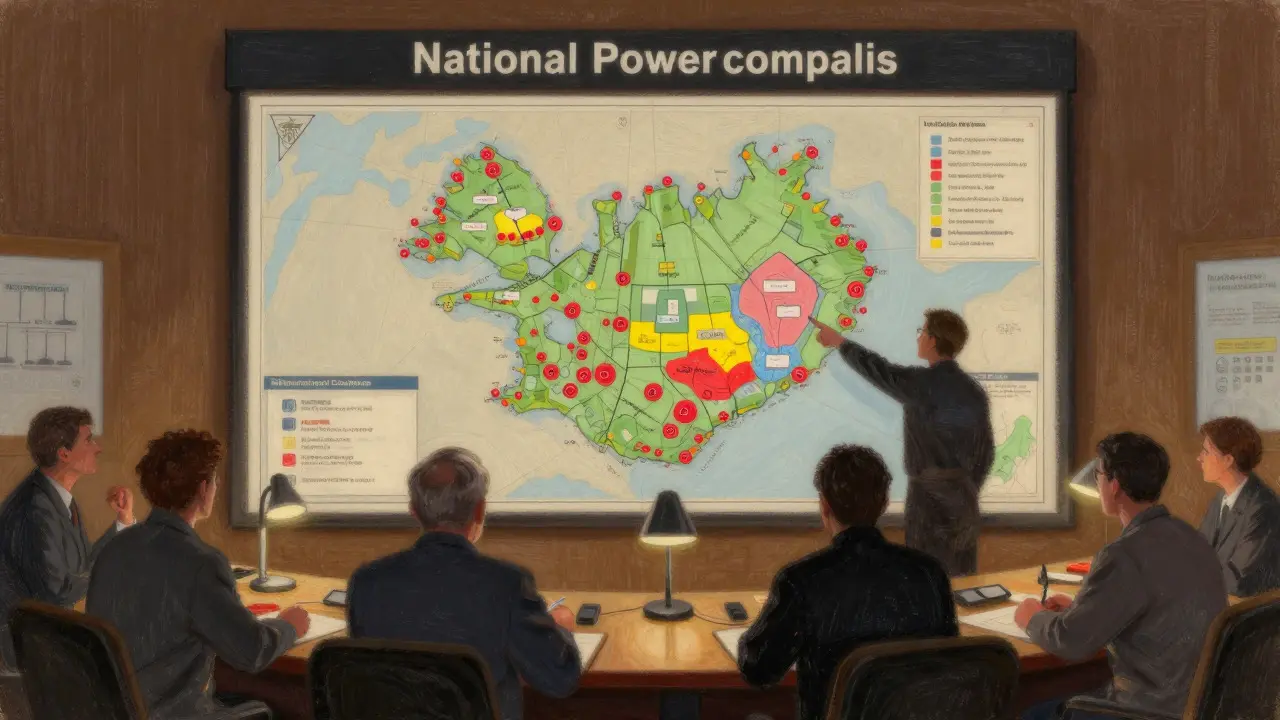
While the government sets the broad policy direction, the day-to-day enforcement often falls to the utility providers, specifically the national power company entities. These companies manage the grid, allocate capacity, and determine who gets priority access to electricity. In the past, they were relatively lenient, signing long-term contracts with miners without rigorous stress-testing of the grid's resilience.
Today, the approach has changed. The national power company now acts as a gatekeeper. Instead of offering unlimited access, they are imposing stricter allocation limits. This means that new applicants face higher hurdles, and existing operators may find their contracts renegotiated with tighter terms. The focus has shifted from "who wants to buy power" to "who can prove they won't destabilize the grid."
This shift is part of a broader strategy to ensure energy security. The national power company is responsible for balancing supply and demand in real-time. With wind and geothermal sources fluctuating based on weather and volcanic activity, having a massive, constant draw from mining farms adds significant risk. If a geothermal plant goes offline for maintenance, or if a storm reduces hydro output, the grid needs buffer capacity. Miners, who require consistent high loads, are less flexible than other consumers. Therefore, the utility is prioritizing flexibility and reliability over raw volume.
Government Policy Shifts and Regulatory Framework
The utility restrictions don't exist in a vacuum. They align with a clear political signal. In March 2024, Iceland's Prime Minister publicly expressed a desire to reduce cryptocurrency mining activities within the country. This marked a significant pivot from the previously accommodating stance. While no outright ban has been implemented, the tone has changed from "welcome" to "manage carefully."
The Icelandic Financial Supervisory Authority (FSA) oversees the financial side, requiring exchanges and major players to comply with anti-money laundering policies. However, the energy side is handled through environmental and utility regulations. The government is not banning the technology; it is regulating the resource consumption. This distinction is important. You can still mine, but you have to do it within a tighter envelope of permitted energy use.
Regulations now focus on minimizing environmental impact while maintaining sustainability goals. This includes potential requirements for dynamic pricing, where miners must pay more during peak demand periods, or even curtailment clauses that allow the utility to cut power temporarily if the grid becomes unstable. For miners, this introduces revenue uncertainty. Your hardware runs 24/7, but your power supply might not.
Comparing Old vs. New Operational Realities
How does this affect actual operations? Let's look at the differences between the pre-2024 era and the current landscape.
| Factor | Pre-2024 Era | Post-2024 / Current Status |
|---|---|---|
| Power Allocation | Unlimited or easily expandable contracts | Strict caps and rigid allocation limits |
| Grid Priority | Miners treated as standard industrial consumers | Miners subject to curtailment risks during peaks |
| Contract Terms | Long-term, fixed-price agreements common | Shorter terms, dynamic pricing, and performance clauses |
| Regulatory Tone | Pro-growth, investment-friendly | Energy-security focused, cautious |
| New Entry Barriers | Low; easy to secure permits | High; requires proof of grid resilience and flexibility |
The table highlights a key change: flexibility. In the past, miners could assume they would always have power. Now, they must design their operations to handle interruptions. This might mean investing in backup batteries or diversifying locations. It adds complexity and capital expenditure, which affects the return on investment for smaller operators.
Impact on Major Players and Small Miners
Not all miners are affected equally. Large corporations like Bitfury Holding have the capital to negotiate better terms and invest in grid-stabilizing technologies. They can afford to build hybrid facilities that switch between geothermal and other sources, or install local storage solutions. Their scale allows them to absorb some of the increased costs and operational risks.
For smaller, independent miners, the picture is less rosy. The barrier to entry has risen. Securing a new contract with the national power company is harder, and the terms are less favorable. Many small operators are finding that the economics no longer work. If you have to pay premium rates during peak hours, or if your power gets cut off unpredictably, your profit margins shrink rapidly. This is leading to a consolidation trend, where smaller players exit the market or sell their equipment to larger firms that can better manage the regulatory burden.
Public sentiment also plays a role. While locals are generally curious about the tech, there is growing concern about power requirements. Community pressure can influence local permitting decisions. A mining farm that causes voltage drops in nearby neighborhoods will face resistance. This social license to operate is becoming as important as the legal permit.
What Does This Mean for Your Strategy?
If you are planning to mine in Iceland, you need to adjust your expectations. The days of plug-and-play profitability are over. Here are some practical steps to consider:
- Audit Your Power Contract: Review any existing agreements for curtailment clauses. Understand exactly when and how the utility can reduce your supply.
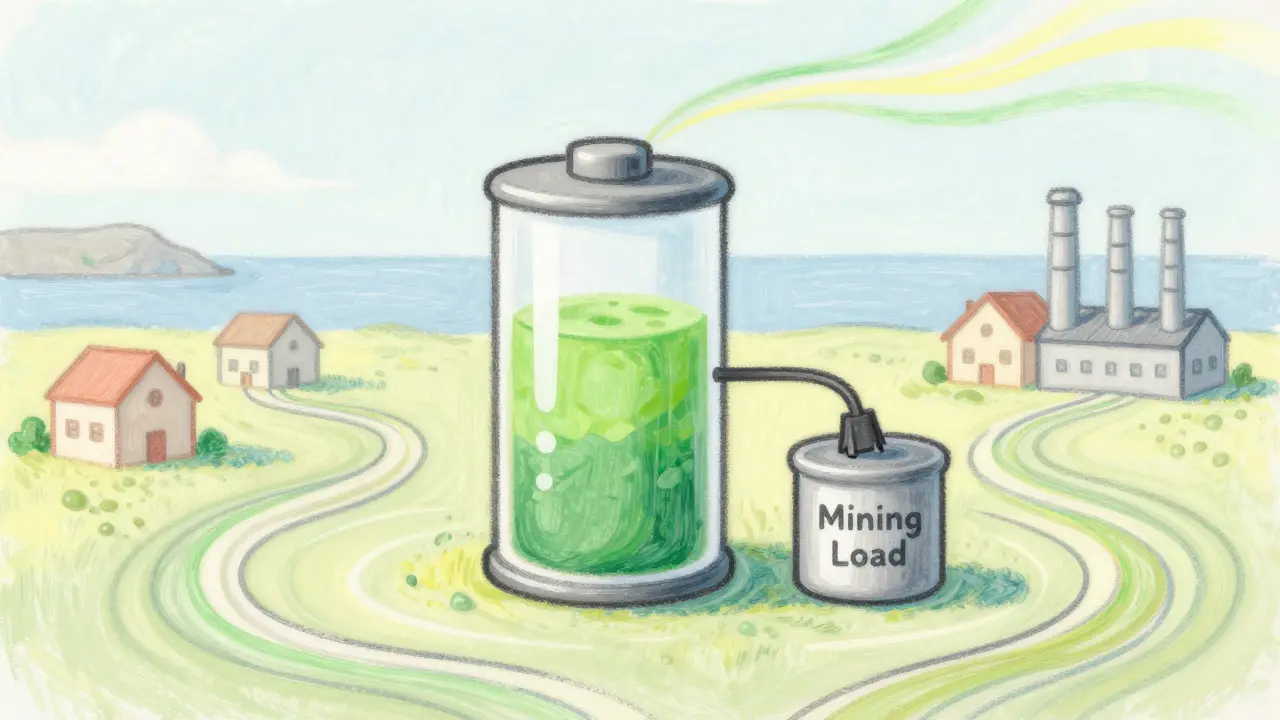
- Diversify Energy Sources: Look into hybrid setups that combine geothermal with other renewables or battery storage to mitigate peak-time risks.
- Calculate Dynamic Costs: Model your profits based on variable electricity prices, not just average rates. Factor in the possibility of paying more during high-demand periods.
- Engage with Local Stakeholders: Build relationships with community leaders and local businesses. A positive reputation can help smooth over permitting issues.
- Monitor Policy Updates: Keep an eye on announcements from the Icelandic government and the FSA. Regulations are evolving quickly, and what is true today may change tomorrow.
Alternatively, consider whether Iceland is still the right location for you. Other countries with similar renewable resources may offer more stable regulatory environments. The decision depends on your scale, your risk tolerance, and your ability to adapt to changing conditions.
Future Outlook: From Mining to Broader Blockchain
Iceland is not abandoning blockchain technology; it is shifting its focus. The government is increasingly interested in central bank digital currencies (CBDCs) and institutional blockchain applications rather than raw mining. This suggests that the future of crypto in Iceland may be less about hashing power and more about software development, fintech innovation, and financial infrastructure.
For miners, this means the window for easy growth is closing. The industry is maturing, and the low-hanging fruit has been picked. Those who remain will need to be efficient, flexible, and well-capitalized. The national power company will continue to play a central role in shaping this environment, ensuring that the grid remains stable for all users, not just the biggest consumers.
In short, Iceland is still a viable location for crypto mining, but it requires a different approach than five years ago. You need to respect the grid, plan for variability, and stay ahead of regulatory changes. If you can do that, the opportunities remain. If not, you might find yourself priced out or shut down.
Is cryptocurrency mining illegal in Iceland?
No, cryptocurrency mining is not illegal in Iceland. It remains legal for trading and investment purposes. However, it is heavily regulated regarding energy consumption. The restrictions come from the need to balance the national grid, not from a ban on the technology itself.
Who imposes the restrictions on crypto mining in Iceland?
The restrictions are a combination of government policy and utility management. The national power company manages grid capacity and allocates power to consumers, including miners. The government sets the broader regulatory framework through bodies like the Icelandic Financial Supervisory Authority and environmental agencies.
Can new miners still get power contracts in Iceland?
Yes, but it is much harder than before. New applicants face stricter scrutiny, higher barriers to entry, and less favorable contract terms. The national power company prioritizes grid stability, so new large-scale projects must demonstrate how they will manage their load without causing instability.
How does the cold climate affect mining operations now?
The cold climate is still a benefit for cooling, reducing the need for expensive HVAC systems. However, the primary constraint is no longer heat management but power availability. The natural cooling advantage remains, but it doesn't solve the problem of limited grid capacity.
What happens if the grid becomes unstable during mining?
Under current contracts, miners may be subject to curtailment. This means the utility can temporarily reduce or cut off power to stabilize the grid. Miners should plan for these interruptions by having backup plans or diversified energy sources.



Oh, how the tables have turned. The little island that thought it could outsmart the global energy market with its geothermal vents and sub-zero air conditioning is now choking on its own ambition. It is a classic case of hubris meeting physics. They lured in the miners with promises of cheap power, only to realize that 'cheap' does not mean 'infinite.' Now they are playing gatekeeper, pretending this is about grid stability when it is really about protecting their precious national identity from being hashed into oblivion by American and Asian corporations. How very noble of them to prioritize the local villager's voltage drop over the efficiency of the network.
Grid stability is a real constraint. Iceland’s renewable mix is weather-dependent. Miners are constant loads. The mismatch causes volatility. Curtailment is the logical fix.
Volatility? You call it volatility; I call it poor planning. They sold the dream of unlimited green energy. Now they want to tax the dreamers for the privilege of existing on their grid. Typical small-nation behavior: invite the giants in, then complain when the giants eat everything.
You all miss the point entirely. This isn't about electricity or geography. It's about the fundamental nature of scarcity. We live in a world where resources are finite, yet we pretend through technology that they are infinite. Iceland is just the first domino to fall because their resource base was too small to hide the lie. The 'green' label was always a marketing ploy to mask the brutal reality of thermodynamics. When the grid blinks, you don't blame the miner; you blame the illusion of sustainability itself. It is a philosophical crisis disguised as an engineering problem. Stop looking at the wires and look at the human desire for control. That is the true bottleneck.
The so-called 'experts' will tell you it's about peak demand curves. Nonsense. It's about social license. The moment the average citizen feels a flicker in their light, the political calculus shifts. Democracy is inefficient precisely because it reacts to discomfort. Iceland is merely demonstrating the inevitable friction between industrial scale and communal comfort. Do not expect other nations to follow suit; they will simply build bigger dams or dig deeper holes. The lesson here is not regulatory caution; it is the fragility of consensus-based resource allocation.
you guys are over thinking this whole thing. its just business. if the price goes up you move. why do americans think every country should be a wild west for mining? in nigeria we know what it means when the grid fails, we dont need iceland to teach us lessons about reliability. stop acting like this is some big moral failing of the icelandic people. they are just trying to keep the lights on for their own people which is smart. maybe if you spent less time arguing about philosophy and more time finding cheaper power you would save everyone some time. its simple economics, supply and demand, nothing more. the fact that you make it sound so complicated is just a way to avoid the hard truth that easy money is gone.
Simplistic. Economics without context is just arithmetic. You ignore the externalities. The 'hard truth' you speak of is actually a complex negotiation between capital and community. But yes, moving is easier than understanding why staying became impossible. A very pragmatic view for someone who has never had to manage a shared resource with limited capacity.
well i guess complexity is better than reality. thanks for the insight. just remember that while you are analyzing the externalities the rest of us are trying to pay our bills. nice try though.
It is truly fascinating to observe how a nation can pivot so quickly from being a beacon of innovation to a fortress of restriction :). One must appreciate the intricate dance of diplomacy involved here. The National Power Company is essentially performing a high-stakes ballet, balancing the heavy steps of industrial consumption against the delicate twirls of residential needs. It is a testament to the resilience of modern infrastructure management. We should learn from their approach, perhaps implementing similar dynamic pricing models in our own sectors to ensure that no single entity dominates the energy landscape. It is a masterclass in strategic retreat and repositioning, showing that sometimes the best move is to step back and reassess the board before making your next play. The cultural shift is equally notable, moving from open arms to cautious embrace, which reflects a maturing societal understanding of resource limits. :)
Masterclass in strategic retreat? More like a panic attack dressed in a tuxedo. You Indians love to romanticize bureaucracy. It's not a ballet, it's a fumble. They are tripping over their own feet because they didn't read the fine print of physics. Call it what it is: a failure of foresight.
Foresight is often a luxury, Sean. Adaptability is the skill. :). Even the best plans meet unexpected storms. Perhaps instead of criticizing the stumble, we should admire the quick correction. It shows strength, not weakness. To fail and correct is human; to persist in error is fatal. Let us hope they find their footing soon. :)
Look, let's not get too poetic about it! The bottom line is simple: the grid is strained, and the utility company is pulling the plug on the biggest consumers. It is not about 'ballet' or 'philosophy'; it is about volts and amps. If you cannot handle a curtailment clause, you probably should not be running a 24/7 hash farm in a country with seasonal hydro fluctuations. The regulations are tight, but they are fair. Everyone shares the load. End of story.!
There is a certain poetry in the idea that the cold air that once cooled the servers might now cool the ambitions of those who sought to exploit them. It is a reminder that nature is not a servant, but a partner. When we treat the environment as a mere backdrop for our industrial endeavors, we forget that it has its own rhythm, its own breath. Iceland’s journey mirrors our own collective struggle to balance progress with preservation. The hum of the machines is fading, replaced by the quiet whisper of wind and water. Perhaps this silence is not an ending, but a beginning. A chance to listen more deeply to the land. To understand that true wealth is not measured in hashes per second, but in the harmony of systems. We are all part of this web, woven together by threads of energy and intent. Let us weave carefully. Let us weave wisely. For the tapestry of our future depends on it.
Poetry is nice, Linda, but do you have any idea what a kilowatt-hour costs during a storm?! The 'harmony of systems' doesn't pay the electric bill. The utility company cares about megawatts, not metaphors. Keep your tapestries for the art museum, and leave the engineering to the engineers.!
And yet, the engineer who ignores the metaphor often builds a bridge that collapses under the weight of unconsidered consequences. Both perspectives are necessary. The ampere and the aura. The meter and the meaning. Without one, the other is blind. Let us hold both truths gently. 🌿⚡
From a technical standpoint, the shift to dynamic pricing is a standard load-shaping mechanism. It incentivizes flexible consumption. Miners need to integrate BESS (Battery Energy Storage Systems) to smooth out the draw. It increases CAPEX but improves OPEX predictability. The key metric here is PPA flexibility clauses. If you're locked into a fixed rate without curtailment rights, you're exposed. Diversify your source mix. Geothermal is baseload, but hydro is variable. Stack them properly. Don't rely on a single vector. The grid operator is doing their job; adapt your stack accordingly. No drama, just physics and finance. :)
This is so true! I am from Nigeria and we deal with power issues daily so we understand the pain of an unstable grid. It is dramatic how fast things change. I respect the boundary keeping here. The power company is right to protect the people. It is a big challenge for the miners but they must adapt. Thank you for sharing this info. It helps us understand the global picture. We should all be more careful with our energy use. It is a serious matter. I hope the solution works well for everyone. Good luck to the miners in Iceland. May they find a way forward. It is a difficult time for many industries. We must support each other in these times of change. The world is connected in ways we are only beginning to see. Let us learn from Iceland's experience. It is a valuable lesson for all of us. Respectful discussion is key here. Well written post overall.
Agreed. The Nigerian grid context adds useful perspective on resilience. Flexibility is the new currency. Not just financial, but operational. Keep monitoring the FSA updates. Regulations evolve faster than hardware cycles. Stay agile. :)
i think most people are missing the point here. it feels like everyone is blaming the icelanders for being too greedy or the miners for being too loud. but honestly? it just feels unfair to the small guys getting squeezed out. i feel like the big companies are going to win again and the little guys are going to lose. it makes me sad. why does it always have to be this way? the rich get richer and the poor get pushed aside. it is so frustrating to watch. i just wish there was a fairer way to do things. but i guess that is just how the world works. sigh. anyway, good post. thanks for writing it. i hope it helps someone. even if it is just a little bit. it is nice to see people talking about this. it is important. really important. don't forget that. ok bye.
It is indeed a nuanced situation. The disparity between corporate scale and individual operation is a recurring theme in resource-intensive industries. However, viewing it solely through a lens of injustice overlooks the systemic pressures at play. The grid is a shared commons, and its management requires prioritization. While the exit of smaller players is painful, it may also lead to a more sustainable, albeit consolidated, ecosystem. Empathy for the small miner is warranted, but so is respect for the collective need for stability. The path forward likely involves hybrid solutions that benefit both parties. Let us hope for a balanced outcome. 🌟
thanks matt. i guess you are right. i just get emotional about it. it feels like the system is rigged. but maybe you are right that it is just how things work. i hope the small guys can find a way to survive. it would be nice to see fairness. but i guess we have to accept reality. thanks for listening. i needed to vent a bit. it helps to talk to someone who understands. or at least tries to. appreciate the kind words. it is a tough world out there. stay safe everyone. take care. 💔