

Pacific DeFi IDO Launch Airdrop: Real Opportunity or Red Flag?
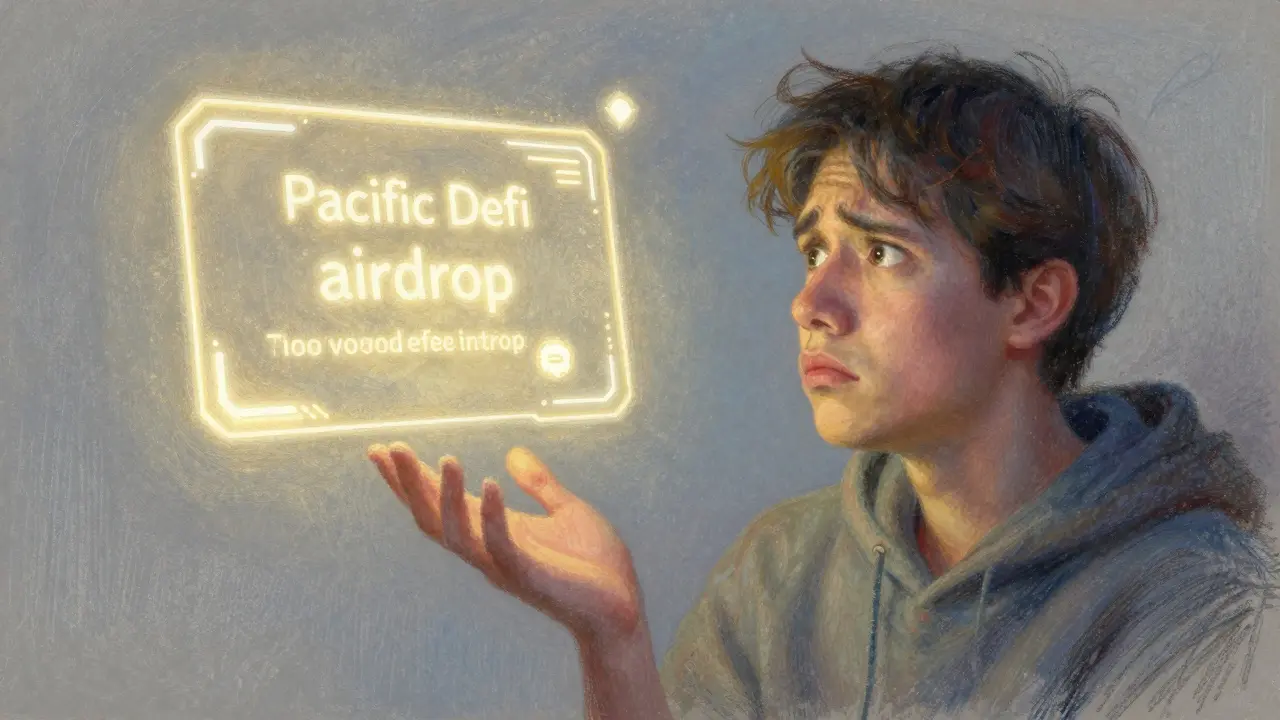
You probably saw a post about a massive crypto airdrop from a project called Pacific DeFi and wondered if you should connect your wallet. In the fast-moving world of decentralized finance, a "too good to be true" offer often is exactly that. If you are looking for the specific steps to claim tokens from Pacific DeFi, you have likely noticed a frustrating trend: there is almost no official documentation, no whitepaper, and no listing on reputable tracking sites.
The Red Flags Surrounding Pacific DeFi
Before you send any funds or grant smart contract permissions, we need to look at the facts. A legitimate project launching an Initial DEX Offering (IDO) usually leaves a massive digital footprint. For instance, when Nexchain is a cryptocurrency project that successfully ran a transparent presale, raising over $10 million across documented stages , you can track their progress, verify their funding, and see their community growth in real-time.
Pacific DeFi, however, is a ghost. It doesn't appear on Airdrops.io is one of the most trusted aggregators for verified cryptocurrency airdrops and retroactive rewards , nor does it show up on CoinPedia Markets is a curated launchpad that hand-picks and verifies upcoming cryptocurrency presales . When a project claims to be launching an IDO but isn't listed on any vetted platform, it is a massive warning sign that the project might not actually exist.
How Legitimate IDOs Actually Work
If you are new to the scene, it is helpful to know what a real launch looks like so you can spot the fakes. A standard IDO typically happens through a Crypto Launchpad is a platform that allows new blockchain projects to raise capital by selling tokens to the community in a decentralized manner . Platforms like Polkastarter or BSCPad act as a filter, requiring projects to undergo basic vetting before they can go live.
| Feature | Verified Project (e.g., Nexchain) | Suspect Project (e.g., Pacific DeFi) |
|---|---|---|
| Whitepaper | Detailed technical documentation available | Missing or vague generic text |
| Launchpad | Listed on Polkastarter, DAO Maker, etc. | No reputable launchpad affiliation |
| Audit | Smart contracts audited by CertiK or Hacken | No public audit reports available |
| Community | Active GitHub and verified social growth | Bot-filled Telegram/Twitter accounts |
The Danger of "Connect Wallet" Airdrops
Many people are lured in by the promise of "free tokens." In a real airdrop, like those seen in the Solana is a high-performance blockchain supporting a vast ecosystem of DeFi projects and airdrops ecosystem, the project rewards you for actually using their product-like swapping tokens or providing liquidity. They don't usually ask you to pay a "gas fee" upfront to receive a reward.
If the Pacific DeFi "airdrop" asks you to connect your wallet to a site you've never heard of, you are risking a drainer attack. These malicious scripts don't just steal your tokens; they can give the attacker full control over your assets. If you see a prompt asking for "Unlimited Approval" of a token you don't own, close the tab immediately.
Steps to Verify Any New DeFi Project
Since the details on Pacific DeFi are non-existent in authoritative databases, use this checklist for any other project that hits your feed. If they can't check at least four of these boxes, keep your money in your wallet.
- Check the Audit: Look for a report from a reputable firm. A project without a code audit is a gamble.
- Verify the Team: Are the founders "doxxed" (publicly known), or are they anonymous avatars?
- Scan the GitHub: Legitimate DeFi projects have active repositories where developers commit code. If there's no GitHub, there's no product.
- Cross-Reference Aggregators: Search for the project on ZebPay's airdrop lists or ICO Announcement.
- Analyze Tokenomics: Does the project explain how tokens are distributed, or is the "roadmap" just a series of vague promises?
The Verdict on Pacific DeFi
After scanning every major crypto tracking site and launchpad for 2025 and 2026, there is zero evidence that Pacific DeFi is a real, functioning project. No whitepaper, no verified partnership, and no mention on industry-standard lists like the top airdrops of the year. This has all the hallmarks of a social engineering scam designed to harvest wallet seeds or steal small "activation fees" from hopeful investors.
The safest move is to ignore any links claiming to be the "Official Pacific DeFi Launch." If a project is real, it will eventually be listed on a trusted exchange or a verified launchpad. Until then, treat it as a threat to your funds.
Is the Pacific DeFi airdrop legit?
There is no evidence from authoritative sources (like Airdrops.io or CoinPedia) that this project exists. Due to the lack of a whitepaper, audits, and verified launchpad listings, it is highly likely to be a scam.
How can I tell if an IDO is a scam?
Look for "rug pull" warning signs: anonymous teams, no smart contract audits, lack of a clear technical roadmap, and pressure to "act now" before a timer expires. Legitimate IDOs usually launch on vetted platforms like Polkastarter.
What should I do if I already connected my wallet to a suspect site?
Immediately move your remaining funds to a new, secure wallet. Use a tool like Revoke.cash to cancel any token approvals you may have granted to the malicious smart contract.
Do real airdrops require a payment to claim?
No. While you may need to pay a tiny amount of network gas (like ETH or SOL) to execute the transaction, a legitimate project will never ask you to send them tokens first to "verify" your account.
Where can I find verified airdrops?
Stick to recognized aggregators such as Airdrops.io or the official announcement channels of established Layer 2 solutions and blockchain ecosystems.






Standard drainer play. The lack of a verifiable smart contract audit is a total non-starter for any serious DeFi degenerate. If the TVL isn't locked and the codebase is essentially a black box, you're just handing over the keys to your vault.
Maybe it's just a stealth launch.
Oh, the absolute audacity of these scammers to think we'd actually fall for this again! It is truly an exercise in futility to keep posting these warnings when the level of greed in this space is simply astronomical, yet here we are, dancing the same tired dance while some poor soul is undoubtedly emptying their life savings into a void of digital nothingness. Just utterly pathetic.
Yeah, totally, a stealth launch with no whitepaper is a great way to lose money.
It's not just a scam, it's a coordinated effort by the central banks to make DeFi look unstable so we all crawl back to their failing fiat systems. They probably fund these ghost projects to trick the patriots of this country into losing faith in decentralized finance. I've seen this pattern before with the 2021 crashes and it's all connected to the same shadow players who want total control over our assets.
Its frankly disgusting how many of these foreign ops are tryin to bleed american investors dry with this garbage and the governmant just sits there doin nothin while the real patriots are gettin rugpulled by some kid in a basement halfway across the world who doesnt even know what a real value system is!! we need to stop trustin these nameless protocols and go back to real assets that actually mean somethin in the real world before we lose every single cent we have to these digital ghosts!!
I've been in the space for a while and I really want to emphasize that using Revoke.cash is a lifesaver if you've already interacted with a suspicious site. A lot of people think that just disconnecting the wallet is enough, but the permission is still there in the smart contract, which is why your funds can disappear days later without you doing anything. Always check your approvals and never, ever give unlimited approval to a project you don't trust with your life, because once that transaction is on the chain, there is no undo button, and the attackers will just wait for the perfect moment to strike when your balance is high.
Great heads up! Stay safe everyone.
Verify everything!!!
My soul literally shrivels up thinking about the sheer, unadulterated greed driving these predators to hunt the innocent! It's a digital wasteland of broken dreams and empty wallets, a symphony of despair orchestrated by a few lines of malicious code. I can almost hear the screams of a thousand liquidated portfolios echoing through the blockchain. Absolutely wretched!
We can use this as a learning moment to grow our collective wisdom. Every scam is just a lesson in disguise, teaching us to be more mindful and skeptical of the noise. Keep your energy high and your security tighter! 🚀
Let's be very clear: if you're seeing these ads on social media and they promise a 'guaranteed' return, you are the product. Stop looking for shortcuts and start doing the actual research. I'm not here to hold your hand, but I will tell you that clicking random links is the fastest way to get zeroed out. Be assertive about your security or don't play the game.
I'm curious if anyone has actually seen a working site for this or if it's just a Telegram bot blast.
thanks for the warning’ just stay safe out there guys
It is a tragedy of the highest order that human avarice has eclipsed the nobility of technological progress 😔. One must contemplate the void of morality that allows such deceit to flourish in the digital ether. We seek gold but find only the dust of our own delusions 🕉️.
Oh sure, because the 'official' documentation is always 100% honest in this industry.
probly just another front for the deep state to track wallets anyway... tho the lack of a whitepaper is pretty obviuous.
its funny how we think we can control the chaos of the blockchain with a simple checklist... like we are trying to cage a hurricane with a picket fence. anyway i just avoid anything that sounds like it was written by a marketing bot in a basement somewhere lol.
I really hope anyone who feels overwhelmed by all this technical stuff knows that there are people here to help you learn. It's a big world and crypto is just one part of it, so don't let the fear of scams keep you from exploring, just take it slow and always ask for a second opinion before you send any money anywhere. We're all in this together and the best way to beat the scammers is for us to keep sharing this kind of info so everyone can stay safe and keep their money where it belongs!
I've just been watching from the sidelines and it's scary how many people actually fall for this.
Always stay positive but stay cautious! We can still find a few gems in the dirt if we just do the work.