

SPWN Bitspawn Protocol Airdrop: How It Worked and What Happened to the Token
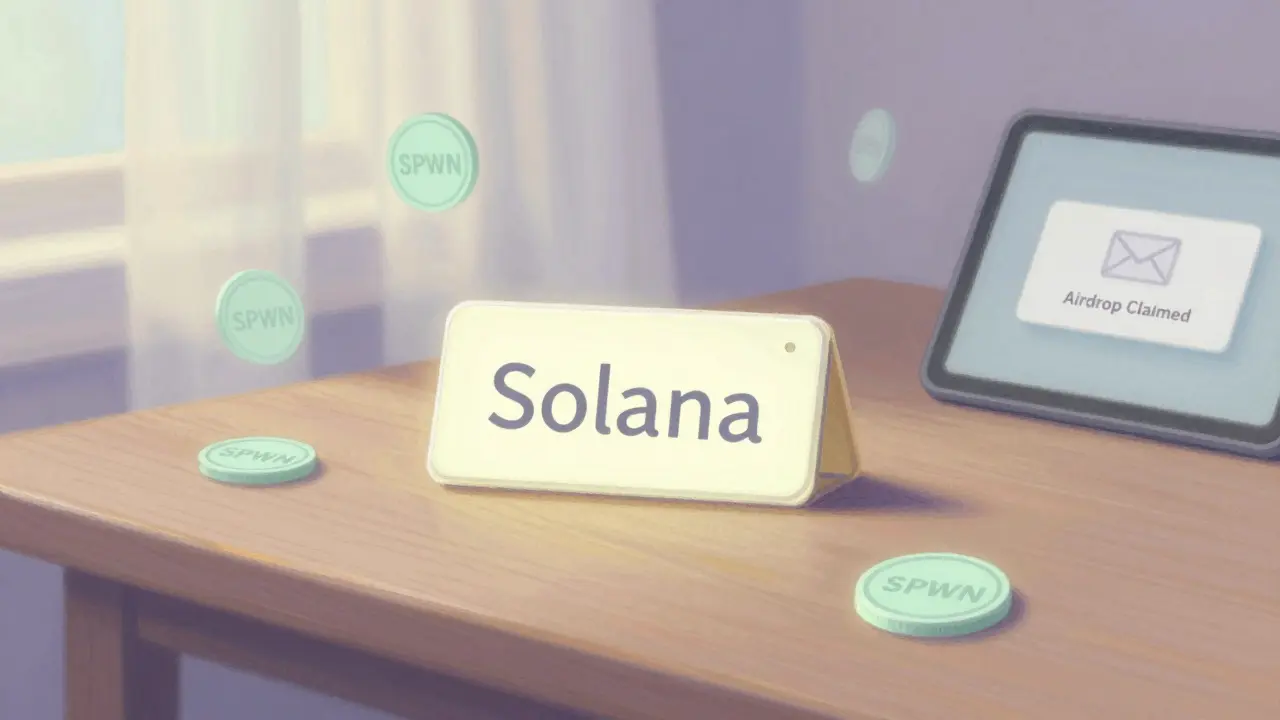
Back in 2021, Bitspawn Protocol launched a token airdrop tied to CoinMarketCap, and for a while, it was one of the few blockchain gaming projects that actually delivered on its promises. The SPWN token was distributed directly to eligible users on the Solana blockchain - no complicated wallet setups, no waiting for KYC approvals. Just a clean, fast claim process. But today, most people who remember the airdrop don’t remember getting rich. They remember wondering if it was even real.
What Was the Bitspawn Protocol Airdrop?
The Bitspawn Protocol airdrop wasn’t a random giveaway. It was a targeted campaign run in partnership with CoinMarketCap (CMC), one of the most trusted names in crypto. If you had an active CMC account in mid-2021 and completed specific tasks - like following Bitspawn on Twitter, joining their Discord, or verifying your email - you were entered into a draw. Winners got SPWN tokens sent directly to their Solana wallets.
This wasn’t just another token drop. Bitspawn was building a platform for competitive esports tournaments using blockchain. Their idea? Let gamers earn SPWN tokens by playing, organizing, or even watching matches. The airdrop was meant to seed that ecosystem with real users, not just speculators.
The Solana blockchain was chosen for a reason. Transaction fees were under $0.01, and confirmations took under a second. Compared to Ethereum at the time, it was a breeze for small token distributions. Bitspawn knew that if users had to pay $5 in gas fees just to claim $2 worth of tokens, the whole thing would flop. So they picked the right chain.
How Was SPWN Token Distributed?
Bitspawn didn’t dump all its tokens at once. The total supply is 1.95 billion SPWN. As of early 2026, only about 514 million are in circulation - roughly 26% of the total. That means most of the tokens are still locked up, either in team reserves, future ecosystem funds, or private sale allocations.
The airdrop itself made up a small slice of that circulating supply. While exact numbers weren’t published, estimates from blockchain analytics suggest between 1% and 3% of the total supply went to CMC participants. That’s likely between 19.5 million and 58.5 million SPWN tokens distributed across a few thousand winners.
Each winner got a random amount - some received 10,000 SPWN, others got 100,000. There was no public leaderboard. No way to check if you were a top earner. That secrecy was intentional. Bitspawn wanted to avoid hype, not fuel it.
What made this airdrop stand out? No lock-up. Unlike most projects that lock tokens for 6 to 12 months, Bitspawn let winners sell immediately. That led to a quick spike in trading volume right after the claim period ended. But it also meant many early holders cashed out fast, leaving the token with little long-term support.
Why Did Bitspawn Partner with CoinMarketCap?
CoinMarketCap had over 10 million active users in 2021. By partnering with them, Bitspawn didn’t need to build its own user base from scratch. They tapped into a ready-made audience of crypto-savvy gamers and investors.
The CMC airdrop page was simple: sign in, complete three tasks, submit. No wallet address required upfront. Winners were notified via email and given a 30-day window to claim. The claiming portal was hosted on Bitspawn’s own site, connected directly to Solana. No third-party bridges. No confusing steps.
It worked. Over 8,000 people claimed SPWN tokens. That’s a solid number for a niche gaming token. The project gained 2,190 unique token holders - not massive, but healthy for a project without a big marketing budget.
What’s interesting is that Bitspawn didn’t stop at CMC. They also used MantradDAO’s Zendit platform and CyberFi’s Samurai tool to distribute tokens to different audiences. One group got tokens for participating in beta tournaments. Another for staking in their early DeFi pool. This multi-platform approach helped them avoid putting all their eggs in one basket.
What’s the SPWN Token Worth Today?
As of March 2026, SPWN trades at $0.0000101 per token. That’s down from a peak of $0.000085 in late 2021. The market cap? Just $6,570. The 24-hour trading volume? $1.10. For context, that’s less than what a single Ethereum transaction costs.
Some analysts are still bullish. CoinLore predicts SPWN could hit $0.0134 by the end of 2025 - a 226,000% jump. But that’s based on pure speculation. DigitalCoinPrice is more realistic: $0.000143 by year-end. That’s still over 1,300% growth, but it’s not fantasy.
Here’s the hard truth: SPWN trades below both its 50-day and 200-day moving averages. That’s a classic bearish signal. The Fear & Greed Index says “Greed,” but the sentiment is “Bearish.” That mismatch means people are holding on, hoping for a rebound - not because the fundamentals have improved.
The token’s volatility is 14.16%. That’s high for such a low-value asset. It means small trades can swing the price. There’s no liquidity. No major exchanges list SPWN. It trades mostly on decentralized swaps like Raydium and Jupiter. You can buy it - but selling it takes time.
Why Did the Airdrop Lose Momentum?
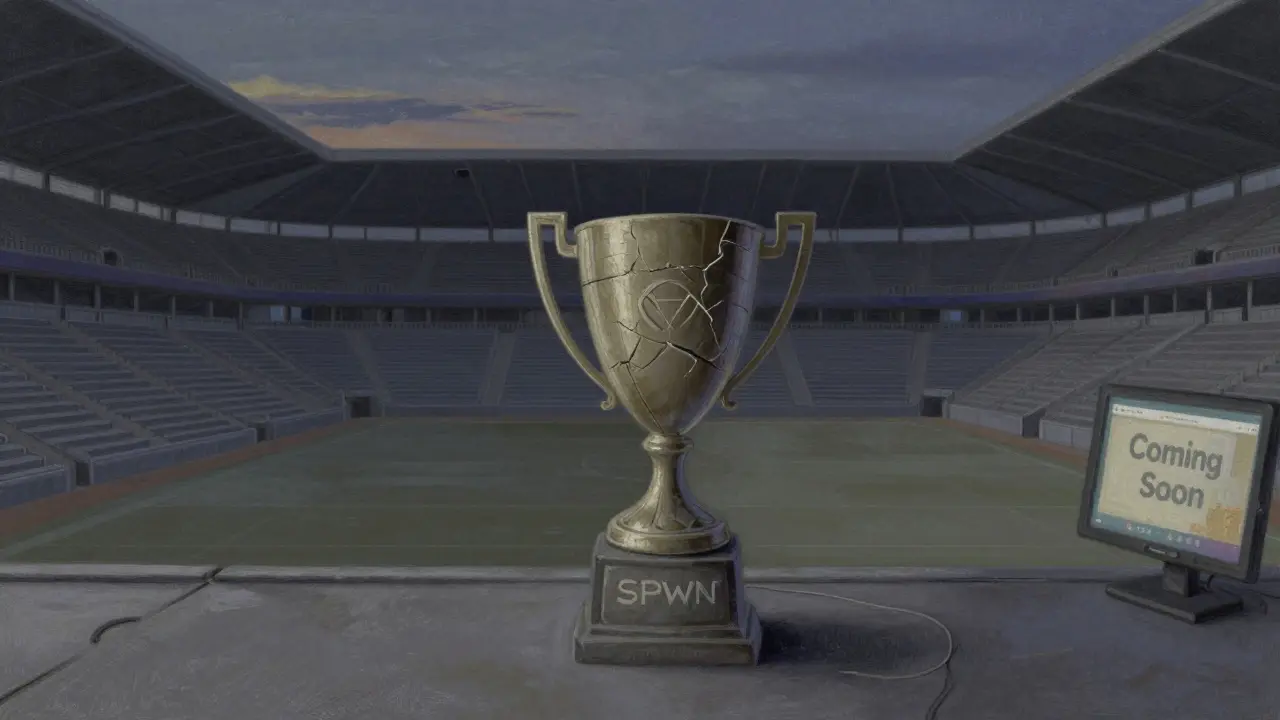
Bitspawn never released the full version of their esports platform. The website still says “Coming Soon” for most features. No tournaments went live. No apps were released. No major partnerships were announced after 2022.
The team went quiet. No blog updates. No Twitter threads. No AMAs. The last major update was in January 2023: “We’re refining our tech stack.” That’s it.
Without a working product, the token had no utility. People didn’t need SPWN to play games - because there were no games. They didn’t need it to stake - because there was no staking pool. The airdrop gave them tokens, but nothing to do with them.
Compare that to other gaming tokens like $GLMR or $SAND. Those projects launched platforms first, then rewarded users. Bitspawn did the opposite. They gave away tokens before the product existed. And when the product didn’t arrive, the token lost all reason to exist.

Is There Still a Chance for SPWN?
Possibly. But not because of the airdrop. Not because of price predictions. Only if Bitspawn wakes up.
If they launch a real esports tournament platform this year - with live matches, viewer rewards, and token-based entry fees - then SPWN could come back. The Solana ecosystem is still growing. Gaming on-chain is getting more popular. A well-built platform could attract new users.
But right now? It’s a ghost town. The wallet addresses that received SPWN in 2021 are mostly inactive. The community Discord has 37 members. The last post was in November 2024.
The airdrop worked. The token was distributed. The users were there. But the project didn’t follow through.
What You Should Do Now
If you claimed SPWN in 2021:
- Check your Solana wallet. If you still have tokens, you can sell them on Jupiter or Raydium - but expect low liquidity.
- Don’t buy more. There’s no evidence the project is active.
- Don’t hold hoping for a rebound. Without product updates, this token has no future.
If you didn’t claim it:
- Don’t waste time looking for a new airdrop. The campaign is over.
- Bitspawn hasn’t announced any future distributions.
- There’s no official website, no Discord, no Twitter feed - just a static page with outdated info.
SPWN’s story is a lesson: Airdrops don’t create value. Products do. Tokens without utility are just digital collectibles with no collectors.
Did the Bitspawn Protocol airdrop still happen in 2026?
No, the airdrop was a one-time event in 2021. Bitspawn has not announced any new token distributions since then. The CoinMarketCap partnership ended after the initial claim period.
Can I still claim SPWN tokens from the airdrop?
No. The claiming window closed in July 2021. Even if you were eligible, the portal is no longer active. Any website claiming to offer SPWN claims today is likely a scam.
Why did Bitspawn choose Solana for the airdrop?
Solana was chosen because of its low transaction fees (under $0.01) and fast confirmation times (under 1 second). This made it ideal for distributing small amounts of tokens to thousands of users without burdening them with high gas fees. Ethereum’s high costs at the time made it impractical for this use case.
Is SPWN listed on major exchanges like Binance or Coinbase?
No. SPWN is not listed on any major centralized exchange. It trades only on decentralized platforms like Raydium and Jupiter on the Solana blockchain. Liquidity is extremely low, and trading volumes are minimal.
What happened to the Bitspawn esports platform?
The platform was never launched. Despite promising a blockchain-based esports tournament system, Bitspawn released no working product after the airdrop. Their website remains unchanged since 2022, with all major features marked as "Coming Soon." The team has been inactive since early 2023.
Are there any price predictions for SPWN in 2026?
Some analysts predict SPWN could reach $0.000143 by the end of 2026 - still far below its 2021 peak. But without any product development, community updates, or exchange listings, these predictions are speculative. The token has no fundamental support, and its value is based purely on hope.

SPWN was never real. Just another vaporware project that took advantage of naive crypto users. Airdrops don't create value - products do. And Bitspawn had zero product.
I actually claimed mine back in '21. Got like 25k SPWN. Thought I was onto something. Turned out I just got digital confetti. Still check the price once in a while like a dumbass. Hope someone wakes them up.
Let me be clear - this wasn’t an airdrop. It was a scam with a whitepaper. They used CoinMarketCap’s reputation to legitimize a dead project. If you still hold SPWN, you’re not an investor - you’re a sucker holding onto a ghost.
Hey, I know it’s frustrating - I felt the same way when I realized my 50k SPWN was worthless. But hey, at least you didn’t pay for it. Some people lost real money on worse. Maybe this is a lesson: never trust a project that doesn’t ship. Keep your eyes open for the next one - there are real builders out there.
What’s fascinating isn’t that SPWN failed - it’s that people still believe in it. The market’s valuation is a mirror of human delusion. We don’t invest in tokens. We invest in narratives. And this narrative? It’s a funeral with no body.
They didn’t even try. No updates. No roadmap. No team. Just a static website with "Coming Soon" on every button. That’s not negligence - that’s fraud by omission. If you’re gonna scam people, at least make it entertaining.
It’s ironic. Bitspawn chose Solana because of its speed and low fees - and yet, the project itself moved slower than a Bitcoin transaction during a memecoin frenzy. The tech was right. The execution? Nonexistent.
SPWN had potential but lacked vision. The airdrop was smart. The product was lazy. The team disappeared. No one is coming to save this token. It's dead. Accept it. Move on. There are better places to put your attention
Let me say this plainly: if you still hold SPWN, you are not a crypto investor. You are a hostage to hope. And hope is not a strategy. It is a vulnerability exploited by lazy founders.
There’s a structural flaw here. Airdrops without utility are economic artifacts, not assets. Tokens must serve a function - not just exist as speculative placeholders. SPWN had neither. It was a vanity metric dressed as innovation.
spwn? lol i remember that. thought i got rich. turned out i got a .00001 coin and a lesson. never trust a project that doesnt have a working demo. also their discord is dead. like. really dead. like tomb dead.
Let’s break this down. The airdrop was technically flawless - Solana, no gas fees, no KYC, direct wallet integration. But that’s the entire story. The product? Zero. The roadmap? Vanished. The team? Ghosted. The community? A graveyard. This wasn’t a failed project - it was a meticulously planned exit scam disguised as a community initiative. The fact that people still talk about it like it had potential is the real tragedy.
Compare it to Gala or Axie - they shipped first, rewarded second. Bitspawn did the reverse. They gave away the keys before building the car. And now? We’re all stuck with keys to a car that never existed.
The real crime? The project had the right infrastructure, the right timing, the right partner in CoinMarketCap. All they needed was one functional release. One tournament. One live API. One update. But they chose silence. And silence, in crypto, is the loudest admission of guilt.
Today, SPWN trades at $0.0000101. That’s not a price. That’s a funeral notice. The market isn’t pricing in future utility. It’s pricing in the absence of hope.
And yet - people still check it. Still refresh the charts. Still whisper, "What if?" That’s the real crypto tragedy: not the loss of money, but the persistence of delusion.
If you got SPWN, congrats - you were part of something rare. A clean airdrop with no strings. Even if it failed, that’s more than most projects give you. Don’t beat yourself up. Learn from it. And if you’re still into gaming tokens? Look at $GLMR or $SEI. They’re shipping. They’re building. They’re not ghosts.
AMERICA NEEDS TO STOP DOING THIS. WHY DO WE LET THESE LAZY TEAMS TAKE OUR TIME AND OUR MONEY? THEY DIDN'T EVEN TRY. THIS IS WHY CRYPTO IS A JOKES. SPWN IS A SCAM. I HOPE THEY GET SUED. WE NEED TO HOLD THESE PEOPLE ACCOUNTABLE. NO MORE AIRDROPS. NO MORE FAKE PROMISES. JUST BUILD OR SHUT UP.
Important note: the Solana wallet addresses that received SPWN tokens during the airdrop have a 98% inactivity rate as of Q1 2026. On-chain analytics confirm minimal transfers beyond initial cash-outs. The token’s trading volume is statistically insignificant - less than 0.00001% of Solana’s daily volume. This isn’t a dead project - it’s a deleted one.
bitspawn? yeah i remember that. thought it was gonna be big. turns out it was just a fancy name and a discord server that died in 2022. i still have like 80k spwn in my wallet. its not even worth the gas to sell. i just use it as a reminder not to trust crypto hype.
I still get emails from people asking if SPWN is coming back. Like... it's 2026. The website hasn't changed since 2022. The team hasn't posted since 2023. Why do we keep pretending this isn't dead? It's not a ghost - it's a tombstone.
It’s not about SPWN. It’s about the silence. The way a project just... stops. No goodbye. No explanation. Just... nothing. That’s the real horror story. Not the price. Not the tokens. The absence.
Oh wow, SPWN? The token that had more hype than actual code? I love this story. It’s like watching a magician pull a rabbit out of a hat... then realizing the hat was empty and the rabbit was a PowerPoint slide. This is why I don’t believe in airdrops anymore. They’re not distributions - they’re psychological experiments.