

Understanding Curve.fi FRAX/USDC (CRVFRAX): A Guide to Liquidity Pool Tokens
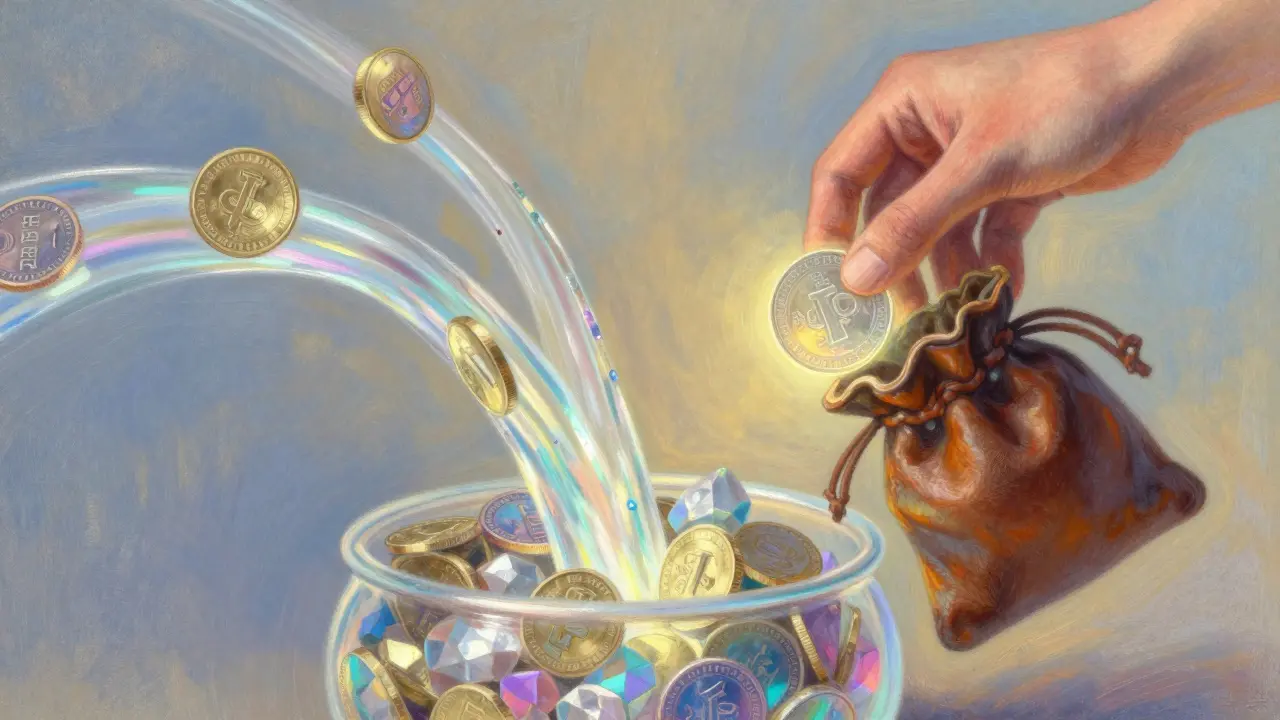
Imagine you have a pile of two different stablecoins, and you want to earn a profit from people swapping them. You can't just leave them in a wallet; you need a place where they actually do something. That is where CRVFRAX is a liquidity pool token representing a share in the FRAX/USDC pool on the Curve.fi platform. It acts as a digital receipt, proving that you've deposited assets into a pool to help others trade without needing a middleman.
What Exactly is CRVFRAX?
To understand CRVFRAX, we first need to look at the engine driving it. Curve.fi is a decentralized exchange (DEX) specifically optimized for trading stablecoins with minimal price slippage. Unlike a typical exchange where you wait for a buyer to match your price, Curve uses an Automated Market Maker (AMM). This means the price is set by a mathematical formula based on how many tokens are in the pool.
When you see the ticker CRVFRAX, you aren't looking at a standalone coin like Bitcoin. Instead, it's a Liquidity Provider (LP) token. It represents a pair of two specific assets: FRAX is a fractional-algorithmic stablecoin created by Frax Finance and USDC is a fiat-collateralized stablecoin issued by Circle . When you put an equal value of these two into the Curve pool, the system gives you CRVFRAX tokens to track your share of that pool.
How the FRAX/USDC Pool Works
The primary goal of this pool is to keep the exchange rate between FRAX and USDC as close to 1:1 as possible. Because both are stablecoins, they CRVFRAX is designed to be much less volatile than tokens paired with something like Ethereum or Solana. If you were trading a volatile pair, you'd have to worry about "impermanent loss," where the price of your assets diverges so much that you'd have been better off just holding them.
In the FRAX/USDC pool, that risk is significantly lower. Since both assets are pegged to the US Dollar, the ratio rarely shifts violently. This makes the pool a favorite for "yield farmers"-people who want to put their money to work with lower risk than betting on a new meme coin.
| Attribute | FRAX | USDC |
|---|---|---|
| Stability Mechanism | Fractional-Algorithmic | Fiat-Collateralized |
| Issuer | Frax Finance | Circle |
| Risk Profile | Algorithmic stability risk | Centralized issuer risk |
| Primary Goal | Price stability via mint/burn | 1:1 Peg to USD |
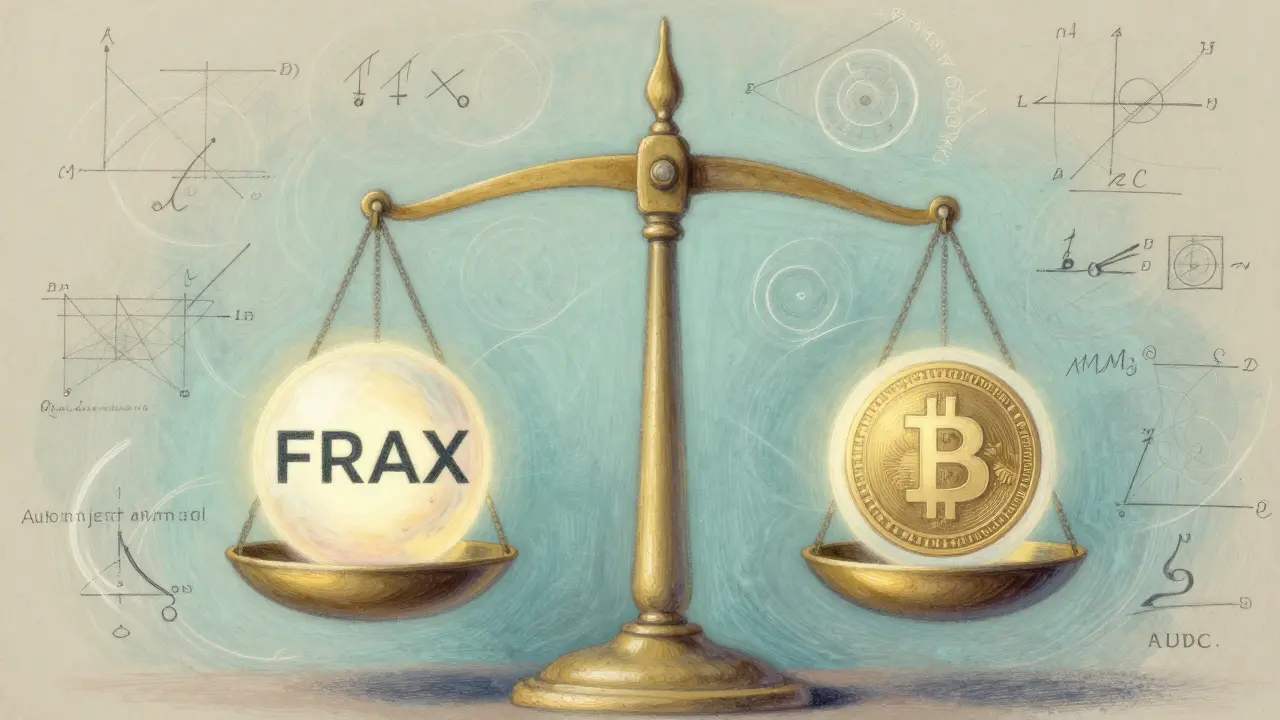
Earning Money with CRVFRAX
Why would anyone bother locking up their USDC and FRAX? The answer is simple: rewards. There are two main ways you make money here:
- Trading Fees: Every time a user swaps FRAX for USDC (or vice versa) using the Curve pool, they pay a small fee. That fee is distributed among everyone who holds CRVFRAX tokens.
- Staking Rewards: Beyond just holding the token, you can often stake your CRVFRAX on platforms like Frax Finance is the ecosystem governing the FRAX stablecoin and its associated yield products to earn additional rewards.
Think of it like a savings account, but instead of a bank paying you interest, the "market" pays you for providing the fuel (liquidity) that allows trades to happen. If the pool has high volume-meaning a lot of people are swapping-your earnings generally increase.
Current Market Status and Performance
As of April 2026, CRVFRAX is trading around $1.01. While it hasn't hit its all-time high of $1.12 (which happened back in August 2023), it remains a steady asset. With a market cap of roughly $56.1 million, it's a moderately sized pool in the massive world of DeFi.
One weird thing you'll notice if you look at different data sites is the "circulating supply." Some sites might say it's zero, while others say it's the full 55.43 million tokens. This happens because LP tokens are often locked in smart contracts for staking, which confuses some tracking bots. In reality, these tokens represent the actual liquidity sitting in the Ethereum is the primary blockchain network that hosts the Curve.fi smart contracts blockchain.
The Risks Involved
No investment is truly "safe," and CRVFRAX is no exception. You aren't fighting the volatility of the market, but you are exposed to other risks:
- Smart Contract Risk: Since your funds are managed by code, a bug or a hack in the Curve.fi or Frax Finance contracts could lead to loss of funds.
- De-pegging: If FRAX or USDC loses its peg (meaning it drops significantly below $1.00), the value of your CRVFRAX will drop because the underlying assets are worth less.
- Liquidity Gaps: While generally liquid, if everyone tries to exit the pool at once, you might experience slippage when converting your CRVFRAX back into the original stablecoins.
Is CRVFRAX a stablecoin?
Not exactly. While it represents two stablecoins, it is a liquidity pool token. Its price usually stays close to $1, but it can fluctuate based on the fees accumulated in the pool and the value of the underlying assets.
How do I get CRVFRAX tokens?
You get them by depositing an equal amount of FRAX and USDC into the Curve.fi liquidity pool. The platform then mints CRVFRAX tokens and sends them to your wallet as a receipt.
Can I sell CRVFRAX on an exchange?
Yes, you can trade them on various decentralized exchanges (DEXs) or use a wallet like the Binance Web3 Wallet to interact with the pools. However, most users simply "burn" the token back into the pool to withdraw their original FRAX and USDC plus earned fees.
What happens if FRAX loses its peg?
If FRAX drops to, say, $0.90, your CRVFRAX token value will decrease because the pool now contains an asset worth less than a dollar. This is the primary risk of providing liquidity to algorithmic stablecoin pools.
Is this better than just holding USDC?
If you are looking for yield, yes. Holding USDC in a wallet earns nothing. Providing liquidity via CRVFRAX allows you to earn trading fees and staking rewards, though it comes with the smart contract and de-pegging risks mentioned above.
Next Steps for Users
If you are a conservative investor, sticking to fiat-collateralized coins like USDC is the safest bet. However, if you're comfortable with the Automated Market Maker is a decentralized trading protocol that uses algorithms to provide liquidity without a traditional order book model, CRVFRAX offers a way to generate passive income.
Before jumping in, always check the current "APR" (Annual Percentage Rate) on the Curve.fi dashboard. If the rewards are too low, the risk of a smart contract failure might not be worth the small gain. For those who already hold CRVFRAX, consider whether you are maximizing your returns through staking or simply holding the LP tokens in a dormant wallet.
Everyone acts like this is some revolutionary discovery but it is literally just basic AMM mechanics. I've been doing liquidity providing since the early days of Uniswap and the risks of algorithmic stablecoins are way higher than people realize. You're basically betting that the mint/burn mechanism of FRAX doesn't collapse under pressure, which we've seen happen to other algorithmic pegs in the past. It's a simple trade-off: higher yield for higher systemic risk. Most people here probably don't even understand what a smart contract is, let alone the risk of a logic error in the Curve pool. It is a classic case of chasing yield without understanding the underlying plumbing of the protocol. Just don't cry when your "safe" stablecoin pair drops 20% in a flash crash because the oracle lagged.
This is a really helpful breakdown for anyone starting out!
Circle is just a front for the government to track every single cent you move. Why would anyone put their money into USDC when it is basically a digital leash? They can freeze your funds with one click. The whole system is rigged to keep us in control and this pool is just another way to suck people into the centralized trap.
honestly just looks like a way to lose money slowly if the apr is trash
There is a profound irony in the pursuit of "stability" within a financial system built upon the most volatile technology humans have ever created, yet we find ourselves seduced by the promise of a steady percentage return. When we analyze the nature of a liquidity pool, we are essentially observing a digital manifestation of collective trust, where the token serves as a proxy for a promise that the ratio of assets will remain constant. I wonder if the psychological comfort of a dollar-pegged asset blinds us to the inherent instability of the code that manages it, creating a paradox where the perceived safety is actually the primary source of vulnerability. We treat these protocols as immutable laws of nature, but they are merely lines of code written by fallible humans, subject to the same greed and error as the banks they seek to replace. In the end, we are not just trading coins, we are trading our belief in a decentralized future for a few extra basis points of yield.
The technical explanation is quite clear. It is always good to see these detailed guides for the community.
imagine trusting a "fractional-algorithmic" coin in 2026 lol 🙄 absolute madness if u actually believe this is safe. just waiting for the inevitable crash 🤡
For those who are new to this, remember that the APR can change daily. It is a great way to learn how AMMs work without risking as much as you would in a volatile pair like ETH/USDC.
The utter banality of this guide is staggering. It presents the risks as mere bullet points while ignoring the macro-economic implications of Circle's centralized hegemony. Only the uninitiated would consider this a "guide" to risk management.
Oh my goodness!! I am so worried about the smart contract risk part!! It sounds truly terrifying that a single bug could take everything away!! I hope everyone is being careful with their hard earned money!!
why do people even use frax just use usdc and be done with it lol the yield is probably not even worth the headache
It is just a receipt. You give them money and they give you a piece of paper that says you gave them money.
This is such a sparkly way to explain DeFi! I love how it breaks down the difference between the two coins... really makes the whole thing feel less scary for us newbies!
so helpful thanks
It is imperative to note that the risk of de-pegging is the most critical factor when selecting a stablecoin pair. One should perform due diligence on the collateralization ratio of FRAX before committing significant capital.
I'm feeling really positive about these options for passive income! It's great to have more ways to make our assets work for us.
Let's all try to diversify our portfolios! This seems like a solid middle-ground for those of us wanting a bit more than a standard savings account!
I really appreciate the clarity here. For my friends in India looking at DeFi, this is a great example of how to manage stable assets.
Love the vibes of this post! 🚀 DeFi is such a wild ride but these kinds of guides make it accessible for everyone! 🌟
One must consider the long-term viability of the Curve ecosystem in the face of increasing regulatory scrutiny. (o_o)
Imagine thnkng a $56m market cap is "moderately sized" in a trillion dollar industry... the delusions are real with this one
you think these tokens are real just numbers in a database controlled by people who want your money it is all a lie to keep you trapped in the loop
money is just a dream we all agree on anyway so who cares if it is in a pool
Exactly, it's all just a game of musical chairs until the liquidity dries up. See, I told you it was basic.