
What is Budbo Token (BUBO): Complete Guide to the Cannabis Crypto Coin
Jonathan Jennings
Blockchain as a Service: What It Is and How It Powers Real Crypto Projects
When you hear blockchain as a service, a cloud-based platform that lets businesses deploy and manage blockchain networks without handling the underlying tech. Also known as BaaS, it’s the behind-the-scenes engine powering many crypto projects you interact with daily. You don’t need to run your own nodes, set up consensus mechanisms, or worry about server uptime. Companies like IBM, Microsoft, and even smaller crypto firms use BaaS to launch dApps, token systems, or supply chain trackers in days, not months.
Think of it like renting a car instead of building one. You still drive it, you still choose the route, but you skip the welding, engine tuning, and oil changes. That’s what blockchain platforms, the tools and environments that host blockchain networks for users do for enterprises. They handle the heavy lifting—security, scaling, updates—so teams can focus on building features users care about. This is why you see BaaS popping up in finance, logistics, and even gaming. It’s not just for tech giants. Even small startups use it to test token economies without hiring a full blockchain team.
But not all BaaS solutions are the same. Some are built for public blockchains like Ethereum, letting you deploy smart contracts with one click. Others lock you into private, permissioned networks that sacrifice decentralization for speed and control. The posts below dig into real examples: exchanges that rely on BaaS to handle user accounts, platforms that use it to power token launches, and even failed projects that cut corners by using cheap BaaS tools that couldn’t scale. You’ll see how decentralized applications, apps that run on blockchain networks instead of central servers depend on the quality of the BaaS they’re built on. A shaky backend means slow transactions, high fees, or worse—your tokens disappearing when the platform crashes.
And here’s the thing: if you’re investing in crypto or using a dApp, you’re already using blockchain as a service—even if you don’t know it. The exchange you trade on? Likely running on a BaaS backend. The NFT marketplace you browse? Probably built on one. The airdrop you claimed? It was triggered by a smart contract hosted on a BaaS platform. Knowing how it works helps you spot the difference between a solid project and a house of cards. Below, you’ll find real reviews and breakdowns of platforms that got it right—and those that didn’t. No fluff. Just what you need to see behind the curtain.
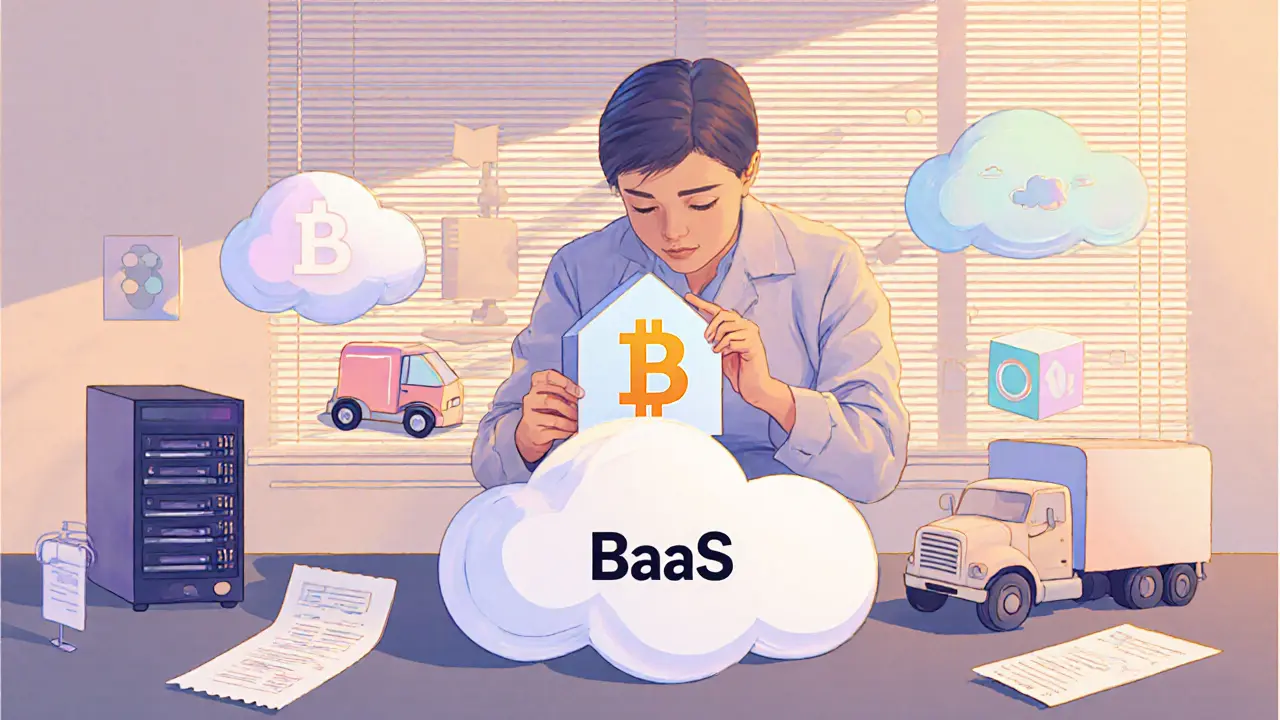
BaaS offers speed and low cost for enterprise blockchain projects, while custom blockchains deliver control and compliance for regulated industries. Learn which approach fits your business in 2025.
Jonathan Jennings Nov 16, 2025