

Self-Sovereign Identity on Blockchain: Take Back Control of Your Digital Identity
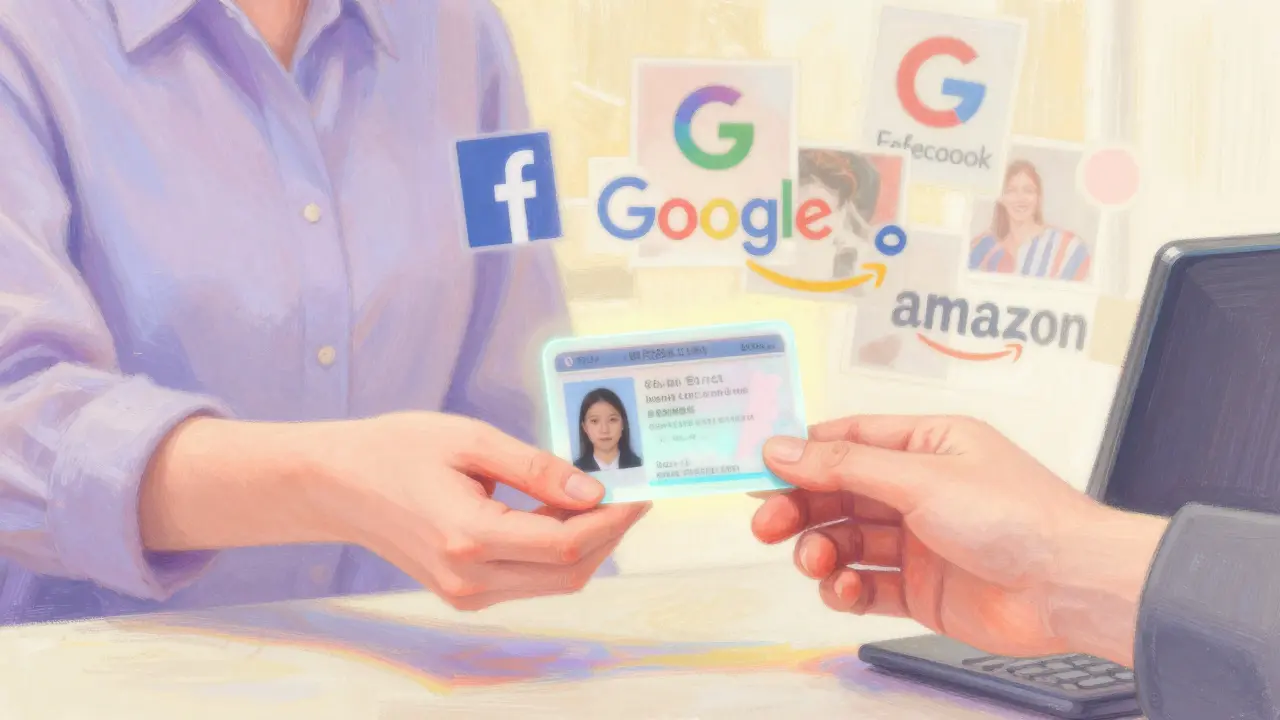
Imagine logging into a bank, applying for a job, or accessing your medical records - without handing over your passport, social security number, or any personal data. No forms. No passwords. No third parties holding your information. Just proof - cryptographically signed, instantly verified, and entirely under your control. That’s the promise of self-sovereign identity on blockchain.
Right now, your digital life is scattered across platforms. Google knows your email. Facebook knows your friends. Amazon knows your purchases. Banks know your income. Each one holds a piece of you - and if one gets hacked, you’re exposed. The 2023 Facebook data leak affected 419 million people. The system isn’t broken. It was designed this way. Self-sovereign identity flips the script. It doesn’t ask you to trust companies. It gives you the keys to your own identity.
What Exactly Is Self-Sovereign Identity?
Self-sovereign identity, or SSI, is a system where you - not a corporation or government - own and control your digital identity. It’s not a new app. It’s a new way of thinking about who you are online. Instead of creating usernames and passwords for every site, you hold your identity in a digital wallet. You decide what to share, when, and with whom.
This isn’t science fiction. It’s built on three core pieces: Decentralized Identifiers (DIDs), Verifiable Credentials (VCs), and blockchain. DIDs are unique addresses - like your name but cryptographically secured - that you control. No central registry. No company owns them. VCs are digital versions of your driver’s license, degree, or passport. They’re signed by trusted issuers (like a university or government) but stored in your wallet. Blockchain? It’s the tamper-proof ledger that makes sure no one can forge or delete your credentials.
Think of it like a physical wallet. You carry your ID, credit card, and health card. You show them only when needed. SSI does the same - but digitally, securely, and without giving away more than you have to.
How It Works: The Three Pillars
SSI doesn’t work in isolation. It needs all three parts to function.
Decentralized Identifiers (DIDs) are the foundation. Unlike email addresses or usernames tied to Google or Apple, DIDs are created by you. They’re stored on a blockchain or a distributed network like ION or Sovrin. You own the private keys. No one else can take them. If you lose your phone, you can recover your DID using a backup phrase - just like a crypto wallet.
Verifiable Credentials are the proof. Say you’re applying for a loan. Instead of emailing your pay stubs to a bank, you generate a VC from your employer - signed and encrypted. The bank checks the signature, confirms it’s real, and sees only what you allow: your income level, not your entire payroll history. This is called selective disclosure. You’re not giving away your life. You’re giving proof of a fact.
Blockchain is the backbone. It doesn’t store your data. It stores hashes - digital fingerprints - of your DIDs and credentials. This makes them tamper-proof. If someone tries to alter a credential, the hash changes. The system knows instantly. Public blockchains like Ethereum handle this at low cost - around $0.45 per transaction. But for privacy-heavy use cases, networks like Sovrin or Hyperledger Indy are designed specifically for identity, handling up to 1,000 transactions per second.
Together, these pieces let you prove who you are without revealing who you are.
Why It’s Better Than Google Sign-In or Facebook Login
Right now, most people use “Sign in with Google” or “Login with Facebook.” It’s easy. But you’re trading your data for convenience. Every time you use it, those companies log your activity, build profiles, and sell insights. In 2023, Google processed 3 billion logins a day. That’s 3 billion data points. And if Google’s system is compromised? So are you.
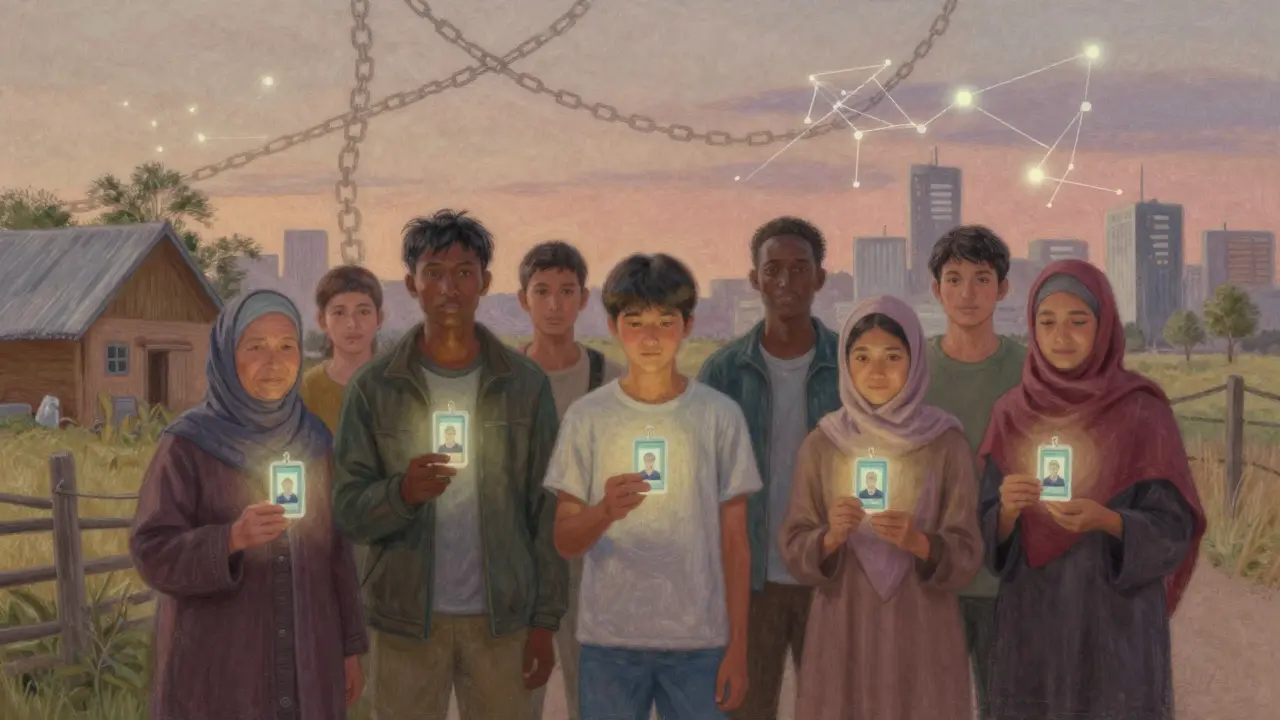
SSI removes that middleman. You don’t need to trust anyone. You don’t need to give up your data. You don’t even need to be online to prove something - credentials can be stored offline. This matters for people in rural areas, refugees, or anyone without reliable internet.
Real-world examples show the difference. In British Columbia, the Verified.Me system lets citizens prove their age to buy alcohol without showing ID. Zero data was stored by the store. Zero breaches. In JPMorgan’s pilot, SSI cut KYC (know-your-customer) time from 5 days to under 2 hours. No paperwork. No calls. Just a verified credential.
Compare that to traditional systems like SAML or OAuth - still used by 1.2 trillion enterprise logins a year. They’re better than passwords, but they still rely on trusted providers. If the provider is hacked, you’re hacked. SSI has no single point of failure.
Where It’s Already Being Used
SSI isn’t just theoretical. It’s live.
In Europe, the eIDAS 2.0 regulation - effective September 2024 - requires all member states to support SSI for digital IDs. That means a German citizen can use their SSI to open a bank account in Spain or enroll in a university in Italy - without paperwork.
Healthcare is another big win. The European Health Network (EHN) uses SSI to let 450 million citizens control access to their medical records. Doctors get only the info they need. Patients decide who sees what. No more handing over entire medical histories to every clinic.
In Indonesia, UNICEF used an SSI system to issue digital birth certificates. Retention rates jumped to 92% - compared to 63% with old systems. Why? Because parents didn’t have to travel to government offices. They could verify their child’s identity using their phone, even in remote villages.
Even DeFi platforms are adopting it. Users can prove they’re over 18 or live in a compliant region without revealing their name or address. No more KYC forms. No more waiting weeks for approval.
The Big Problems: Why It’s Not Everywhere Yet
SSI sounds perfect. So why aren’t you using it?
Because it’s hard. And most people aren’t ready.
First, key management. If you lose your private key, you lose your identity. No “forgot password” button. A 2023 IEEE study found 68% of non-technical users struggle with this. Reddit users report horror stories: “Lost my entire identity after a phone upgrade.” Product Hunt reviews show 87% of negative feedback is about recovery.
Second, UX is terrible. Most SSI wallets are clunky. Civic’s consumer app had a 72% abandonment rate during onboarding. People didn’t understand what they were signing. They didn’t know how to store backups. The tech is there - the interface isn’t.
Third, trust is still centralized. Dr. Lorrie Cranor from Carnegie Mellon found that 83% of users would happily use an Apple or Google identity wallet - even though that defeats the whole point of decentralization. If Apple becomes the gatekeeper of your identity, we’re back where we started.
And then there’s bias. MIT Media Lab audited facial recognition in some SSI wallets and found error rates 34.7% higher for darker-skinned women. If your identity system can’t recognize you, it doesn’t matter how secure it is.
Enterprise adoption is better. Accenture saved a European bank 47% on KYC costs. But for regular people? The gap is wide.
Who’s Building It - And What’s Next
Microsoft’s Entra Verified ID is used by 37% of Fortune 500 companies. Dock.io, Trinsic, and Sovrin are leading open-source tools. The European Blockchain Services Infrastructure now connects 27 countries - processing 1.2 million verifications daily.
The tech is evolving fast. In June 2024, W3C released Verifiable Credentials 2.0 - adding better privacy features. In September, ION 2.0 launched with 10x faster performance. By Q4 2025, FIDO Alliance plans to integrate passkeys with SSI - meaning you could log in with your fingerprint and own your identity at the same time.
Forrester predicts SSI will dominate Web3 by 2027. But mainstream adoption? That’s not until 2030. Why? Because people need to trust it. And trust comes from simplicity, not sophistication.
What You Can Do Today
You don’t need to be a developer to start using SSI.
Try a wallet like uPort or Civic. Get a DID. Request a credential from a test issuer (some universities offer them). See how it feels to share proof without sharing data.
If you’re a business owner, explore SSI for KYC or access control. The cost savings are real. The compliance benefits are stronger.
If you’re a developer, learn DID methods and VC schemas. The learning curve is 8-12 weeks. The payoff? Building the next generation of digital trust.
SSI isn’t about replacing passwords. It’s about replacing the entire idea that your identity belongs to someone else. It’s about saying: This is me. I decide what you see.
The internet was built for machines. Now it’s time to build it for people.
Is self-sovereign identity the same as a crypto wallet?
Not exactly. A crypto wallet holds your Bitcoin or Ethereum. A self-sovereign identity wallet holds your digital credentials - like your driver’s license, degree, or passport - as verifiable proofs. You can use the same app for both, but they serve different purposes. SSI wallets are designed to prove who you are, not to send money.
Can I lose my self-sovereign identity?
Yes - if you lose your private key and don’t have a recovery method. Unlike passwords, there’s no “forgot password” button. That’s why backup phrases and multi-signature recovery are critical. Some wallets now offer social recovery (asking trusted friends to help reset access), which helps reduce this risk.
Is SSI legal?
Yes, and increasingly required. The European Union’s eIDAS 2.0 regulation, effective September 2024, mandates that all member states support SSI-compatible digital IDs. Other countries are following. In the U.S., 17 states have active SSI pilots. As long as the credentials are issued by trusted entities (like governments or universities), they’re legally recognized in many jurisdictions.
Does SSI work without blockchain?
Technically, yes - but it loses key benefits. DIDs and VCs can run on distributed hash tables (like ION), which are faster and cheaper than public blockchains. But blockchain adds tamper-proofing and global verifiability. Without it, you rely on centralized servers to validate credentials - which brings back the very problems SSI was designed to fix.
Will Apple or Google take over SSI?
They already are trying. Most users prefer convenience over control. If Apple offers a one-tap SSI wallet that works everywhere, 83% of people will use it - even if it means Apple becomes the new identity gatekeeper. That’s the biggest threat to SSI’s promise: user behavior. The tech is decentralized. The people? They’ll still click “Sign in with Google.”
How do I get started with SSI?
Start by downloading a wallet like uPort or Civic. Then, look for a test issuer - some universities and NGOs offer free verifiable credentials. Practice requesting and sharing a credential. Don’t worry about using it for real yet. Just get comfortable with the flow. The goal isn’t to replace your passport tomorrow - it’s to understand how you can control your data tomorrow.


Finally, someone gets it. I’ve been using uPort for my digital credentials since last year, and honestly? It’s life-changing. I shared my degree verification with a remote employer last week - no email attachments, no LinkedIn creepiness, just a QR code and a tap. No one else holds my data. No one. That feeling? Priceless.
And yeah, the UX is rough right now - but that’s not the tech’s fault. It’s the same as saying the internet was useless in 1995 because Netscape crashed all the time. We’re in the dial-up phase of identity. Give it five years.
Also, if you’re worried about losing your keys? Use a hardware wallet + social recovery. I’ve got three trusted friends set up as backups. It’s like having a safety net made of humans, not corporations.
LOL. So now we’re supposed to trust a blockchain instead of Google? 😂
Who’s really running the Sovrin network? Who owns the nodes? Who’s auditing the ‘tamper-proof’ ledger? 🤔
It’s all just a new flavor of the same ol’ surveillance capitalism. They just swapped the data brokers for crypto bros. Next thing you know, Apple’s gonna sell ‘SSI Pro’ for $9.99/month and call it ‘freedom.’
Also - if I lose my key? I’m dead. No refunds. No customer service. Just… gone. Like my cat after the vet visit. RIP.
blockchain identity? yeah right
next theyll say your soul is on the ledger
theyre just trying to make you pay for your own freedom
you think you own your identity but you just bought the prison key
watch them add a subscription fee for your DID next year
its all a scam
they just want you to think youre in control so youll stop asking questions
trust me i know how this works
Oh wow. Another tech bro pretending decentralization is a moral victory. Let’s be real - this only works if you’re a white, middle-class, English-speaking tech-literate person with a $1000 phone and three backup devices.
What about the elderly? The undocumented? The rural communities without broadband? SSI isn’t liberation - it’s a digital caste system where only the privileged get to own their identity.
And don’t even get me started on the ‘verifiable credentials’ from governments. You think the U.S. won’t revoke your DID if you protest? You think the EU won’t flag your health data if you’re a refugee?
This isn’t freedom. It’s surveillance with a blockchain veneer. And you’re all too busy being impressed by the shiny interface to notice the chains.
Wait so if I use SSI and my phone dies and I didn’t backup my key... I just can’t ever prove I exist again? Like... I’m legally dead? 😅
Also why is everyone acting like this is new? I’ve been using PGP for email since 2008 and no one cared then either. People want convenience. Not control. They’ll click ‘Sign in with Google’ until the servers burn down.
Also - who’s gonna teach my grandma to use this? She still thinks ‘cloud’ is a weather thing.
I tried one of these wallets. Took me 45 minutes just to get the backup phrase right. Then I realized I had to trust three strangers to help me recover it. I don’t even trust my own brother. What if one of them gets hacked? What if one of them dies? What if one of them just… doesn’t reply?
It’s exhausting. The whole thing feels like emotional labor wrapped in cryptography. I just want to log in. Why does it have to be so heavy?
I miss passwords. At least they were simple. Even if they were terrible.
man i love this idea but holy cow the onboarding is a nightmare 😅
i got my did set up after like 3 tries and then i accidentally signed a credential that said i was 300 years old and a professional llama groomer. no idea how that happened. the app just popped up a screen with 12 buttons and i clicked the sparkly one.
but once you get past the chaos? it’s wild. i used it to prove i was over 21 at a bar in seattle and the bouncer just scanned my phone and said ‘cool’ and handed me a beer. no id, no questions. i felt like a spy.
we need better ux. but the potential? unreal.
SSI is just crypto’s answer to ‘I don’t trust institutions’ - which is fair. But you’re replacing one set of gatekeepers with another: the developers who control the DID methods, the validators who run the nodes, the issuers who decide what counts as a credential.
And let’s not forget: if a government issues your birth certificate as a VC, they can revoke it. Just like they can cancel your passport. The blockchain doesn’t stop tyranny. It just makes it more efficient.
Decentralization is a myth. There’s always a central point of control. Someone always holds the keys. Always.
Okay but let’s talk about the real elephant in the room - accessibility. I’ve worked with elderly clients trying to use these wallets. One woman thought she had to ‘charge’ her digital ID like a phone. Another asked if she could print it out and carry it in her purse. The UX isn’t just bad - it’s actively hostile to non-tech users. And yet we’re acting like this is the future of democracy?
Meanwhile, the people who need this most - refugees, undocumented immigrants, survivors of abuse - are being left behind because they can’t afford a smartphone or don’t have Wi-Fi. This isn’t inclusion. It’s exclusion with a blockchain sticker on it.
And don’t even get me started on the fact that 80% of these wallets require a phone number to register. So you’re still giving your data to a centralized provider just to get your ‘decentralized’ identity. The irony is thick enough to spread on toast.
USA built the internet. Now we’re letting Europeans dictate how we control our own identities? No thanks. eIDAS 2.0? That’s EU surveillance dressed up like a TED Talk.
My identity is American. My data is American. I don’t need some German bureaucrat deciding if my VC is ‘compliant.’
And don’t tell me about ‘trustless systems’ - you think China isn’t building its own SSI? They already have. It’s called Social Credit 2.0 with blockchain. They just call it ‘digital citizenship.’
We’re not building freedom. We’re building the next version of Big Brother - and it’s got a prettier UI.
For anyone actually trying to implement this: start with verifiable credentials from trusted issuers - universities, government portals, professional licenses. Don’t try to build your own DID from scratch. Use existing frameworks like W3C VC 2.0 and ION. The libraries are open source.
Also - if you’re a developer, learn JSON-LD and LD-Proofs. They’re not sexy, but they’re the foundation. And for god’s sake, build recovery flows. Social recovery. Multi-sig. Hardware tokens. Don’t make users choose between security and sanity.
SSI isn’t about the tech. It’s about design. Make it stupid simple. People don’t care how it works. They care if it works.
Been using Civic for my freelance gigs. Got a VC from Upwork verifying my skill level. Now I just show it when I apply. No more sending 3 versions of my resume. No more LinkedIn stalking. Just… boom. Verified.
My buddy tried it too and thought it was a scam at first - until he used it to prove he was a certified electrician to a client in Texas. No license number, no state database lookup. Just a tap. The client cried. I’m not joking.
It’s not perfect. But it’s the first time I’ve felt like my work was mine - not some platform’s asset.
Also, the app just got a major update. Way less confusing now. Still not for grandma, but hey - progress.
If you’re new to this - don’t panic. Start small. Get a test credential from a university or NGO. Just play with it. Don’t try to replace your driver’s license tomorrow.
It’s okay to feel overwhelmed. I was too. But once you realize you can share your age without showing your birthdate, or your address without revealing your street - it clicks.
You’re not losing control. You’re reclaiming it. Slowly. One credential at a time.
And if you mess up? That’s fine. We’re all learning. The tech is new. The norms are still being written. Be patient with yourself. And with others.
SSI isn’t just a technical shift - it’s a philosophical one. We’ve spent decades outsourcing our sense of self to platforms. We define ourselves by our likes, our followers, our login history. SSI forces us to ask: who are we, outside of the algorithm?
This is the first time in digital history where the user isn’t the product - they’re the sovereign.
It’s messy. It’s hard. It’s inconvenient. But it’s necessary.
Like democracy. Like literacy. Like the right to vote. We didn’t make those easy. We made them worth fighting for.
SSI is the same. Not because it’s perfect - but because it’s possible.
So now we’re supposed to trust blockchain instead of the government? Yeah right. Who do you think controls the nodes? Who funds the research? Who wrote the standards?
It’s all the same people. Just with better PR.
And don’t even get me started on ‘verifiable credentials’ from universities. You think Harvard’s not gonna flag your VC if you speak out against their donors?
This isn’t freedom. It’s branding. They just changed the logo.
Just wanted to say - I’m a single mom with two kids and a slow internet connection. I tried one of these wallets. It crashed twice. I cried. But then I got a credential from my local library for my daughter’s school enrollment. No paperwork. No waiting. Just a QR code.
I didn’t understand the tech. But I understood the result.
That’s all I need.
Thank you to the people who made this possible. Even if it’s imperfect. Even if it’s slow. It’s helping.
One thing no one talks about: mental load. Managing your own identity is exhausting. You have to remember where you shared what. You have to track which credentials are expired. You have to decide who to trust with your recovery.
It’s like being your own IT department, HR rep, and privacy officer - all at once.
That’s not empowerment. That’s burnout with a blockchain.
We need tools that help, not add to the weight.
But… I still believe in it. Just not the way it’s being sold.
They say ‘no central authority’ - but who controls the issuers? Who approves the standards? Who decides what counts as a ‘valid’ credential?
It’s the same corporations. Same governments. Same elites. They just moved the server from New York to Switzerland and called it ‘decentralized.’
And if you’re a woman of color? Good luck getting your facial recognition to work. The algorithm still thinks you’re a ‘low-confidence match.’
This isn’t liberation. It’s exclusion with a fancy new name.
They’re not building a new system. They’re just rebranding the old one.
i tried to use this thing and lost my keys and now i cant log into my bank or my job or anything
no one will help me
they just said 'its your responsibility'
so now im basically digital ghost
no id no proof no nothing
they told me to buy a new phone
but i cant afford one
so i guess i dont exist anymore
thanks ssi
youre the best
Just saw Greg’s comment. I’m so sorry you’re going through this. You’re not alone. I’ve seen this happen too - and it’s not a ‘user error.’ It’s a system failure.
The industry needs to stop treating key loss like a personal failing. It’s a design flaw. We need mandatory recovery education. We need free recovery services. We need legal protections.
And if you’re reading this and you’re a developer - please, for the love of all that’s human, build recovery into the core. Not as an afterthought.
Greg - if you’re still here, DM me. I know someone who can help you recover access. You deserve to exist.