

What Are Digital Identity NFTs? A Clear Guide to Blockchain-Based Digital IDs
Jonathan Jennings
Blockchain Sanctions: How Governments Control Crypto and What It Means for You
When we talk about blockchain sanctions, government-imposed restrictions on cryptocurrency addresses, wallets, or entire networks to block financial activity. Also known as crypto freezing, it’s when state agencies like the U.S. Treasury’s OFAC identify and blacklist blockchain addresses tied to sanctioned entities—like terrorist groups, rogue states, or ransomware operators. This isn’t science fiction. In 2022, OFAC added the mixer Tornado Cash to its sanctions list, freezing over $475 million in ETH across thousands of wallets—even those owned by regular people who never knew they were interacting with it.
Blockchain sanctions rely on blockchain analysis, tools that trace crypto transactions across public ledgers to identify suspicious flows. Companies like Chainalysis and Elliptic help governments track how funds move from darknet markets to exchanges. But here’s the catch: these same tools are used by exchanges to block users. If your wallet ever touched a sanctioned address—even once—you might get locked out of Kraken, Coinbase, or Biteeu without warning. And unlike banks, crypto platforms don’t have to explain why.
It’s not just about criminals. crypto regulation, the growing set of rules forcing exchanges to monitor users and report activity is turning decentralized networks into monitored systems. KYC checks, as you’ve seen in posts about TRIV and Biteeu, are just the start. Now, exchanges are building automated filters that freeze accounts based on on-chain behavior. You can’t just HODL anymore—you have to prove you’re clean. And if you’re in Indonesia, Iran, or Russia, you’re already feeling the squeeze.
Running a node doesn’t protect you from this. Neither does using a DEX like SundaeSwap or Cube Exchange. If your wallet gets flagged, no amount of decentralization will unblock it. The system doesn’t care if you’re tech-savvy or just unlucky. What matters is the address history. That’s why posts about Wicrypt’s failed airdrop or the dead Amaterasu Finance exchange matter—they show how easily trust collapses when compliance overrides utility.
So what’s next? More wallets getting frozen. More exchanges pulling support for certain tokens. More users stuck with unusable crypto because they didn’t know their address was tainted. The tools to track this are getting better. The rules are getting tighter. And the people caught in the middle? They’re not the ones designing the policy. They’re just trying to trade, stake, or earn tokens without getting punished for someone else’s actions.
Below, you’ll find real-world examples of how blockchain sanctions shape the crypto landscape—from exchange reviews that warn about compliance risks, to guides on why some airdrops vanish overnight. This isn’t theory. It’s happening right now. And if you’re using crypto, you’re already part of it.
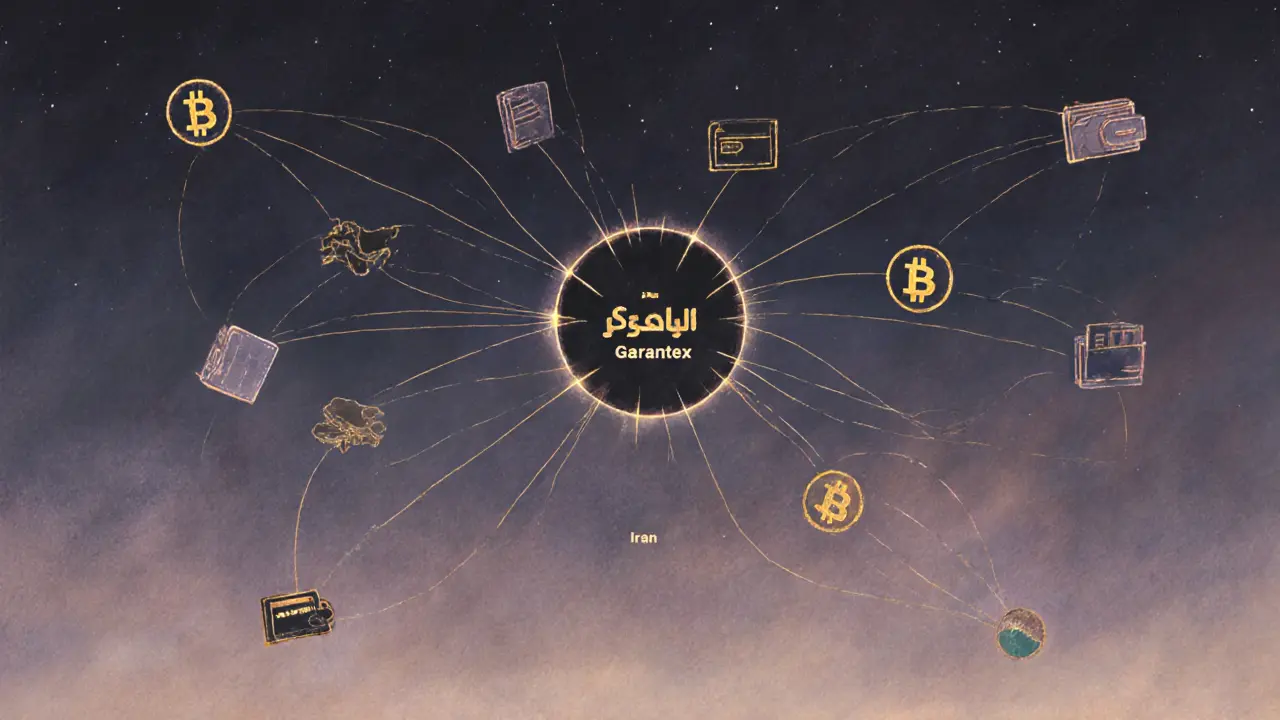
In 2024, $15.8 billion in cryptocurrency flowed to sanctioned entities, proving crypto is now a key tool for illicit finance. Bitcoin dominated, DeFi enabled evasion, and exchanges like Garantex became targets. Here's what it means for users and regulators.
Jonathan Jennings Nov 23, 2025
OFAC cryptocurrency sanctions are now enforceable, with fines up to $750,000 for non-compliance. Learn what crypto businesses must do in 2025 to avoid penalties, block sanctioned wallets, and build a real compliance program.
Jonathan Jennings Nov 13, 2025