
Pandora Finance (PNDR) Airdrop: What You Need to Know About the CoinMarketCap Community Claim
Jonathan Jennings
Full Node: What It Is, Why It Matters, and How It Powers Crypto Networks
When you run a full node, a computer that downloads and verifies the entire blockchain history to independently validate transactions and blocks. Also known as a complete node, it doesn’t just receive data—it checks every rule, every signature, every block, and refuses to accept anything that breaks the protocol. This is how Bitcoin and Ethereum stay trustless: no middleman, no blind faith, just code and consensus.
A full node, a computer that downloads and verifies the entire blockchain history to independently validate transactions and blocks. Also known as a complete node, it doesn’t just receive data—it checks every rule, every signature, every block, and refuses to accept anything that breaks the protocol. This is how Bitcoin and Ethereum stay trustless: no middleman, no blind faith, just code and consensus.
Running a full node isn’t just for tech experts. It’s a quiet act of sovereignty. Every time you run one, you help protect the network from fake transactions, censorship, or malicious upgrades. You’re not mining. You’re not staking. You’re doing something even more fundamental: you’re enforcing the rules. That’s why exchanges like TRIV or Biteeu can’t control your money when you’re connected directly to the chain. They rely on third-party nodes. You don’t.
Most people use lightweight wallets or apps that connect to someone else’s node. That’s fine for buying Bitcoin or checking your balance. But if you want real control—if you want to know for sure that your transaction was valid, that no one altered the rules, that the network hasn’t been compromised—you need your own full node. It’s the difference between trusting a friend’s summary of a book and reading the whole thing yourself.
Full nodes don’t just support Bitcoin. They’re the backbone of every serious blockchain. From Cardano’s SundaeSwap to decentralized exchanges like Cube Exchange, full nodes keep the system honest. Without them, DEXs would collapse into centralized gatekeepers. Without them, airdrops like NUUM or MCRT could be manipulated. Without them, scams like THDax or Crypcore would run unchecked.
It’s not about speed or profit. It’s about resilience. A network with thousands of full nodes is nearly impossible to shut down. One with a handful? That’s a single point of failure waiting to happen. That’s why places like Iceland, where energy limits are forcing crypto to evolve, still need full nodes—even if mining dies. The infrastructure stays. The trust stays. The rules stay.
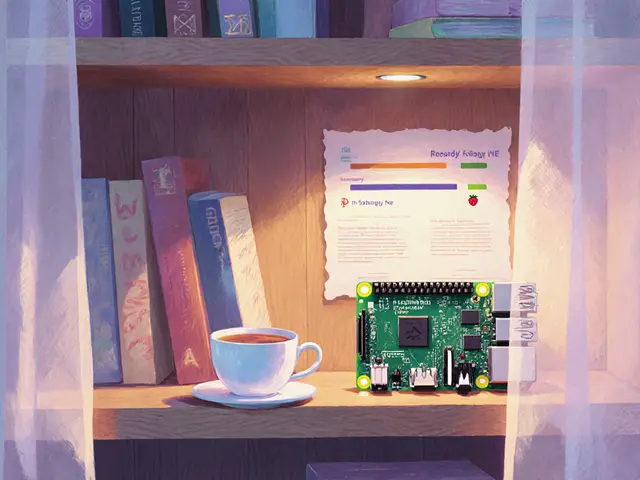
You don’t need a supercomputer. A Raspberry Pi and a hard drive can run a Bitcoin full node. Ethereum needs more space and bandwidth, but it’s still doable. The real barrier isn’t hardware—it’s awareness. Most users don’t know their wallet is borrowing someone else’s truth. They think they’re decentralized. They’re not. Not unless they’re running their own node.
Below, you’ll find real-world breakdowns of how full nodes interact with exchanges, airdrops, and DeFi protocols. You’ll see which platforms rely on them, which ones ignore them, and how running one changes your entire relationship with crypto. No fluff. No hype. Just what matters: control, verification, and independence.

Running a blockchain node keeps the network secure, censorship-resistant, and truly decentralized. It's not just for tech experts-anyone can help maintain the system by running a node and verifying transactions independently.
Jonathan Jennings Nov 14, 2025