

UAE Removal from FATF Greylist: How It Changed the Crypto Industry

The UAE was officially removed from the FATF grey list on February 23, 2024-and for crypto businesses operating in the region, it wasn’t just a paperwork win. It was a signal that the country was now fully trusted by global financial systems. This change didn’t come from luck. It came from two years of sweeping reforms: new courts for financial crimes, harsher penalties for bribery, mandatory AML training for diamond traders and real estate agents, and a major boost in resources for the Financial Intelligence Unit. All of this mattered for crypto because the same rules that apply to banks now apply to exchanges, wallet providers, and token issuers.
What the FATF Grey List Actually Meant for Crypto
Before February 2024, being on the FATF grey list made it harder for UAE-based crypto firms to work with international banks. Many global payment processors, liquidity providers, and even fiat gateways refused to touch any entity linked to the UAE. Why? Because the risk of being fined or sanctioned for accidentally processing a transaction tied to money laundering was too high. Even if a crypto exchange in Dubai had perfect KYC, the country’s reputation was enough to trigger red flags. Banks in Europe and the U.S. started requiring extra documentation, longer due diligence, and higher fees just to open accounts. Some crypto firms in Dubai had to shift their operational headquarters to Singapore or Switzerland just to keep their banking relationships alive. Others shut down their fiat on-ramps entirely. That meant fewer ways for regular people to buy Bitcoin or Ethereum with dirhams. It slowed adoption. It scared off institutional investors. It made the UAE look like a risky place to build a crypto business-even though many local firms were already following global standards.The Reforms That Changed Everything
The UAE didn’t just tweak its laws. It rebuilt its entire financial crime defense system. One of the biggest moves? Creating a specialist court dedicated to financial crimes. Before, cases dragged on for years. Now, prosecutors have dedicated judges, forensic accountants, and faster timelines. This sent a clear message: if you’re laundering money through a crypto exchange in Abu Dhabi, you’re going to jail. They also forced every Designated Non-Financial Business and Profession (DNFBP)-including gold dealers, real estate agents, and law firms-to report suspicious activity. That meant even if bad actors tried to move crypto into physical assets like luxury watches or high-end property, they’d be caught. The Financial Intelligence Unit (FIU) got more staff, better tools, and real authority to shut down non-compliant firms. In 2023 alone, the FIU suspended licenses for 17 entities and issued over $40 million in fines, mostly targeting unlicensed money service businesses. The UAE also started sharing more data with other countries. They increased outbound mutual legal assistance requests by over 200% in two years. That’s not just paperwork-it means if the U.S. Treasury asks for transaction records from a Dubai-based exchange, the UAE now responds within days, not months. That kind of cooperation is what FATF looks for. And it’s exactly what crypto exchanges needed to feel safe operating there.How Crypto Exchanges Reacted
Within weeks of the removal, major exchanges started announcing new partnerships. Binance reopened its UAE fiat gateway, allowing direct AED deposits and withdrawals. By April 2024, OKX launched a local fiat on-ramp with a UAE bank for the first time. Crypto.com began offering UAE-based users direct bank transfers without third-party intermediaries. These weren’t marketing moves-they were operational shifts made possible because banks finally trusted the regulatory environment. Local exchanges like BitOasis and CoinMENA saw a 65% increase in new user sign-ups in the first quarter after the removal. More importantly, institutional clients-hedge funds, family offices, even some sovereign wealth fund subsidiaries-started asking for custody solutions in the UAE. Before, they’d say, “We’d love to, but we can’t get a banking partner.” After, they said, “How do we set this up?” Even crypto startups raising capital found it easier. Investors who previously avoided the UAE because of regulatory uncertainty now saw it as a stable jurisdiction. Token sales that were stuck in limbo got green lights. VC firms that had written off the region started sending teams to Dubai for due diligence. The UAE went from being a “maybe” to a “yes” on investor checklists.
The Ripple Effect: EU Followed Suit
The FATF removal was only half the story. In June 2025, the European Union finally removed the UAE from its own high-risk list-despite having kept it on the list for over a year after FATF cleared it. That alignment was huge. It meant European banks could now legally process transactions involving UAE-based crypto firms without fear of violating EU sanctions. No more “we can’t process this because the UAE is still high risk.” This opened the door for European crypto firms to partner with UAE-based custodians. It allowed EU-based DeFi protocols to integrate UAE wallets without triggering compliance alerts. It made it possible for UAE residents to use EU-based crypto platforms without being flagged as high-risk users. The regulatory alignment removed friction that had been holding back cross-border crypto activity for years.What This Means for Everyday Crypto Users
For regular users in the UAE, the change was simple: faster deposits, lower fees, more options. You could now buy crypto with your local bank account without jumping through hoops. Withdrawals to your bank happened in hours, not days. Some exchanges even started offering zero-fee AED deposits-something that was unheard of before. It also meant more legitimacy. Before, people outside the UAE saw crypto trading in Dubai as shady. Now, it’s seen as regulated, transparent, and compliant. That helped normal people feel safer using crypto. Parents started investing for their kids’ education. Freelancers began receiving payments in crypto and converting to AED instantly. Small businesses accepted Bitcoin for services without worrying about bank account freezes.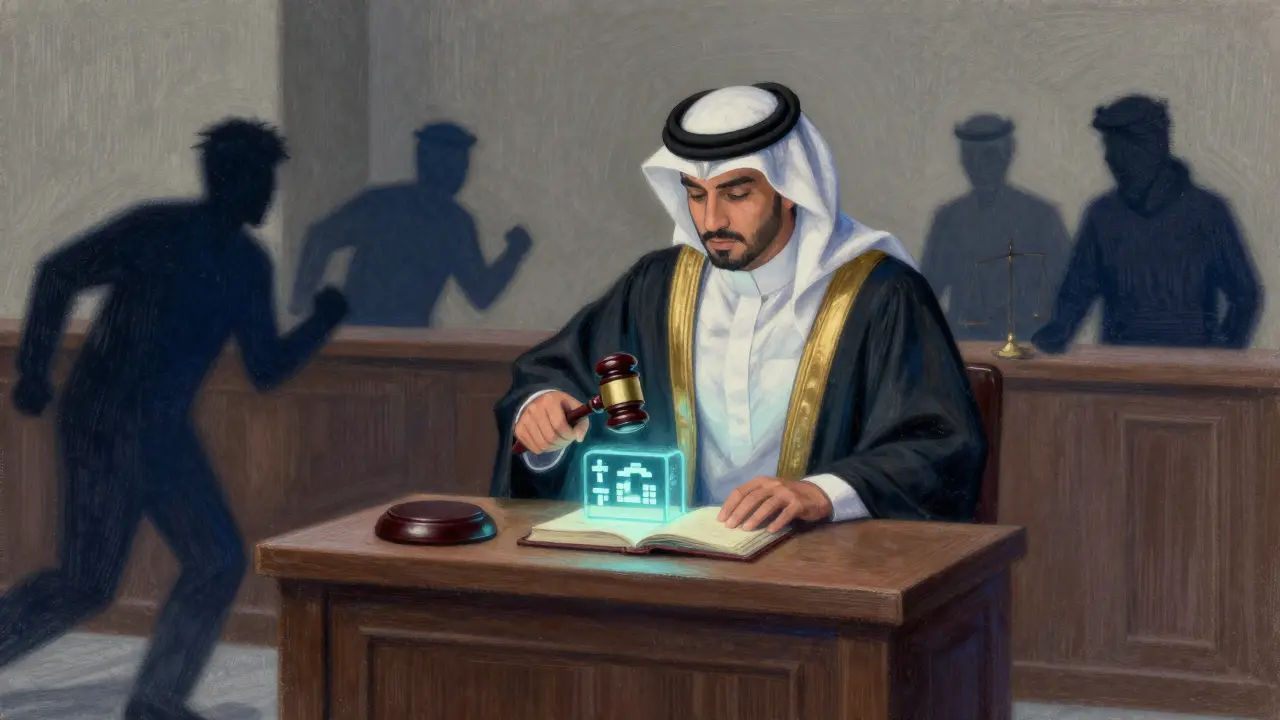
What’s Next? The Real Test Is Coming
The UAE’s win isn’t permanent. FATF will start its fifth round of evaluations in 2026. That means the country has to keep improving-not just maintaining. The Executive Office of AML/CFT has already started preparing. They’re training new inspectors, upgrading their transaction monitoring systems, and pushing for real-time reporting from all crypto firms. The big question now is whether crypto firms will keep up. Some smaller exchanges are still cutting corners. Some DeFi platforms claim they’re “decentralized” so they don’t need to comply. But that’s a dangerous gamble. The UAE now has the tools to track them. And they’re not afraid to use them. In late 2024, a local DeFi protocol was shut down for failing to report over $12 million in suspicious transactions. That sent a clear message: compliance isn’t optional anymore.Why This Matters Beyond the UAE
The UAE’s journey shows that a country can fix its financial reputation-even after being labeled risky. It proves that strong enforcement, political will, and real investment in compliance can turn things around. For other countries still on the grey list-like Nigeria, Pakistan, or Myanmar-the UAE is now a blueprint. It also shows that crypto regulation doesn’t have to mean stifling innovation. The UAE didn’t ban anything. They didn’t shut down exchanges. They just made sure everyone played by the same rules. And because of that, crypto didn’t just survive-it thrived. The message is clear: if you want to build a real crypto economy, you need trust. And trust comes from rules that are enforced-not just written.Was the UAE ever blacklisted by FATF?
No, the UAE was never on the FATF black list. It was on the grey list, which means it had identified weaknesses in its anti-money laundering and counter-terrorism financing systems but was actively working to fix them. The black list is reserved for countries that are considered non-cooperative and pose a severe threat to the global financial system. The UAE was never in that category.
Does FATF regulate crypto directly?
FATF doesn’t regulate crypto directly. Instead, it sets global standards for how countries should regulate virtual asset service providers (VASPs)-like exchanges, wallets, and custodians. Countries then create their own laws based on those standards. The UAE followed FATF’s 2019 guidance, which required VASPs to register, perform KYC, and report suspicious activity. That’s why crypto firms in Dubai now need licenses and must comply with the same rules as banks.
Are all crypto businesses in the UAE now regulated?
Yes, but only if they’re operating legally. The UAE’s Virtual Assets Regulatory Authority (VARA) and the Securities and Commodities Authority (SCA) now license and supervise all crypto businesses. Unlicensed platforms are illegal and can be shut down. Many small operators tried to fly under the radar, but since 2024, enforcement has increased dramatically. If a crypto firm is accepting users from the UAE, it must be licensed.
Can I now use UAE-based crypto exchanges from other countries?
Yes, but with limits. Many UAE-based exchanges now accept international users because they’re no longer seen as high-risk. However, some countries still restrict access to UAE platforms due to their own local rules. For example, the UK and Canada require additional disclosures for users trading on foreign exchanges. Always check your home country’s regulations before using a UAE-based service.
Will crypto fees in the UAE go down now?
Fees have already dropped. Before the FATF removal, exchanges had to use third-party payment processors with high fees to avoid banking risks. Now that banks are directly working with exchanges, transaction costs have fallen by 30-50% for AED deposits and withdrawals. Some platforms now offer free fiat on-ramps. This trend will likely continue as competition grows.
Is the UAE now a safe place to store crypto?
Compared to before, yes. Licensed custodians in the UAE now follow strict security and audit standards. They’re required to use cold storage, undergo quarterly penetration tests, and maintain insurance against hacks. The government also monitors them closely. While no system is 100% foolproof, the UAE is now one of the most regulated and transparent jurisdictions for crypto custody in the Middle East.






The UAE didn't just clean up its act-they rebuilt the entire financial infrastructure from the ground up. Real courts for financial crimes? Mandatory AML training for diamond traders? That's not lip service, that's systemic change. Most countries talk about compliance, the UAE actually implemented it. And now banks are lining up to work with them. This is what happens when you stop pretending and start enforcing.
This is the exact kind of story we need more of. Too many people think regulation kills innovation, but here’s proof it can fuel it. The UAE didn’t shut down crypto-they gave it a real foundation. Now local businesses can grow without constantly fighting banks. Regular people can buy Bitcoin without jumping through ten hoops. That’s not just policy-it’s progress.
I never thought I’d see a country turn its reputation around like this. It makes me wonder what’s possible elsewhere. Maybe Nigeria or Pakistan could do something similar if they really tried. It’s not about being perfect-it’s about being willing to change.
What’s fascinating is how this wasn’t about crypto at all. It was about trust. The UAE fixed its financial credibility first, and crypto rode the wave. That’s the lesson for every emerging market: don’t chase the shiny tech, fix the foundation. The tech will come if people believe you’re not a scam.
The data speaks for itself: 17 license suspensions, $40M in fines, 200% increase in international cooperation. This wasn’t a PR stunt. It was a surgical strike on corruption. And now, for the first time, UAE-based crypto firms can operate without the shadow of suspicion. That’s monumental.
Oh please. They just bribed FATF with fancy brochures. Wait till you see the next scandal. These so-called reforms? All smoke and mirrors. You think a few new judges and some training courses actually stop money laundering? Please. The same people are still running things. This is just a rebrand.
They're watching your crypto transactions now. Every single one. That's what 'compliance' really means. You think the UAE did this for you? No. They did it so the CIA and NSA can track your buys. This isn't freedom. It's surveillance with a better logo.
Let’s be real here-no one cares about the UAE’s financial reforms. What matters is that now Western banks can finally profit off crypto again without getting dirty hands. The real story isn’t about regulation-it’s about capital finding a new playground. The UAE didn’t become trustworthy, they just became convenient. And the moment they’re not, they’ll be dumped like last year’s crypto exchange.
Wow. A country actually followed the rules? How quaint. I suppose next we’ll hear about a CEO who paid taxes and didn’t cry about it. This is the kind of self-congratulatory drivel that makes crypto journalism look like a TED Talk written by a compliance officer. Did they at least get a gold star?
It's not about the FATF removal. It's about the quiet, brutal discipline behind it. The UAE didn’t wait for approval. They didn’t ask for permission. They identified the rot, cut it out, and rebuilt with surgical precision. That’s leadership. That’s vision. Most nations are still debating whether to wear a seatbelt. The UAE built a spaceship. And now, the world is finally catching up.
OMG this is HUGE!! 😍 I just moved my entire portfolio to a UAE exchange and the deposits are instant!! No more 3-day waits!! And no fees!! 🚀 Thank you UAE for being the grown-ups!! 💪👏
I’m so glad to see this. For years, people in the UAE were told their crypto use was ‘risky’-but they kept going anyway. Now they’re being validated. It’s not just about money. It’s about dignity. People deserve to participate in the global economy without being treated like criminals. This matters.
They’re watching everything. Every transaction. Every wallet. Every chat. You think the banks are happy? No. They’re terrified. Because now the UAE has the tools to trace every dollar back to you. And they’re not afraid to use them. This isn’t freedom. This is control dressed up as compliance.
USA built the internet. China controls AI. The UAE? They got lucky and cleaned up their mess just in time to cash in. Don’t act like this is some heroic story. They’re just the latest tax haven with a fancy new license. If you think this changes anything for the rest of the world, you’re delusional.