
CRDT Give a Way Airdrop: What We Know and How to Participate
Jonathan Jennings
GFI Token: What It Is, Who Uses It, and Why It Matters in Crypto
When you hear GFI token, a cryptocurrency with unclear origins and minimal public documentation. Also known as GFI cryptocurrency, it appears in a handful of trading lists and airdrop alerts—but rarely with clear explanations of its purpose or team. Unlike major tokens backed by real protocols or teams, GFI token doesn’t have a well-documented whitepaper, active GitHub, or verified social channels. That doesn’t mean it’s irrelevant—it just means you need to dig deeper before trusting it.
Most mentions of GFI token show up alongside airdrops, free token distributions often tied to obscure projects or low-volume exchanges. You’ll find it listed in posts about crypto scams, projects that vanish after collecting user data or funds, or in obscure forums where users ask, "Is GFI real?" The truth? There’s no official website, no team bio, and no major exchange lists it as a top asset. Yet, it keeps popping up—sometimes as a reward in "Learn and Earn" programs, sometimes as a token you can claim after signing up for a new wallet. That’s the pattern: low visibility, high curiosity.
What’s strange is that GFI token doesn’t fit the mold of a meme coin like Dogecoin or a utility token like Ethereum. It’s not tied to DeFi, NFTs, or blockchain gaming. It doesn’t enable staking, governance, or payments. If it has a use case, no one’s telling you what it is. Some users claim it’s linked to a defunct exchange or a failed mining project. Others say it’s a placeholder token used by developers testing smart contracts. Either way, if you’re seeing GFI token in a presale or airdrop, treat it like a red flag unless you can verify its origin through multiple trusted sources.
The real question isn’t whether GFI token has value—it’s whether it has legitimacy. In crypto, tokens without transparency don’t last. Look at projects like Crypcore or THDax: they vanished because no one could answer basic questions about who built them or why they existed. GFI token walks that same line. It’s not officially banned, but it’s not endorsed either. If you’re considering interacting with it, ask: Who controls the supply? Where are the funds stored? Is there a public audit? If the answers are silent, the risk is high.
Below, you’ll find posts that cover similar cases—tokens with shaky foundations, exchanges that mislead users, and airdrops that turn out to be traps. These aren’t just warnings. They’re lessons in how to spot what’s real in a space full of noise. If you’ve ever wondered why some tokens disappear overnight, these stories will show you exactly how it happens—and how to avoid becoming a footnote in someone else’s scam.
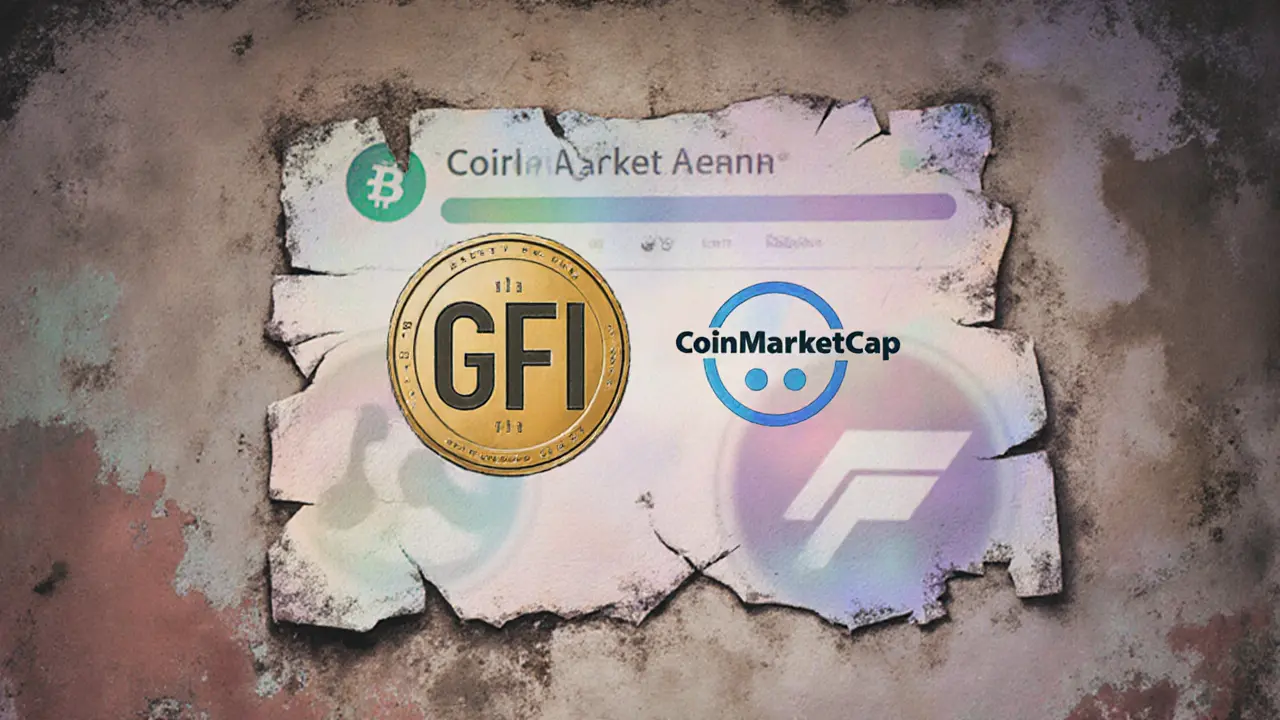
No GameFi Protocol (GFI) airdrop with CoinMarketCap ever happened. This is a persistent scam built on fake names and old hype. Learn how to spot the truth and avoid losing your crypto to fake airdrops.
Jonathan Jennings Nov 30, 2025