

Understanding State Channels: Blockchain Scaling Made Simple
Jonathan Jennings
Legitimate Crypto Exchange: How to Spot Real Platforms and Avoid Scams
When you hear legitimate crypto exchange, a regulated, transparent platform where users can buy, sell, and store digital assets with real security and accountability. Also known as a trusted crypto platform, it’s the only kind you should ever use if you want to protect your money. Too many people lose everything to fake exchanges that look real—until it’s too late. There’s no magic trick to spotting them, but there are clear signs you can check in under five minutes.
A regulated crypto exchange, a platform licensed by a government financial authority like the EU, UK, or US regulators follows strict rules. It runs KYC checks, keeps user funds separate from company money, and gets audited regularly. Biteeu, for example, is licensed in the EU and uses satellite-backed security. That’s not marketing fluff—it’s legal requirement. On the flip side, platforms like Crypcore and THDax don’t exist as real businesses. They’re ghost sites with fake reviews, zero trading volume, and founders who vanished. If an exchange doesn’t say which country regulates it, walk away.
Another red flag? No crypto KYC process, a mandatory identity verification step required by law for most legal exchanges to prevent money laundering and fraud. Legit platforms ask for your ID, proof of address, and sometimes a selfie. If a site lets you trade $10,000 in Bitcoin without asking who you are, it’s not protecting you—it’s hiding. And if they claim to be "decentralized" to avoid KYC, that’s usually a cover for being unregulated, not more secure.
Then there’s the money. A non-custodial exchange, a platform where you keep control of your private keys and your crypto never leaves your wallet is safer than one that holds your funds. Cube Exchange lets you trade without giving up control—great for experienced users. But if you’re new, a custodial exchange with insurance (like Kraken or Bybit) gives you a safety net. Scam sites often promise zero fees or crazy leverage, but they’re not cutting corners to help you—they’re cutting corners to steal from you.
Real exchanges publish security audits, have live customer support, and update their websites regularly. Fake ones delete pages, bury contact info, and have zero social media activity. Web3.World has two trading pairs and no mobile app. Amaterasu Finance hasn’t processed a trade since August 2025. TRIV is legal in Indonesia but has low security ratings. These aren’t opinions—they’re facts you can verify. You don’t need to be a tech expert to spot the difference.
What you’ll find below isn’t a list of the "best" exchanges. It’s a field guide to what’s real and what’s not. Every review here checks the same things: regulation, security, transparency, and user reports. No hype. No paid promotions. Just what you need to know before you deposit a single dollar.
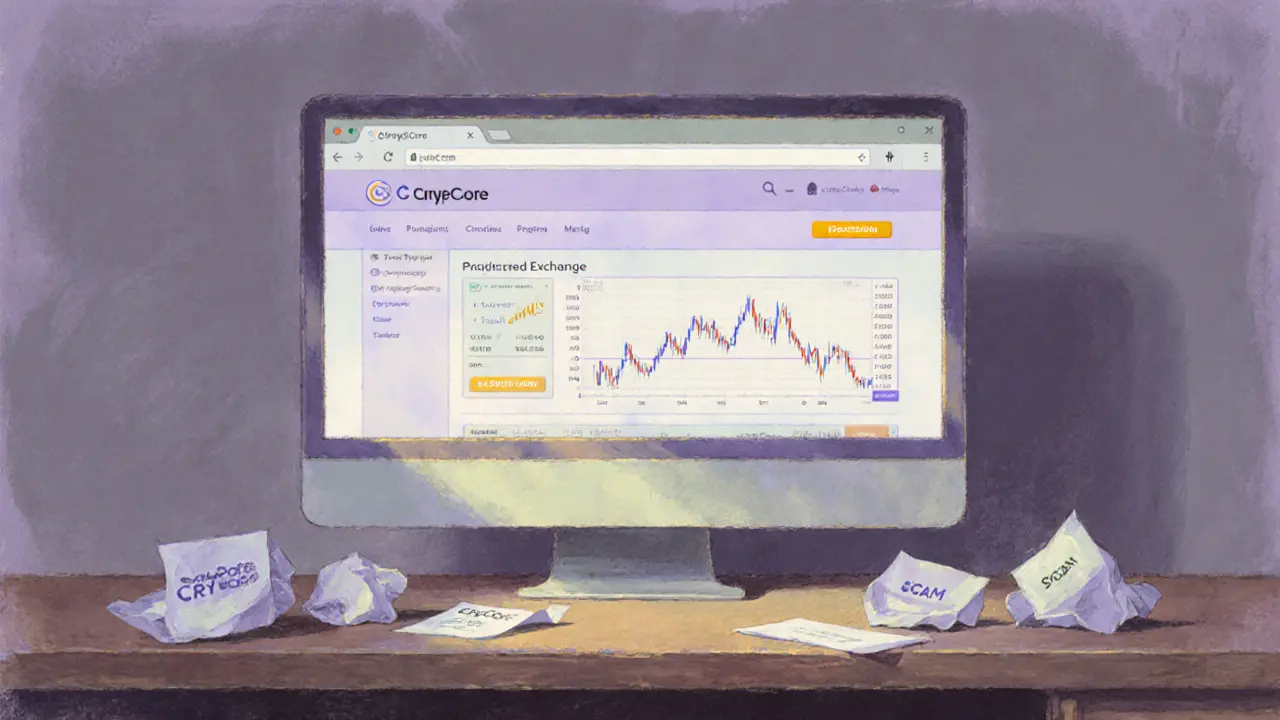
Crypcore is not a legitimate crypto exchange. No verified platform exists under this name. What you're seeing is likely a scam or confusion with the CrypCore (CRYP) token. Avoid it entirely.
Jonathan Jennings Nov 9, 2025