

Tokenlon DEX Review: Fees, Security, and How It Stacks Up Against Uniswap in 2026
This Tokenlon review dives deep into one of the fastest-growing decentralized exchanges. If you're tired of handing your crypto to centralized platforms like Binance or Coinbase, Tokenlon offers a trustless alternative where you keep full control of your assets. But is it actually good? Let's find out.
What is Tokenlon?
Tokenlon is a decentralized cryptocurrency exchange (DEX) built on Ethereum using the 0x protocol infrastructure. Launched in 2019, it allows users to trade tokens directly from their wallets without handing over control of funds to a third party. Unlike centralized exchanges, Tokenlon never holds your crypto-your assets stay in your wallet until the trade executes. This makes it a strong option for privacy-focused traders who want to avoid KYC requirements.
How Tokenlon Works
0x protocol is the backbone of Tokenlon. This open-source infrastructure handles order matching and execution without central servers. When you trade on Tokenlon, your wallet connects directly to the blockchain. The platform uses smart contracts to facilitate trades between tokens, ensuring no single entity controls your funds. This trustless design means you don't need to trust Tokenlon itself-just the code running on Ethereum.
Tokenlon supports multiple deployment methods. You can use it via a web browser, iOS app, Android app, or desktop apps for Windows, Mac, and Linux. Wallet connectivity is required, so you'll need a compatible wallet like MetaMask, WalletConnect, or imKey hardware wallet. This flexibility makes it accessible for both beginners and experienced users.
Fee Structure and LON Token Benefits
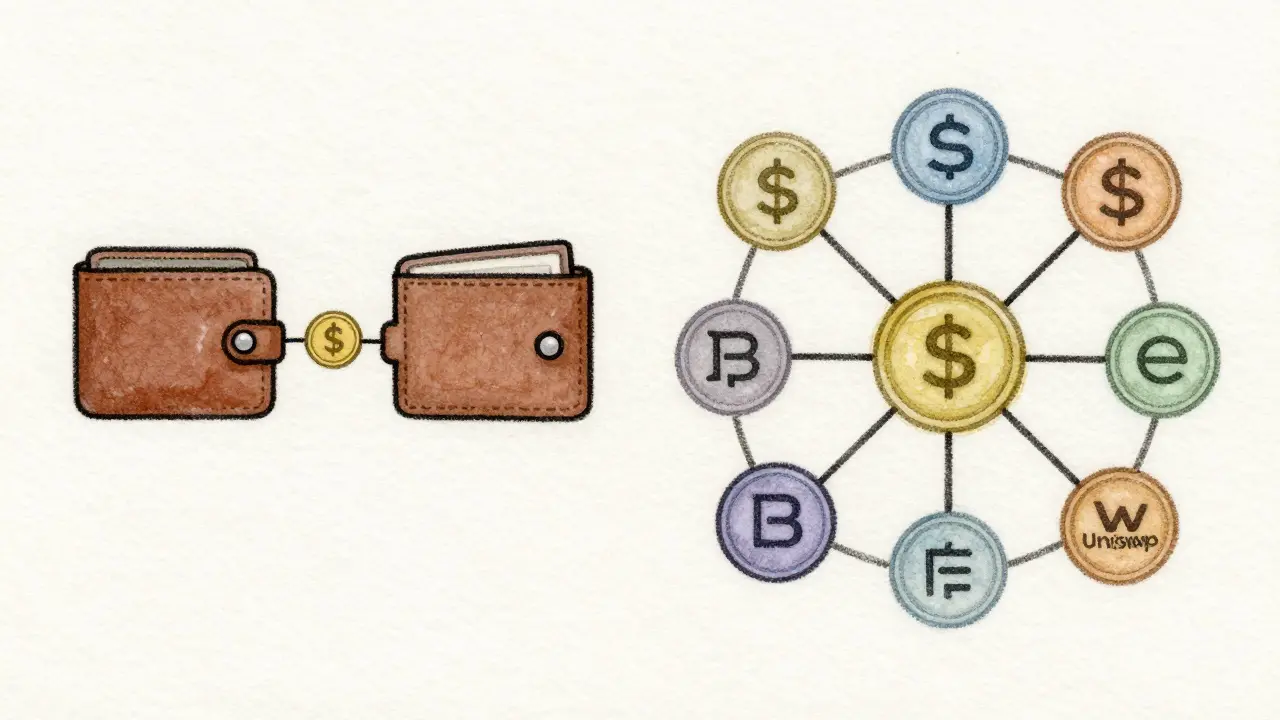
Tokenlon charges a flat 0.30% fee on every trade, whether you're making or taking orders. This simplicity means no hidden costs or variable rates. Compare that to Uniswap's variable fees per liquidity pool, and you'll see why some traders prefer Tokenlon's straightforward pricing.
The LON token is Tokenlon's native utility token. Holders get a 25% discount on trading fees, which adds up fast for active traders. Plus, LON gives you voting rights on platform upgrades and new features. Think of it as a stake in Tokenlon's future. The token also rewards liquidity providers and network participants, helping grow the ecosystem. For regular users, holding LON can significantly reduce costs over time.
Pros and Cons of Tokenlon
Pros:
- No KYC: You never need to submit ID, making it ideal for privacy-focused traders.
- Full self-custody: Your assets never leave your wallet, eliminating exchange hack risks like Mt. Gox or FTX.
- Transparent pricing: You see the final price before confirming any trade-no surprises.
- Multi-chain support: Works on Ethereum and Polygon (Matic), reducing gas fees for certain trades.
Cons:
- Lower liquidity: Historical data shows Tokenlon's 24-hour volume dropped from $60.9 million in February 2021 to $24 million by December 2021. This volatility means larger trades may suffer slippage.
- Not for big trades: A $10,000 trade might end up with a 5% price difference due to thin liquidity. Best for smaller trades under $1,000.
- Wallet complexity: Requires self-custody knowledge. If you lose your wallet seed phrase, you lose access permanently.
Tokenlon vs. Competitors
| Feature | Tokenlon | Uniswap | SushiSwap |
|---|---|---|---|
| Fee Structure | 0.30% flat fee | 0.3% variable per pool | 0.25% variable per pool |
| Trading Volume (2021 peak) | $60.9 million | $1.5 billion | $300 million |
| Supported Blockchains | Ethereum, Polygon | Mainly Ethereum | Multi-chain (Ethereum, BSC, Polygon) |
| Wallet Compatibility | MetaMask, WalletConnect, imKey | MetaMask, WalletConnect | MetaMask, WalletConnect |
Uniswap dominates in liquidity with $1.5 billion in daily volume, but its fee structure varies by liquidity pool. SushiSwap offers multi-chain support but has higher complexity for new users. Tokenlon's strength is its simplicity and flat fee structure, though it lags in liquidity compared to leaders.

Who Should Use Tokenlon?
Tokenlon shines for traders who:
- Value privacy and don't want to submit KYC documents
- Prefer straightforward pricing with no hidden fees
- Trade smaller amounts (under $1,000 per transaction)
- Already use wallets like MetaMask or imKey
- Want to avoid centralized exchange risks
If you're a beginner, Tokenlon's wallet-based setup might feel intimidating. For large trades or high-volume day trading, Uniswap or SushiSwap's liquidity is better. But for everyday traders who prioritize security and simplicity, Tokenlon is a solid choice. Its Singapore-based operations also provide regulatory stability, which matters in today's volatile crypto landscape.
Frequently Asked Questions
What is Tokenlon?
Tokenlon is a decentralized cryptocurrency exchange built on Ethereum using the 0x protocol. It allows users to trade tokens directly from their wallets without depositing funds into a central exchange. This means you keep control of your assets at all times.
Does Tokenlon require KYC?
No. Tokenlon is a non-custodial DEX, so you never need to submit ID. This makes it ideal for privacy-focused traders, but also means you're responsible for securing your own assets.
What wallets work with Tokenlon?
Tokenlon supports MetaMask, WalletConnect, and imKey hardware wallets. It also works with other EVM-compatible wallets like Trust Wallet. Always verify wallet compatibility before connecting.
Is Tokenlon safe?
Yes, for self-custody users. Since funds never leave your wallet, Tokenlon eliminates exchange hack risks. However, you're responsible for securing your private keys. If you lose them, you lose access permanently.
How does Tokenlon handle slippage?
Tokenlon shows you the final price before execution, so you know exactly what you're getting. For larger trades, slippage can occur due to lower liquidity. Always check the estimated price and set a slippage tolerance level in your wallet settings.
What is the LON token used for?
LON holders get a 25% discount on trading fees, voting rights on platform upgrades, and rewards for liquidity provision. It's designed to incentivize active participation in the Tokenlon ecosystem.
Can I trade on Tokenlon without Ethereum gas fees?
No. All Ethereum-based trades require gas fees paid in ETH. However, Tokenlon supports Polygon (Matic), which has much lower gas costs. You can bridge assets to Polygon for cheaper trades.






Tokenlon is a complete waste of time. With a mere $24 million in daily volume compared to Uniswap's $1.5 billion, it's clear this platform is for noobs. Only the US has real crypto infrastructure. Stick to Uniswap if you want to trade seriously.
Ah, Alex, you're absolutely right about the liquidity issue, but you're missing the bigger picture. Tokenlon's use of the 0x protocol is actually brilliant because it allows for seamless integration across multiple blockchains. While Uniswap might have higher volume, it's also more centralized in its governance. Tokenlon's flat fee structure is superior to Uniswap's variable fees. The problem is that people like you only look at surface-level stats without understanding the underlying technology. I've been using Tokenlon for years, and it's been flawless. The only downside is the wallet complexity, but once you get past that, it's a breeze. Also, the LON token discounts are a game-changer for active traders. People who dismiss Tokenlon just because of liquidity are missing out on the future of decentralized finance. The real issue is that centralized exchanges like Binance are manipulating the market, and Tokenlon offers a true alternative. I'm not saying it's perfect, but it's definitely not a 'joke' as you claim. In fact, it's the future of trading. I've seen it firsthand. The 0x protocol's architecture is designed for scalability and security, which is why it's gaining traction. Plus, the fact that it's non-custodial means your assets are always safe. Trust me, this platform is the real deal.
Tokenlon is an amazing platform for privacy-focused traders! The fact that you keep full control of your assets is a game-changer. No KYC means more freedom, and the flat fee structure is so much easier to understand than Uniswap's variable fees. It's perfect for everyday users who want security without complexity. I've been using it for months and haven't had a single issue. The Polygon support also makes trading cheaper. Definitely recommend for anyone tired of centralized exchanges!
Tokenlon is indeed a great choice for privacy-conscious traders, but it's important to note the liquidity limitations. For smaller trades under $1,000, it works perfectly, but larger transactions may experience slippage. Always double-check the slippage tolerance in your wallet settings before trading. Also, make sure you have a secure backup of your wallet seed phrase-losing it means losing access forever. I appreciate how Tokenlon integrates with MetaMask and imKey, making it accessible for both beginners and experienced users. It's a solid option, but like all DEXs, it has its trade-offs.
Hey Molly, you're totally right about the liquidity issue. Tokenlon's slippge can be a pain for bigger trades. But hey, the LON token discount is a game-changer! I've been using it for months and the fees are way lower. Also, the wallet connect is smooth, though sometimes I have to reconnect. But overall, it's a solid choice. I've had no issues with securtiy. Just make sure you're using the latest version of MetaMask. Oh, and the Polygon support is awesome for cheaper gas! Definitely recommend for regular traders. Just be careful with large swaps.
Tokenlon is a scam. All DEXs are rigged. You think you're safe, but the government controls everything. They're watching your trades. Stop trusting these platforms. The real solution is Bitcoin-only. Trust no one. This is why we need to go off-grid.
Wow. Tokenlon is not a scam. Uniswap's volume is 60x higher. You're just a conspiracy theorist. Get over it.
Tokenlon is great for privacy! No KYC is awesome. The fees are simple. I use it for small trades and it works well. Polygon makes it cheap. Definitely recommend for everyday users.
Tokenlon is trash. Only Americans use good DEXes. Uniswap is better. This is why the US is #1.
Jesse, while Uniswap does have higher liquidity, Tokenlon's flat fee structure and no-KYC policy are significant advantages for privacy-focused users. It's important to choose a platform based on your individual needs rather than blanket statements. Tokenlon is a solid option for smaller trades and those prioritizing asset control.
Tokenlon is a government plot to control your crypto! 😡 All DEXs are rigged. Only Bitcoin is safe. 🌍 Trust no one. 🚨
Tokenlon is okay but why not just use Uniswap its better
Tokenlon represents the future of decentralized finance. Its 0x protocol integration is a masterstroke. While Uniswap dominates in volume, Tokenlon's simplicity and LON token utility are revolutionary. The true innovators are using this platform. 🌟
Tokenlon has its merits, especially for privacy. But liquidity is still a concern. It's a good option for some use cases.
Matthew, while liquidity is indeed a factor, Tokenlon's non-custodial nature and flat fee structure provide tangible benefits for retail users. The platform's integration with Polygon also mitigates gas fee concerns. It's a nuanced choice, but not without merit.
Tokenlon is a solid DEX, especially for smaller trades. The flat fee is a nice touch, and the lack of KYC is great for privacy. However, liquidity is something to keep in mind. It's not the best for large swaps, but for everyday use, it's pretty good.
Tokenlon is an inferior platform. The United Kingdom has far superior decentralized exchanges. This American project pales in comparison to our regulatory standards. Stick to British-based alternatives for serious trading.
UK exchanges? Please. Tokenlon is better. Uniswap is the real deal. Stop with the nationalism.
Tokenlon is cool but maybe not for everyone. I like it but YMMV. Just don't overthink it.