

USDT Ban in European Union Under MiCA: What You Need to Know Before July 2025
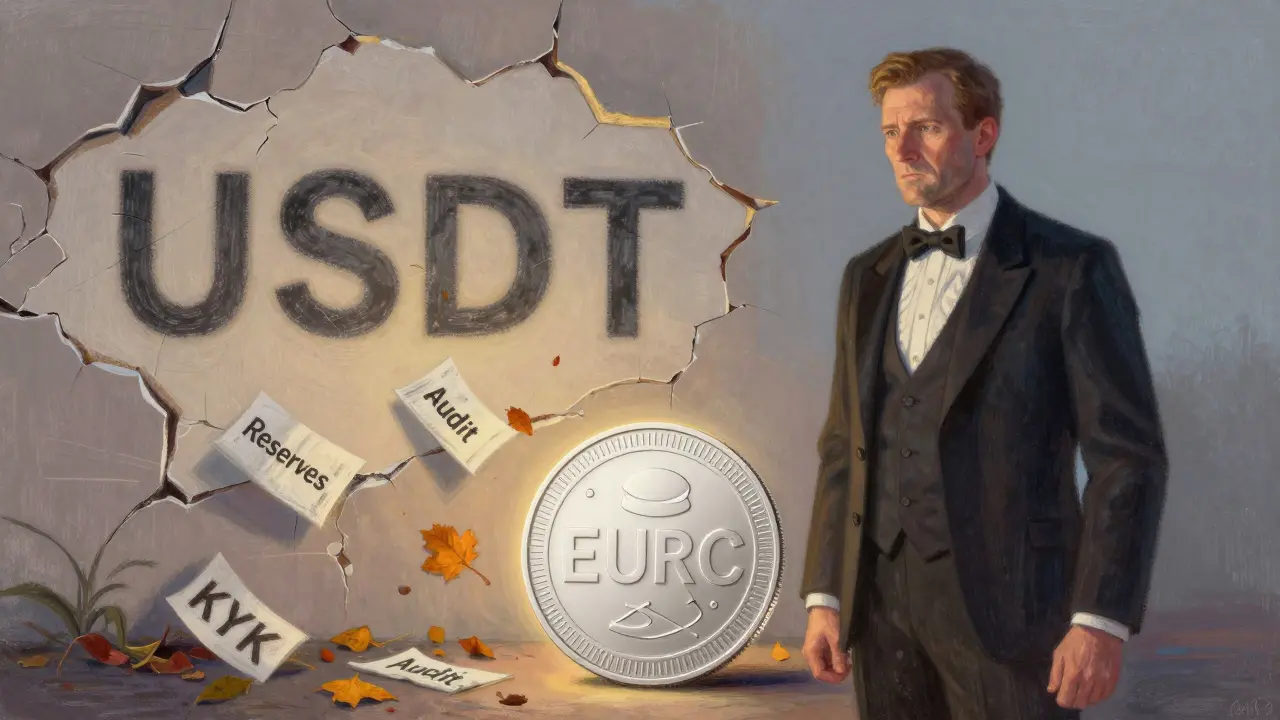
On July 1, 2025, USDT will be banned from trading on all regulated cryptocurrency exchanges in the European Union. This isn’t a rumor. It’s not a threat. It’s the law. The Markets in Crypto-Assets Regulation (MiCA) is now fully in force, and Tether Limited has failed to meet even the most basic requirements to keep its flagship stablecoin live in Europe.
Why MiCA Targets USDT
MiCA doesn’t go after all stablecoins. It goes after the ones that don’t play by the rules. USDT, the world’s largest stablecoin by volume, claims to be backed 1:1 by cash and cash equivalents. But regulators in the EU have asked for proof - real-time audits, full reserve transparency, and automated anti-money laundering systems - and Tether has never delivered them. The EU doesn’t want guesswork. They want certainty. MiCA requires every stablecoin issuer to be authorized by a national regulator like France’s ACPR or Germany’s BaFin. Tether never applied. They never submitted their reserve reports. They never opened their books to independent auditors. That’s not negligence - it’s non-compliance. Unlike USDC, which is issued by a U.S.-regulated financial company and publishes monthly attestations, USDT’s reserve disclosures have always been vague. They’ve used terms like “reserves” without specifying what’s in them - commercial paper? Corporate bonds? Cash in offshore banks? No one knows. And under MiCA, that’s illegal.What MiCA Actually Demands
MiCA splits stablecoins into two types: Electronic Money Tokens (EMTs) and Asset-Referenced Tokens (ARTs). USDT falls under EMTs because it’s pegged to the U.S. dollar. To qualify, an EMT must:- Hold reserves equal to 100% of circulating supply, kept in segregated, liquid assets
- Provide monthly, publicly accessible reserve reports verified by independent auditors
- Implement fully automated KYC/AML checks for every transaction
- Submit a detailed white paper explaining risk controls and governance
- Have a legal entity registered in the EU and licensed as a Crypto-Asset Service Provider (CASP)
What Exchanges Are Doing
Major exchanges didn’t wait for regulators to force their hand. They acted early to avoid fines and license revocations. OKX was the first to pull USDT entirely from its EU platform in late 2024. Coinbase followed in February 2025, sending emails to users: “Convert your USDT to USDC or EURC before March 31.” Binance took a phased approach - first blocking new purchases, then removing trading pairs entirely by March 31, 2025. By July 1, 2025, no EU-based exchange will be allowed to list USDT. Even decentralized exchanges (DEXs) aren’t safe. If a DEX has a legal entity registered in the EU, it must comply. Some have already added geo-blocking to prevent EU IP addresses from accessing USDT trading pairs.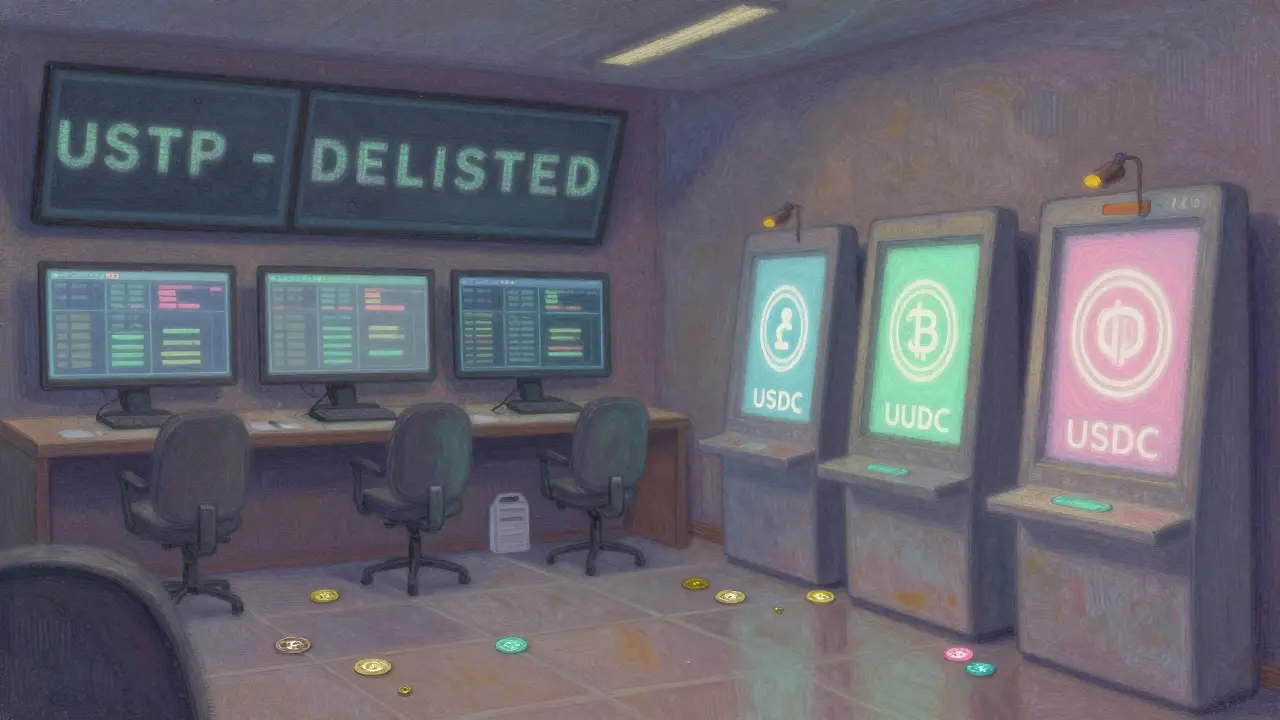
What Happens to Your USDT
If you’re holding USDT in a wallet you control - not on an exchange - you can still keep it. MiCA doesn’t ban ownership. It bans trading, listing, and service provision by regulated entities. But here’s the catch: if you try to cash out your USDT into euros via a licensed exchange or bank, they’ll refuse. Banks in the EU now treat USDT like unregulated foreign currency. They’re required to flag any transaction involving non-MiCA stablecoins as high-risk. Your funds could be frozen while they investigate. Even peer-to-peer trades are risky. If you sell USDT to someone in the EU through a platform like LocalBitcoins or Paxful, and the buyer reports the transaction, you could trigger an AML investigation. The EU is building a blockchain monitoring system that tracks cross-border stablecoin flows. USDT is on the watchlist.The Alternatives Are Here
You don’t need USDT in Europe. Five MiCA-compliant stablecoins are already live and growing fast:- EURC - Issued by Circle, pegged to the euro, fully audited, EU-registered
- USDC - Issued by Circle, fully transparent reserves, regulated in the U.S. and EU
- Euro Coin (EURE) - Backed by the Swiss-based Sygnum Bank, audited monthly
- DAI - Decentralized, overcollateralized by crypto assets, compliant under MiCA’s ART rules
- FRAX - Algorithmic stablecoin with partial collateral, approved under MiCA’s hybrid model

Why This Matters Beyond Europe
The EU isn’t just cleaning up its own backyard. It’s setting a global standard. Countries like Japan, Canada, and Singapore are watching closely. If MiCA works - and early signs suggest it will - other regions will copy it. USDT’s dominance isn’t under threat because of technology. It’s under threat because of trust. Investors and institutions don’t want to hold a stablecoin whose backing is a black box. They want audited, regulated, traceable assets. MiCA forces issuers to choose: comply or disappear. Tether could still apply for authorization before July 1, 2026 - the final grace period for legacy operators. But that would mean surrendering control over their reserve data, opening their books to EU auditors, and restructuring their entire corporate entity. It’s unlikely they’ll do it.What You Should Do Now
If you’re in the EU:- Check your exchange. If you still see USDT trading pairs, move your funds before June 30, 2025.
- Convert USDT to EURC or USDC. These are the safest, most liquid options.
- Don’t hold USDT in wallets you plan to use for EU payments or withdrawals.
- If you’re a business using USDT for cross-border payments, switch to EURC immediately. Banks are already rejecting USDT transactions.
- Stay updated. The EU will publish a public list of authorized stablecoins on June 1, 2025.
- Accept only MiCA-compliant stablecoins in your contracts.
- Ask your EU clients which stablecoin they use - it’s probably EURC or USDC.
- Don’t assume USDT is universal. It’s becoming a regional liability.
The Bigger Picture
This isn’t about banning crypto. It’s about bringing order to chaos. Before MiCA, every EU country had different rules. Some banned stablecoins. Others allowed anything. Now there’s one rulebook. And USDT didn’t meet the bar. The result? A cleaner, safer market. Lower risk of bank runs. Fewer fraud cases. More institutional adoption. The EU is betting that transparency beats liquidity. So far, the market agrees. MiCA-compliant stablecoins are already capturing 18% of the EU’s stablecoin volume - up from 3% in early 2024. USDT may still rule globally. But in Europe? Its reign is over.

Post Comment





So USDT is basically the crypto version of a used car with a rolled-back odometer? Guess the EU just said 'nope' and locked the doors. Time to switch to EURC - it’s got the same dollar peg but without the sketchy paperwork.
They didn’t ban USDT because it’s crypto - they banned it because it’s a black box. Imagine if your bank said, 'We have your money, but we won’t tell you where it is or who’s holding it.' You’d freak out. That’s USDT. And now the EU is saying: no more pretending.
This is not merely regulatory overreach - this is the dawn of financial integrity in the digital age. The EU has demonstrated that transparency is not a luxury but the very bedrock upon which trust must be constructed. USDT’s refusal to submit to audit is not negligence; it is a moral failure in the architecture of value. Let us not mourn its exit - let us celebrate the emergence of clarity.
They’re banning USDT because they don’t want people to have financial freedom. This is just the beginning - next they’ll ban Bitcoin, then cash, then your ability to buy bread without a government app. MiCA is the Fed’s secret weapon to control you. Wake up.
Just moved my USDT to EURC last week. No drama, no panic. Took 10 minutes. My DeFi portfolio’s cleaner now. Honestly? Feels good to not be holding something that feels like it could vanish tomorrow.
Oh please. The EU is just jealous because Tether made more money than their entire finance ministry combined. They’re banning USDT because it’s too successful. Next they’ll ban sunlight because it’s 'unregulated'. This is tyranny wrapped in compliance paperwork. I’m moving to Switzerland.
For those unfamiliar with the regulatory landscape: MiCA’s EMT requirements are non-negotiable. The absence of a licensed EU entity, lack of monthly attestation, and non-segregated reserves constitute material non-compliance under Article 52. Transitioning to EURC or USDC is not merely advisable - it is a fiduciary obligation for any EU-based actor.
My cousin in Germany just got her bank account frozen because she tried to cash out $500 in USDT. They asked for a 12-page audit report on a coin she bought on Binance in 2021. It’s insane. I told her to convert everything to EURC - she did, and her account was unfrozen in 48 hours.
Of course the EU is banning USDT - they hate freedom. America built this system. Now they’re trying to force us to use their euro-based digital currency so they can track every transaction. This isn’t regulation - it’s digital colonization.
People keep saying 'it’s just a stablecoin.' But what is money, really? Is it the ledger? The algorithm? Or the trust between strangers? USDT broke that trust. And now the EU is saying: we won’t be complicit in illusions. That’s not regulation. That’s wisdom.
The real question isn’t whether MiCA is good - it’s whether we’ve reached the end of crypto’s Wild West phase. USDT was the last cowboy riding into town with a six-shooter full of unverified reserves. Now the sheriffs have arrived. And they’re not just carrying badges - they’re carrying blockchain analytics, KYC protocols, and audited balance sheets. The frontier is closed.
Let’s be real - Tether’s reserve disclosures were a joke. 'Cash and equivalents' means 'we bought some corporate bonds in the Caymans and called it good.' This isn’t a ban. It’s a public shaming. And honestly? They deserved it.
For users holding USDT off-exchange: you’re not breaking any laws. But you’re holding an asset that no regulated entity will touch. If you ever need to convert it to EUR, you’ll face delays, scrutiny, and likely higher fees. The market is already pricing in that risk. It’s not gone - it’s just become a liability.