

What Are Digital Identity NFTs? A Clear Guide to Blockchain-Based Digital IDs

Digital Identity NFT Cost Calculator
Calculate Your Identity NFT Cost
Estimate the transaction costs for verifying your digital identity across different blockchain networks. Based on data from Polygon ID, walt.id, and Ethereum networks.
Estimated Cost
* Costs may vary based on network congestion and verification provider. All values in USD.
Important Notes
Remember that lost keys = lost identity. Always back up your seed phrase. Use a hardware wallet like Ledger for long-term storage.
- Basic verification typically costs $0.02 on Polygon
- Premium verification may cost $0.50-$5 on Ethereum
- Most identity NFTs now run on Layer 2 chains for lower costs
Imagine logging into every website, app, or online community without typing a password, answering security questions, or uploading a passport photo again. What if your digital identity-your name, age, credentials, even your reputation-was something you owned, controlled, and carried with you like a digital wallet? That’s the promise of digital identity NFTs.
What Exactly Is a Digital Identity NFT?
A digital identity NFT is a unique, blockchain-based token that proves you are who you say you are online. Unlike NFTs that represent art or collectibles, these tokens store verifiable personal information-like your name, birth date, education, or membership in a group-and link it to your wallet address. You don’t give this data to companies. You hold it yourself.
These aren’t just digital badges. They’re cryptographically signed credentials that can’t be forged, copied, or deleted without your permission. Think of them like a tamper-proof digital ID card that works across every platform that supports blockchain verification.
They’re built on standards like ERC-721 or ERC-1155 on Ethereum, or similar protocols on Polygon and Solana. Some are even non-transferable-called soulbound tokens-meaning they stay locked to your wallet forever, like a diploma or a driver’s license. Once you earn one, you can’t sell it or give it away.
How Do Digital Identity NFTs Work?
Here’s how it actually works in practice:
- You connect your wallet (like MetaMask or Trust Wallet) to an identity verification service.
- You prove your identity-maybe by uploading a government ID, completing a video liveness check, or getting verified by a trusted organization.
- Once verified, a smart contract mints an NFT containing your verified attributes. This NFT is stored in your wallet.
- When you want to access a DAO, DeFi platform, or metaverse space, you sign a message proving you own the NFT. No need to re-enter your details.
The actual data? Often stored off-chain on IPFS (InterPlanetary File System) for efficiency. Only the hash-a digital fingerprint-is saved on the blockchain. This keeps your private info secure while still letting systems verify it instantly.
For example, if you’re verified as a university graduate, the NFT doesn’t show your transcript. It just says, “This wallet holds a verified degree from XYZ University.” Anyone can check that claim is real-without seeing your name, address, or student ID.
Why Are Digital Identity NFTs Better Than Traditional Login Systems?
Right now, most online services use passwords, OAuth (like “Login with Google”), or government-issued IDs. All of these have problems:
- Passwords get stolen in massive data breaches-over 42 million Americans were affected in 2022 alone.
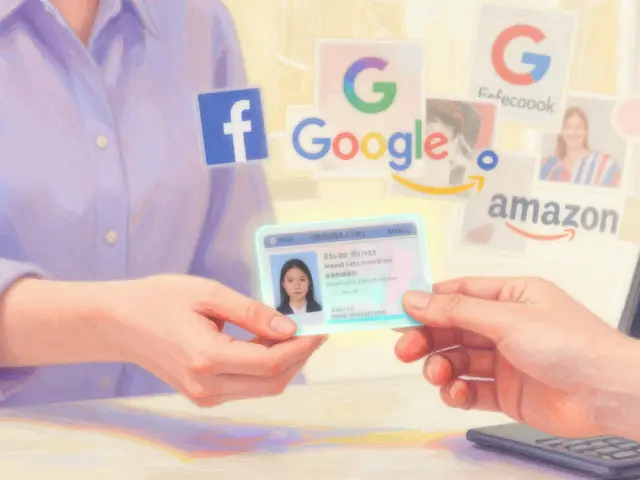
- Google or Facebook controls your identity. They decide what you can access and what data they keep.
- You repeat the same verification process over and over: KYC for exchanges, age checks for gaming, proof of residency for banking.
Digital identity NFTs fix this:
- No more password reuse-your identity is secured by your private key, not a weak password.
- No middlemen-you don’t hand your data to Facebook or a bank. You own it.
- One-time verification, everywhere-get verified once, use it on 10 platforms.
- Zero-knowledge proofs-you can prove you’re over 18 without showing your birth date. Prove you’re a member of a group without revealing who else is in it.
Companies like Microsoft’s ION project and walt.id are already using this tech. In Q1 2023, ION processed over 12,000 decentralized identifiers daily. DAOs like Snapshot.org saw 1.2 million governance votes gated by NFT identities in just one quarter.
Real-World Use Cases
Digital identity NFTs aren’t theoretical. They’re being used right now:
- DeFi access-Platforms like Aave and Compound use NFTs to verify users before letting them borrow or lend. This reduces fraud and ensures compliance without KYC forms.
- DAO membership-To vote in a DAO, you need proof you’re a real member. NFTs replace manual applications and prevent Sybil attacks (fake accounts).
- Metaverse access-In virtual worlds like Decentraland or The Sandbox, your NFT identity grants you entry to exclusive events, land ownership, or roles.
- Education and credentials-Universities are testing NFT diplomas. Imagine sharing your degree with employers without paying for transcript verification services.
- Healthcare-Patients could control access to their medical records, granting temporary access to doctors without handing over entire files.
Builders Tribe, a Web3 community, cut onboarding time from 45 minutes to 6 minutes per person using identity NFTs-and reduced impersonation by 92%.

Problems and Risks
This isn’t magic. There are real hurdles:
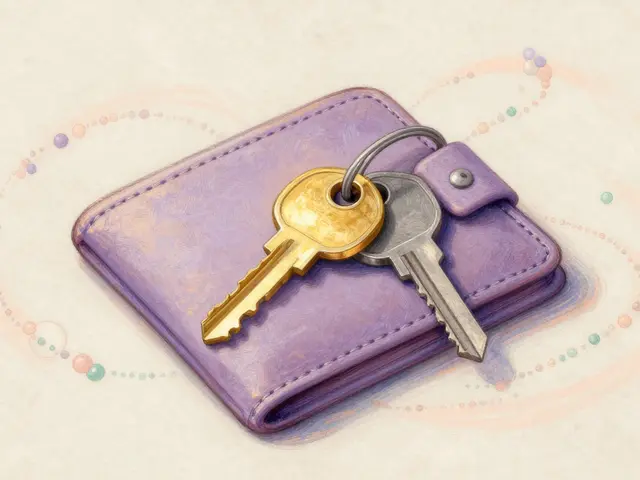
- Lost keys = lost identity-If you lose your private key or seed phrase, you lose your identity. No “forgot password” button. Chainalysis found 20% of early adopters permanently lost access to their identity NFTs.
- Regulation clashes-GDPR in Europe says you have the right to be forgotten. But blockchains are immutable. You can’t delete an NFT. This creates legal gray zones.
- Complexity-Most people don’t know how to manage a wallet, let alone secure a private key. A Trustpilot review of early platforms showed 65% of users struggled with setup.
- Fragmentation-There’s no universal standard yet. An identity NFT from one platform might not work on another.
- Performance-Ethereum handles only 15-30 transactions per second. Visa handles 65,000. That’s why most identity NFTs now run on Polygon or other Layer 2 chains.
Experts like Bruce Schneier warn that immutability-a feature-is also a flaw. What if your identity NFT contains outdated or incorrect data? You can’t fix it. You can only add a new one.
How to Get Started
If you want to try a digital identity NFT, here’s how:
- Install a Web3 wallet: MetaMask, Trust Wallet, or Phantom.
- Connect to a trusted identity provider: Try walt.id or Polygon ID (both offer free verification).
- Complete identity verification: Upload a photo ID, do a selfie check, or get verified by a known entity.
- Receive your NFT: It lands in your wallet. You now have a portable, verifiable identity.
- Use it: Log into DAOs, DeFi apps, or metaverse platforms that accept NFT-based identity.
Start small. Use testnets first. Don’t lock up your real identity until you’re comfortable with wallet management. Use a hardware wallet like Ledger or Trezor for long-term storage.
The Future of Digital Identity
The market for digital identity verification is worth $15.8 billion today and could hit $35.6 billion by 2027. But blockchain-based systems still make up less than 3% of that.
That’s changing fast. Ethereum’s EIP-5169 standard, released in September 2023, lets NFTs carry standardized identity data. Polygon ID processed over 1 million verifications in its first month. Microsoft’s ION network is growing daily. And the W3C is finalizing a new Verifiable Credentials standard expected in late 2023.
By 2025, Forrester predicts 45% of Web3 platforms will use NFT-based identity. The real question isn’t whether it will happen-it’s whether traditional systems will adapt, or be replaced.
For now, digital identity NFTs are still early. But they’re not a gimmick. They’re the foundation of a new internet-one where you own your identity, not a corporation.

Key Differences: Digital Identity NFTs vs Traditional Systems
| Feature | Digital Identity NFTs | Traditional Systems (OAuth, Passwords, Gov IDs) |
|---|---|---|
| Ownership | You own and control it | Company or government owns it |
| Storage | On your wallet, off-chain data | In company or government databases |
| Verification Speed | Seconds (on Layer 2) | Hours to days |
| Reusability | Works across platforms | Each service requires separate login |
| Privacy | Zero-knowledge proofs possible | Full data often shared |
| Security Risk | Key loss = permanent loss | Data breaches, phishing, credential stuffing |
| Regulatory Compliance | Conflicts with GDPR right to erasure | Well-established legal frameworks |
Frequently Asked Questions
Are digital identity NFTs the same as crypto wallets?
No. A crypto wallet holds your tokens and lets you sign transactions. A digital identity NFT is a specific type of token stored inside your wallet that proves who you are. Think of your wallet as your physical wallet, and the identity NFT as your driver’s license inside it.
Can I lose my digital identity NFT?
Yes-if you lose your private key or seed phrase, you lose access to your identity NFT forever. There’s no customer support to reset it. That’s why using a hardware wallet and backing up your recovery phrase is critical.
Do I need to pay to get a digital identity NFT?
Sometimes. Verification costs vary. On Polygon, it can cost as little as $0.02. On Ethereum mainnet, it might be $1.50 to $5. Some platforms offer free verification for basic identity checks. Premium credentials (like professional licenses) may require payment.
Are digital identity NFTs legal?
They’re not illegal, but their legal status is unclear. Most governments don’t yet recognize them as official ID. They’re useful for Web3 platforms but can’t replace passports or driver’s licenses for legal purposes-yet.
Can I have more than one digital identity NFT?
Yes. You might have one for your university degree, another for your professional certification, and a third for your membership in a DAO. Each is a separate NFT, and you control which one you share with whom.
What happens if my identity NFT contains wrong information?
You can’t change it. The blockchain doesn’t allow edits. But you can get a new NFT with corrected data and let others know the old one is invalid. This is why trusted issuers are essential-they must verify accurately the first time.
Are digital identity NFTs only for crypto users?
Right now, yes. But as more platforms integrate them-like banks, hospitals, and universities-they’ll become useful for anyone who uses the internet. The goal is to make them as easy as logging in with Google, but without giving away your data.
What’s Next?
If you’re new to this, start by trying a free identity verification on Polygon ID or walt.id. Use a testnet wallet first. Learn how to back up your seed phrase. Then, try using your NFT identity on a simple DAO or DeFi app.
If you’re a developer, explore the ERC-735 and ERC-780 standards. Look at open-source identity stacks from walt.id or the Decentralized Identity Foundation.
Digital identity NFTs won’t replace your driver’s license tomorrow. But they’re already replacing the broken, fragmented login systems of the past. The internet is shifting from “trust us” to “prove it.” And with digital identity NFTs, you’re the one holding the proof.

This is actually kind of revolutionary. I tried Polygon ID last week and it took 3 minutes to verify my email and DOB. Now I can log into 5 different DAOs without re-uploading my license. No more password resets. 🙌
Imagine being able to prove you're a licensed therapist without handing over your full medical record to every platform. This isn't just convenience-it's dignity. We've been giving away our humanity for convenience for too long. Time to take it back. 💪
Blockchain identity is a Western fantasy. Most of the world doesn't even have reliable internet, let alone crypto wallets. Stop pretending this is universal.
Let's be honest-this is just another way for tech bros to avoid regulation. GDPR right to be forgotten? Poof. Gone. The immutable ledger is a dystopian nightmare disguised as empowerment. And don't get me started on how this enables surveillance capitalism under a libertarian veneer. The moment you 'own' your identity, corporations just shift control to the blockchain infrastructure they own anyway. It's not liberation-it's rebranding.
Zero-knowledge proofs = magic ✨ I can prove I'm over 21 without showing my ID. I can prove I graduated without revealing my GPA. This is the internet I’ve been waiting for. No more oversharing. Just truth, encrypted. 🤯
My cousin in Lagos got his identity NFT from a church-run verifier. Now he can get microloans without a bank account. This tech is already saving lives, not just logging into Discord.
Wait… so if the government finds out you have an identity NFT, they’ll track you through your wallet? And if they ban crypto, you’re stuck? This is a trap. They want you to think you’re free, but you’re just giving them a new way to monitor you. They’ll force exchanges to KYC your NFTs. It’s not ownership-it’s a leash with glitter.
So you lose your seed phrase and your entire life’s credentials vanish? No customer service? No reset? That’s not empowerment that’s a suicide pact
India has Aadhaar. 1.3 billion people verified. No blockchain. No wallet. No crypto. Your NFTs are a rich man’s toy. We solved identity at scale. You’re still arguing over private keys.
I get the hype, but let’s not pretend this is ready for Grandma. My mom tried to use MetaMask and thought the seed phrase was a password. She’s not tech-illiterate-she’s just human. We need interfaces that don’t require a CS degree.
One of the most thoughtful breakdowns I’ve seen on this topic. The comparison table alone is worth a dozen blog posts. Thank you for clarifying the trade-offs between convenience and control. This isn’t just tech-it’s a philosophical shift in how we relate to institutions.
While the theoretical benefits are compelling, the real-world adoption curve is still in its infancy. The infrastructure required for seamless interoperability across heterogeneous chains remains fragmented. Moreover, the legal liability frameworks surrounding data inaccuracies in immutable records are not merely underdeveloped-they are nonexistent. Until regulatory bodies formally recognize these tokens as legally binding identity instruments, their utility remains confined to niche, permissioned ecosystems. One must also consider the energy consumption of Layer 1 chains, which contradicts the sustainability ethos often espoused by proponents.
I’ve been using this for my freelance gigs. Clients verify my portfolio and past work with one click. No more sending PDFs, no more waiting for PayPal to clear. I feel like I’m finally in control. Still scared about losing my key though. Got a Ledger now. Worth every penny.
ERC-721 soulbound tokens are the only viable path forward. Anything else is just rebranded OAuth with extra steps. The moment you allow transferability, you reintroduce the very centralization you claim to oppose. This isn’t identity-it’s reputation engineering. And if you’re not using ZKPs, you’re not even playing the game. The rest are just tourists.
What if your identity NFT gets flagged as 'suspicious' by an algorithm? Who audits the auditors? Who decides what's 'verified'? The blockchain doesn't care. It just records. And that’s the problem. We're outsourcing morality to code. And code has no conscience.
Just tried it on a small DAO. Felt like I was flying. No forms. No waiting. Just me and my wallet. If this becomes mainstream, we’ll look back at passwords like we look at fax machines. 🚀
My daughter’s high school is piloting NFT diplomas. She got hers last week. She’s 16. She showed it to her future employer and they verified it in 12 seconds. No transcript request. No fee. Just… done. This is the future. And it’s beautiful.
People are scared of losing their keys. But we lost our privacy long ago. At least now we’re choosing what to share. I’d rather lose my digital ID than have Facebook know what I clicked on at 3 a.m. This isn’t perfect-but it’s better than the alternative.
Western tech elites think they invented identity. We’ve had community-based verification for centuries. In my village, you don’t need a blockchain to prove you’re who you are. You just need someone who knows your family. This tech ignores culture. It’s arrogant.
Who’s minting these NFTs? Governments? Big Tech? The same people who sold us social media? You think this isn’t just another backdoor for mass surveillance? They’ll make you prove your ‘loyalty’ to get a job. Your identity NFT will have a ‘trust score’. You’ll need it to buy coffee. This isn’t freedom. It’s a new kind of cage.
So you’re telling me I have to learn how to use a wallet just to prove I’m not a bot? And if I forget my password-oops, I’m dead. No refunds. No help. Just… gone. This isn’t innovation. It’s a cult.
Y’all are overthinking this. It’s just a better login. Stop pretending it’s a revolution. You’re not changing the world-you’re just making your Discord server feel fancy. I logged in. I voted. I’m done. Next.
My dad’s a retired teacher in Ohio. He doesn’t know what a blockchain is. But he got his identity NFT through his church’s free kiosk. Now he can prove he’s a veteran to get discounts online. No paperwork. No waiting. He cried. This isn’t for techies. It’s for people who’ve been ignored by the system for too long.