

What is ChainX (PCX)? A Guide to the Bitcoin Layer-2 and Polkadot Bridge
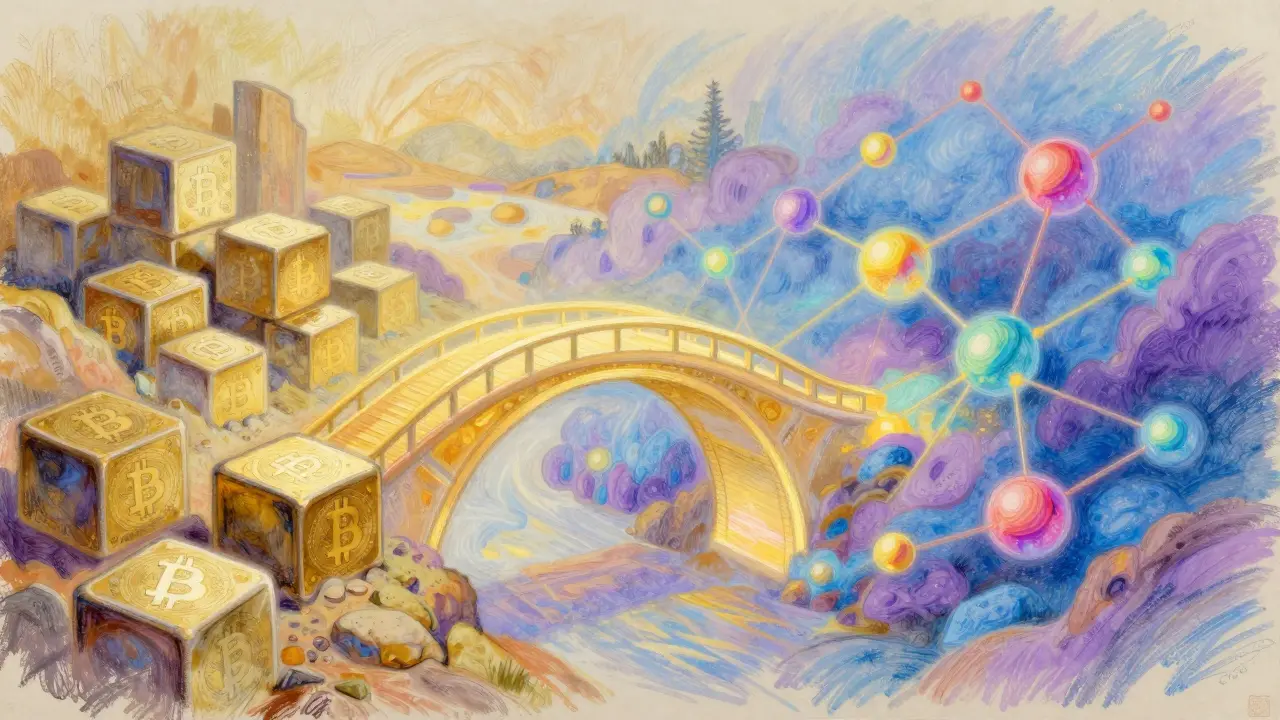
Have you ever wondered how your Bitcoin could earn yield on a completely different blockchain? That’s the promise behind ChainX, a specialized network designed to act as a gateway between isolated blockchains. If you’ve heard of Polkadot or seen mentions of "interoperability," you’ve likely brushed up against the concept ChainX tries to solve. But what exactly is it, and is the native token, PCX, still worth your attention in 2026?
At its core, ChainX is a cross-chain asset gateway built on the Substrate framework. It doesn’t just move money; it locks assets like Bitcoin (BTC) or Ethereum (ETH) in a vault and issues a wrapped version that can be used across other networks, particularly within the Polkadot ecosystem. Think of it as a universal translator for crypto assets, allowing them to speak the same language so they can participate in decentralized finance (DeFi) applications elsewhere.
How ChainX Actually Works
To understand ChainX, you need to look at its technical foundation. It was one of the first projects built using Substrate, the modular Rust-based framework created by Parity Technologies for building Polkadot parachains. This choice wasn't accidental. By using Substrate, ChainX gained access to advanced features like on-chain runtime upgrades and support for multiple virtual machines, including WASM and EVM.
The magic happens through its consensus mechanism. ChainX uses a hybrid Proof-of-Stake (PoS) system combining two protocols: BABE for block production and GRANDPA for finality. This separation means blocks are generated quickly while confirmations remain secure. Here is where things get interesting for users:
- Inter-chain Mining: Unlike traditional mining that requires expensive hardware, ChainX allows you to "mine" PCX by depositing other assets. When you lock BTC, DOT, or ETH into the ChainX bridge, the market value of those assets contributes to your mining power.
- Voting Power: The native PCX token acts as the primary unit of computing power for voting and governance. To maintain security, the protocol caps the influence of external assets. Currently, inter-chain assets contribute up to 10% of total mining power, while PCX staking accounts for at least 90%.
- Asset Relaying: Once assets are bridged, they become X-Tokens (like xBTC). These tokens can then be used in DeFi platforms connected to the Polkadot network, such as Acala or Mandala, to take out loans or provide liquidity.
This design positions ChainX not just as a bridge, but as a "third relay chain" alongside Polkadot and Kusama, focusing specifically on asset interaction rather than general data routing.
Understanding PCX Tokenomics
The utility of the PCX token extends far beyond simple trading. It serves four main functions within the ecosystem: governance, payment, staking, and collateral.
First, let's talk supply. ChainX has a hard cap of 21 million PCX, a number deliberately chosen to mirror Bitcoin’s scarcity model. However, instead of Bitcoin’s four-year halving cycle, PCX halves every two years. This faster schedule was designed to distribute rewards more rapidly to early adopters and active participants. As of 2026, approximately 60% of this maximum supply has been issued, meaning the circulating supply hovers around 12.5 million tokens.
When it comes to earning PCX, the incentives have historically been aggressive. In earlier years, staking APYs were advertised as high as 42%, attracting significant community interest. Today, while yields may vary based on network activity, the structure remains similar: you stake PCX or lock external assets to earn rewards. Importantly, ChainX’s staking model does not include slashing penalties for misbehavior, which lowers the risk for delegators compared to some other PoS networks.
Governance is another key pillar. All PCX holders form the "Referendum Chamber," voting on critical changes like runtime updates or parameter adjustments. There is also an elected Council, where users can lock small amounts of PCX (as little as 0.01) to vote for candidates. This multi-chamber democracy aims to keep the project community-owned rather than controlled by a single entity.
Market Performance and Current Status (2026)
If you are looking at ChainX today, you will notice a stark contrast between its ambitious technical vision and its current market reality. ChainX reached an all-time high of roughly $19.73 in April 2021 during the peak of the DeFi summer. Since then, like many altcoins from that era, it has faced significant headwinds.
By mid-2026, PCX trades in the micro-cap segment, with prices often fluctuating between $0.02 and $0.05 depending on the exchange. Market capitalization figures consistently sit below $1 million, indicating thin liquidity and lower trading volume. Different data aggregators sometimes show conflicting prices due to this illiquidity, so checking multiple sources is essential before making any moves.
| Metric | Value / Detail |
|---|---|
| Max Supply | 21,000,000 PCX |
| Circulating Supply | ~12.5 Million PCX |
| Halving Cycle | Every 2 Years |
| Consensus | BABE + GRANDPA (Hybrid PoS) |
| Primary Use Case | Cross-chain Asset Gateway / BTC L2 |
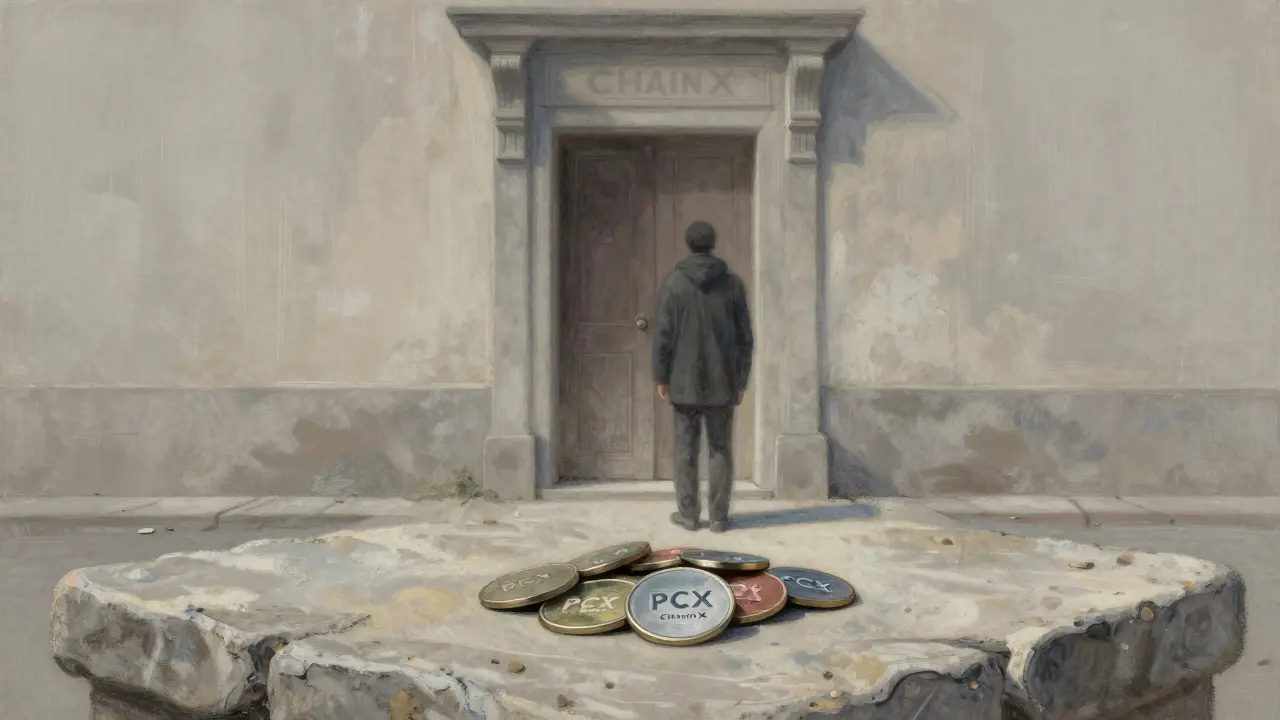
One major red flag for potential investors is the state of the project’s public presence. The official chainx.org domain, once central to tutorials and community updates, currently resolves to a parked page. While the GitHub repository shows sporadic activity, the lack of an active website raises questions about ongoing development and user support. Additionally, there is frequent confusion between ChainX (the protocol) and unrelated entities like "ChainX Global Technology" or the defunct exchange "chainx.kr," which adds a layer of reputational risk.
Risks and Considerations
Before interacting with ChainX, you should weigh several risks. First, cross-chain bridges are historically vulnerable to hacks. While ChainX uses light-client protocols to verify transactions securely, any smart contract involved in locking and minting assets carries inherent code risk.
Second, consider the liquidity trap. With a market cap under $1 million, selling large amounts of PCX could significantly impact the price. You might find yourself unable to exit a position quickly without slipping the price against you.
Finally, there is the opportunity cost. Many newer Layer-2 solutions and bridge protocols have emerged since ChainX’s inception in 2019. Projects with more active communities, higher transaction volumes, and better-funded development teams may offer safer or more profitable avenues for cross-chain exposure.
How to Get Started (If You Choose To)
If you decide to explore ChainX despite these risks, here is the practical path forward. You cannot simply buy PCX on most major centralized exchanges like Binance, as it is not listed there. Instead, you typically need to use a decentralized exchange (DEX) or a smaller CEX that supports the token.
- Set Up a Wallet: You will need a wallet that supports Substrate-based chains. MathWallet is one of the few remaining reliable options that integrates with ChainX. Alternatively, you can use the browser-based dApp wallet hosted by the ChainX team.
- Acquire PCX: Look for listings on exchanges like Gate.io or Crypto.com. Be prepared for wide bid-ask spreads due to low volume.
- Bridge Assets (Optional): If you want to mine PCX using Bitcoin, you would send BTC to the ChainX bridge address. This creates xBTC on the ChainX network, which then generates mining power.
- Stake: Inside your wallet, navigate to the staking module. Select a validator to delegate your PCX to. Remember, there is no slashing, but you must protect your private keys, as recovery options are limited if you lose them.
Always double-check contract addresses. The ERC-20 representation of PCX exists on Ethereum, but ensure you are interacting with the correct official contract to avoid scams.
Is ChainX a scam?
ChainX itself is not a scam; it is a legitimate blockchain protocol with open-source code and a functional network. However, there have been instances of name confusion with unrelated entities like "chainx.kr" (a separate exchange) or "ChainX Global." Always verify you are interacting with the official ChainX organization associated with the Polkadot ecosystem and Lipeng Yue, the founder.
Can I mine PCX with my CPU or GPU?
No. ChainX does not use Proof-of-Work. You cannot mine PCX with traditional hardware. Instead, you "mine" or earn PCX by staking the token itself or by depositing other cryptocurrencies (like BTC or ETH) into the ChainX bridge to generate inter-chain mining power.
Why is the ChainX website down?
As of 2026, the main chainx.org domain appears to be inactive or parked. This suggests a decline in public-facing maintenance or marketing efforts. Users are advised to rely on official GitHub repositories and community channels like Reddit for the most accurate technical information, though caution is recommended due to reduced visibility.
What is the difference between ChainX and Polkadot?
Polkadot is a heterogeneous multi-chain network that provides shared security for various parachains. ChainX is a specific chain built on Polkadot’s Substrate framework. Its primary role is to act as an asset gateway, specializing in bringing Bitcoin and other external assets into the Polkadot ecosystem for use in DeFi applications.
Is it safe to stake PCX?
Staking PCX is considered relatively safe from a protocol perspective because there is no slashing penalty for validators or delegators. However, the safety depends entirely on you securing your own private keys. If you lose your seed phrase, your funds are unrecoverable. Additionally, the financial risk lies in the potential devaluation of the PCX token itself.



Oh, please. Another guide to a dead protocol? 🙄 It’s almost cute how people still think ChainX is relevant in 2026. The website is parked, the liquidity is non-existent, and yet here we are reading about 'inter-chain mining' like it’s some revolutionary breakthrough instead of a relic from the 2021 DeFi bubble. I suppose for those who enjoy holding bags of micro-cap dust, this must feel like a treasure map. 📉💀
I actually found the technical breakdown pretty useful though. It's rare to see someone explain the BABE and GRANDPA consensus split so clearly without getting bogged down in too much jargon. Even if the project isn't thriving, understanding how Substrate chains handle finality is good knowledge for anyone looking at Polkadot parachains.
The concept of bridging assets across different blockchains is fascinating when you really stop to think about what it means for the nature of value itself. If Bitcoin can exist as xBTC on another chain, does it remain Bitcoin in essence, or has it become something else entirely? This philosophical question underpins all of DeFi. We are essentially creating digital shadows of real assets, and while the utility is clear, the ontological status of these wrapped tokens remains a mystery that few truly ponder deeply enough before investing their life savings into such volatile structures.
Let me save you some time and money right now because clearly nobody read the section on market performance. ChainX is a ghost town. The market cap is under a million dollars. Do you know what happens when you try to sell $10k worth of PCX on a chain with that kind of liquidity? You crash the price by 40% in ten seconds. It is not an investment; it is a donation to whoever is left holding the bag. The lack of slashing is nice, sure, but it doesn't matter if the token goes to zero because no one cares anymore. The GitHub activity is sporadic at best, which usually means the core devs have moved on to shittier coins or better jobs. Don't be that guy who buys the dip on a dead coin.
I appreciate the detailed explanation of the risks involved. It is very important to understand the potential downsides before engaging with any cross-chain protocol. The point about the parked website is particularly concerning, as it suggests a lack of ongoing maintenance. Perhaps the community could focus more on active projects within the Polkadot ecosystem that have stronger support and clearer roadmaps? Safety first, always! 😊
This article is a masterclass in how to describe a failure as a 'challenge.' The author tries to spin the lack of liquidity as a 'consideration,' but let's call it what it is: irrelevance. ChainX was supposed to be the gateway to interoperability, and instead, it became a graveyard for early adopters who fell for the 'mine BTC with BTC' hype. The technical architecture might have been sound in 2019, but in 2026, it's obsolete. No one needs a third relay chain when Layer-2s on Ethereum and Solana are eating lunch. Stop pretending this is still a viable play.
i mean its not a scam technically but its kinda sus u know? the website being down is red flag number one. why would a legit project just leave their domain parked? feels like rug pull energy even if they didnt steal the money directly. just bad vibes overall. dont trust it.
I totally get why people are skeptical!! It is super scary when a website goes down like that!!! But maybe they are just focusing on backend development?? Or maybe they are tired?? Either way, I hope everyone stays safe out there!!! Always double check those contract addresses!!! Love y’all!!! ❤️✨
While the current state of ChainX is certainly less than ideal, it is worth noting that the underlying technology of Substrate-based bridges has influenced many subsequent projects. The concept of inter-chain mining was innovative at the time. However, your caution regarding liquidity is well-founded. Investors should indeed prioritize projects with transparent governance and active development teams. Thank you for providing a balanced view of the risks.
The inefficiency of ChainX’s current economic model is glaring. With a circulating supply hovering around 12.5M and negligible trading volume, the price discovery mechanism is broken. The reliance on external assets for only 10% of mining power creates a distorted incentive structure where native stakers are subsidizing a bridge that no one uses. From a fundamental analysis perspective, the tokenomics are designed for a bull market that hasn't materialized for this specific niche. The opportunity cost of capital tied up in xBTC vaults is astronomical compared to yield farming on established L2s.
Wake up sheeple! The reason ChainX is 'down' isn't because it failed. It's because they were too successful at moving Bitcoin off-chain and the central banks didn't like it. They shut down the website to hide the evidence of the massive wealth transfer. Inter-chain mining is just a cover for surveillance capitalism. They track every BTC that enters the bridge. Don't let them gaslight you into thinking this is about 'DeFi.' It's about control. The 10% cap on external assets is a backdoor for regulators to freeze funds. Stay paranoid, stay free.
I find myself reflecting on the broader implications of what happened to ChainX. It serves as a poignant reminder of how quickly the crypto landscape shifts. One day you are the darling of interoperability, the next you are a footnote in a GitHub repository. It makes one wonder if any of these projects are truly sustainable or if they are merely fleeting moments of innovation destined to fade. Perhaps we should approach all such ventures with a sense of humility and caution, recognizing that technological promise does not always equate to long-term viability. It is a complex dance between code, community, and market forces.
Boring. Just boring. Everyone here talking like it matters. It doesn't. Move on.
i am convinced that the whole polkadot ecosystem is a honeypot designed to trap retail investors. chainx is just the tip of the iceberg. look at the dates. look at the silence. they are waiting for you to stake your pcx so they can dump it on you later. do not fall for it. (:(
typical garbage project. waste of time. burn it.
Y'all are missing the forest for the trees. ChainX wasn't just a bridge; it was a statement. A declaration that Bitcoin doesn't need to sit idle. Sure, the execution got messy, and the market moved on, but the idea? Timeless. The fact that the site is down just proves they achieved decentralization in the most literal sense-no central server needed. It's poetic, really. Most of you are too busy counting pennies to see the artistry in the decay. 🎨🚮
Oh wow, another post about a coin that went to zero! 🤡 How original! I bet the author made a lot of money writing this guide, huh? Probably selling courses on 'How to Not Lose Everything on ChainX.' Keep dreaming, folks. The only thing yielding here is your patience running out. 💸📉
Interesting read. 🧐 The irony is palpable. A project built to connect isolated blockchains ended up isolating itself from relevance. But hey, at least the code is open source. Maybe someone will fork it and make it cool again. Until then, enjoy the dust. ☕
It is disheartening to see Indian developers and global communities fail to maintain such projects. The lack of discipline in keeping the website active reflects poorly on the entire team. We need more accountability in the blockchain space. If you cannot maintain a simple domain name, how can you be trusted with billions in cross-chain assets? This is a lesson for all startups.
I have been monitoring the transaction patterns on the ChainX bridge for months. There is a distinct pattern of large withdrawals followed by periods of silence. This is not organic user behavior. This is coordinated dumping by insiders. The public is being misled by the 'open-source' narrative. The reality is that the keys to the kingdom are held by a few, and they are leaving the building. Proceed with extreme caution.
its so sad really. i remember when this was huge. now its just... nothing. like a ghost. i tried to log in once and my wallet just froze. terrible experience. why did i bother reading this? probably because im stupid. lol. anyway, avoid.
Look, I get the hate train rolling, but let's keep it real. The tech was solid. The problem was timing and marketing. ChainX arrived when everyone wanted quick flips, not infrastructure. Now that everyone understands the importance of bridges, it's too late for them. It's a tragedy, honestly. But yeah, don't buy it. Just learn from it.
You guys are being too harsh! I know it looks bad, but maybe they are rebuilding? I heard rumors on Discord that they are launching a new app soon. Who knows? Crypto moves fast. Maybe this is the bottom? I'm gonna hold my PCX just in case. Hope springs eternal! 🌱