
What is OmniCat (OMNI)? The Omnichain Meme Coin Explained
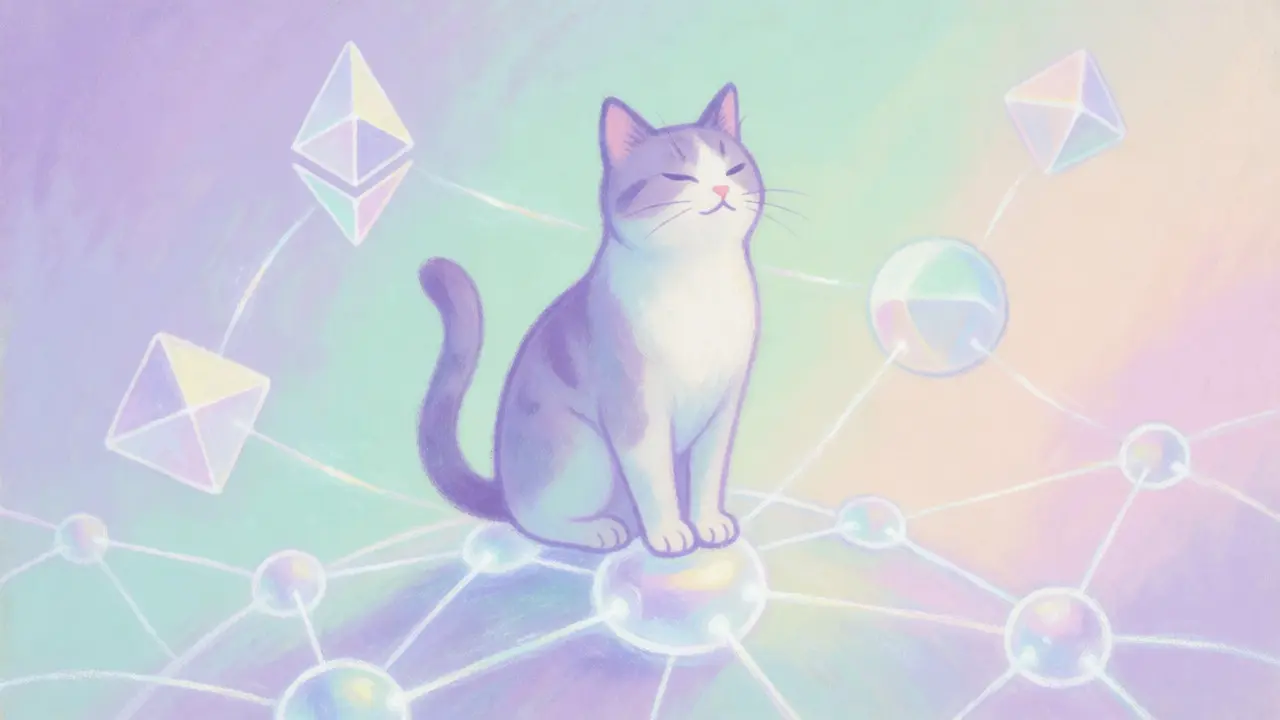
You’ve probably seen the cat memes flooding your Twitter feed or Telegram groups. But OmniCat (OMNI) isn’t just another joke token trying to ride the Dogecoin wave. It claims to be the first omnichain meme coin, designed to exist simultaneously across multiple blockchains without the usual bridge headaches.
But here’s the catch: while the tech sounds innovative, the market reality is a bit murkier. Is this a genuine breakthrough in cross-chain interoperability, or just another speculative asset with thin liquidity? Let’s break down what OmniCat actually is, how it works under the hood, and whether it deserves a spot in your portfolio-or if you should keep your distance.
The Core Concept: Why "Omnichain" Matters
Most meme coins are stuck on one chain. If you hold Shiba Inu, you’re trapped on Ethereum. If you want to move it to Solana, you need a bridge, which means fees, wait times, and security risks. OmniCat flips this script by using LayerZero technology to create a native cross-chain experience.
Instead of wrapping tokens or locking them in a vault on one chain and minting synthetic versions on another, OmniCat uses the Omnichain Fungible Token (OFT) standard. This allows the same OMNI token to move seamlessly between networks like Ethereum, BNB Chain, Polygon, Avalanche, Arbitrum, Optimism, Base, and even Solana. Think of it as having one bank account that works instantly in every country, rather than needing separate accounts for each.
This architecture eliminates the need for traditional bridges. When you send OMNI from Ethereum to Polygon, LayerZero handles the messaging layer directly. No wrapped assets, no complex liquidity pools managing the exchange rate. Just direct transfer. For users, this means lower friction and potentially lower costs, though gas fees still apply on each network.
Tokenomics and Supply Details
Understanding the supply structure is crucial before you buy anything. According to data verified by major trackers like CoinMarketCap and CoinGecko, OmniCat launched with a total supply of approximately 45.82 billion OMNI tokens. However, circulating supply figures can vary slightly depending on the source, with some reports citing around 42 billion in circulation.
Here is a snapshot of the key metrics as of late 2024:
| Metric | Value / Detail |
|---|---|
| Total Supply | ~45.82 Billion OMNI |
| Circulating Supply | ~42 Billion OMNI (varies by tracker) |
| Supported Chains | Ethereum, BNB Chain, Polygon, Avalanche, Arbitrum, Optimism, Base, Solana |
| Technology Standard | Omnichain Fungible Token (OFT) via LayerZero |
| Holder Concentration | Top 100 wallets hold ~85% of supply |
One red flag worth noting is the holder concentration. Data suggests that the top 100 wallets control roughly 85% of the total supply. In the world of meme coins, this often indicates a high risk of price manipulation. If a few large holders decide to sell, the price can crash instantly because there isn’t enough retail demand to absorb the shock.
How to Buy and Store OmniCat
If you’re interested in testing out the omnichain concept, buying OMNI isn’t exactly straightforward compared to buying Bitcoin on Coinbase. You won’t find it listed on major centralized exchanges like Binance or Kraken yet. Instead, you’ll need to navigate the decentralized finance (DeFi) landscape.
- Set up a multi-chain wallet: Since OMNI exists on multiple chains, you need a wallet that supports them all. MetaMask is great for EVM chains (Ethereum, Polygon, etc.), but you’ll also need Phantom or Solflare for Solana.
- Fund your wallet: Buy ETH, BNB, or SOL depending on which chain you plan to trade on first. Remember, you’ll need gas fees for every transaction.
- Connect to a DEX: Use decentralized exchanges like PancakeSwap (for BNB Chain), Uniswap (for Ethereum), or Jupiter (for Solana). Look for the official contract address to avoid fake tokens.
- Swap for OMNI: Exchange your base currency for OMNI. Be careful with slippage settings; due to low liquidity, you might need to set higher slippage tolerance to complete the trade.
- Transfer across chains (Optional): To truly test the omnichain feature, try moving a small amount of OMNI from one chain to another using a LayerZero-compatible interface or a supported bridge aggregator.
Be prepared for some friction. Users have reported issues with failed transactions and confusing balance displays when moving between networks. It’s not as smooth as sending an email, but it’s getting better as the infrastructure matures.
Risks and Red Flags You Should Know
Let’s be real: OmniCat is a high-risk play. While the technology is interesting, the financial fundamentals are shaky. Here’s why experts remain skeptical.
Negligible Liquidity: Trading volume for OMNI is extremely thin. On some days, 24-hour volume has dropped below $1,000. This means you might buy easily but struggle to sell without crashing the price yourself. Slippage can eat into your profits quickly.
Anonymous Team: Like many meme coins, the developers behind OmniCat are anonymous. There is no clear link to the legitimate Omni Network project, despite the similar name. This lack of transparency makes accountability difficult.
Lack of Utility: Beyond being a meme and existing on multiple chains, what does OMNI actually do? There are no significant staking rewards, NFT integrations, or ecosystem apps driving consistent demand. It’s purely speculative at this stage.
Data Discrepancies: Different tracking platforms report wildly different prices and volumes. Some show impossible historical highs due to data errors or wash trading. Always cross-reference data from multiple sources before making decisions.
OmniCat vs. Other Meme Coins
How does OmniCat stack up against the giants? It’s not about beating Dogecoin or Shiba Inu in market cap-it’s about offering something they don’t.
| Feature | OmniCat (OMNI) | Dogecoin (DOGE) | Shiba Inu (SHIB) |
|---|---|---|---|
| Primary Chain | Omnichain (Multi-chain) | Own Blockchain | Ethereum |
| Cross-Chain Native? | Yes (via LayerZero) | No (Requires Bridges) | No (Requires Bridges) |
| Market Cap Range | Micro-cap (<$1M) | Large-cap ($Billions) | Large-cap ($Billions) |
| Community Size | Small & Niche | Huge & Mainstream | Large & Active |
| Utility Focus | Technical Experimentation | Payment/Meme | Ecosystem/Shibarium |
OmniCat wins on technical novelty but loses heavily on community strength and liquidity. If you’re looking for safety and brand recognition, DOGE or SHIB are safer bets. If you’re a tech enthusiast wanting to test LayerZero’s capabilities with a meme coin, OMNI offers a unique sandbox.

Future Outlook and Community Sentiment
The future of OmniCat hinges on two things: broader adoption of LayerZero and sustained community hype. Currently, developer activity on GitHub has slowed significantly, with long periods of inactivity. The roadmap promised features like NFT integration and staking, but these updates have been delayed or remain vague.
Community sentiment is mixed. Reddit threads and Telegram chats show declining engagement, with fewer new posts and discussions. Many early adopters have moved on to newer narratives. However, a core group remains optimistic, betting that the omnichain narrative will become mainstream as blockchain fragmentation increases.
Regulatory scrutiny is another wildcard. As the SEC looks closer at multi-chain tokens, projects like OmniCat could face questions about whether their identical functionality across chains constitutes a security. For now, it operates in a gray area common to most meme coins.
Should You Invest in OmniCat?
Ask yourself this: Are you investing for utility or speculation? If you believe that cross-chain compatibility is the next big unlock for crypto, OmniCat is a fascinating, albeit risky, experiment. It solves a real problem-bridging friction-but does so with a token that has little fundamental value backing it.
For most investors, OmniCat represents a lottery ticket. The potential upside exists if the omnichain trend explodes, but the downside is severe due to low liquidity and concentrated holdings. Never invest more than you can afford to lose completely. And always verify the contract address before swapping, as copycat tokens are rampant in this niche.
Is OmniCat related to Omni Network?
No, despite the similar name, OmniCat (OMNI) is not officially affiliated with the Omni Network project. They are separate entities. OmniCat is a meme coin utilizing LayerZero, while Omni Network is a distinct protocol focused on scaling Ethereum.
Where can I buy OmniCat (OMNI)?
OmniCat is primarily traded on decentralized exchanges (DEXs). Depending on the chain, you can use PancakeSwap (BNB Chain), Uniswap (Ethereum), or Jupiter (Solana). It is generally not listed on major centralized exchanges like Binance or Coinbase.
What is the main advantage of OmniCat over other meme coins?
Its main advantage is its omnichain capability. Using LayerZero's OFT standard, OMNI can move natively between multiple blockchains (like Ethereum, Solana, and Polygon) without needing traditional bridges or wrapped tokens, reducing friction and potential security risks associated with bridging.
Is OmniCat a good investment?
It is considered a high-risk, speculative investment. While the technology is innovative, the token suffers from low liquidity, high holder concentration, and a lack of clear utility beyond speculation. It is suitable only for those willing to take significant risks on experimental crypto projects.
How many blockchains does OmniCat support?
OmniCat currently supports several major networks including Ethereum, BNB Chain, Polygon, Avalanche, Arbitrum, Optimism, Base, and Solana. The exact number of active deployments may vary based on current project updates and liquidity availability on each chain.