

What is Titan Hunters (TITA)? GameFi Project Explained
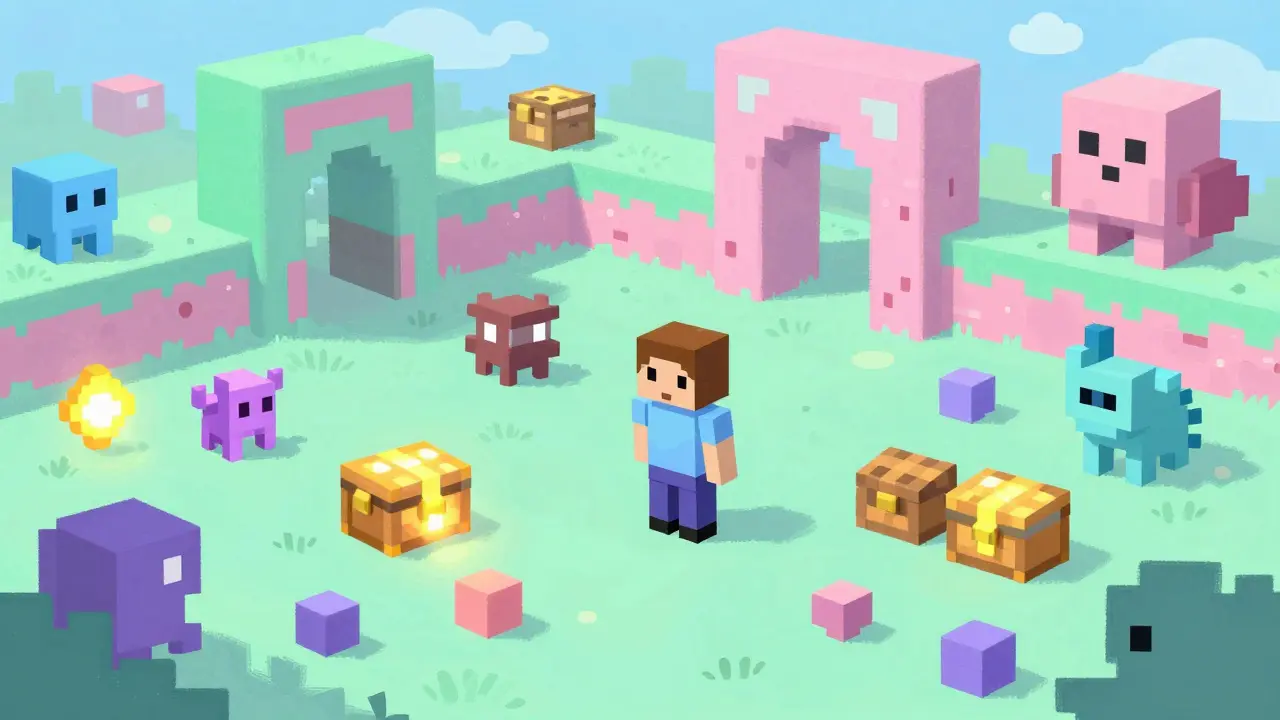
Remember the hype around play-to-earn games in 2021 and 2022? You probably saw headlines about people making full-time incomes just by playing mobile games. Titan Hunters was one of those projects that promised to let you earn cryptocurrency while battling monsters in a voxel-style world. The project launched with a lot of buzz, raised funds through major launchpads, and attracted tens of thousands of players. But if you look at the charts today, the story looks very different. The token price has crashed, liquidity is thin, and many early investors are left wondering what happened.
If you’re asking "What is Titan Hunters (TITA) crypto coin?" because you found it on an exchange or heard about it from a friend, you need to understand both the game mechanics and the harsh reality of its current market status. This isn’t just a simple definition; it’s a look at how the project works, why it failed to maintain its value, and whether there is any future left for this specific asset.
The Core Concept: Free-to-Play Meets Blockchain
Titan Hunters is a free-to-play action MMORPG built on the Binance Smart Chain (now known as BNB Smart Chain). Unlike earlier play-to-earn giants like Axie Infinity, which required you to buy expensive NFTs just to start playing, Titan Hunters allowed anyone to jump in for free. You could download the app, create a character, and start fighting immediately without spending a single cent.
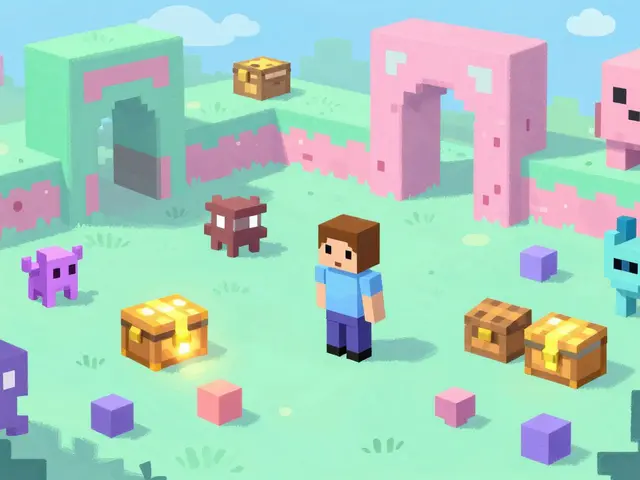
The gameplay itself borrows heavily from familiar titles. Think of the voxel graphics from Minecraft, combined with the loot-driven dungeon crawling of Diablo, and the one-stick shooter controls of Archero. It was designed to be accessible on low-end Android devices, aiming to bring crypto gaming to a mass audience rather than just hardcore PC gamers.
The twist was the economic layer. As you played, you earned in-game resources. If you wanted to turn those rewards into real cryptocurrency, you had to engage with the blockchain side of the ecosystem. This meant minting your high-level gear as Non-Fungible Tokens (NFTs) or converting in-game currency into the project’s native token, TITA. The idea was to lower the barrier to entry so that casual players could eventually become stakeholders in the economy.
Understanding the TITA Token
TITA is the BEP-20 utility and governance token of the Titan Hunters ecosystem. Deployed on the BNB Smart Chain, the token was supposed to serve multiple purposes within the game and the broader community. According to the original whitepaper, TITA holders could use their tokens to mint new NFTs, audit existing items to verify their rarity, participate in decentralized governance votes, and stake for rewards.
Let’s break down the supply numbers, which are crucial for understanding the token's potential value:
- Total Supply: 1,000,000,000 (1 billion) TITA tokens.
- Circulating Supply: At various points, data aggregators like CoinMarketCap reported circulating supplies ranging from zero to over 66 million tokens, depending on vesting schedules and lock-ups.
- All-Time High (ATH): During the peak of the GameFi boom, TITA reached prices between $0.43 and $0.58, depending on the exchange.
The token was launched via Initial Game Offerings (IGOs) on platforms like DAO Maker in late 2021. This gave the project significant visibility among crypto-native investors who were looking for the next big play-to-earn opportunity. However, the initial distribution often leads to heavy selling pressure once the token becomes tradable on open markets, a pattern seen in many similar projects.
How the Economy Actually Worked
To understand why the token struggled, you have to look at the flow of money inside the game. Titan Hunters operated a hybrid economy. There was an off-chain currency (often called "Coin") used for basic upgrades and purchases within the game client. Then there was the on-chain layer involving TITA and NFTs.
Players earned materials by defeating Titans in procedurally generated dungeons. These materials could be used to craft better gear. Once a player had high-rarity gear, they could choose to "audit" it. Auditing converted the in-game item into an on-chain NFT stored on the BNB Smart Chain. This process cost TITA tokens. Additionally, players could sell these NFTs on the marketplace for TITA or other cryptocurrencies.
The revenue model for the developers relied on several streams:
- Fees from summoning new NFT gear (gacha mechanics).
- Fees charged when auditing non-NFT items into NFTs.
- Transaction fees from the internal marketplace.
- Conversion fees when moving value from off-chain coins to on-chain assets.
Theoretically, this created a closed loop where demand for TITA was driven by the desire to upgrade and trade assets. In practice, however, the emission rate of rewards often outpaced the external demand for the token. When more players were selling their earned TITA than new buyers were entering the market, the price began to fall. This is a classic problem in unsustainable play-to-earn models.
The Crash: What Happened to the Price?
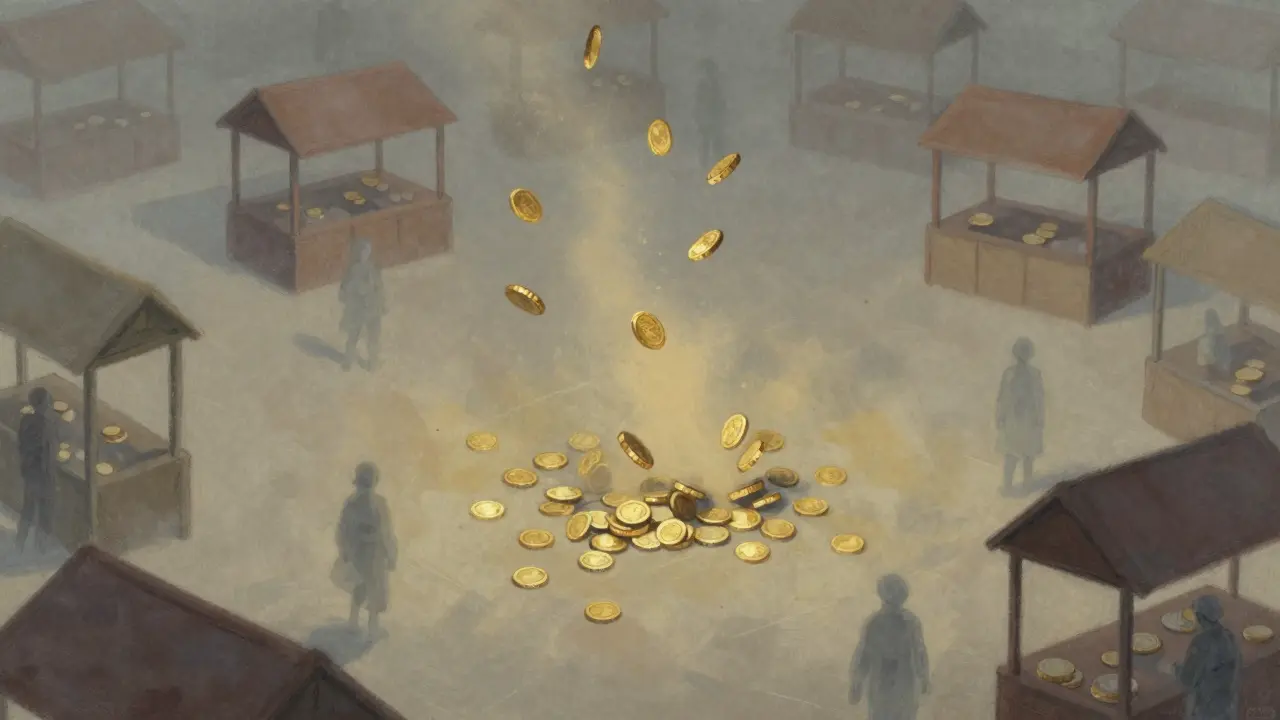
If you bought TITA during its peak, you likely lost most of your investment. By mid-2023 and into 2024, the token had experienced a catastrophic decline. Data from major exchanges shows the price dropping by more than 95% from its all-time high. In some snapshots, the fully diluted valuation (FDV) fell below $10,000, and 24-hour trading volumes hit zero on several platforms.
Why did this happen? Several factors contributed:
Market Saturation: The play-to-earn sector became overcrowded. Hundreds of new games launched, fragmenting the user base. Players moved to newer projects with higher promised returns, leaving older games like Titan Hunters with fewer active earners.
Liquidity Crisis: As the price dropped, interest from investors vanished. Without fresh capital entering the order books, even small sell orders caused massive slippage. Gate.io and other exchanges listed TITA, but at times, the daily volume was effectively nonexistent. This means that even if you wanted to sell your tokens, you might not find a buyer, or you’d have to accept a fraction of the displayed price.
Tokenomics Imbalance: Many critics pointed out that the reward structure was too generous initially. When rewards are high but there is no real-world utility or external demand for the token, inflation kills the value. Players sold their earnings to cover living costs, creating constant downward pressure on the price.
| Feature | Titan Hunters (TITA) | Axie Infinity (AXS) |
|---|---|---|
| Entry Cost | Free (F2P) | High (Requires NFT Team) |
| Blockchain | BNB Smart Chain | Ethereum / Ronin Sidechain |
| Current Liquidity | Very Low / Near Zero | High (Top 100 Market Cap) |
| Price Performance | >95% Decline from ATH | Significant Decline but Higher Floor |
| Primary Utility | In-game Minting & Governance | Governance, Staking, Marketplace |
Is Titan Hunters Still Worth Playing?
This depends entirely on your goal. If you are looking for entertainment, the answer might still be yes. The core gameplay loop-fighting bosses, collecting loot, and upgrading gear-remains functional. The voxel art style is charming, and the controls are smooth. For a casual gamer who wants to try blockchain technology without risking money, it offers a safe sandbox.
However, if you are looking to make money, the outlook is bleak. The earning potential has dried up significantly. With the token price near pennies or fractions of a penny, the amount of TITA you earn per hour translates to negligible fiat value. Furthermore, the lack of liquidity means you cannot easily cash out even if you do manage to accumulate a large number of tokens.
For investors, TITA is currently considered a high-risk, speculative asset with limited prospects for recovery. The project has not seen the kind of revitalization or pivot that has helped some other struggling GameFi tokens survive. While the team may continue to update the game, the financial engine that drove the initial hype appears broken.
Security and Technical Risks
From a technical standpoint, Titan Hunters operates on the BNB Smart Chain, which is generally secure and fast. The smart contracts governing the TITA token and NFTs have not been associated with major hacks or exploits comparable to the Ronin Bridge incident. However, the absence of a major hack does not guarantee safety.
One concern is the lack of prominent third-party audit reports from firms like CertiK or Quantstamp in public documentation. This doesn't mean the code is bad, but it means users have less independent verification of security standards. Additionally, interacting with decentralized exchanges (DEXs) like PancakeSwap to buy or sell TITA carries standard DeFi risks, including potential rug pulls or contract vulnerabilities, although TITA itself has remained stable in terms of contract integrity.
Always ensure you are using the correct contract address when interacting with TITA. Fake tokens with similar names are common on block explorers like BscScan. Verify the address against official channels before connecting your wallet.
Future Roadmap and Viability
The original roadmap for Titan Hunters included ambitious plans: expanding the game universe with new biomes, introducing advanced co-op features, and allowing players to design their own games using a proprietary engine. There were also plans for deeper DAO governance where TITA holders would vote on fee rates and reward distributions.
While some of these features may have been partially implemented, the broader context of the crypto market has changed. The era of easy funding for GameFi projects is over. Investors are now demanding sustainable economies and real engagement metrics, not just high token emissions. Given the extremely low market cap and trading volume, it is unlikely that TITA will return to its previous highs without a complete overhaul of its economic model or a massive influx of new users, neither of which appears imminent.
Can I still buy Titan Hunters (TITA) token?
Yes, technically you can still buy TITA, but it is difficult due to low liquidity. It is not listed on major centralized exchanges like Binance or Coinbase for direct trading. You would need to use a decentralized exchange (DEX) on the BNB Smart Chain, such as PancakeSwap, and swap BNB for TITA. Be aware that slippage may be very high, meaning you might pay significantly more than the displayed price.
Is Titan Hunters a scam?
There is no evidence that Titan Hunters is a traditional scam or rug pull. The game exists, the team has released updates, and the smart contracts function as intended. However, the project failed to maintain its economic sustainability, leading to a massive drop in token value. This is a common outcome for many play-to-earn projects that relied on unsustainable reward structures rather than genuine product-market fit.
How do I play Titan Hunters for free?
You can download the Titan Hunters app from mobile app stores or PC clients. Create an account using email or social login. You can start playing immediately without connecting a crypto wallet or buying any tokens. To access blockchain features like NFT minting or withdrawing earnings, you will need to set up a BNB Smart Chain-compatible wallet like Trust Wallet or MetaMask.
What is the maximum supply of TITA?
The maximum total supply of Titan Hunters (TITA) tokens is 1,000,000,000 (one billion). This fixed supply was defined at the time of the token's creation on the BNB Smart Chain.
Why did the TITA token price crash?
The price crash was driven by several factors: excessive token emissions that outpaced demand, saturation of the play-to-earn market, and a general bear market in cryptocurrency during 2022-2023. As players sold their earned tokens to cash out, and new investor interest waned, the lack of buying pressure caused the price to plummet by over 95% from its peak.
Hey everyone, just wanted to drop a quick note about the liquidity situation mentioned here. 📉 It's really important to check PancakeSwap directly if you're looking at TITA because centralized exchanges often show stale prices or zero volume that doesn't reflect the actual DEX state. I've seen too many people get burned by assuming the price on CoinMarketCap is what they'll actually get when selling. Always do your own due diligence on the contract address too! 👀
I remember playing this back in 2021 when it was all the rage. The voxel art style was genuinely charming and the controls were surprisingly smooth for a mobile game. It’s sad to see it reduced to a shell of its former self though. For those who just want to play without the crypto hassle, it still works as a decent casual dungeon crawler. Just don’t expect to earn anything meaningful from it anymore.
The trajectory of Titan Hunters serves as a profound case study in the ephemeral nature of speculative asset bubbles within the gaming sector. We must consider how the initial promise of financial liberation through gameplay was fundamentally undermined by unsustainable tokenomics. The emission rates simply could not keep pace with the infinite sell pressure generated by users seeking fiat conversion. This is not merely a failure of marketing but a structural flaw in the economic design itself where reward mechanisms outstrip utility creation. One must reflect on whether true value can be extracted from such models or if they are destined to collapse under their own weight.
Oh, look at us, analyzing dead coins like we’re archaeologists digging up Roman ruins. 🏛️ You know what’s funny? People still think 'play-to-earn' is a viable career path instead of a pyramid scheme with better graphics. The article spells it out clearly: liquidity is thin, price crashed, game is free-to-play but earning is impossible. Yet here we are, commenting on it. Maybe focus on games that don’t require you to audit NFTs just to feel special?
Just checking in. Is the game server still up?
I agree with Sharada that the gameplay itself isn't terrible. If you strip away the crypto layer, it’s just a standard MMORPG loop. The issue is purely economic. I tried to engage with the community a bit more, but most discussions have dried up since the token lost its value. It’s tough for developers to maintain motivation when the primary driver for user retention-money-is gone.
it’s almost poetic how these projects rise and fall so quickly. one day you’re a titan hunter slaying monsters for wealth, the next you’re hunting for scraps in a desert of abandoned forums. i guess that’s the cycle of hype. nothing lasts forever really. maybe that’s the lesson we should take away. impermanence is the only constant in crypto.
You guys are missing the bigger picture here. This wasn't a failure of execution it was a deliberate extraction event. Look at the vesting schedules and the team allocations. They knew exactly when the liquidity would dry up. Every single GameFi project follows this exact pattern launch hype dump exit repeat. Stop calling it a market correction and start calling it what it is theft wrapped in blockchain jargon. The smart contracts might work but the intent was malicious from day one.
Mr. Gjerlufsen’s assessment lacks nuance. While the tokenomics were indeed flawed, attributing the entire collapse to malicious intent ignores the broader macroeconomic environment of 2022-2023. Even well-structured projects suffered during the bear market. The lack of third-party audits is a valid concern, yet it does not constitute proof of a scam. One must distinguish between poor financial engineering and outright fraud.
Nuance? Nuance is for academics who didn't lose their shirts. The fact remains that no real utility was ever built. Just minting fees and gacha mechanics. That’s not a game economy that’s a casino with worse odds. And don’t give me that bear market excuse every other coin dropped 90% too but at least they had some underlying tech or user base. This was pure speculation on air.
I’ve been tracking this project since the DAO Maker launchpad days. Let me tell you something, the insiders got out early while retail holders were left holding the bag. I watched the order books thin out week by week. It’s disgusting how these founders treat investors like ATMs. I hope they rot in hell for wasting my time and capital. Absolute scum.
Gavin, please refrain from using such inflammatory language. While it is understandable to feel frustrated by financial losses, personal attacks do not contribute to a productive discussion. We should focus on the technical aspects of why the model failed rather than assigning moral judgments to individuals. Constructive criticism is always welcome, but hostility is not.
Constructive? Try getting your money back then Jerry. I’m tired of the polite corporate speak. These people stole from me. I want them to know it. Your ‘productivity’ means nothing when you’re broke.
Wow, quite the drama unfolding here. 😂 I just came here to see if anyone else remembered the voxel graphics. They were cute. But honestly, reading all this anger over a game that’s essentially dead makes me realize how emotional crypto investing gets. Maybe we should all just go touch grass instead of staring at charts that haven’t moved in months.
typo alert: nobody cares about the grammar here but seriously this shitcoin is dead. dont waste your time trying to revive it. the devs ghosted long ago. i saw their discord last year and it was just bots posting fake updates. total waste of bandwidth.
Actually, the Discord is still active, though mostly with bots and a few die-hard fans. I checked yesterday. The devs haven’t posted much, but they haven’t fully disappeared either. However, John is right about one thing: don’t invest any money into this. It’s purely speculative at this point with near-zero liquidity. If you buy, you’re gambling, not investing.
I understand the frustration many feel regarding the loss of value. It is difficult to watch an investment disappear. However, it is important to remember that decentralized assets carry inherent risks. Without proper risk management strategies such as diversification and stop-losses these types of outcomes are inevitable. Learning from this experience may help prevent similar situations in the future.
They say it’s just bad economics but I suspect there is a deeper conspiracy at play. Who benefits from the crash of small-cap GameFi tokens? The large exchange operators who siphon fees from the dying volumes. The venture capitalists who shorted the sector before dumping their positions. It’s a coordinated effort to cleanse the market of weak hands. Trust no one. Watch the wallet addresses closely. The truth is hidden in the transaction hashes.
i think yash is onto something but also maybe he’s just paranoid lol. either way im glad i sold my tita before it went to zero. barely made pennies but better than losing everything. thanks for the heads up everyone even if its late for most of you.