

OpenLeverage Crypto Review: A Dying DeFi Margin Protocol with Little Liquidity and No Future
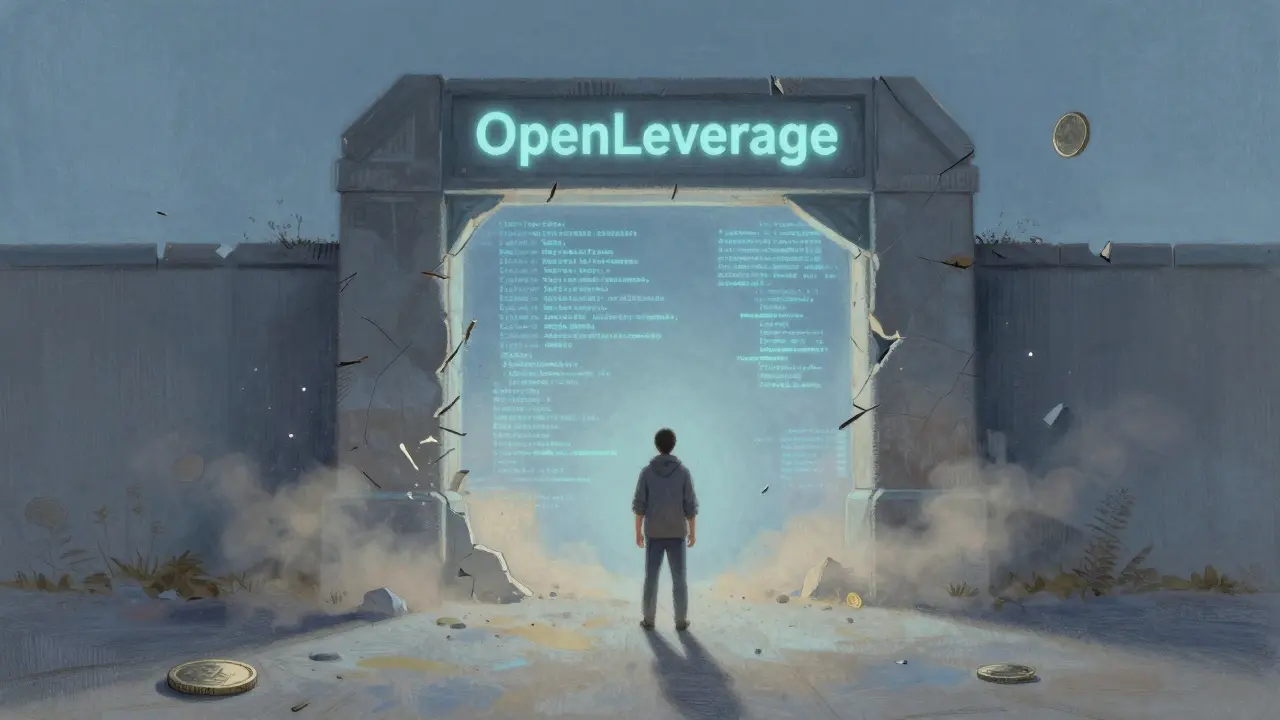
OpenLeverage isn’t a crypto exchange - and that’s the first problem
Most people think OpenLeverage is a crypto exchange like Binance or KuCoin. It’s not. It’s a DeFi protocol that lets you trade on margin across other decentralized exchanges. You don’t sign up for an account. You don’t deposit funds into a central wallet. You connect your MetaMask or Trust Wallet and interact directly with smart contracts. That’s fine if you know what you’re doing. But if you’re looking for a simple place to trade BTC or ETH with leverage, OpenLeverage will frustrate you.
What OpenLeverage actually does
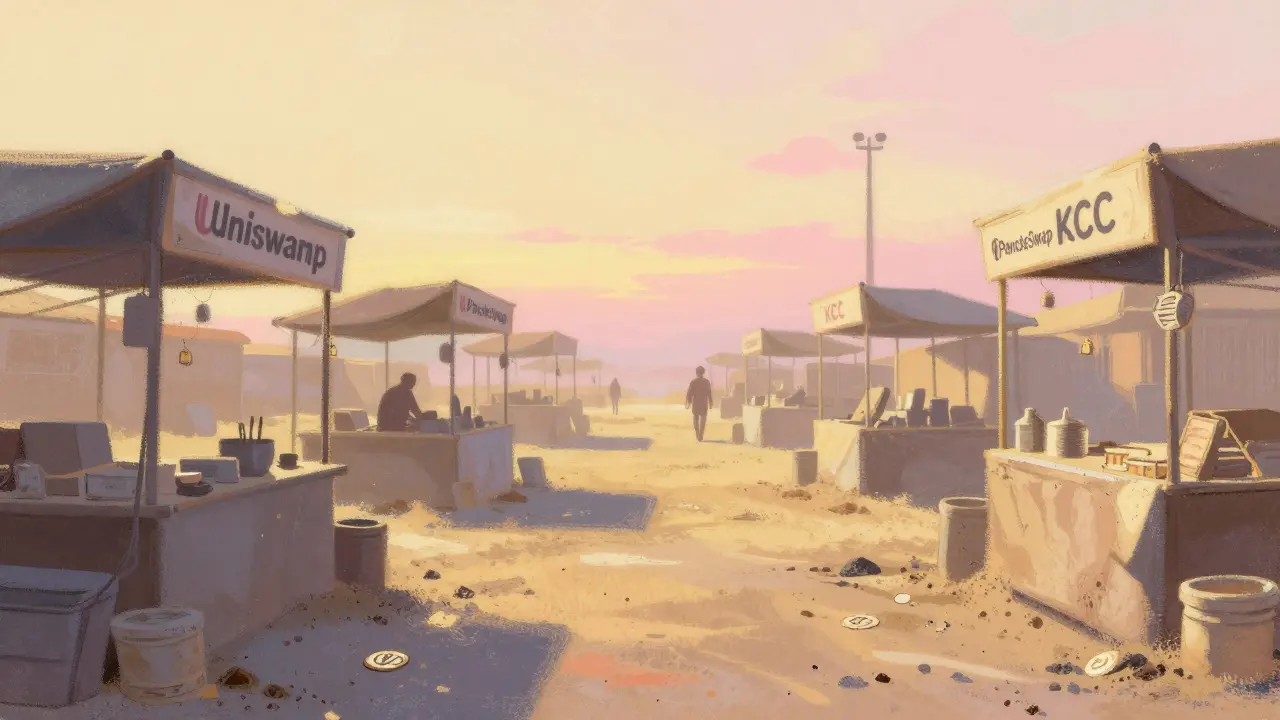
OpenLeverage (OLE) lets traders create lending pools for any token pair on DEXs like Uniswap or PancakeSwap. Need to short a new meme coin with 5x leverage? OpenLeverage lets you do it - if there’s enough liquidity. The protocol pulls together scattered liquidity from multiple chains (Ethereum, BNB Chain, KCC) so you don’t have to jump between platforms. Sounds smart? It is - in theory.
But theory doesn’t pay the bills. In practice, the liquidity is thin. On January 28, 2026, the 24-hour trading volume was just $12,078.91. That’s less than what a single large trade moves on Coinbase. For comparison, dYdX moves $187 million daily. GMX moves $234 million in total value locked. OpenLeverage? Its TVL is a fraction of that. You can’t trade large amounts without slippage over 8.7%. That means if you try to buy $5,000 worth of a token, you might end up paying $5,435. That’s not trading. That’s gambling.
The token is collapsing - and it’s not coming back
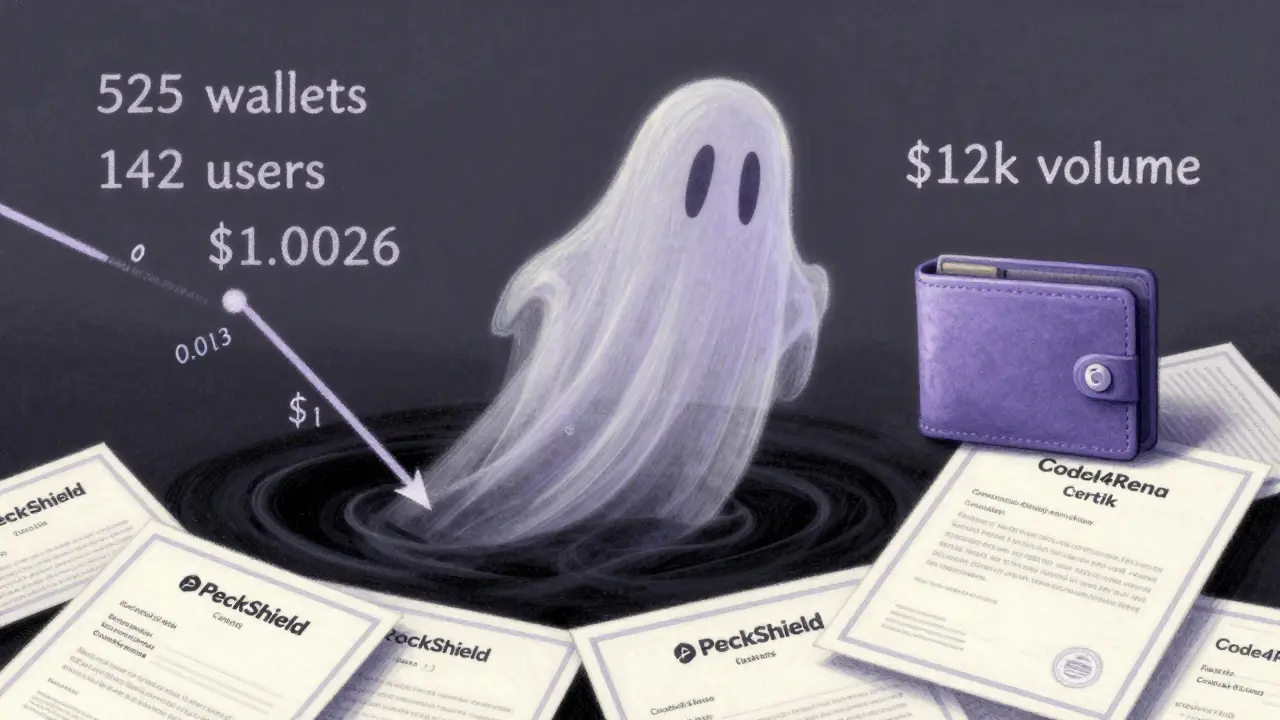
The OLE token has lost 80.15% of its value in the last year. It’s trading at around $0.0026 as of January 2026. That’s down from $0.013 a year ago. Why? Because no one’s using it. Only 525 wallets hold OLE. The top 10 wallets control nearly 70% of the supply. That’s not decentralized. That’s a pump-and-dump scheme with a smart contract.
Worse, 81.14% of all OLE tokens are still locked in reserves. That means more tokens will be released into the market. Every new emission pushes the price down. There’s no cap. No halving. Just endless supply. CoinCodex’s technical analysis shows all 13 indicators pointing to a sell. TradingBeast predicts it’ll hit $0.001235 by February 24 - another 52% drop. WalletInvestor says it might recover to $0.001794 by year-end. That’s still 30% below today’s price.
Delisted from Crypto.com - and no one cares
Crypto.com officially delisted OLE on October 22, 2025. Their reason? "Insufficient liquidity depth and declining user engagement." That’s corporate speak for "nobody’s trading this, and we don’t want the liability."
Since then, you can only trade OLE on a handful of tiny DEXs: Uniswap, PancakeSwap, and a few obscure platforms. No centralized exchange will touch it. No institutional investor is interested. No news site covers it anymore. The only mentions left are on Reddit threads titled "Whatever happened to OpenLeverage?" with 27 comments. That’s not a community. That’s a graveyard.
The tech is sound - but the market isn’t
OpenLeverage’s code has been audited by PeckShield, Code4Rena, and Certik. That’s good. The smart contracts are secure. The governance uses timelocks and multisig. The protocol works as designed.
But design doesn’t matter if no one uses it. Ethereum gas fees hit $1.27 per trade in late January 2026. On BNB Chain, it’s $0.08. On KCC, $0.03. But even with low fees, transactions fail constantly during network congestion. Users report 68% of trades fail when Ethereum is busy. That’s not a glitch. That’s a dealbreaker.
And the interface? It’s simple - too simple. There’s no help. No guides. No customer support. If you get liquidated, you’re on your own. No email reply. No Telegram response. The official Telegram group has shrunk from 4,215 members to 1,842. GitHub hasn’t seen a meaningful commit in 90 days. This isn’t a living project. It’s a zombie.
Who should avoid OpenLeverage - and who might still try
If you’re new to crypto, don’t touch OpenLeverage. You need to understand gas fees, impermanent loss, liquidation thresholds, and cross-chain bridging just to open a position. Coinbase Learn rates it as "unsuitable for beginners." Even experienced DeFi traders say it takes 8-12 hours to learn.
There’s one use case where OpenLeverage still makes sense: trading obscure tokens with no other leverage options. Say you want to short a new Solana-based meme coin that’s not listed on any major DEX. OpenLeverage lets you create a lending pool for it. That’s niche. That’s rare. That’s not a reason to invest.
For everyone else - traders looking for reliable leverage, investors looking for growth, or even speculators chasing a rebound - OpenLeverage is a trap. The token’s price is sinking. The volume is dead. The community has vanished. The development team is silent.
The numbers don’t lie
- Market cap: $321,049 (January 2026)
- Circulating supply: 18.86% of total tokens
- 24-hour volume: $12,078.91
- TVL: Under $1 million (down from $14.5M peak)
- Daily active users: 142 (down from 2,871 in Jan 2025)
- Token holders: 525 wallets (top 10 own 68.3%)
- Delisted from: Crypto.com (Oct 22, 2025)
- Fee structure: 0.15% maker / 0.25% taker
- Max leverage: 5x (varies by pair)
Final verdict: Don’t invest. Don’t trade. Walk away.
OpenLeverage isn’t a failed project. It’s a dead one. The tech works. The audits are clean. But the market has spoken. No volume. No users. No future. The delisting from Crypto.com wasn’t a setback - it was the end.
There’s no comeback plan. No new features. No partnerships. No updates. The roadmap is empty. The only thing growing is the number of people selling OLE.
If you already hold OLE, consider cutting your losses. If you’re thinking of buying, don’t. This isn’t a speculative opportunity. It’s a warning sign.
Is OpenLeverage a real crypto exchange?
No, OpenLeverage is not a crypto exchange. It’s a decentralized finance (DeFi) protocol that enables margin trading across existing DEXs like Uniswap and PancakeSwap. You connect your wallet and trade via smart contracts - there’s no central platform to log into or deposit funds with.
Can I still trade OLE on major exchanges?
No. OpenLeverage (OLE) was delisted from Crypto.com on October 22, 2025. It’s now only available on a few small decentralized exchanges like Uniswap and PancakeSwap. No major centralized exchange lists it, and none are likely to in the future due to its lack of liquidity and user activity.
Why is the OLE token price falling so fast?
The OLE token has dropped 80% in a year due to minimal trading volume, a massive unissued token supply (81.14% still in reserve), and a tiny holder base of just 525 wallets. With no demand and constant new supply being released, the price is under constant downward pressure. Technical indicators from CoinCodex show 100% sell signals.
Is OpenLeverage safe to use?
The smart contracts have been audited by PeckShield, Code4Rena, and Certik, so the code itself is secure. But safety isn’t just about code - it’s about liquidity and usability. High slippage, failed transactions during network congestion, and zero customer support make it risky for anyone but advanced DeFi users who understand liquidation mechanics and gas fees.
Who should use OpenLeverage?
Only experienced DeFi traders who want to create margin positions on obscure tokens with no other leverage options. Even then, it’s risky. For everyone else - including those looking to trade BTC, ETH, or popular altcoins with leverage - there are far better, more liquid alternatives like dYdX or GMX.
What are the alternatives to OpenLeverage?
For decentralized margin trading, dYdX (v3) and GMX are the top choices. dYdX offers $187 million in 24-hour volume and a clean order-book system. GMX has $234 million in TVL and supports both perpetual swaps and spot trading. Both have active communities, regular updates, and better liquidity. For centralized leverage trading, Binance, Bybit, and OKX are far more reliable and user-friendly.



This is the most thorough takedown of OpenLeverage I’ve seen. Seriously. Every point is nailed. The liquidity numbers? Pathetic. The tokenomics? A dumpster fire. The fact that 81% of tokens are still locked? That’s not a protocol-it’s a Ponzi with a smart contract. And the interface? It looks like it was built in 2018 and forgotten. I’ve used dYdX and GMX. This? It’s not even in the same galaxy.
Stop wasting your time. Walk away. Save your gas fees for something that actually moves.
The structural deficiencies of OpenLeverage are not merely operational-they are existential. The protocol, while technically audited, suffers from a fatal misalignment between its architectural intent and market reality. Liquidity fragmentation across chains exacerbates slippage, while token distribution asymmetry renders governance a charade. The absence of institutional backing, coupled with delisting from centralized exchanges, signals a terminal decline. One cannot engineer demand where none exists.
Oh wow. Someone actually wrote a 2,000-word obituary for a crypto project that died in 2024? Congrats. You just wrote the eulogy for a zombie that got buried under 142 active users. I didn’t know we still had people who think ‘audited smart contract’ means ‘safe investment.’ LOL. Next you’ll be defending Terra’s algorithmic stablecoin with a PowerPoint.
I’ve reviewed every DeFi margin protocol since 2021. OpenLeverage was never meant to be a retail product. It was an academic experiment in cross-chain liquidity aggregation-flawed, yes, but conceptually elegant. The real failure isn’t the code. It’s the retail masses who think leverage trading is a shortcut to riches. They don’t understand impermanent loss. They don’t comprehend gas volatility. They just want to 10x on a meme coin. That’s not OpenLeverage’s fault. That’s humanity’s.
I’ve seen this movie before. The devs pump the token, lock 80% of supply, pretend it’s ‘decentralized,’ then vanish when the FOMO dies. And now people are still clinging to it like it’s a life raft? You’re not ‘investing’-you’re donating to a scammer’s vacation fund. The fact that the Telegram group dropped from 4k to 1.8k? That’s not a decline. That’s a mass exodus. If you still hold OLE, you’re not a degenerate crypto trader-you’re a sucker with a wallet.
Look, I get it-people love to bury things. But let’s be real. OpenLeverage’s tech isn’t dead. It’s just waiting for the right market conditions. The fact that it works on KCC with 3-cent gas? That’s genius. The problem isn’t the protocol. It’s that the entire crypto ecosystem is obsessed with hype, not utility. Everyone wants to trade BTC with 5x leverage on a UI that looks like a 2017 iPhone app. But if you actually want to trade obscure Solana memecoins with cross-chain leverage? OpenLeverage is still the only game in town. It’s not failing. It’s just ahead of its time. And we all know how that ends.
This isn’t a dead project. It’s a cover-up. The devs sold their bags early. The audits? Paid for by insiders. The ‘delisting’? A coordinated exit. The 525 wallets? Half of them are controlled by one guy in a basement in Austin. The volume? Manipulated with bots. The ‘research’? Written by the same guy who did the whitepaper. They’re not dead. They’re just waiting for the next pump cycle. Don’t be the last one holding the bag.
The collapse of OpenLeverage is emblematic of a broader systemic failure in the DeFi ecosystem: the prioritization of speculative tokenomics over sustainable protocol adoption. The absence of a clear revenue model, coupled with an inflationary token emission schedule, renders the protocol economically unsustainable. The delisting from Crypto.com was not an anomaly-it was an inevitability.
Honestly? I still have a tiny position in OLE. Like 0.5 ETH worth. Not because I think it’ll bounce. But because I’m weirdly attached to the idea of it. Like that one band you used to love that broke up but you still play their album sometimes. The UI is clunky, the liquidity is trash, but… I kinda respect that someone tried to build something cross-chain without VC money. Maybe it’s dumb. Maybe I’m dumb. But I’m not selling. Not yet. 🤷♂️
I can’t believe people still talk about this. It’s been dead for a year. The team ghosted. The community vanished. The token’s down 80%. And yet-somehow-there’s still a handful of delusional souls buying dips like it’s Black Friday. Do you even know what ‘liquidation’ means? Or are you just hoping the devs will magically come back and ‘fix’ it? Newsflash: they’re not coming back. Stop throwing good money after bad. You’re not investing. You’re grieving.
The audits mean nothing if no one uses it.
I used to trade here back in 2023. It was fun. Weird, but fun. I remember creating a pool for a Solana meme coin no one else had heard of. It was like building a tiny island in a sea of chaos. I lost money. But I learned more about DeFi in two weeks than I did in six months on Binance. I don’t use it anymore. But I don’t hate it. It was a beautiful experiment. Just… too early. And now it’s quiet. And that’s sad.
The real tragedy isn’t the token’s price. It’s the wasted potential. OpenLeverage’s architecture could have solved the fragmented liquidity problem across L2s and sidechains. Instead, it became a cautionary tale about poor token distribution and lack of community engagement. The code was sound. The execution was not. A reminder: in DeFi, good tech without good incentives is just a museum piece.
I’ve been tracking this since day one. The team had access to 10 million OLE tokens before launch. They dumped 2 million into early liquidity pools. Then they created a ‘community incentive’ program that rewarded themselves with 70% of the emissions. The audits? Paid for by their own treasury. The ‘delisting’? A distraction. They already cashed out. The only thing growing is the number of people who still believe in the fairy tale. You’re not investing. You’re funding their next yacht.
I’ve watched this protocol die slowly. Like a candle in a hurricane. First, the volume dropped. Then the Telegram group went silent. Then the GitHub commits stopped. Then the devs stopped replying to GitHub issues. Then the last community call was canceled. And now? No one even remembers its name. I miss the days when we used to argue about leverage ratios on Discord. Now? Just silence. And a $0.0026 token that no one wants to buy. It’s not just dead. It’s forgotten.
I used to think OpenLeverage was the future. Now I think it was a warning. The devs didn’t fail because they were bad coders. They failed because they didn’t listen. They didn’t build for users. They built for whitepapers. And now? The market doesn’t care about audits. It cares about volume. And volume? Gone. The only thing left is the echo of what could’ve been. And that’s the worst kind of death.
I don’t trade here anymore. But I still check the TVL every week. Just to see if anything changed. It hasn’t. It’s been under $1M for 11 months. I think about how many people still hold OLE, hoping for a miracle. I don’t judge them. I just feel… sorry. This isn’t greed. It’s hope. And hope is the hardest thing to kill.
I remember when OpenLeverage had a real community. People helping each other on Discord, explaining how to set up a margin position, sharing tips on which chains had the lowest gas. It felt like something real. Now? The forums are full of bots and spam. The last active user posted in April. I still have my old wallet with a few OLE tokens in it. I don’t trade them. I just keep them. Like a souvenir from a time when DeFi felt like a movement instead of a casino. Sometimes I wonder if anyone else remembers what it was like back then. Probably not. But I do.
You’re not wrong. But that’s exactly why it’s dead. People don’t want to learn. They want to click ‘Buy’ and 10x. OpenLeverage demanded effort. The market wanted magic. And magic doesn’t scale. The only people who ever succeeded on it were the ones who treated it like a lab-not a casino. And they’re all gone now.