
Decentralized Storage Security: Why It Beats the Cloud
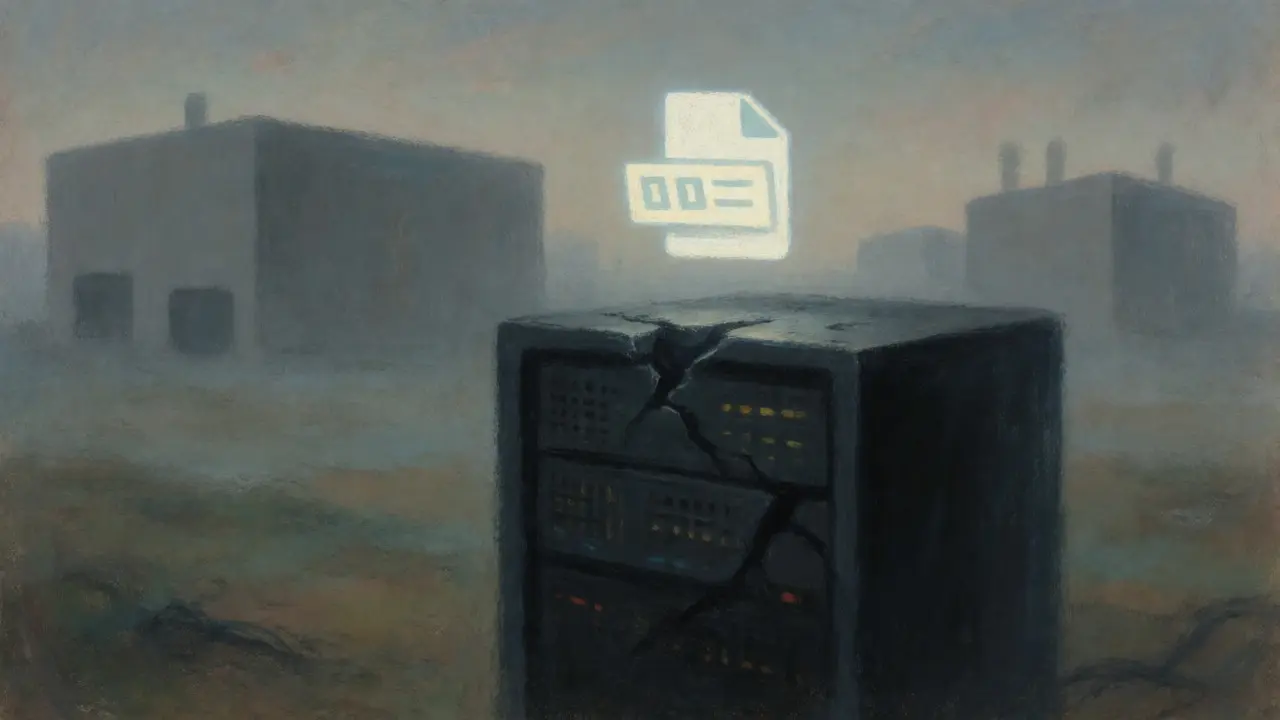
You know that sinking feeling when you hear about another massive data breach? Millions of passwords leaked, photos exposed, or entire services going offline because one server rack caught fire. We’ve grown so used to trusting giant tech companies with our digital lives that we forget how fragile that trust really is. Decentralized storage security offers a way out of this mess by ditching the single point of failure entirely. Instead of your files living in one warehouse in Virginia, they’re shattered into encrypted pieces and scattered across thousands of computers worldwide. If one computer crashes, or gets hacked, or decides to go offline, your data doesn’t care. It’s still there, safe and sound, waiting for you to reassemble it.
The Core Problem With Centralized Storage
Think about where your documents actually live right now. Likely on Amazon S3, Google Drive, or Dropbox. These are centralized systems. They work great until they don’t. A centralized system has what engineers call a "single point of failure." If the main database goes down, everyone goes down. Remember when Facebook was down for hours a few years back? Or when AWS had an outage that took half the internet with it? That’s the risk of centralization. Beyond downtime, there’s the issue of control. When you upload a file to a centralized cloud provider, you are technically giving them a copy of it. They hold the keys to decrypt it. This means they can access your data, scan it for ads, or hand it over to authorities if requested. You lose sovereignty. Decentralized storage flips this model on its head. You keep the keys. The network stores the data, but it doesn’t own it or understand it without your permission.
How Decentralized Storage Actually Works
It sounds like magic, but it’s just clever engineering. Here’s the basic flow when you save a file to a decentralized network:
- Fragmentation: Your file isn’t stored as one big chunk. It’s broken down into smaller pieces called shards.
- Encryption: Each shard is encrypted using strong cryptographic algorithms before it leaves your device. This is client-side encryption, meaning the network never sees the raw data.
- Distribution: These encrypted shards are distributed across many different nodes (computers) in the network. No single node holds the complete file.
- Verification: Blockchain technology often records the metadata-where each shard is stored and its cryptographic hash. This ensures integrity. If someone tries to swap a shard, the hash won’t match, and the network rejects it.
This process creates a robust system. To steal your data, an attacker wouldn’t just need to hack one server; they’d need to compromise enough nodes to gather all the shards and then break the encryption. That’s exponentially harder than breaching a single cloud account.
Key Security Features You Need to Know
Not all decentralized networks are created equal, but the best ones share specific security traits. Let’s look at the pillars that make this approach secure.
Cryptographic Fragmentation
This is the heart of the system. By breaking data into pieces, you ensure redundancy and privacy. Even if a malicious actor gains access to one node, they only see a meaningless fragment of your photo or document. Without the other fragments and the decryption key, that piece is useless noise.
User-Managed Keys
In traditional cloud storage, the provider manages the keys. In decentralized storage, you do. This gives you absolute control. If you lose your key, no customer support agent can reset it for you. You are your own bank. This shifts responsibility to the user but eliminates the risk of a third-party leak. Many users find this intimidating at first, but hardware wallets and password managers have made key management much easier.
Censorship Resistance
Because there is no central authority, no one can arbitrarily delete your content. Governments or corporations can’t pressure a single company to take down a blog post or a video. As long as the network is healthy and nodes are incentivized to store data, your content remains accessible. This is crucial for journalists, activists, and anyone who values free speech.
| Feature | Centralized Cloud (e.g., AWS, Google) | Decentralized Network (e.g., Filecoin, Arweave) |
|---|---|---|
| Single Point of Failure | Yes - Server outages affect all users | No - Data survives node failures |
| Data Ownership | Provider holds keys and copies | User holds keys; network stores encrypted shards |
| Censorship Risk | High - Provider can remove content | Low - Hard to target specific data |
| DDoS Vulnerability | High - Attackers target central servers | Low - Attack surface is distributed |
| Cost Model | Subscription or pay-as-you-go | Often token-based, potentially cheaper long-term |

Major Players in the Space
If you’re looking to try this out, you’ll likely encounter two names immediately: IPFS (InterPlanetary File System) and Filecoin. While often mentioned together, they serve different roles.
IPFS is a protocol for addressing and sharing content. It’s like HTTP but better because it addresses content by its hash (a unique fingerprint) rather than its location. However, IPFS itself doesn’t guarantee long-term persistence. Nodes can drop off. That’s where Filecoin comes in. Filecoin is a marketplace built on top of IPFS. It uses cryptocurrency incentives to pay miners for storing data reliably. If a miner loses your data, they lose their stake. This economic layer adds a serious security guarantee that pure IPFS lacks.
Another notable mention is Arweave. Unlike Filecoin, which focuses on rentable storage, Arweave aims for permanent storage. You pay once, and the data stays forever. This is ideal for archival purposes, such as storing legal documents, historical records, or NFT metadata that needs to survive indefinitely.
Real-World Risks and Pitfalls
Let’s be honest: decentralized storage isn’t perfect yet. There are trade-offs you need to consider before migrating your family photos.
Complexity: Managing your own keys is scary. If you forget your seed phrase, your data is gone forever. There is no "Forgot Password" button. For non-technical users, this is a significant barrier. Some platforms are building better UIs to hide this complexity, but the underlying responsibility remains yours.
Performance: Retrieving data from a decentralized network can sometimes be slower than pulling it from a nearby AWS data center. Since the data might be scattered globally, latency can vary. However, caching layers and Content Delivery Networks (CDNs) integrated with these protocols are rapidly improving speed.
Regulatory Uncertainty: Because these networks are global and borderless, navigating regulations can be tricky. While censorship resistance is a feature, it also means you might store data in jurisdictions with unclear laws regarding copyright or illegal content.

Who Should Use Decentralized Storage?
You don’t need to switch everything overnight. Start small. Decentralized storage shines in specific scenarios:
- NFT Projects: Storing artwork metadata on-chain or via decentralized storage prevents "rug pulls" where the image disappears because the developer stopped paying for hosting.
- Archival Data: Things you rarely access but must keep safe, like tax records, medical history, or old projects.
- Sensitive Documents: Contracts, personal journals, or private keys backups where privacy is paramount.
- Web3 Applications: If you’re building a dApp, using decentralized storage aligns with the ethos of the platform and reduces reliance on centralized APIs.
Future Outlook: Is This the New Standard?
We are seeing a shift. Major enterprises are starting to test hybrid models, keeping hot data in the cloud but archiving cold data on decentralized networks. The integration of advanced cryptography, like zero-knowledge proofs, will further enhance privacy by allowing verification of data integrity without revealing the data itself. As interfaces improve, the technical barrier will lower. We’re already seeing tools that let you drag-and-drop files into a decentralized bucket with the same ease as Dropbox. The goal isn’t necessarily to replace the cloud entirely but to diversify our digital infrastructure. Just as we don’t put all our money in one bank, we shouldn’t put all our data in one server farm.
Is decentralized storage completely unhackable?
No system is 100% unhackable. However, decentralized storage significantly raises the cost and difficulty of attacks. An attacker must compromise multiple independent nodes and break strong encryption simultaneously, whereas centralized hacks often involve breaching a single perimeter.
What happens if I lose my encryption key?
If you lose your private key or seed phrase, you lose access to your data permanently. Unlike centralized services, there is no customer support team that can reset your password or recover your key for you. Secure backup of your keys is critical.
Is decentralized storage cheaper than Amazon S3?
It depends on usage patterns. For long-term archival storage, decentralized networks like Filecoin or Arweave can be significantly cheaper. For high-frequency read/write operations, centralized clouds may still offer better performance-to-cost ratios due to optimized infrastructure.
Can governments censor data on decentralized networks?
It is difficult but not impossible. While the data itself is hard to remove, governments can block access to gateways or penalize users accessing specific content. However, the underlying data remains on the network unless every node voluntarily deletes it.
Do I need to run a node to use decentralized storage?
No, most users interact with decentralized storage through web interfaces or apps provided by service providers. You don’t need to maintain your own hardware unless you want to earn rewards by renting out your disk space to others.