

OECD Crypto-Asset Reporting Framework (CARF) Adoption in India: A Complete Guide

The Era of Crypto Transparency Begins
If you hold cryptocurrency in India, the rules of engagement are changing dramatically. On September 2, 2024, the Ministry of Finance made a clear declaration: India will implement the Organisation for Economic Co-operation and Development's Crypto-Asset Reporting Framework (CARF). By April 1, 2027, this system will be fully operational. However, the groundwork is happening right now. As we stand in March 2026, the deadline for initial legislative compliance is only weeks away.
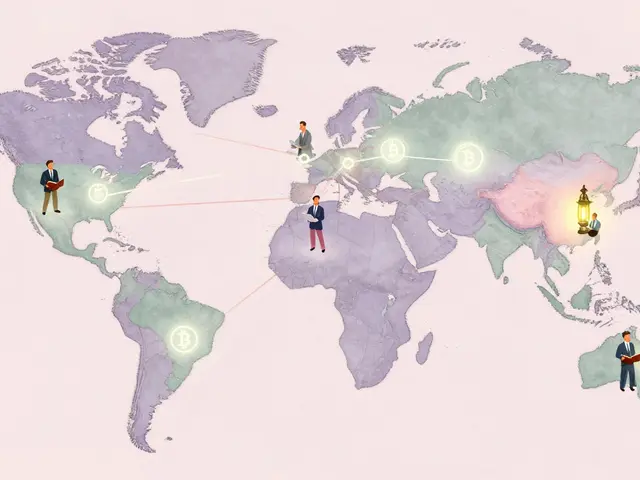
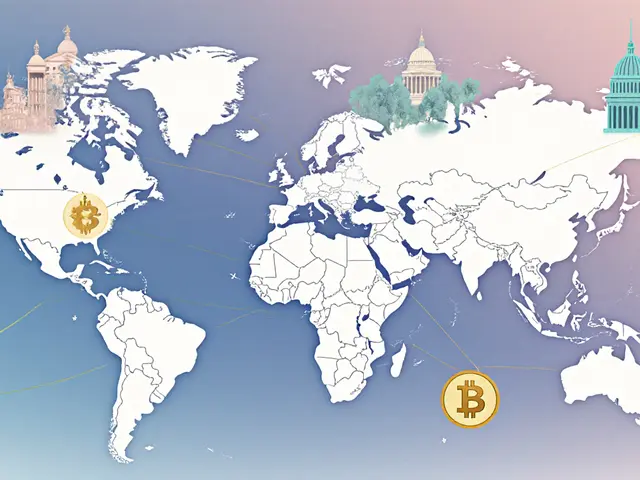
This isn't just another tax form update. It represents a fundamental shift in how digital assets are tracked globally. For years, crypto traders have operated in a regulatory grey area. With CARF, that ambiguity is vanishing. The government aims to close the loopholes used for offshore tax evasion by bringing India into alignment with 52 other jurisdictions. If you think your holdings are safe because they are stored in a foreign wallet or on an overseas exchange, think again. The automatic exchange of information is designed specifically to pierce that veil.
Understanding CARF and Its Origins
To grasp why India is adopting this framework, we first need to look at the global landscape. The Organisation for Economic Co-operation and Development (OECD), often referred to as the OECD, is the primary body driving this initiative. They worked closely with the G20 nations to create a standardised way to report crypto-assets, similar to how traditional bank accounts were handled previously.
The framework mirrors the Common Reporting Standard (CRS), which India has been using for financial accounts since signing the Multilateral Competent Authority Agreement (MCAA) in 2015. You might remember CRS making headlines when banks began sharing account data internationally. CARF applies this same logic to blockchain transactions. When the OECD launched CARF, they aimed to address a massive gap in tax administration. Cryptocurrencies allowed for rapid cross-border movement of value without leaving traditional banking trails. The new framework fixes that by forcing reporting entities to share data automatically.
Why does this matter for an individual investor? Under the old system, if you bought Bitcoin in India and sold it on an exchange based in Singapore, Indian tax authorities had little visibility unless you voluntarily disclosed it. Now, the Indian tax department expects direct access to that transaction data through international channels. This level of scrutiny was impossible before the introduction of these standards. It transforms crypto taxation from a reactive system into a proactive surveillance mechanism.
The Timeline: Immediate vs. Long-Term Obligations
Navigating the dates is crucial because there are two distinct phases coming up. Confusion between these two dates can lead to compliance failures.
| Date | Milestone | Significance |
|---|---|---|
| April 1, 2026 | Legislation Effective (Section 285BAA) | Duty begins for designated entities to collect and report data domestically. |
| September 2025 | MCAA Signing Target | India signs the agreement to enable international data sharing. |
| January 1, 2026 | Data Collection Period Start | Entities begin capturing transaction data for the 2027 reporting cycle. |
| April 1, 2027 | Full CARF Implementation | Actual exchange of information begins between jurisdictions. |
As of today in March 2026, Section 285BAA of the Income Tax Act is the governing law. This provision requires designated reporting entities to submit detailed transaction reports to the Central Government. While the international swap of data won't happen until 2027, the domestic collection phase has already commenced in principle. This means that even if the Indian government doesn't send your data to France tomorrow, they are still collecting it internally. You cannot hide your activity from local oversight.

Who Has to Report?
A major question for the industry is who exactly is responsible for gathering this sensitive data. The burden falls primarily on Virtual Asset Service Providers (VASPs). These are not just the big names like WazirX or CoinSwitch, though they are the most obvious targets. The definition extends to anyone facilitating crypto transactions. This includes:
- Exchanges: Platforms allowing the buying, selling, or trading of crypto for fiat currency.
- Custodians: Wallet providers or entities holding private keys on behalf of users.
- OTC Brokers: Over-the-counter dealers facilitating large trades outside public order books.
- Lending Platforms: Services offering interest on crypto deposits.
For smaller startups or decentralized finance (DeFi) protocols operating in India, this presents a significant hurdle. Many DeFi projects are non-custodial, meaning they do not hold user funds. However, regulators are looking at whether developers who facilitate access to these protocols can be held liable as reporting agents. This creates a "compliance fog" where the exact boundaries of liability are being tested in real-time.
Financial institutions also have a role. Traditional banks dealing with fiat-to-crypto off-ramps must integrate CARF requirements into their anti-money laundering checks. If a customer moves money from HDFC or ICICI to a crypto gateway, that trigger event gets flagged and recorded under the new standards.
Data Standards and Technical Requirements
The technical side of CARF is rigorous. The OECD published specific XML reporting standards in October 2024 to ensure uniformity across borders. This isn't a simple CSV upload; it's a structured data format that machine-reads automatically.
Reporting entities must capture specific attributes for every transaction. These include:
- Wallet Addresses: The unique public identifiers associated with the asset holders.
- Transaction Values: Both the amount in crypto tokens and the fiat equivalent at the time of transfer.
- Timing: Precise timestamps for every buy, sell, or transfer.
- User Details: KYC data including PAN cards, residential status, and tax residency.
The challenge lies in consistency. Blockchain networks operate differently. A wallet on Ethereum tracks things differently than a Lightning Network channel. Aggregators need sophisticated software to map all these disparate data points into a single OECD-compliant XML file. Medium to large exchanges estimate needing 12 to 18 months to build the necessary infrastructure. Given the tight timeline of 2026 to 2027, many smaller players are already seeking third-party compliance solutions to avoid heavy penalties.
Additionally, the data retention period is a key consideration. Once data is collected under Section 285BAA, it enters the government database. The laws specify a retention window usually spanning five years or more. This historical data can be audited later. Even if a project shuts down, the reporting obligation likely remains attached to the legal entity or the administrators.

Impact on Individual Investors
For the average trader, the psychological impact is shifting. There is a sense of finality. The idea that crypto provides anonymity is rapidly becoming obsolete. Your digital footprint on the blockchain is immutable; CARF simply adds the layer of identity confirmation required for tax enforcement.
If you are a long-term holder, you need to review your portfolio strategy. In the past, some traders utilized offshore exchanges to delay capital gains tax. With CARF, the tax year is defined by the source jurisdiction. If you are a tax resident of India, your obligations apply regardless of where the exchange is physically located. The automatic exchange ensures that if you move your account to a compliant jurisdiction (like Singapore or UAE), the information eventually flows back to India via the G20 network.
Privacy advocates have raised concerns about the breadth of data collection. While financial institutions argue this legitimizes the sector, individuals worry about data security. With millions of records being aggregated, the potential for data breaches increases. However, the government argues that secure transmission protocols similar to those used for the National Population Registry are in place to mitigate risks.
Another angle is the cost of compliance. Small exchanges may pass on administrative costs to users. We might see higher spread margins or increased fees for withdrawals as platforms upgrade their compliance engines. This is a structural cost of entry that didn't exist in the early days of the crypto boom.
Global Context and G20 Influence
India did not make this decision in isolation. During its G20 Presidency, New Delhi pushed for universal adoption of the framework. The 2024 Leaders' Declaration endorsed CARF across all member nations. This political momentum ensures that the framework isn't just a suggestion but a binding commitment for most major economies.
The OECD Secretary-General Mathias Cormann called this a "major step forward." He emphasized that coordinated action prevents "tax arbitrage," where wealthy individuals move assets to low-tax jurisdictions to avoid paying elsewhere. India joining forces with the US, EU, and China aligns the playing field. If India had stayed out, it would have become a haven for non-compliant funds, inviting sanctions or trade barriers. Joining the coalition protects national economic sovereignty while ensuring fairness.
Furthermore, this aligns with the Financial Action Task Force (FATF) Travel Rule. Although slightly different in focus, both frameworks work together to identify beneficial owners of funds. When you send crypto across borders, both the sender and receiver identities are verified. CARF focuses on the tax aspect, while FATF focuses on the illicit finance aspect. Together, they form a comprehensive regulatory wall around the digital economy.
How to Prepare for Compliance
With April 2026 approaching, here is what you can do immediately:
- Audit Your Holdings: Map out every wallet address and exchange account you own, even inactive ones.
- Check Tax Residency: Understand your status under the Income Tax Act. Non-resident status changes reporting obligations significantly.
- Maintain Records: Save transaction histories from your personal ledger. Do not rely solely on exchange records; download them locally.
- Consult Professionals: Tax laws evolve fast. Regular consultation with chartered accountants specializing in digital assets is prudent.
The transition period offers a grace window for setup, but waiting until the last minute is risky. Enforcement typically accelerates once the deadline passes. Being ahead of the curve allows you to negotiate with service providers who might offer bulk compliance tools.






The fundamental shift we are witnessing here represents a collision between the decentralized ethos of blockchain technology and the centralized grip of nation-state financial oversight. It forces us to consider the philosophical underpinnings of privacy when viewed through the lens of mandatory transparency. For decades, the digital realm promised anonymity, yet now we see that identity is becoming inextricably linked to value transfer regardless of the medium used. We are essentially dismantling the myth of borderless money in favor of a globalized ledger system. This move by the OECD and its participating nations signals that tax compliance is no longer optional but embedded into the infrastructure itself. As we navigate this transition, we must acknowledge that the era of shadow banking via tokens is closing fast. The psychological weight on individual investors cannot be overstated given the scrutiny level involved. History suggests that these frameworks tighten rather than loosen over subsequent years. We are essentially building a permanent archive of financial behavior that will persist beyond our current lifetimes. The argument for legitimacy is strong, yet the cost to individual liberty remains a contentious point in modern discourse. Every transaction becomes a permanent record accessible to authorities across multiple jurisdictions simultaneously. It changes how we view ownership when third parties hold the keys to your history. The technological capability exists, which removes the excuse of inability to track assets previously. This standardization ensures that one cannot simply move funds to a non-compliant jurisdiction easily. Global cooperation here seems to prioritize state revenue over personal financial sovereignty entirely. Ultimately, we are entering a period where digital assets are treated exactly like traditional fiat currency accounts.
I think everyone shoudl stay calm about thgis because regulations are just trying to help us all feel safe in the end you know
It might seem scary at first but actually its going to legitimize the whole industry so much
We just ned to adapt to new rules and keep learning along the way together as a community
Remember that growth always come with some pain and change is hard for everyone sometimes
But look on the bright side and remember the opportunities still exist even with oversight
Stay positive my friends and we can get through this transsition period really well!
i understand the fear people have regarding privacy but seeing the bigger picture helps calm things down
Cultural exchange of financial ideas is interesting here especially when nations work together on standards
The technical implications for compliance systems are substantial and require rigorous attention to detail by all stakeholders involved. Entities must ensure their data aggregation methodologies align perfectly with the specified XML structures outlined by international bodies. Failure to comply could result in significant operational disruptions for smaller firms lacking resources. The timeline provides a window for preparation, yet the margin for error remains incredibly narrow. One must consider the integration costs alongside the legal requirements mandated by new statutes. Precision in data retention is vital for maintaining audit trails over the requisite five-year period. Institutions should begin audits of their current KYC procedures immediately to identify gaps. Collaboration between IT teams and legal counsel will be paramount during this overhaul process.
Boring update nothing really changes anyway.
This confirms what many suspected regarding future regulatory trends. Automatic exchange mechanisms eliminate offshore loopholes efficiently. Domestic collection precedes international swaps in this specific framework timeline.
So the government just wants to know where you parked your digital gold hoard while pretending it is for safety reasons. Classic move.
The narrative of security often masks the desire for total visibility into citizen economics though we must play by rules now.
Another layer of bureaucracy wrapped in 'transparency' branding for those who believe the state cares. Privacy is dead regardless.
We must adhere to the guidelines set forth by the income tax act without deviation to ensure legal standing.
Good riddance to tax cheats hiding behind anonymous blocks finally getting caught in the net.
This is part of the grand reset plan obviously designed to track every cent :)
People just want peace with the rules so they dont get fined later
While the measures appear intrusive on surface level they serve a macro function for economic stability globally.
You got this everyone just organize your papers and talk to experts early
I wonder how small wallets handle the xml reports honestly
Its so annoying why cant we just keep it secret foreverrrr
does this mean i have to show everything to neighbors now or just gov?
Just folow the rules and keep ur records safe
lets just do whats needed to stay compliant and move on with life
Remember that every challenge is just an opportunity for growth in mindset and strategy planning
You need to prepare your docs thoroughly before deadlines arrive otherwise penalties will be severe
Take action today instead of waiting till panic sets in next month
There are many tools avaiable to help manage tax liability effectively
Communication with professionals ensures you stay ahead of changing laws
The system works best when everyone participates in good faith
Financial freedom comes with responsibility attached to new protocols
We must adapt to the landscape shifting beneath our feet constantly
Ignoring these updates leads to massive problems down the road for sure
Your portfolio needs to reflect reality not just hopes
Transparency builds trust with institutions over long periods
Stay focused on compliance goals rather than old habits
The future requires new skills in tracking and reporting
Do not underestimate the speed of implementation phases
Planning now saves immense stress later in the cycle
This is going to be a catastrophe for retail investors everywhere.
Absolutely predictable outcome for anyone paying attention to policy shifts.