
Governance Attack Vectors in Blockchain: How Protocol Changes Get Hijacked

Imagine spending months securing your code against every known bug, only to have the protocol’s own rules changed by a malicious vote. That is the nightmare scenario for Governance Attack Vectors are exploits that target the decision-making processes and voting mechanisms of decentralized systems rather than technical bugs in the code. In traditional cybersecurity, hackers break locks. In blockchain, they often just convince the board to hand them the keys.
As decentralized finance (DeFi) has matured, the focus has shifted from simple smart contract exploits to sophisticated attacks on the very heart of decentralization: governance. These attacks don't require finding a zero-day vulnerability in Solidity or Rust. Instead, they exploit human behavior, economic incentives, and flawed voting structures. Understanding these vectors is no longer optional for developers, investors, or protocol participants; it is essential for survival in the current landscape.
The Core Mechanism: Exploiting Trust and Time
At its simplest, a governance attack vector works by manipulating the proposal and voting process of a Decentralized Autonomous Organization (DAO) or a blockchain protocol. The attacker doesn't hack the database; they hack the policy. This usually involves three stages: accumulation, influence, and execution.
First, the attacker accumulates voting power. This might look like buying up tokens on the open market, but more often, it involves borrowing massive amounts of tokens through lending protocols without intending to repay them immediately-a tactic known as "flash loan" governance attacks. Next, they influence the narrative. They might propose a seemingly benign change that actually grants them access to treasury funds. Finally, they execute the vote. If the quorum is met and the majority votes yes, the protocol changes its own rules to benefit the attacker.
This differs fundamentally from a standard smart contract hack. A reentrancy attack targets a logic error in code. A governance attack targets a logic error in human coordination and incentive design. It is slower, subtler, and often harder to reverse because, technically, the protocol did exactly what its voters told it to do.
Common Types of Governance Attacks
Not all governance attacks look the same. Depending on the structure of the protocol and the value of the assets at stake, attackers employ different strategies. Here are the most prevalent vectors observed in recent years:
- Flash Loan Takeovers: An attacker borrows millions of dollars worth of governance tokens for a single block. They use this temporary power to pass a proposal. However, if the proposal requires time to implement (like a multi-day timelock), the attacker must maintain the borrowed position or find a way to keep the proposal alive until execution. This was famously seen in attacks targeting smaller DeFi protocols where token liquidity was low.
- Voting Power Concentration (Whale Dominance): When a small number of wallets hold a disproportionate amount of voting power, the system becomes oligarchic. An attacker can collude with these "whales" or simply buy enough tokens to sway the vote. This undermines the democratic ideal of one-token-one-vote if those tokens are hoarded.
- Proposal Spamming and Gas Wars: Attackers flood the governance forum with hundreds of low-quality proposals. This clogs the system, increases transaction fees (gas costs), and discourages genuine participants from engaging. It creates chaos and distraction, allowing other attacks to slip through unnoticed.
- Oracle Manipulation via Governance: Some protocols allow governance to update oracle prices or parameters. An attacker might vote to change how price data is fetched, feeding false data into the system to drain liquidity pools. This bridges the gap between governance and financial exploitation.
- Multi-Sig Compromise: While not strictly on-chain voting, many protocols rely on a multisignature wallet for emergency controls. If an attacker gains control of even a few of the required signers (through social engineering or key theft), they can bypass the entire voting process entirely.
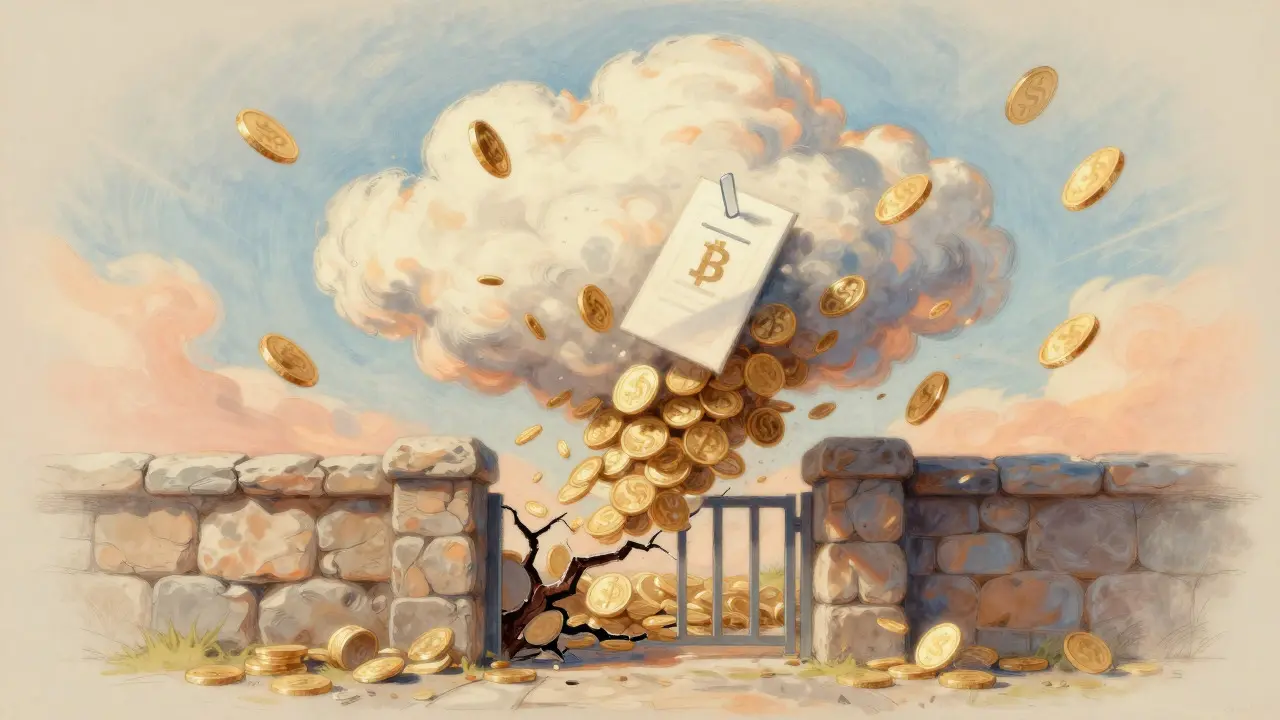
Why Governance Is the Weakest Link
You might wonder why protocols bother with complex voting systems if they are so vulnerable. The answer lies in the trade-off between security and decentralization. Fully centralized systems are fast and secure but lack trustlessness. Fully decentralized systems are trustworthy but slow and prone to human error.
Governance attack vectors thrive in this gray area. Most DAOs suffer from low voter turnout. Often, less than 5% of token holders participate in any given vote. This means a relatively small investment in tokens can swing a major decision. Furthermore, many token holders treat their governance rights as passive income sources-they farm rewards and never read the proposals. This apathy is the attacker's best friend.
Consider the case of a hypothetical protocol, "SafeBank." SafeBank has $100 million in total value locked (TVL). Only $10 million worth of tokens are actively voted. An attacker spends $6 million to buy tokens. Now they control 60% of the voting power. They propose a new fee structure that sends 90% of future fees to their wallet. The remaining 40% of voters protest, but the proposal passes. The attacker then sells their tokens, recouping some costs, while keeping the ill-gotten gains. No code was broken. The economy was manipulated.
Defensive Strategies: Building Resilient Systems
Solving governance attacks requires a mix of technical safeguards and economic design. There is no silver bullet, but layering defenses significantly raises the cost of attack.
- Timelocks: Implement a mandatory delay between when a proposal passes and when it executes. Standard delays range from 24 hours to two weeks. This gives the community time to react, raise alarms, and potentially counter-propose if something looks suspicious. It also prevents flash loan attacks where the borrowed tokens must be returned immediately.
- Quadratic Voting: Instead of one-token-one-vote, use quadratic voting where the cost of casting votes increases quadratically. To cast 1 vote costs 1 unit, 2 votes cost 4 units, and 10 votes cost 100 units. This makes it exponentially expensive for whales to dominate the conversation, encouraging broader participation.
- Delegation Mechanisms: Allow token holders to delegate their voting power to trusted experts or representatives. This ensures that even if you don't have time to vote, your stake still counts toward informed decisions. Platforms like Snapshot enable gas-free voting and delegation tracking.
- Minimum Staking Requirements: Require voters to lock their tokens for a period before they can vote. This reduces the ability to borrow tokens temporarily for a single vote and aligns long-term interests with the protocol's health.
- Emergency Brakes: Maintain a separate, highly secured multisig wallet with the power to pause contracts in case of a detected governance exploit. This is a centralization risk, but it serves as a necessary circuit breaker.

Real-World Lessons and Case Studies
Theoretical models are useful, but real-world incidents teach us the most. One notable example involved the compound.finance protocol, where a whale named Wintermute attempted to pass a proposal to increase the collateral factor for a specific asset. Although the proposal failed due to community pushback, it highlighted how easily large actors could manipulate outcomes. The incident led Compound to implement stricter timelocks and improve transparency in voting analytics.
Another lesson comes from the collapse of TerraUSD (UST). While primarily a monetary policy failure, the governance aspect played a role. Validators and delegators were incentivized to support the protocol regardless of its fundamental flaws. When the death spiral began, governance mechanisms were too slow and fragmented to enact effective rescue measures. This shows that governance isn't just about preventing bad actors; it's about enabling good responses during crises.
| Mechanism | Effectiveness Against Whales | Complexity | User Experience Impact |
|---|---|---|---|
| Timelocks | High | Low | Minimal (delays only) |
| Quadratic Voting | Very High | High | Medium (requires calculation) |
| Delegation | Medium | Medium | Positive (easier participation) |
| Staking Requirements | High | Low | Negative (locks capital) |
The Future of Governance Security
As we move further into 2026, the sophistication of governance attacks continues to evolve. Artificial Intelligence is beginning to play a role, with bots analyzing proposal language for hidden risks or coordinating voting patterns across multiple identities. Sybil resistance-preventing one person from creating thousands of fake identities to vote-is becoming a critical research area.
We are also seeing a shift towards "off-chain" governance solutions. Tools like Tally and DeepLook provide advanced analytics on voting behavior, helping users identify potential collusion or unusual activity before a vote concludes. Additionally, there is a growing trend of cross-protocol governance alliances, where major DAOs agree to share threat intelligence and coordinate defenses.
For the average user, the takeaway is simple: never assume a protocol is safe just because its code is audited. Look at who holds the tokens. Look at how voting works. Ask yourself: if I wanted to steal from this protocol, would I hack the code, or would I just vote myself rich? The answer is increasingly the latter.
What is the difference between a smart contract hack and a governance attack?
A smart contract hack exploits a bug in the code, such as a reentrancy flaw or integer overflow. A governance attack exploits the rules of the protocol itself, typically by manipulating the voting process to pass a malicious proposal. The former breaks the system; the latter legally changes the system to favor the attacker.
How can I protect my investments from governance attacks?
Diversify your holdings across protocols with strong governance records. Use platforms that offer insurance or guarantees. Monitor governance forums for unusual proposals. Consider using vaults or aggregators that automatically rebalance based on governance health scores. Never leave large sums in a single protocol without understanding its voting mechanics.
Are flash loan governance attacks still common?
They are less common now than in 2021-2022 because most major protocols have implemented timelocks. However, they remain a threat to newer, smaller protocols that prioritize speed over security. Always check if a protocol has a minimum delay between proposal passage and execution.
What is quadratic voting and why is it better?
Quadratic voting makes it increasingly expensive to cast additional votes. This prevents wealthy individuals or entities from dominating the outcome. It encourages a wider distribution of influence and better reflects the will of the majority rather than the power of the minority.
Can governance attacks be reversed?
It depends. If the attack happens during the timelock period, the community can counter-propose or pause the contract. Once executed, reversing a governance attack is difficult and often requires hard forks or legal action, which defeats the purpose of decentralization. Prevention is far easier than cure.