

How Do Banks in Russia React When You Withdraw Crypto to Fiat?

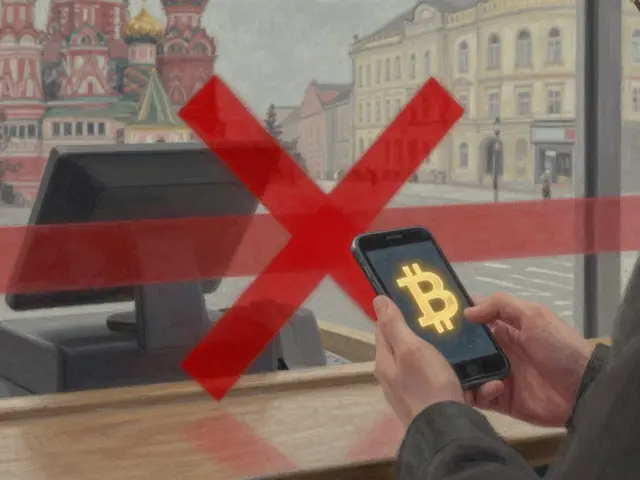
When you try to turn cryptocurrency into cash in Russia, your bank doesn’t just process the transaction - it scrutinizes it. Since September 1, 2025, Russian banks have been legally required to treat any crypto-to-fiat withdrawal as a potential red flag. This isn’t about slowing down crime - it’s about shutting down everyday users who rely on crypto to move money in a sanctions-hit economy.
What Happens When You Withdraw Crypto to Cash?
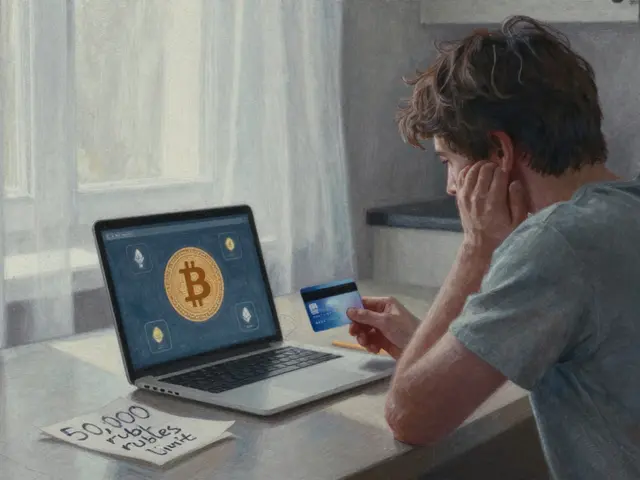
If you’ve ever sent Bitcoin or Ethereum to a Russian exchange and then withdrawn rubles to your bank account, you’ve probably noticed something odd: your withdrawal suddenly gets blocked. Or worse - your card gets frozen for 48 hours. That’s not a glitch. It’s policy.Under Federal Law No. 3-1092818-2025, Russian banks must automatically limit daily cash withdrawals to 50,000 rubles (about $600 USD) if a transaction triggers any of 12 specific suspicious patterns. These aren’t vague rules. They’re technical checkpoints built into the banking system:
- Withdrawals made between 11 PM and 5 AM
- Amounts that aren’t divisible by 1,000 rubles (e.g., 67,340 instead of 67,000)
- Using an ATM more than 50 km from your registered address
- Swiping a QR code or virtual card instead of a physical debit card
- Receiving a large transfer (over 200,000 rubles) via Russia’s Faster Payments System, then cashing out within 24 hours
- Getting 3+ text messages from unknown numbers in the 6 hours before withdrawal
- Device fingerprinting that shows signs of malware or screen recording
When even one of these triggers fires, the bank sends an SMS and locks your cash access. You’ll get a notification asking you to verify your source of funds. No verification? No cash. And if you try again? The lock gets longer - up to 72 hours.
Why Are They Doing This?
The official reason? Fraud. The Central Bank of Russia says 273,100 crypto-related scams occurred in Q2 2025 alone, totaling 6.3 billion rubles. But the real target isn’t scammers - it’s ordinary people using crypto to bypass sanctions.Finance Minister Anton Siluanov confirmed in October 2025 that cryptocurrency accounts now handle 37.2% of all cross-border currency withdrawals and import payments. That’s not a side effect - it’s the point. When Western banks cut off Russian businesses from SWIFT, people turned to crypto. When they couldn’t buy goods online, they used P2P platforms like Paxful and LocalBitcoins to trade Bitcoin for rubles in cash.
Now, the government wants to shut that down. Not because crypto is dangerous - but because it’s too effective. The 50,000 ruble limit doesn’t stop organized crime. It stops your grocery run, your rent payment, your daughter’s school fees. It forces people to rely on intermediaries who charge 7-12% fees to bypass the system.
Who Gets Hit the Hardest?
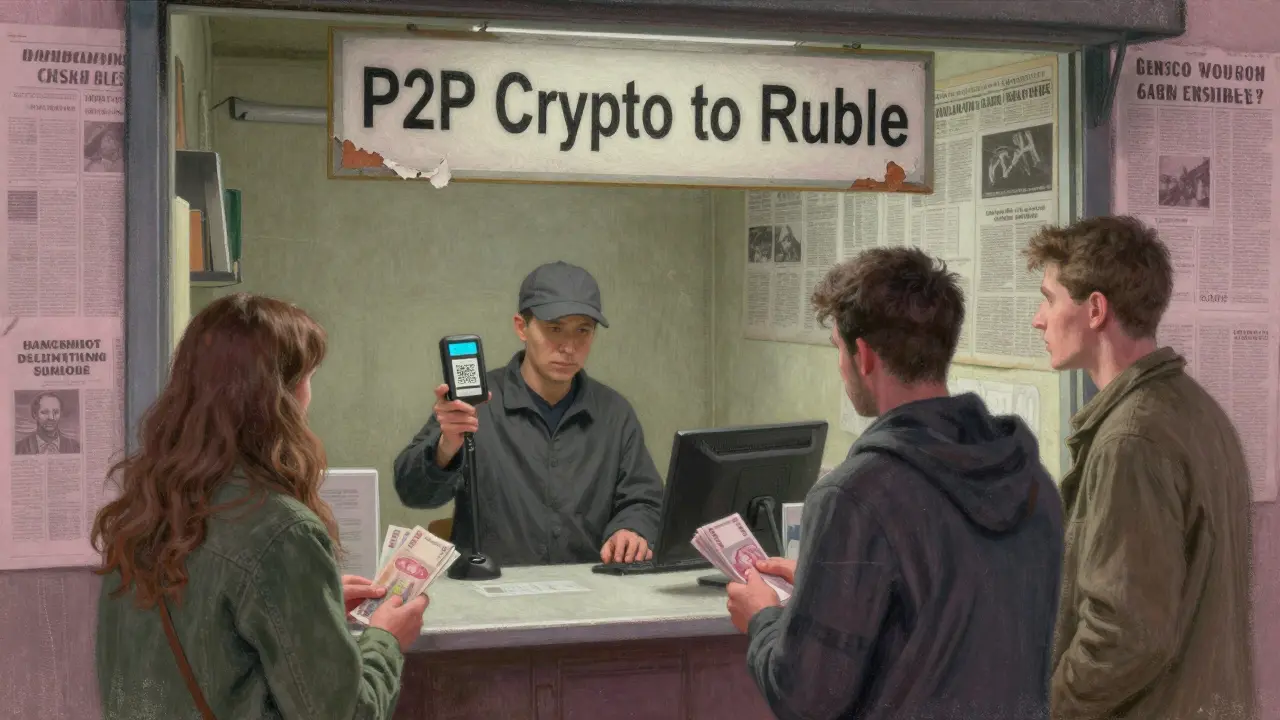
It’s not just traders. It’s the small business owner who gets paid in USDT and needs to pay suppliers in cash. The freelancer who earns in crypto and needs to buy groceries. The pensioner who sold their crypto to cover medical bills.Peer-to-peer (P2P) exchange operators - the middlemen who connect crypto sellers with cash buyers - are collapsing. Ainvest reported a 40-60% revenue drop in the first two weeks after the rules took effect. Over 63% of these small cash exchange offices have shut down or moved underground.
Even banks are feeling the strain. Sberbank and VTB hired over 400 new analysts each to monitor crypto transactions. Transaction processing times jumped from 2.3 hours to 18.7 hours for flagged withdrawals. Users report waiting days just to prove they didn’t steal their Bitcoin.
Real Stories: What People Are Experiencing
On Russian forums like BitBoom and Reddit’s r/RussianCrypto, users are sharing horror stories:- A user withdrew 65,000 rubles after a Paxful trade - their account froze for 72 hours. They had to drive 80 km to their Sberbank branch with screenshots of their wallet history and a notarized letter explaining the source.
- A freelancer received 1.2 million rubles in USDT, then tried to withdraw 300,000 rubles. The bank demanded a full transaction history from the exchange. But since they used a decentralized platform, no such history exists. Their account remains blocked.
- A small shop owner used crypto to buy parts from Turkey. When they tried to cash out the leftover crypto, their Tinkoff Bank card was frozen. Reviews for Tinkoff’s crypto services dropped from 4.3 to 2.1 stars in one month.
These aren’t edge cases. CoinPolitan documented 147 verified cases in October 2025. The average time to resolve a flagged withdrawal? 3.2 business days. And 68% of users had to prove their income came from legal sources - something most crypto earners never had to do before.
How Are People Adapting?
Some users have found workarounds - but they’re risky and expensive.- Multiple bank accounts: Active traders now spread withdrawals across 3-4 different banks. But banks now monitor cross-institutional patterns. If you withdraw from three accounts in one week, you trigger a new red flag.
- Consistent transaction history: Experts like Alexey Likhunov advise keeping at least three months of regular spending on your card - grocery runs, utility bills, taxi rides. Banks are 73% less likely to flag transactions from accounts with “natural” behavior.
- Staggered withdrawals: Instead of withdrawing 200,000 rubles at once, users now do 50,000 every 48 hours. It’s slow, but it works - if you don’t mind waiting weeks to access your own money.
But there’s no easy way out. The system is designed to make crypto-to-cash conversion inconvenient - not impossible. And that’s the point.

The Bigger Picture: Russia’s Dual Crypto Strategy
Here’s the twist: Russia isn’t banning crypto. It’s rebranding it.While ordinary citizens face withdrawal limits, the government is quietly building a parallel system for institutions. In September 2025, the Bank of Russia announced banks could legally hold cryptocurrency - but only up to 1% of their regulatory capital. And they must keep 150% reserves for every digital asset they hold. That’s not a loophole - it’s a cage.
At the same time, Finance Minister Siluanov confirmed Russia will soon allow crypto settlements for foreign trade. The goal? Use blockchain to bypass Western financial controls - while locking domestic users into a cash-only, monitored system.
And it’s getting tighter. By December 1, 2025, banks will need to verify the source of funds for any withdrawal over 100,000 rubles. And legislation is moving through the Duma that could jail repeat offenders for up to 10 years for “organized cryptocurrency conversion schemes.”
The message is clear: You can use crypto - if you’re a bank, a state-owned enterprise, or a foreign trader. But if you’re just a regular person trying to turn your Bitcoin into rubles? You’re not a customer. You’re a risk.
What’s Next?
The digital ruble - Russia’s central bank digital currency - starts rolling out in September 2026. It’s not designed to replace cash. It’s designed to replace crypto.Every transaction will be tracked. Every withdrawal logged. Every peer-to-peer exchange blocked. The government isn’t trying to stop crypto because it’s illegal. It’s trying to stop crypto because it works too well.
For now, if you’re in Russia and you need to cash out crypto, expect delays. Expect scrutiny. Expect to prove you didn’t steal it. And expect the rules to get stricter - not looser.



This is just another example of how state control over financial infrastructure inevitably leads to dystopian overreach. 🤷♂️
Let’s be real-when the government starts policing your grocery money because you used Bitcoin, you’re not in a market economy anymore. You’re in a surveillance state with a ruble-shaped sticker on it.
I’ve been following this whole crypto crackdown in Russia, and honestly? It’s heartbreaking. People aren’t trying to launder money-they’re trying to feed their kids. The fact that a 67,340 ruble withdrawal triggers a freeze because it’s not divisible by 1,000? That’s not security. That’s bureaucratic absurdity with a side of cruelty.
Meanwhile, the state quietly lets banks hold crypto as reserves… but only if they’re big enough to play by the rules. Double standards? More like double oppression.
bro this is wild. i had no idea they were tracking qr code usage and text messages?? like… how do they even know if you got 3 texts from strangers?? smh. i’m just glad i don’t live there lol
The systemic irony here is profound. Russia is weaponizing financial regulation not to combat crime, but to eliminate financial autonomy for its own citizens. The 50,000 ruble cap doesn’t deter fraud-it criminalizes necessity. What’s more telling is that the same state that restricts personal crypto use is simultaneously building a parallel infrastructure for institutional use. This isn’t about financial integrity. It’s about control.
OF COURSE they’re doing this! The West has been trying to strangle Russia for years, and now they’re using crypto as a lifeline? This is WAR. These people aren’t ‘ordinary users’-they’re traitors enabling sanctions evasion. Freeze their cards, lock their accounts, jail them if they try again. This is what happens when you let a nation become dependent on digital black markets. The state is doing its job. The real criminals are the ones who think crypto is ‘freedom’.
Oh sweet mercy. So now you need to be a forensic accountant just to buy milk? I mean, I get it-Russia’s trying to look tough. But this isn’t sovereignty. It’s panic dressed up as policy. 3+ texts from unknown numbers? Did someone forget we live in 2025 and not 1999? 😭
There’s a deeper layer here that most people miss. The real target isn’t crypto-it’s the informal economy. People in Russia have been using P2P platforms not because they’re crypto enthusiasts, but because they’re surviving. When the formal banking system cuts you off, you turn to what works. The government’s response isn’t about fraud prevention-it’s about re-centralizing economic power.
And yes, the 7-12% fee intermediaries? They’re the new informal banks. The system didn’t kill crypto. It created a shadow banking sector that’s even harder to regulate.
this whole thing is just a mess. people shouldnt even be using crypto if they cant follow rules. its not hard to just use rubles like normal people. why do you need to be fancy with bitcoin? its like using a horse and cart in 2025. dumb.
The psychological toll of this policy cannot be overstated. Imagine living in a country where your ability to access your own money hinges on whether a QR code was scanned or whether your phone received an unknown SMS. This isn’t economic policy-it’s psychological warfare. The state isn’t just monitoring transactions; it’s eroding trust in personal agency. And that’s far more dangerous than any scam.
I’m so angry right now. This isn’t about security. This is about fear. Fear of losing control. Fear of people finding ways to be free. They don’t want to stop crime-they want to stop hope. A pensioner selling crypto to pay for insulin? A freelancer trying to pay rent? They’re not criminals. They’re victims of a system that sees autonomy as treason. I hope someone in the Duma wakes up and realizes they’re not protecting the people. They’re punishing them.
The staggered withdrawal tactic is actually smart. If you’re going to play the system, play it slow and steady. Regular spending history matters more than you think. Banks are trained to flag anomalies-not patterns. Keep your card active with small, consistent transactions. It’s boring, but it works.
they say crypto is for criminals but then they let the banks hold it?? so its only illegal if you're poor?? sounds like america lol. also why do i care about some dude in moscow? they made their bed. now they gotta sleep in it. 🤷♀️
I appreciate the depth of analysis here. The distinction between institutional crypto adoption and individual restriction reveals a deliberate strategy: maintain financial sovereignty through centralized control while denying decentralization to citizens. This mirrors broader global trends where digital infrastructure is used to reinforce state power rather than enable individual autonomy. The digital ruble isn’t innovation-it’s surveillance with a new name.