

Uniswap v2 (Blast) Crypto Exchange Review: Limited but Low-Cost DeFi Option

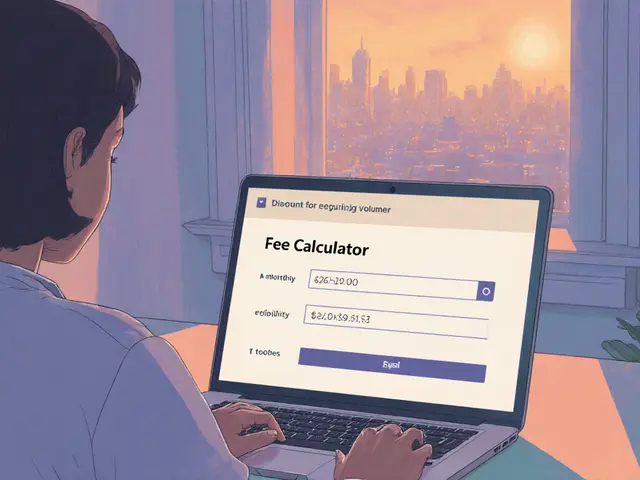
Blast Swap Fee Calculator
See how much you can save on swap transactions using Uniswap v2 on Blast versus Ethereum mainnet. Note: Blast currently supports only one trading pair.
Uniswap v2 on Blast isn’t what you think it is. If you’re looking for a full-featured crypto exchange with dozens of tokens, deep liquidity, and advanced trading tools, you’ll be disappointed. But if you want to swap one token on a blockchain with near-zero fees and earn yield on your idle assets, it might just work - for now.
What Is Uniswap v2 (Blast)?
Uniswap v2 (Blast) is a version of the Uniswap decentralized exchange protocol running on the Blast Layer 2 network. It launched in early 2024 and uses the same core technology as the original Uniswap v2: an Automated Market Maker (AMM) that swaps tokens using a simple formula - x * y = k. No order books. No middlemen. Just smart contracts that match buyers and sellers automatically.
But here’s the twist: unlike Uniswap on Ethereum or Arbitrum, which support hundreds or thousands of tokens, Uniswap v2 on Blast currently supports only one trading pair. As of December 2024, that’s it. No ETH/USDT. No WBTC/DAI. Just one pair. That’s not a bug - it’s the current state of the ecosystem.
The Blast network itself is designed to give users native yield on their idle ETH and stablecoins. That’s why some developers chose to deploy Uniswap v2 here - not because it’s the best version, but because it’s simple, audited, and fits the early-stage needs of the chain.
How It Works: Simple, But Restricted
Using Uniswap v2 on Blast is easy if you’ve used any Uniswap before. Connect your wallet - MetaMask, Trust Wallet, or Coinbase Wallet - switch to the Blast network, and you’ll see the familiar swap screen. You pick the token you want to sell, the token you want to buy, and hit swap. The interface hasn’t changed since 2020.
But because there’s only one trading pair available, your options are extremely limited. You can’t swap ETH for USDT. You can’t trade any other token. You’re locked into whatever pair the Blast team chose to launch with. Most users report this feels like using a fully loaded smartphone with only one app installed.
Transaction fees are the real highlight. On Ethereum mainnet, a simple swap can cost $5-$15 during peak times. On Blast, thanks to its Layer 2 design, swaps cost between $0.01 and $0.05. That’s 99% cheaper. For small, frequent traders or those just testing the waters, that’s a game-changer.
Pros: Low Fees, Native Yield, Familiar Interface
- Ultra-low transaction costs - Swaps cost pennies, making it ideal for micro-trading or testing DeFi without risk.
- Native yield on idle assets - Unlike other chains, Blast automatically earns interest on deposited ETH and stablecoins. If you provide liquidity here, you earn trading fees and yield - something no other Uniswap deployment offers.
- Fast confirmations - Transactions settle in 2-3 seconds, not 15+ like on Ethereum.
- Proven security - The code is the same as Uniswap v2, which was audited by Trail of Bits, OpenZeppelin, and Certora in 2020. No known exploits.
- Easy wallet integration - Works with all major non-custodial wallets. No new software needed.

Cons: One Trading Pair, Low Liquidity, No Advanced Features
- Only one trading pair - This isn’t a temporary glitch. It’s the current reality. You can’t trade anything else unless the Blast team adds more.
- High slippage - With tiny liquidity pools, even small trades can move the price significantly. A $100 swap might cost you 5% in slippage.
- No concentrated liquidity - Unlike Uniswap v3, you can’t pin your liquidity to a specific price range. Your capital is spread thin across the whole curve, making it inefficient.
- No fee tiers - All trades pay 0.30%. No 0.05% option for stablecoin pairs or 1% for volatile tokens.
- Not built for professionals - No limit orders, no charting tools, no margin trading. This isn’t a trading platform - it’s a basic swap tool.
How It Compares to Other DEXs
Let’s put this in perspective.
On Ethereum mainnet, Uniswap v3 handles $193 million in daily volume with over 2,000 trading pairs. On BNB Chain, PancakeSwap does $1.2 billion daily with 1,200+ pairs. Uniswap v2 on Blast? Less than $50,000 daily volume. One pair. Hundreds of users, not tens of thousands.
It’s not competing with those platforms. It’s not trying to. It’s a niche tool for people already on Blast who want to swap tokens without paying Ethereum fees. Think of it like a gas station inside a new housing development - it’s there because the neighborhood is growing, not because it’s the biggest station in town.
Other DeFi apps on Blast - like Radiant Capital and Squid - have already captured most of the TVL and user activity. Uniswap v2 is playing catch-up, and right now, it’s losing.
Who Should Use It?
Uniswap v2 (Blast) isn’t for everyone. Here’s who it’s actually for:
- New Blast users - If you’re just getting into Blast and want to try swapping your native tokens without paying high fees, this is a safe, simple option.
- Yield seekers - If you want to earn passive income on your idle crypto and don’t mind limited trading options, this gives you two benefits: swap access + yield.
- Developers testing the ecosystem - If you’re building something on Blast and need to test token swaps, this gives you a reliable, low-cost environment.
It’s not for:
- Traders who want multiple tokens or deep liquidity.
- People looking for advanced features like limit orders or leverage.
- Those who expect high trading volume or fast price movements.

How to Get Started
Here’s how to use Uniswap v2 on Blast right now:
- Install a wallet that supports Blast: MetaMask, Trust Wallet, or Coinbase Wallet.
- Add the Blast network manually. Use these settings:
- Network Name: Blast
- New RPC URL: https://rpc.blast.io
- Chain ID: 81457
- Symbol: ETH
- Block Explorer: https://blastscan.io - Deposit ETH or a stablecoin (like USDT or USDC) onto Blast using a bridge like the official Blast Bridge or third-party options like Synapse.
- Go to the Uniswap v2 interface on Blast: https://app.uniswap.org/#/swap?chain=blast
- Connect your wallet and select your one available trading pair.
- Swap and confirm. That’s it.
Warning: If you don’t add the Blast network correctly, you’ll end up on Ethereum mainnet and waste gas. Double-check your network settings before sending funds.
Future Outlook: Will It Grow?
Right now, Uniswap v2 on Blast feels like a prototype. It’s functional, but barely useful. Experts agree it’s not meant to be the endgame.
Uniswap Labs is focused on v3 and v4. The v2 version on Blast is likely a stopgap - a way to get users on the chain before a better version arrives. There are already proposals in Uniswap’s governance forum to expand token listings on Blast, but nothing concrete yet.
If Blast’s ecosystem keeps growing - and it has, with over $1.2 billion in TVL by end of 2024 - then Uniswap v3 could arrive here in 2025. That would change everything. Concentrated liquidity, multiple fee tiers, and hundreds of trading pairs would make this a real contender.
But until then? It’s a low-fee, low-option swap tool. Don’t expect miracles. But if you’re already on Blast and want to make a quick swap without paying $10 in fees, it’s the best option you’ve got.
Final Verdict
Uniswap v2 (Blast) is not a crypto exchange in the traditional sense. It’s a minimal, no-frills swap tool built for a specific purpose: to let Blast users trade tokens with near-zero fees while earning yield on their liquidity.
It’s not powerful. It’s not flexible. It’s not even close to being competitive with other DEXs. But it’s cheap, secure, and simple - and in the early days of a new blockchain, that’s sometimes enough.
If you’re a casual user, a yield farmer, or a developer testing the Blast ecosystem, it’s worth trying. If you’re a trader looking for depth, options, or volume - walk away. There are better places to trade.
The real question isn’t whether Uniswap v2 on Blast works - it’s whether Blast will grow fast enough to justify upgrading it to v3. If it does, this could become something important. If not, it’ll fade into obscurity like dozens of other early-chain experiments.
Can I trade any token on Uniswap v2 (Blast)?
No. As of December 2024, Uniswap v2 on Blast supports only one trading pair. You cannot swap ETH for USDT, WBTC for DAI, or any other token. The limited selection is due to the early stage of the Blast ecosystem, not a technical limitation.
Is Uniswap v2 (Blast) safe to use?
Yes. The smart contracts are the same as the original Uniswap v2 code, which was audited by Trail of Bits, OpenZeppelin, and Certora in 2020. No exploits have been found. However, always verify you’re on the official Blast network and never send funds to unknown contracts.
How much does it cost to swap on Uniswap v2 (Blast)?
Swaps cost between $0.01 and $0.05 during normal network conditions. This is because Blast is a Layer 2 solution that drastically reduces gas fees compared to Ethereum mainnet, where similar swaps can cost $1.50-$15.
Does Uniswap v2 (Blast) pay yield like other Blast DeFi apps?
Yes. Unlike Uniswap on Ethereum, the Blast version allows liquidity providers to earn native yield on their deposited assets. This means you get both trading fees from swaps and passive interest - a unique advantage not found on other Uniswap deployments.
Should I use Uniswap v2 (Blast) instead of PancakeSwap or Uniswap v3?
Only if you’re already on the Blast network and need to swap one token with minimal fees. For anything else - more tokens, deeper liquidity, advanced trading - PancakeSwap (on BNB Chain) or Uniswap v3 (on Ethereum or Arbitrum) are far better choices. Uniswap v2 on Blast is too limited to compete.
Will Uniswap v2 (Blast) be upgraded to v3?
It’s likely. Uniswap Labs is focused on v3 and v4, and experts believe the v2 deployment on Blast is temporary. If Blast’s ecosystem grows as projected, a v3 version could arrive in 2025, bringing concentrated liquidity, multiple fee tiers, and hundreds of trading pairs.
Why is there only one trading pair on Uniswap v2 (Blast)?
Because the Blast ecosystem is still new. Developers chose to launch with one pair to test the infrastructure, reduce complexity, and avoid liquidity fragmentation. As more projects build on Blast, more pairs will likely be added - but that’s still months away.


![DeFi Yield Protocol (DYP) Airdrop by Dypius [Old]: Complete Guide & Details](/uploads/2026/08/thumbnail-defi-yield-protocol-dyp-airdrop-by-dypius-old-complete-guide-details.webp)
this is why america still leads in crypto bros. one pair? lol. we got more options in a 2010 bitcoin forum. blast is just eth but with extra steps and zero innovation. 🤡
OMG this is actually so cool 🥹 like, imagine earning yield AND swapping without paying $10 in gas? it’s like DeFi but with a hug. blast is the quiet girl at the party who ends up being the life of it. 🤫💖
The fact that anyone would call this a 'solution' is concerning. It’s not a product. It’s a placeholder. And placeholders don’t build ecosystems. They delay the inevitable.
if you’re just starting out on blast, this is actually perfect. no stress, no confusion, no fees. just swap your tokens and let your eth earn while you sleep. you don’t need a trading floor to get started. keep it simple.
you’re telling me people are using this instead of uniswap v3 on arbitrum? you’re not a degenerate. you’re a masochist. the yield is nice, but you’re trading freedom for pennies. and that’s not smart. that’s surrender.
i just want to say how much i love that someone actually built something simple and useful instead of trying to reinvent the wheel with 17 layers of complexity. sometimes the quietest tools are the ones that stick around longest. this feels like that. 🫶
i mean... one pair? really? you’re telling me you can’t swap USDC for ETH? that’s not a DEX, that’s a glorified vending machine. and you’re calling it 'low-cost'? it’s low-utility. and i’m not even mad, i’m just... confused?
this is the crypto equivalent of buying a Tesla with no wheels. the tech is there. the infrastructure is half-built. but you’re stuck with one function. and that’s not innovation. it’s a beta.
i tried it last week. just swapped 5 USDC for ETH. paid 2 cents. got my yield on the rest. no drama. no gas wars. no panic. it’s not flashy but it just... works. and sometimes that’s enough.
lol why are you all acting like this is revolutionary? blast is just a rebranded sidechain with fake yield. the real devs are building on solana or op. this is just a distraction for newbies who can’t handle real chains.
so let me get this straight - you’re excited about a DEX that only lets you trade one pair? congrats, you’ve unlocked the world’s most expensive calculator. next they’ll add a button that says ‘swap again’.
i don’t even need to read this. one pair? no limit orders? no charts? if you’re using this, you’re either new or you’re trying to lose money slowly. go use pancakeswap. at least there you can lose money fast.
I find the minimalist approach to be refreshingly intentional. The reduction of complexity allows for greater accessibility, and the native yield mechanism represents a thoughtful integration of DeFi primitives. One might argue that this is not merely a DEX, but a foundational layer for future composability.
i’ve been holding ETH on blast for 3 months now. i’ve swapped twice. i earned $18 in yield and paid $0.06 in fees. i didn’t even think about it. that’s the win. you don’t need to trade every day to benefit. sometimes just holding is the move.
for beginners on blast, this is the safest way to dip your toes. no rug pulls, no weird tokens, no confusing interfaces. just swap. earn. repeat. it’s like a crypto training wheels. and honestly? that’s okay.
The operational parameters of this implementation are demonstrably constrained by the nascent state of the Blast ecosystem. While the fee structure is favorable, the liquidity depth and token diversity are insufficient to support meaningful market participation. Further development is anticipated.
they’re using this to track your wallet. every swap you make gets logged and sold to some shadowy ad network. that’s why they only have one pair - so they can monitor what you’re doing without you noticing. they’re not building a DEX. they’re building a surveillance tool.
this is why crypto is dead. people are happy with one pair and 2 cent fees. we used to fight for decentralization. now we’re celebrating a vending machine. 🤡
so you’re telling me the entire innovation here is that you didn’t charge $10 in gas? congrats. you’ve built the crypto equivalent of a free sample at the grocery store. people are gonna eat it and think they won the lottery.
The architectural constraints imposed by the Blast Layer 2 protocol necessitate a highly restricted token matrix to ensure protocol integrity during the initial phase of ecosystem bootstrapping. This is not a limitation - it is a strategic constraint designed to prevent premature fragmentation of liquidity. The yield mechanism, however, represents a paradigm shift in capital efficiency.
one pair? sure. but i got my yield and i didn’t lose sleep over it. that’s more than i can say for half the DeFi apps i’ve used. keep it simple. let it grow.
you think this is bad? try using uniswap on ethereum in 2021. you paid $50 to swap a token and still lost money to slippage. this? this is luxury. stop comparing it to the big boys. blast is playing chess while everyone else is still playing checkers.
There exists within this humble deployment a quiet poetry - the elegance of restraint. In an age of over-engineered platforms bloated with features no one uses, here we find a system that asks only for trust, simplicity, and patience. It does not shout. It does not promise the moon. It simply... is. And perhaps, in this, it holds the truest form of DeFi.