

Iraq Crypto Mining Ban: Why It Exists and How It Works
Quick Summary
- The Ban: Established in 2017 by the Central Bank of Iraq (CBI).
- Reasoning: Concerns over money laundering, financial instability, and lack of oversight.
- Current Status: Total prohibition of trading, mining, and the use of digital wallets for speculation.
- The Reality: A persistent underground market continues to operate via peer-to-peer networks.
The 2017 Crackdown and Why It Happened
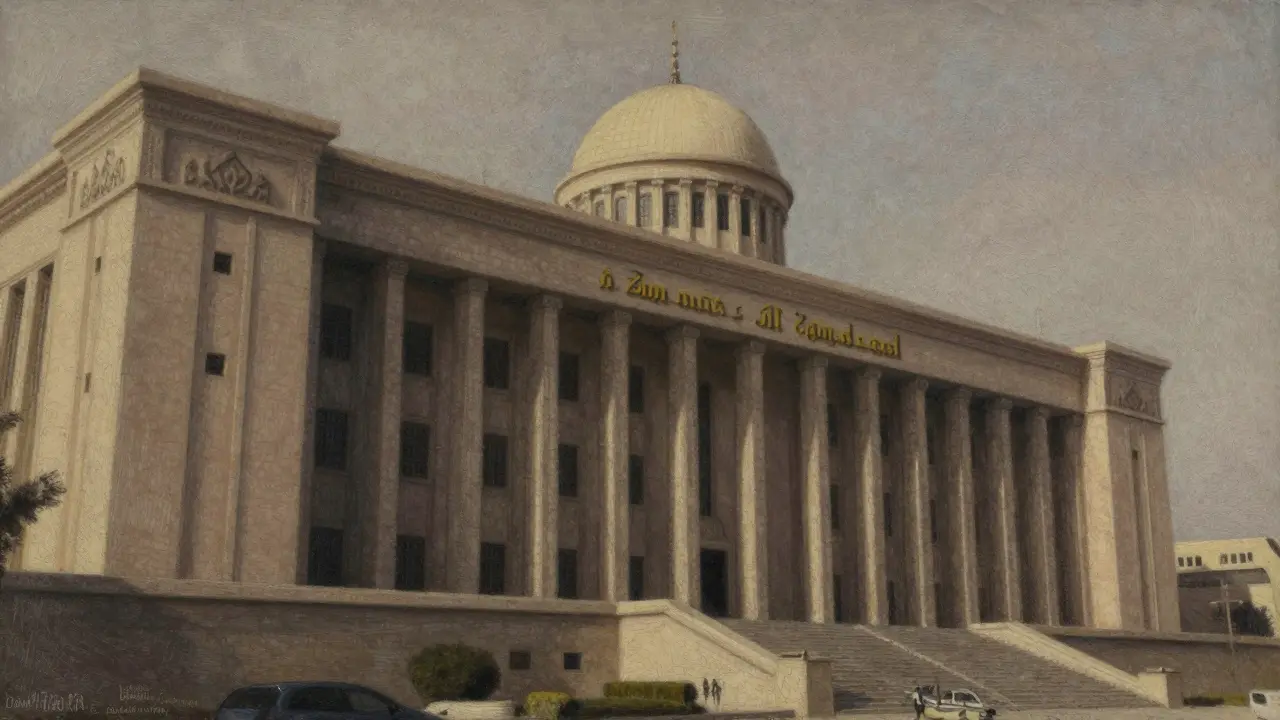
The hammer dropped in 2017 when the Central Bank of Iraq is the apex monetary authority responsible for managing the country's currency and banking stability. Also known as the CBI, it issued a sweeping directive that essentially erased cryptocurrency from the legal financial map. This wasn't just a suggestion; it was a comprehensive ban on trading and mining.
Why such a drastic move? The CBI argued that Cryptocurrency is a digital or virtual currency that uses cryptography for security and operates on a decentralized network, and because of this decentralization, it is nearly impossible to track or tax. In a country already dealing with economic instability, the government viewed the volatility of assets like Bitcoin as a threat to the national financial system. They cited risks of financial crimes and money laundering as primary drivers for the ban, fearing that unregulated digital wallets could become conduits for illicit funds.
This stance wasn't limited to just the central government. In 2018, the Kurdistan Regional Government's Supreme Fatwa Committee weighed in, specifically ruling against OneCoin. This showed a unified front across different administrative regions, ensuring that there were no legal loopholes for crypto enthusiasts to exploit regardless of where they were in the country.
The Technical Battle: Mining and Energy
Mining is where the ban hits the hardest. Most people know that Bitcoin Mining is the process of using powerful computer hardware to solve complex mathematical puzzles to secure a blockchain network and earn rewards. This process requires immense amounts of electricity. The Iraqi government recognized this energy drain early on, and groups like Greenpeace USA noted that Iraq was among the first to address the environmental and energy-intensive nature of Proof of Work systems.
Because mining requires physical hardware-loud, heat-generating rigs-it is much harder to hide than simply holding a private key on a phone. The government's ban targets the infrastructure. If you're caught running a mining farm, you aren't just breaking a financial rule; you're essentially stealing or misappropriating energy resources in a country where power stability is already a major issue.
| Country | Status | Primary Reason for Ban | Year of Major Ban |
|---|---|---|---|
| Iraq | Total Prohibition | Financial Crime & Stability | 2017 |
| China | Total Prohibition | Climate Goals & Control | 2021 |
| Egypt | Total Prohibition | Religious & Economic Reasons | 2018 |
| Bolivia | Regulated (Reversed) | Previously Financial Risk | 2024 (Lifted) |

Life in the Crypto Underground
Despite the legal threats, the Iraq crypto mining ban hasn't stopped the community; it has just pushed it underground. In cities like Baghdad, a hidden economy has flourished. Traders don't use official exchanges; instead, they rely on social media platforms like Facebook to find buyers and sellers. These are peer-to-peer (P2P) transactions where trust is the only real currency.
Take the example of "Ahmed Crypto," a local resident who manages thousands of dollars in digital assets. He doesn't operate out of a flashy office anymore. After receiving security warnings, he shifted his entire operation to be invisible. This is a common trend: meetings happen in whispered conversations at local cafes, far from the ears of anyone who might report them to the authorities. The community views the CBI's approach as outdated, arguing that if the government simply regulated the industry, they could actually generate revenue through commissions and taxes instead of fighting a losing battle against technology.
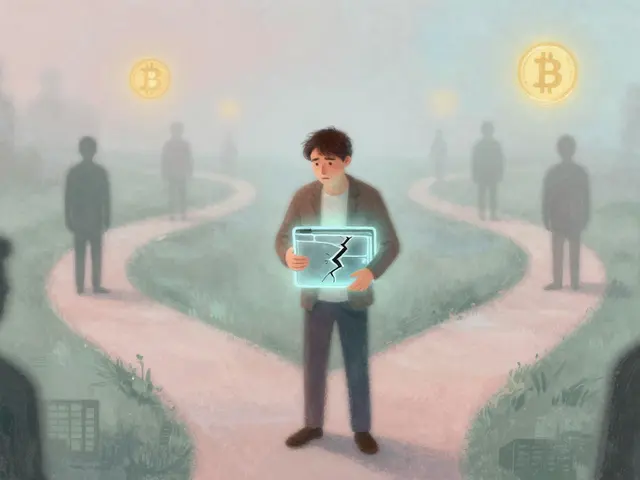
The enforcement of the ban is, however, inconsistent. While there have been reports of individuals being detained for crypto activities, formal trials are rare. This creates a strange grey area where the law is absolute on paper, but the actual punishment is unpredictable. This uncertainty adds a layer of stress to every transaction, as users never know if they are just another "invisible" trader or the next person to be picked up by the police.
The Ripple Effect on International Trade
The ban does more than just scare away hobbyists; it creates a massive headache for legitimate businesses. When a country bans Blockchain is a distributed ledger technology that records transactions across many computers so that the record cannot be altered retroactively, it shuts the door on modern payment rails. Iraq's strict Anti-Money Laundering (AML) frameworks, combined with the crypto ban, make cross-border payments slow and bureaucratic.
Businesses that could benefit from the speed of digital assets are forced back into traditional banking systems that are often bogged down by paperwork and delays. This results in higher operational costs and a higher risk of funds being frozen during international transfers. By rejecting digital assets, Iraq has essentially opted out of a financial evolution, leaving its merchants to rely on legacy systems while the rest of the global trade landscape moves toward instant settlement.
Is a Policy Shift Likely?
Looking at the global map, we see two different paths. Some countries, like Bolivia, realized that prohibition is nearly impossible to enforce and shifted toward a regulated model. Others, like China, doubled down on the ban to meet climate goals and tighten state control. Iraq currently seems to be following the latter path.
The CBI continues to issue warnings against the use of electronic wallets and digital cards for speculation. There is no current indication that the government is planning to reverse course. For the Iraqi government, the risk of a volatile, untraceable currency destabilizing the economy outweighs the potential benefits of blockchain innovation. However, as long as there is an internet connection and a desire for financial autonomy, the underground market will likely persist. As one local trader put it, no matter the law, they will always find a way around it.
Is it illegal to own Bitcoin in Iraq?
Yes, the Central Bank of Iraq has prohibited the trading, mining, and circulation of digital currencies. While owning a private key is hard to prove, engaging in any trade or mining activity is against official policy and can lead to legal trouble.
Why did the Central Bank of Iraq ban crypto mining?
The ban was primarily driven by concerns over financial crimes, money laundering, and the high volatility of the crypto market. Additionally, the energy-intensive nature of Bitcoin mining was seen as a burden on the national power grid.
Are there any legal ways to use crypto in Iraq?
Currently, there are no legal frameworks that allow for the institutional use of cryptocurrencies in Iraq. The CBI specifically prohibits the use of digital wallets and electronic cards for cryptocurrency trading.
How do people in Iraq trade crypto despite the ban?
Most activity happens through peer-to-peer (P2P) networks, often coordinated through social media pages like Facebook, and settled in person via cash or discreet transfers.
Has anyone been arrested for mining crypto in Iraq?
There have been reports of individuals being detained for cryptocurrency-related activities, though formal court trials specifically for mining are less common than administrative detentions.
What to Do if You Are Navigating This Space
If you are a business owner or an investor looking at the Iraqi market, you need to be aware of these constraints:
- For Businesses: Expect delays in cross-border payments. Do not attempt to integrate crypto payments into your Iraqi operations, as this could lead to immediate seizure of assets and legal action.
- For Individuals: Understand that there is zero legal protection. If you are scammed in an underground P2P trade, you cannot report it to the police without admitting to a crime.
- For Tech Developers: Focus on blockchain applications that do not involve currency (like supply chain tracking) which might be viewed more favorably, though you should still consult a local legal expert first.



The intersection of energy instability and financial regulation makes this a very volatile situation for any local entrepreneur. It is quite logical that a government would prioritize grid stability over a decentralized ledger system when the power outages are already a systemic issue.
Who cares about some people in a desert trying to mine coins? They should just be glad we have the real financial systems that actually work in the West. It's a joke that anyone thinks this stuff is a real business anyway.
Oh, absolutely. Because banning technology is such a brilliant way to stop it from existing. I'm sure the 'underground market' is just thriving because the government's foresight is simply unmatched. Truly a masterclass in economic management.
It's really sad to think about people risking their freedom just to have some financial hope. I hope they find a safer way to manage their money without having to hide in cafes.
The synergy between P2P networks and grassroots financial autonomy is just so inspiring!!! Even with the friction of a total ban, the decentralized ethos persists because it's basically an unstoppable paradigm shift!!! 🚀🚀🚀
It is fundamentally naive to assume that regulation would have generated revenue. In a state with such high levels of corruption, any 'commission' would simply be siphoned off by officials before ever reaching the national treasury.
Mining is just a waste of power anyway. Why are we acting like it's a crime to ban something that just burns electricity for nothing.
This situation really highlights the eternal struggle between the desire for individual sovereignty and the state's need for control 🌍. It's fascinating how technology can act as a mirror to the socio-political tensions of a region, pushing people toward these brave, albeit risky, shadow economies that challenge the very notion of legal tender 🕯️✨. We are seeing a global evolution of trust where the community becomes the bank, which is a profoundly philosophical shift in how we perceive value and authority in the modern age 🕊️.
Imagine thinking a Facebook group is a secure financial exchange. Hilarious.
If anyone is looking for alternatives, looking into non-custodial wallets is usually the first step for people in restricted areas, though the off-ramping to cash is always the hardest part!
The sheer audacity of the CBI to claim stability while the local currency is basically a rollercoaster ride is honestly peak comedy, and the fact that they are using 'money laundering' as a blanket excuse without providing a single transparent report on actual intercepted crypto-crimes just proves they are terrified of any system they cannot manually manipulate for their own benefit 🙄😒.
P2P is the only way.
the energy part is key because you cant hide a bunch of asics humming in a basement without the neighbors or the power company noticing the spike in usage
wild west vibes in the middle of baghdad
The lack of legal protection for these traders is absolutely harrowing! 😱 One single bad actor in a P2P trade and your entire life savings are gone with zero recourse! 📉 It is simply tragic!
I bet Ahmed is just scamming people.
This whole system is a failure. The people are just enabling a black market that will eventually crash and burn, leaving the most vulnerable people with nothing while the 'invisible traders' escape with the loot.
I really think the P2P approach is the most resilient way to handle this!!! It shows such great community spirit and trust!!!
Wait, are you saying you'd actually trust a stranger from Facebook with your money? 💸 Madness!! lol
its a tough spot but learning about light nodes might be a way for some to stay connected without the huge power draw of full mining rigs
I agree that the energy concerns are valid, but a balanced regulatory framework could have mitigated the risks while allowing for technological growth.
It is heartening to see people finding ways to innovate even under such strict constraints.