

Kosovo Crypto Mining Ban: What Happened in 2022 and Current Status
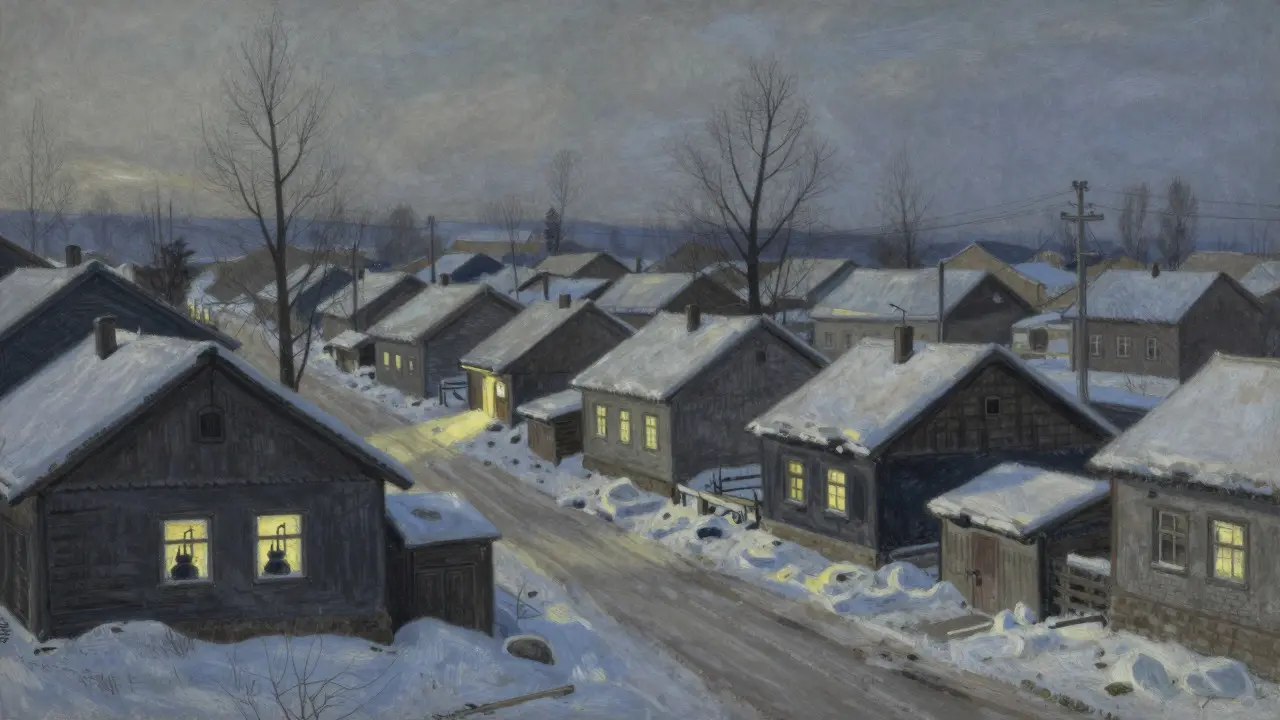
Imagine your power bill skyrocketing not because you ran the AC all day, but because your neighbors were secretly mining Bitcoin in their basements. That was the reality for many in Kosovo is a small country in Southeast Europe that faced a severe energy crisis in late 2021, leading to one of the most decisive governmental responses to cryptocurrency mining activities that consume significant portions of limited electricity supply. On January 4, 2022, the government didn't just raise taxes or issue warnings; they pulled the plug entirely. The Minister of Economy, Artane Rizvanolli, announced a complete ban on cryptocurrency production across the entire territory. This move marked a turning point, placing Kosovo among the few nations worldwide with outright prohibitions on proof-of-work mining.
The Energy Crisis Behind the Ban
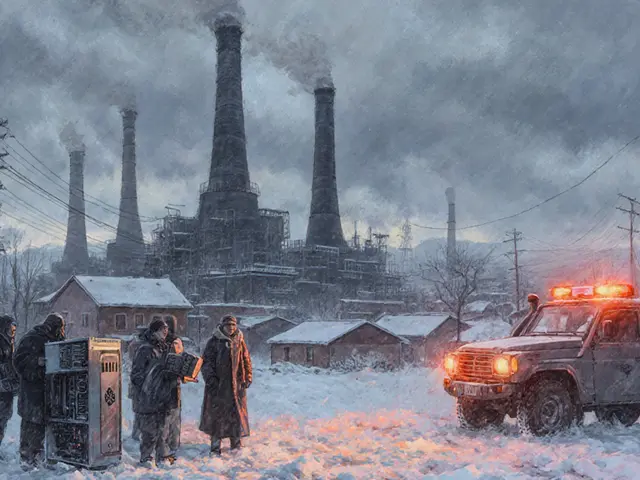
To understand why such a drastic measure was taken, you have to look at the state of Kosovo's grid in December 2021. The country declared a state of emergency due to widespread shortages. Why? A combination of aging infrastructure, rising demand, and the halt of fossil fuel exports from several EU countries left the national grid stretched thin. Bitcoin mining is an energy-intensive process that requires substantial electricity consumption to validate transactions. In a stable economy, this might be manageable. But in a system already on the brink, every kilowatt-hour counted. Unregulated mining operations were siphoning off power that households and businesses desperately needed for heating and basic operations.
The government viewed these miners not as tech innovators, but as free-riders exploiting a broken system. The ban wasn't just about saving money; it was about survival. By cutting off the largest uncontrolled consumer of electricity, the state aimed to stabilize prices and ensure essential services remained online during the winter months.
How Enforcement Worked in Practice
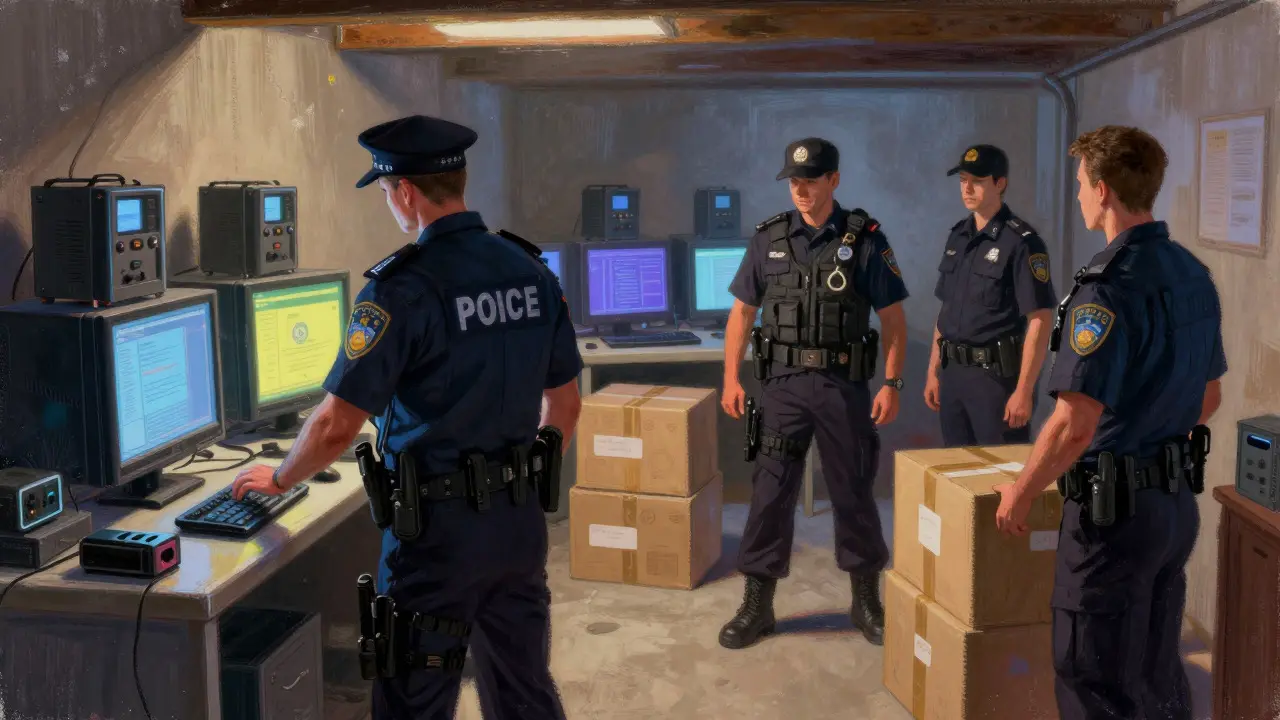
A ban is only as good as its enforcement. Kosovo didn't rely on honor systems. Law enforcement authorities were specifically tasked with monitoring electricity consumption patterns. If a household or business showed usage spikes inconsistent with normal activity, inspectors would show up. The results were immediate and tangible. During the early months of implementation, police and customs authorities conducted coordinated raids. They confiscated more than 300 bitcoin mining devices are specialized hardware units used to solve complex mathematical problems for cryptocurrency validation. These seizures sent a clear message: the rules applied to everyone, regardless of how hidden their setup was.
The enforcement strategy was multi-agency. Police worked alongside customs, creating a net that was hard to slip through. This systematic approach prevented the sporadic interventions seen in other regions. It turned the ban from a paper tiger into a physical reality for anyone trying to operate underground rigs.
Targeting Specific Regions and Misuse
While the ban was nationwide, the scrutiny was particularly intense in northern Kosovo. These municipalities have Serbian majority populations where citizens traditionally did not pay for electricity consumption due to political disputes. This created a perfect storm for illicit mining. Why pay for power when you don't have to? Many residents used this unpaid electricity to run high-power mining farms, pocketing the profits while the national grid suffered. The Committee for Economy in the Assembly of Kosovo committed to addressing these regional electricity misuse issues through the new legislative framework. It wasn't just an economic decision; it was a political one, aiming to close loopholes that allowed private profits to be extracted from public subsidies.
Extensions and Legal Frameworks
The initial ban wasn't a one-off event. It came with built-in flexibility. From August 1, 2022, the restrictions were extended for another 60 days. The law allowed the government to extend these measures for periods ranging from 30 to 180 days depending on energy sector conditions. This adaptive approach recognized that energy crises aren't linear. If the grid stabilized, the ban could theoretically ease. If not, it would tighten. As of 2025, the restrictions remain in effect, with Kosovo maintaining its position as one of eight countries worldwide with outright bans on cryptocurrency mining.
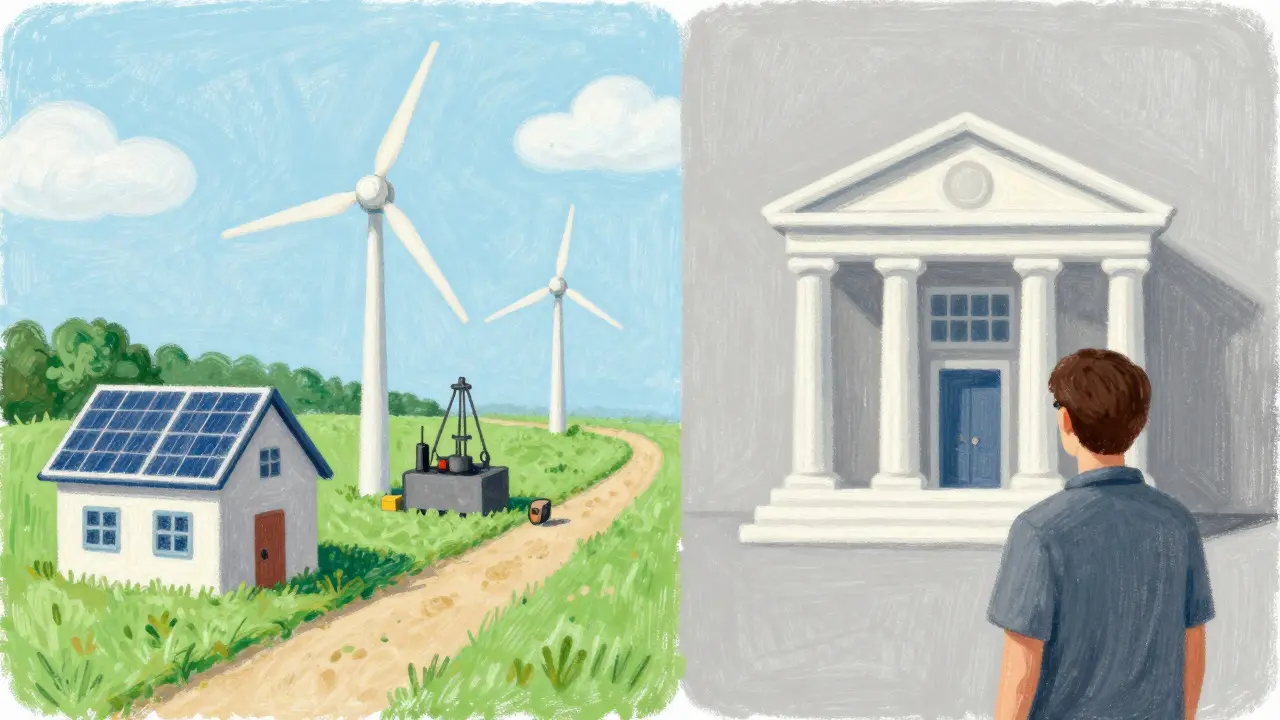
However, the legal landscape isn't static. Recent developments suggest limited exceptions for mining operations powered exclusively by alternative energy sources. If you can prove your rig runs on solar or wind power without touching the national grid, you might have a pathway forward. But for the vast majority of miners relying on the standard grid, the door remains firmly shut.
Economic and Social Impact
What does this mean for people living there? For investors, it’s a dead end. You can’t easily set up a mining farm, and trading carries legal risks. For everyday users, it limits access to digital finance tools. Kosovo has a significant diaspora population. Normally, crypto-based remittances offer a cheaper, faster way to send money home. With mining banned and broader crypto activities often classified as illegal or heavily restricted, these benefits are largely unavailable. The community lost out on potential financial innovation, forced to rely on traditional banking channels that can be slower and more expensive.
Current Status and Future Outlook
As we move further into the mid-2020s, the situation in Kosovo remains restrictive. The broader legal framework continues to classify many cryptocurrency activities as illegal, impacting traders and investors alike. However, the government is working on new legislation. This future framework aims to categorize different cryptocurrencies and establish taxation rules. While mining stays banned for grid-powered operations, the goal is to create a compliant space for other crypto interactions. For now, if you're considering setting up shop in Pristina or elsewhere in Kosovo, check the latest local laws before plugging in your first ASIC miner. The risk of confiscation is real, and the energy bills for unauthorized use are non-existent only until they aren't.
Is cryptocurrency mining still illegal in Kosovo?
Yes, for most purposes. Since 2022, mining using the national electrical grid has been banned. There are limited exceptions for operations powered exclusively by alternative energy sources, but the general rule remains prohibition.
Why did Kosovo ban crypto mining in 2022?
The primary reason was a severe energy crisis. Unregulated mining was consuming too much electricity, threatening grid stability during a period of shortages and high demand.
Can I trade crypto in Kosovo legally?
Trading is complex. While mining is explicitly banned, broader crypto activities have faced legal ambiguity or restriction. Investors face legal repercussions for engaging in certain transactions, so caution is advised.
How did the government enforce the ban?
Authorities monitored electricity consumption patterns for anomalies. Police and customs conducted raids, confiscating over 300 mining devices in the initial phase to deter unauthorized operations.
Are there any exceptions to the mining ban?
Yes, recent regulations permit cryptocurrency production only when alternative electricity sources, such as solar or wind, are utilized exclusively, ensuring no burden on the national grid.

Wow! This is such a wild story!! I never realized how much power mining actually eats up... it’s like a digital black hole!!! The part about the neighbors in basements is so relatable, kinda scary even. Did you know that some people in other countries do this too? It’s fascinating how different places handle the same tech. I feel like we should all be more aware of our energy footprints, not just for crypto but for everything. What do you think about the future of green mining? 🌍✨
interesting read. i think kosofo was right to act fast. when the grid is struggling you can't afford free riders. the enforcement with police raids sounds intense but probably necessary. hopefully the new solar exception works out for those who want to play by the rules.
:) You really need to look at the bigger picture here. These miners were basically stealing from the public good. If they didn't pay their fair share, why should they get to profit? It's just basic morality. The government did the right thing by shutting them down. Anyone who thinks otherwise is just greedy. :)
it is tragic. truly. the human spirit is crushed under the weight of bureaucracy. they did not ban mining they banned freedom. the grid was broken yes but the solution was authoritarian. a sad chapter in history where efficiency killed innovation. we are all just cogs in the machine now. sigh.
stop crying about it. the math doesn't lie. if your country can't handle the load then fix the grid or stop mining. it's not rocket science. most of you are just looking for excuses to keep your rigs running without paying the bill. typical.
Kosovo made the smart move. India has seen similar issues with unregulated power usage. When national interest is at stake, you cut the cord. No sympathy for freeloaders.
Love this perspective! 😊 It’s great to see a balanced view on how small nations manage big tech challenges. The detail about the northern region is something many miss. Thanks for sharing such an informative post! 🌟
I think there's a lot of nuance here that gets lost in the headlines. For the families losing heat during winter, this wasn't just policy, it was survival. But for the young entrepreneurs trying to build something, it feels like a door slamming shut. We have to balance both sides, right? 💔🏠
Finally someone talks about the real issue! 🇺🇸 It’s always the same story: bad infrastructure leads to bad decisions. Kosovo needed to act. Don't let the 'tech bros' cloud the fact that grandma couldn't heat her house. That's what matters. 👎
cool article. didnt know kosovo had a total ban. seems pretty extreme but i guess if the lights are out its hard to argue. the part about the unpaid electricity in the north is wild tho.
One must appreciate the sheer audacity of the state apparatus here; it is, quite frankly, a masterclass in authoritarian overreach disguised as civic duty. The narrative of 'energy crisis' is merely a convenient pretext for stifling decentralized financial innovation. How quaint, isn't it? To believe that a small Balkan nation could dictate the fate of global hash rates through simple confiscation. One wonders if the policymakers even understand the technology they are suppressing, or if they are simply reacting to the fear of losing control over the monetary flow. It is a poignant reminder that in the modern age, sovereignty is often defined by who controls the kilowatt-hour. Truly, a spectacle for the ages. 🙄
You're missing the point entirely. This wasn't about ideology, it was about physics. Energy is finite. If you consume more than the supply, things break. Simple as that. The comparison to China is weak because China had different motivations. Here, it was pure survival. Stop romanticizing the chaos and look at the data.
It is rather tedious to read yet another piece on this topic without any substantive new insight. The ban was inevitable given the circumstances, and the enforcement mechanisms described are standard procedure for any competent administration. One expects a higher level of discourse when discussing geopolitical economic shifts, but alas, we are left with the usual platitudes. Nevertheless, the mention of the alternative energy clause is a pertinent detail that warrants further scrutiny, though likely of limited practical impact for the average citizen. In conclusion, a serviceable summary, albeit lacking in depth.
I think it's cool that they allowed solar exceptions. That shows flexibility. Not every regulation has to be black and white. It gives hope for the future of crypto in places with good renewable resources.
Just wanted to add that the diaspora angle is huge. Many Kosovars work abroad and send money home. Crypto remittances are cheaper than banks. With the ban, that door closed. It's a real loss for the community. :( Hope the new laws help soon!
Ah, the classic tale of the little guy versus the system! 😂 But wait, was it really the little guy? Or was it a few guys with expensive ASICs hoarding power while others froze? Let's not pretend everyone was suffering equally. The 'free rider' label fits perfectly here. It's almost poetic justice, don't you think? 😏
This is a disaster for American investors who thought they could diversify globally! 📉 Why does every country have to pick a fight with Bitcoin? It's obvious the US needs to lead the way, not let these small nations make impulsive decisions based on short-term panic. We need a federal strategy, not local bans. Shameful. 🇺🇸
There's a deep philosophical question here about the nature of scarcity. When resources are limited, do we prioritize utility or freedom? Kosovo chose utility. Is that wrong? Probably not, but it highlights the tension between individual liberty and collective well-being. A fascinating case study for anyone interested in political philosophy. 🤔✨
actually you're all wrong. the ban is temporary nonsense. the grid will fix itself. also nobody cares about kosovo. it's a tiny blip on the map. stop making it sound like a global event. it's irrelevant. anyway nice try.