

Mempool Priority and Transaction Selection: How to Speed Up Your Crypto Transactions

Imagine you are at a busy airport. You have your boarding pass, but the line is moving slowly. Some people skip ahead because they paid for priority boarding. Others wait hours because their tickets were cheap. This is exactly how a mempool works in the world of blockchain.
The mempool, short for memory pool, is a temporary holding area on every blockchain node. It stores unconfirmed transactions waiting to be packed into the next block. If you have ever sent Bitcoin or Ethereum and watched it sit in "pending" status for an agonizingly long time, you have experienced the mempool firsthand. Understanding how miners and validators pick which transactions to process-and why yours might be stuck-is the key to saving money and avoiding delays.
What Is the Mempool and Why Does It Exist?
To understand transaction selection, you first need to see where transactions live before they are confirmed. When you hit "send" on your wallet, your transaction does not instantly appear on the blockchain. Instead, it broadcasts across the network. Every full node receives this data and performs a quick check. If the signature is valid, the balance is sufficient, and the nonce is correct, the node accepts the transaction into its local mempool.
Think of the mempool as a global waiting room. It exists because blockchains have limited space. A Bitcoin block, for example, can only hold about 1 to 4 megabytes of data, depending on the types of transactions included. During peak times, thousands of transactions arrive per second, far exceeding what fits into a single block. The mempool absorbs this overflow, preventing the network from crashing under the weight of demand.
Each node maintains its own copy of the mempool. This means that if one node drops a transaction due to low fees, another node might still keep it alive. However, for a transaction to be confirmed, a miner or validator must pull it from their mempool and include it in a new block they are building. This selection process is not random; it is driven by economics and technical constraints.
The Core Driver: Fees and Economic Incentives
The single most important factor in transaction selection is the fee. Miners and validators spend significant resources-electricity, hardware, and time-to secure the network. In return, they earn block rewards and transaction fees. As block rewards decrease over time (such as through Bitcoin's halving events), transaction fees become a larger portion of a miner's revenue.
Because blocks have limited space, miners face a simple choice: pack the block with many low-fee transactions or fewer high-fee ones. To maximize profit, they almost always choose the latter. This creates a dynamic market known as the fee auction. Users compete for block space by attaching higher fees to their transactions.
This system relies on a metric called satoshis per byte (sat/vB) for Bitcoin, or gas price for Ethereum. These metrics measure the cost relative to the size of the transaction. A large transaction with a high total fee might actually have a low fee rate, making it less attractive to miners than a small transaction with a moderate total fee but a high fee rate. Miners scan the mempool and sort transactions in descending order of these rates. They fill the block from the top down until there is no more space.
| Fee Rate Category | Typical Confirmation Time | Miner Priority |
|---|---|---|
| High (>50 sat/vB) | Next block (10 mins) | Top tier - selected immediately |
| Medium (10-50 sat/vB) | 1-3 blocks | Moderate - waits for congestion to ease |
| Low (<10 sat/vB) | Hours to days | Low - may never confirm if network stays busy |
Beyond Fees: Technical Factors in Selection
While fees are king, they are not the only variable. Miners also consider the complexity and size of transactions. A standard payment from one address to another is simple and compact. It takes up little space and requires minimal computational effort to verify. Complex transactions, such as those involving multi-signature wallets, smart contracts, or numerous inputs and outputs, take up more block space and require more processing power.
If two transactions offer the same fee rate, a miner might prefer the simpler one because it allows them to fit more transactions into the remaining block space, increasing overall profitability. Additionally, some mining pools implement policies to filter out certain types of complex scripts to avoid potential security risks or software bugs.
Transaction age is another subtle factor. Some miners prioritize older transactions that have been sitting in the mempool for a long time, provided their fees are competitive. This helps clear out stale transactions and keeps the mempool healthy. However, if a transaction has a very low fee, it will likely remain ignored regardless of how long it has waited.

The Nonce Bottleneck: Why Order Matters
A critical concept in transaction selection is the nonce. A nonce is a counter associated with each account address. It ensures that transactions from the same sender are processed in the exact order they were created. For example, if you send three transactions from the same Bitcoin address, they must have nonces 0, 1, and 2.
If you broadcast transaction #2 before transaction #0 is confirmed, nodes will place #2 in a "pending" state within the mempool. They know it depends on #0 being resolved first. This creates a dependency chain. Even if transaction #2 has a massive fee, miners cannot include it in a block until transaction #0 is included. This phenomenon is known as a nonce gap.
This is particularly relevant in Ethereum, where accounts manage nonces explicitly. If you accidentally submit two transactions with the same nonce but different fees, the higher-fee version will replace the lower-fee one in the mempool-a technique often used for speed-up strategies. Understanding nonce sequencing is vital for troubleshooting stuck transactions.
Network Congestion and Mempool Dynamics
The state of the mempool changes constantly based on network activity. During calm periods, the mempool might contain only a few hundred transactions. Fees are low, and confirmations happen quickly. But during spikes in demand-such as when a popular NFT collection launches, a token listing occurs, or market volatility triggers mass movements-the mempool fills rapidly.
In these congested states, the competition for block space intensifies. Fee rates skyrocket. Transactions that would normally confirm in minutes can take hours or even days. This is when strategic fee setting becomes crucial. Wallets usually offer preset options like "Slow," "Standard," and "Fast." These presets estimate the current market rate required to get your transaction included within a specific timeframe.
For advanced users, monitoring real-time mempool analyzers provides a clearer picture. Tools that visualize the distribution of fees in the mempool allow you to see exactly what threshold is needed to jump to the front of the line. By paying slightly above the median rate for the desired confirmation window, you can optimize costs without overpaying.

Strategies for Faster Confirmations
If you find yourself waiting too long for a transaction to confirm, you have a few options. The most common method is Child Pays for Parent (CPFP). This involves creating a new transaction that spends the output of the stuck transaction. You attach a high fee to this new "child" transaction. Since the child cannot be confirmed until the parent is, miners are incentivized to include both to capture the combined fee.
Another approach is Replace-By-Fee (RBF). If your wallet supports it, you can broadcast a replacement transaction with the same nonce but a higher fee. This signals to the network that you want to update your original transaction. Not all networks support RBF equally well, so check your wallet's capabilities.
Prevention is better than cure. Always monitor the mempool status before sending urgent transactions. If the network is congested, consider waiting for off-peak hours or using layer-2 solutions like the Lightning Network for Bitcoin or rollups for Ethereum, which bypass the main mempool entirely for faster, cheaper settlements.
Security and Validation in the Mempool
The mempool is not just a queue; it is also a security checkpoint. Before a transaction enters the mempool, nodes perform strict validation checks. They verify digital signatures to ensure the sender authorized the transfer. They check balances to prevent double-spending. They ensure the transaction follows the consensus rules of the protocol.
This pre-validation protects the blockchain from spam and invalid data. If a malicious actor tries to flood the network with fake transactions, nodes will reject them at the mempool entry stage, saving bandwidth and processing power. However, attackers can still clog the mempool with valid but low-fee transactions, a tactic known as a denial-of-service attack. Mining pools often implement filters to ignore extremely low-fee transactions to mitigate this risk.
What happens to transactions that never get confirmed?
Transactions with fees too low to compete may eventually expire or be dropped by nodes after a certain period. The funds remain in the sender's wallet because the transaction was never added to a block. You can then resend the transaction with a higher fee.
Can I change the fee after sending a transaction?
Yes, if your wallet supports Replace-By-Fee (RBF) or Child-Pays-For-Parent (CPFP). RBF allows you to broadcast a new version of the same transaction with a higher fee. CPFP involves sending a new transaction from the output of the stuck one with a high fee.
Why do some transactions confirm faster than others with similar fees?
Factors like transaction size, complexity, and miner preferences play a role. Smaller, simpler transactions are more efficient for miners to include. Additionally, some miners may prioritize transactions from specific addresses or pools they belong to.
What is a nonce and why is it important?
A nonce is a sequential number assigned to each transaction from a specific address. It ensures transactions are processed in order. If a transaction with a lower nonce is missing, subsequent transactions with higher nonces will wait in the mempool until the gap is filled.
How does network congestion affect my transaction?
During congestion, the mempool fills up, and competition for block space increases. This drives up the minimum fee required for timely confirmation. Transactions with low fees may experience significant delays or fail to confirm altogether.

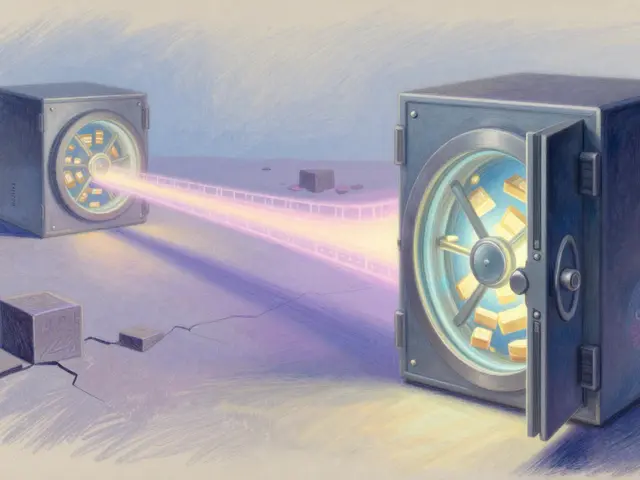




The mempool is not merely a technical buffer; it is the crucible where the raw, unadulterated will of the market meets the cold, hard constraints of physics. We stand at the precipice of a new era, where every satoshi per byte is a vote cast in the grand theater of decentralized consensus. It is poetic, really, how our impatience fuels the very security of the network. The airport analogy? Charming, but reductive. This is less about boarding passes and more about the existential struggle for space in a finite universe.
Hey there! :D Great breakdown of how fees work. Just remember to check Mempool.space before you send anything big. It saves so much headache trying to guess the right fee rate. Happy trading! :)
Listen up!!! If you want your tx confirmed fast, PAY UP!!! Stop complaining about high fees when you are the one clogging the network with dust!!! The market dictates the price!!! Accept it!!!
They tell you it's just 'miners choosing based on profit' 🤔 but have you ever noticed how certain transactions get prioritized regardless of the fee? 🚩 It feels like the nodes themselves are being manipulated by shadowy figures controlling the bandwidth. The mempool is a lie we agree to believe in. 👁️👄👁️
One must consider the ontological implications of transaction inclusion. Is a transaction truly 'sent' if it remains in limbo within the memory pool? The boundary between existence and non-existence becomes porous. Furthermore, the jargon used here-sat/vB-is utterly pedestrian. One should speak of 'priority density metrics' to maintain intellectual rigor. The casual observer fails to grasp the profound philosophical weight of a pending state.
Yo! Let me drop some knowledge bombs 💣 You gotta watch out for RBF (Replace-By-Fee). If you messed up the fee, dont panic. Most wallets let you bump it up. Its a lifesaver when the network gets congested. Keep that gas tank full and stay ahead of the curve! 🚀
Fees are low because adoption is fake!!! Look at the data!!! Real users would pay more!!! The mempool is empty because the project is dying!!! Wake up!!!
i mean its pretty cool how it works. kinda like waiting in line at the grocery store but for money. i usually just set the fee auto and hope for the best lol. sometimes it takes forever tho.
Oh, wow. Another article explaining basic economics to people who clearly didn't listen in school. 😒 But sure, let's pretend this is groundbreaking news. I've been paying attention since 2013, and nothing has changed except the prices went up. 🙄📉
it is interesting to observe how scarcity drives value. the mempool acts as a mirror reflecting our collective urgency. perhaps we should slow down. breathe. let the blocks form naturally. there is wisdom in patience that the market often forgets.
just use layer 2 man. why are we even talking about mainnet fees in 2024?? its so outdated. lightning network or rollups fix this instantly. stop wasting time reading old articles.
my tx got stuck for 3 days and i almost cried. why does this happen to me always?? nobody cares about small holders. its so unfair. i feel so drained thinking about it.
AMERICAN MINERS SHOULD BE PRIDEFUL OF THEIR EFFICIENCY!!! WHY DO WE LET FOREIGN NODES DICTATE OUR FEES??? BUY AMERICAN BLOCKCHAIN!!! MAKE BITCOIN GREAT AGAIN!!!
Nice post. Keep learning. The market will reward those who understand the mechanics. Stay positive and keep holding. Good luck everyone.
You all are so obsessed with speed and efficiency. What about the moral cost of burning energy for trivial transactions? The mempool is a symbol of our greed. We need to reflect on what we are truly valuing here. It’s quite pathetic.
It is an undeniable fact that the central banks are manipulating the mempool to suppress volatility. They want you to think it’s organic congestion, but it’s a coordinated effort to drain liquidity. Do not trust the nodes. Trust no one. The system is rigged against the little guy.
One might ponder the nature of confirmation itself. Is it a binary state or a spectrum of probability? The mempool exists in a quantum superposition of confirmed and unconfirmed until observed by a miner. This duality challenges our classical understanding of transaction finality.
Actually, the table provided is slightly inaccurate regarding Ethereum gas dynamics. Gas limits also play a crucial role, not just the price. People need to read more technical docs before commenting. It’s embarrassing how many misunderstandings persist. ;)
Boring stuff. Fees go up, fees go down. Same old story. Nothing new here. Just noise. Move along.
I found this explanation incredibly helpful, especially the part about how nodes validate transactions before accepting them into their local pools, which really clarified why my transaction was dropped by one node but picked up by another, and it made me realize that the network is actually quite resilient despite the apparent chaos, so I’m feeling much more confident about sending larger amounts now that I understand the underlying mechanics better, thank you for taking the time to write this.
Everyone thinks they know how fees work but they don't. The real issue is block size debates. Until we solve that nothing changes. Stop whining about priority.