
Miner Revenue from Block Rewards: How Bitcoin Miners Get Paid in 2026
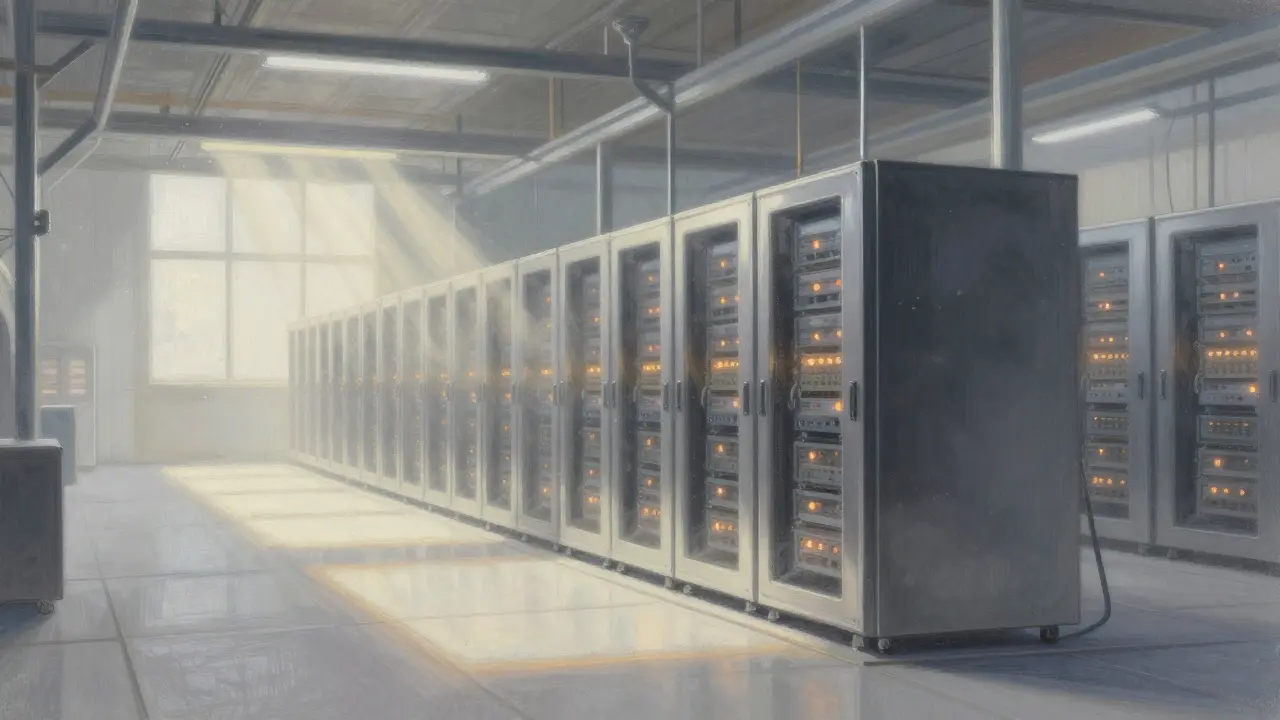
Imagine running a massive server farm that burns through megawatts of electricity just to solve math puzzles. Why would anyone do that? The answer lies in miner revenue, specifically the block rewards issued by the Bitcoin network. For years, this system has been the engine driving the world’s most secure decentralized ledger. But with the April 2024 halving cutting the payout in half, the economics have shifted dramatically. Understanding how miners get paid-and whether they will survive the transition to fee-only revenue-is crucial for anyone involved in crypto.
This isn't just about getting rich quick. It's about understanding the economic incentives that keep the Bitcoin network secure. When you send Bitcoin, miners validate that transaction. In return, they receive compensation. This guide breaks down exactly how that compensation works, the math behind it, and what the future holds for the industry as we move further into 2026.
The Anatomy of Miner Compensation
Miner revenue comes from two distinct sources. Think of it like a salary plus tips. The 'salary' is the block subsidy, which consists of newly minted Bitcoin created out of thin air according to the protocol's code. The 'tips' are the transaction fees paid by users who want their transactions processed quickly.
When Satoshi Nakamoto launched Bitcoin in January 2009, the block subsidy was set at 50 BTC per block. That number sounds huge today, but back then, Bitcoin had no value. Over time, the protocol was designed to reduce this issuance rate to create scarcity. This reduction happens every 210,000 blocks, roughly every four years, in an event known as the 'halving.'
As of mid-2026, the current block reward stands at 3.125 BTC. This followed the April 2024 halving, which cut the previous reward of 6.25 BTC in half. To put that in perspective, if Bitcoin trades at $60,000, a single block yields approximately $187,500 in new coins. With a new block found every 10 minutes on average, that adds up to roughly 144 blocks per day. However, this revenue is shared among all miners globally based on their computational power, or hashrate.
What is the difference between block subsidy and transaction fees?
Block subsidy is the fixed amount of new Bitcoin awarded to the miner who solves the block (currently 3.125 BTC). Transaction fees are variable amounts paid by users attached to their transactions to incentivize miners to include them in the block. As the subsidy decreases over time, transaction fees become a larger portion of total miner revenue.
Calculating Your Share: The Math Behind Mining
You might wonder how much of that 3.125 BTC goes to your specific machine. It depends entirely on your share of the global hashrate. If you control 1% of the network's total computing power, you statistically earn 1% of the block rewards and fees over time.
The formula used by industry tools like Bitdeer’s profitability calculator looks complex, but the logic is straightforward:
- Determine Daily Output: Multiply your hashrate by the block reward, then divide by the network difficulty.
- Account for Time: Factor in the 86,400 seconds in a day.
- Subtract Costs: Deduct pool fees (usually 1-2%) and electricity costs.
A key metric here is the 'hash price,' which represents how much the network pays per terahash of work per second. In June 2023, Fidelity Digital Assets reported a daily hash price of around $0.086 per TH/s. If you own a mining rig with 110 TH/s capacity, your gross daily revenue would be roughly $9.51 before electricity.
However, network difficulty is not static. It adjusts every 2,016 blocks (approximately every two weeks) to ensure blocks are still found every 10 minutes, regardless of how many miners join or leave. If more miners join, difficulty rises, making each individual miner's share smaller. This self-regulating mechanism ensures the network remains stable but puts constant pressure on individual profitability.
Hardware Wars: ASICs vs. GPUs
If you're thinking about entering mining, hardware choice is critical. You cannot mine Bitcoin profitably with a standard computer CPU or even a high-end gaming GPU anymore. The era of GPU mining ended years ago due to the dominance of Application-Specific Integrated Circuits (ASICs).
ASICs are machines built for one purpose only: calculating SHA-256 hashes. They offer incredible efficiency measured in joules per terahash (J/TH). Modern ASICs like the AntMiner S21e XP Hyd can achieve efficiencies of 15-30 J/TH. Compare this to a GPU, which might use 100-300 J/TH for the same task.
Let's look at the numbers. According to data from late 2023, an AntMiner S21e could generate roughly $39.11 daily in revenue. A top-tier NVIDIA H100 GPU, by contrast, generated less than $1.00 daily. That is a nearly 40x difference. While GPUs are versatile and can be used for AI training or gaming, ASICs are single-use devices. If Bitcoin mining becomes unprofitable, an ASIC has almost no resale value, whereas a GPU retains utility elsewhere.
| Hardware Type | Example Model | Efficiency (J/TH) | Est. Daily Revenue (BTC) | Versatility |
|---|---|---|---|---|
| ASIC Miner | AntMiner S21e XP | 15-30 J/TH | ~0.00047 BTC | Low (Bitcoin Only) |
| High-End GPU | NVIDIA H100 | 100-300 J/TH | ~0.00001 BTC | High (AI/Gaming) |
| CPU | AMD Threadripper 3990X | >500 J/TH | ~0.000014 BTC | High (General Purpose) |
The Halving Effect: Surviving the Revenue Cut
The April 2024 halving was a major stress test for the industry. Overnight, the block subsidy dropped from 6.25 BTC to 3.125 BTC. For miners whose electricity costs were already close to their revenue, this meant immediate losses. J.P. Morgan noted that daily block subsidy revenue fell from $27.9 million to $13.95 million immediately after the event.
So, did miners go bankrupt? Not entirely. The market adjusted. Unprofitable miners shut down their machines, reducing the overall network hashrate. This caused the difficulty adjustment to drop in subsequent cycles, increasing the share of remaining efficient miners. Meanwhile, those with access to cheap power-often below $0.04/kWh-continued to operate profitably.
This dynamic highlights a key trend: centralization. Large industrial operations like Marathon Digital and Riot Platforms, which secure multi-megawatt contracts at low rates, dominate the landscape. Individual 'bedroom miners' now represent only about 12% of the network, down from 68% in 2017. If you don't have access to subsidized or stranded energy, competing against these giants is nearly impossible.

The Long Game: Transitioning to Transaction Fees
Eventually, the block subsidy will reach zero. The Bitcoin protocol caps the total supply at 21 million coins, projected to be fully mined around the year 2140. At that point, miners will rely 100% on transaction fees. Is this sustainable?
Experts are divided. Dr. Lee Reiswig of Argo Blockchain has questioned whether fees alone will justify the cost of proof-of-work security. On the other hand, analysts at Bitbo.io argue that as Bitcoin adoption grows, so will transaction volume and fee revenue. Currently, transaction fees make up 12-15% of total miner revenue, up from 5-7% pre-halving.
For this transition to work seamlessly, fee revenue needs to grow significantly. Some estimates suggest fees need to reach $50-$75 per block by 2140 to maintain current security levels. This requires Bitcoin to become the primary settlement layer for global finance, handling millions of transactions daily via Layer 2 solutions like the Lightning Network, which settle batches on-chain periodically.
Practical Challenges for New Miners
If you are considering starting a mining operation in 2026, be aware of the hidden costs. Electricity is obvious, but cooling is often underestimated. Industrial fans and liquid cooling systems can add 15-20% to your power bill. Maintenance is another factor; ASIC fans fail frequently, costing around $50 per part every 6-12 months.
Regulatory hurdles are also rising. In 2023, 19 U.S. states introduced mining-specific legislation. Texas, for example, passed Senate Bill 1751, requiring new large-scale operations to use 80% renewable energy. Navigating these permits takes time and legal expertise.
Finally, consider the learning curve. Surveys indicate it takes 3-6 months for new miners to optimize their operations. Common pitfalls include misjudging difficulty growth (which averaged 10-15% monthly in 2023) and choosing the wrong mining pool. Pool fees vary; Slush Pool charges 2%, while others charge 2.5%. Over a year, that 0.5% difference can mean thousands of dollars in lost revenue for large operations.
Is Bitcoin mining profitable in 2026?
Profitability depends heavily on electricity costs. With the block reward at 3.125 BTC, miners generally need electricity rates below $0.04-$0.06 per kWh to remain profitable using modern ASIC hardware. Those paying residential rates typically lose money unless Bitcoin's price increases significantly.
How does network difficulty affect my revenue?
Network difficulty adjusts every two weeks to maintain a 10-minute block time. If more miners join, difficulty increases, meaning you must perform more calculations to find a block. This reduces your individual share of the block reward unless you upgrade your hardware to match the increased competition.
What happens when the block reward reaches zero?
When the 21 million BTC cap is reached (estimated around 2140), miners will be compensated solely through transaction fees. The sustainability of the network relies on sufficient transaction volume and fee levels to incentivize miners to continue securing the blockchain.
Why can't I mine Bitcoin with my GPU?
Bitcoin uses the SHA-256 algorithm, which is highly optimized for ASIC chips. GPUs are general-purpose processors and are hundreds of times less efficient than ASICs. The electricity cost to run a GPU far exceeds the tiny fraction of block rewards it would earn, making it economically unviable.
How do mining pools work?
Mining pools combine the hashrate of many individual miners to increase the chance of finding a block. When a block is found, the reward is distributed among participants proportional to their contributed work. Pools charge a small fee (typically 1-2%) for this service, providing miners with more consistent, albeit smaller, payouts.