
P2P Crypto Trading in Russia: Top Platforms and Key Risks

Trying to move your crypto into rubles in Russia right now feels like navigating a minefield. You have digital assets, but traditional banking channels are either blocked or heavily scrutinized. This is where P2P crypto trading becomes your lifeline. It’s not just a workaround; for millions of users, it is the primary way to convert between fiat and digital currencies. But with great power comes significant risk. One wrong click on a peer-to-peer platform can lead to frozen bank accounts or lost funds.
The State of P2P Markets in Russia
If you look at the data from late 2025, the landscape has shifted dramatically. The giants that once dominated global markets, like Binance and OKX, have largely pulled back from direct RUB trading due to regulatory pressure and sanctions. Their P2P volumes for the Russian ruble dropped to near zero. In their absence, other platforms stepped up to fill the void. Bybit emerged as the clear leader, processing over $27 million in daily volume across nearly 4,000 advertisements. This isn't just noise; it represents real money moving through a decentralized network of individuals.
HTX (formerly Huobi) follows with about $7.6 million in daily volume, while MEXC handles roughly $2.2 million. These numbers tell a story of adaptation. Russian traders didn't stop trading; they just changed venues. The market fragmented, but it remained highly active. If you are looking to trade today, you aren't choosing between Binance and Coinbase. You are likely choosing between Bybit, HTX, MEXC, Bitget, or KuCoin.
Top Platforms for Russian Users
Not all exchanges are created equal when it comes to serving the Russian market. Some offer better liquidity, others provide better payment method support, and a few specialize in specific types of trades. Here is how the major players stack up.
| Platform | Daily Volume (USD) | Active Ads | Fees | Key Features |
|---|---|---|---|---|
| Bybit | $27,189,103 | 3,829 | 0.1% | Full RU localization, 2000+ cryptos, diverse payment methods |
| HTX | $7,690,063 | 1,351 | Varies | High liquidity, established reputation |
| KuCoin | $3,208,541 | 400 | 0.1% | Card-only RUB deposits, 900+ cryptos |
| MEXC | $2,244,441 | 605 | 0% Maker / 0.02% Taker | Huge altcoin selection, Yandex Money support |
| Bitget | $1,885,313 | 445 | 0.1% | Bulgarian VASP license, copy trading, BGB discounts |
Bybit is currently the go-to choice for most Russians. Why? Because it offers full interface localization and customer support in Russian. More importantly, it supports a wide range of deposit methods, including local cards, Advcash, and e-wallets. The platform’s escrow system holds the seller's USDT until the buyer confirms payment, adding a layer of security. With over 2,000 cryptocurrencies available, you aren't limited to just Bitcoin and Ethereum.
MEXC appeals to a different crowd. If you are hunting for new altcoins before they hit mainstream exchanges, MEXC lists them quickly. They generate over $34 billion in new token trading volume annually. For P2P specifically, they accept RUB via Payeer and Yandex Money, which are popular among certain demographics. Their maker fees are often zero, making them attractive for high-frequency traders who want to minimize costs.
Bitget has carved out a niche by securing a VASP license in Bulgaria. This gives European-based users some legal clarity, though for Russians, the main draw is their social trading features and low fees when paying with BGB tokens. They support up to 125x leverage on futures, which is risky but appealing to aggressive traders.

How P2P Trading Actually Works
You might think P2P means sending money directly to a stranger without any safety net. That’s not quite right. The process is structured to protect both parties, provided you follow the rules. Here is the typical flow on a platform like Bybit:
- Buy Stablecoins: First, you purchase USDT (Tether) using your rubles. This acts as your intermediary asset.
- Navigate to P2P: Go to the P2P marketplace section. Here, you will see a list of ads from other users wanting to buy USDT with rubles.
- Select a Counterparty: Look for verified buyers with high completion rates (ideally above 95%) and positive feedback.
- Initiate Trade: When you accept an order, the platform locks your USDT in escrow. You cannot withdraw these coins until the trade is complete.
- Receive Payment: The buyer sends rubles to your specified bank account. Check your bank app directly-do not trust screenshots alone.
- Release Funds: Once you confirm receipt, you release the USDT to the buyer. The transaction is complete.
A crucial detail here involves payment methods. Due to sanctions, many platforms use color-coded names for banks. "Local Card (Green)" usually refers to Sberbank, while "Yellow Card" indicates T-Bank (formerly Tinkoff). Raiffeisenbank, OZON Bank, and MIR cards also appear frequently. Knowing these codes helps you filter for the banks you actually use.
The Hidden Risks of P2P Trading
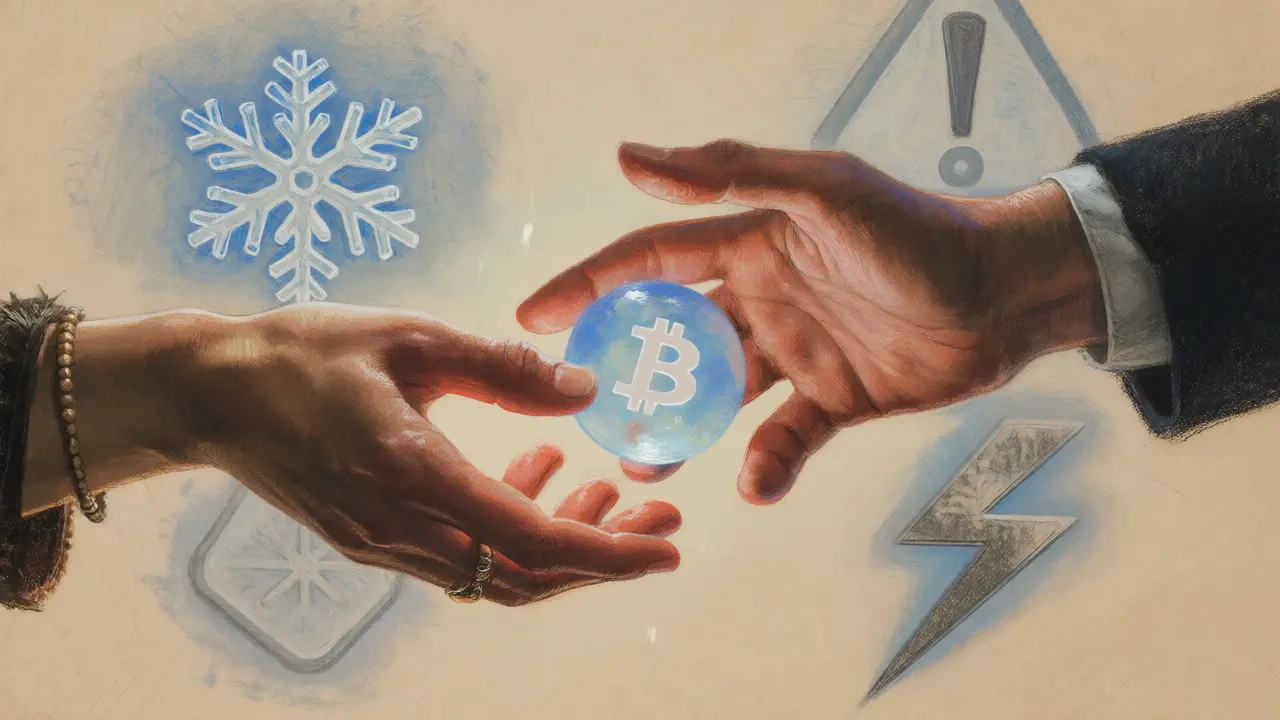
While the mechanics seem straightforward, the risks are real and varied. Ignoring them can cost you more than just transaction fees.
Counterparty Risk is the most obvious danger. A buyer might claim they sent the money but never did, or they might dispute the transaction after receiving your crypto. Always verify the sender's name matches the profile on the exchange. If a random person named "Ivan Petrov" pays you for a trade initiated by "Maria Ivanova," be suspicious. This mismatch often signals third-party payments, which can trigger anti-money laundering flags.
Bank Account Freezes are a growing concern. Russian banks monitor frequent transfers from unknown individuals. If you receive multiple small payments from different people in one day, your bank might freeze your account pending investigation. To mitigate this, avoid splitting large sums into too many tiny transactions if possible, and keep records of all P2P trades.
Price Volatility can bite you if you aren't careful. Suppose you agree to sell USDT at a fixed rate. If the ruble strengthens significantly between the time you lock the deal and the time you receive payment, you lose value. Conversely, if the ruble weakens, the buyer loses. Most platforms allow short windows for payment (15-30 minutes), so speed matters.
Platform Risk exists too. Exchanges can face technical glitches, regulatory crackdowns, or withdrawal limits. While Bybit and MEXC are stable now, the regulatory environment in Russia remains fluid. The Central Bank of Russia (CBR) continues to tighten its stance on crypto, influencing which payment rails remain open.
Best Practices for Safe Trading
You can’t eliminate risk entirely, but you can manage it. Here are some concrete steps to protect yourself:
- Check Reputation Scores: Only trade with users who have completed hundreds of transactions and maintain a 95%+ completion rate. Avoid new accounts with no history.
- Verify Identity: Ensure the bank account details match the trader's verified identity on the platform. Never accept cash deposits or payments from third parties unless explicitly agreed upon.
- Use Two-Factor Authentication (2FA): Enable 2FA on your exchange account. Phishing attacks targeting P2P traders are common, especially fake emails claiming to be from the exchange.
- Keep Communication On-Platform: Never move the conversation to Telegram or WhatsApp immediately. Keep all chat logs within the exchange’s messaging system. This provides evidence if a dispute arises.
- Start Small: If you are trying a new counterparty or platform, start with a small amount. Test the waters before committing thousands of dollars.
Security extends beyond the trade itself. Use unique passwords for each exchange and consider hardware wallets for long-term storage. Don't leave large amounts of USDT on the exchange overnight if you don't need to.
Regulatory Landscape and Future Outlook
The Russian government hasn't banned crypto outright, but it has restricted its use as a medium of exchange for goods and services. However, holding and trading assets is generally permitted for individuals. The focus of regulators is on preventing capital flight and money laundering. This is why KYC (Know Your Customer) verification is mandatory on almost all reputable P2P platforms.
Platforms are adapting by integrating DeFi tools and staking services directly into their interfaces. We are seeing a trend toward specialized wallets, like Bitget Wallet, which offer built-in RUB on-ramps. This suggests the market is maturing. Users demand more than just buying and selling; they want yield generation and seamless integration with their daily financial lives.
Looking ahead, expect stricter compliance tools. Dispute resolution mechanisms will likely become more automated, using AI to analyze chat logs and payment proofs. As international sanctions evolve, the mix of available payment methods may shift again. Currently, domestic systems like SBP (Fast Payment System) are gaining traction because they bypass some international friction points.
Is P2P crypto trading legal in Russia?
Yes, buying, selling, and holding cryptocurrency is legal for individuals in Russia. However, using crypto to pay for goods and services is prohibited. P2P trading falls under the category of exchanging digital assets, which is permitted, provided you comply with tax obligations and anti-money laundering regulations.
Why did Binance and OKX leave the Russian P2P market?
Binance and OKX withdrew from direct RUB P2P trading due to international sanctions and regulatory pressures. They needed to ensure compliance with Western laws regarding sanctioned entities and banking restrictions. This created a vacuum that platforms like Bybit, HTX, and MEXC filled.
What happens if my bank freezes my account due to P2P trades?
If your bank freezes your account, you typically need to provide documentation proving the source of funds. Keep records of your P2P trades, including screenshots of orders, chat histories, and transfer receipts. Banks may classify frequent incoming transfers from individuals as suspicious activity, so transparency is key.
Which P2P platform has the lowest fees for Russian users?
MEXC often offers the lowest fees, with 0% maker fees and very low taker fees (around 0.02%). Bybit charges approximately 0.1%, which is standard but higher than MEXC. However, always check for promotional campaigns or fee discounts based on trading volume or token holdings, as these can change rapidly.
Can I use credit cards for P2P crypto trading in Russia?
Yes, but availability varies by platform. KuCoin, for example, limits RUB deposits to credit and debit cards. Other platforms like Bybit and MEXC support a wider range of methods, including local debit cards, SBP transfers, and e-wallets. Credit card usage might incur higher fees or stricter verification requirements compared to bank transfers.