

Stop-Loss vs Trailing Stop: Which Risk Tool is Best for Your Trades?
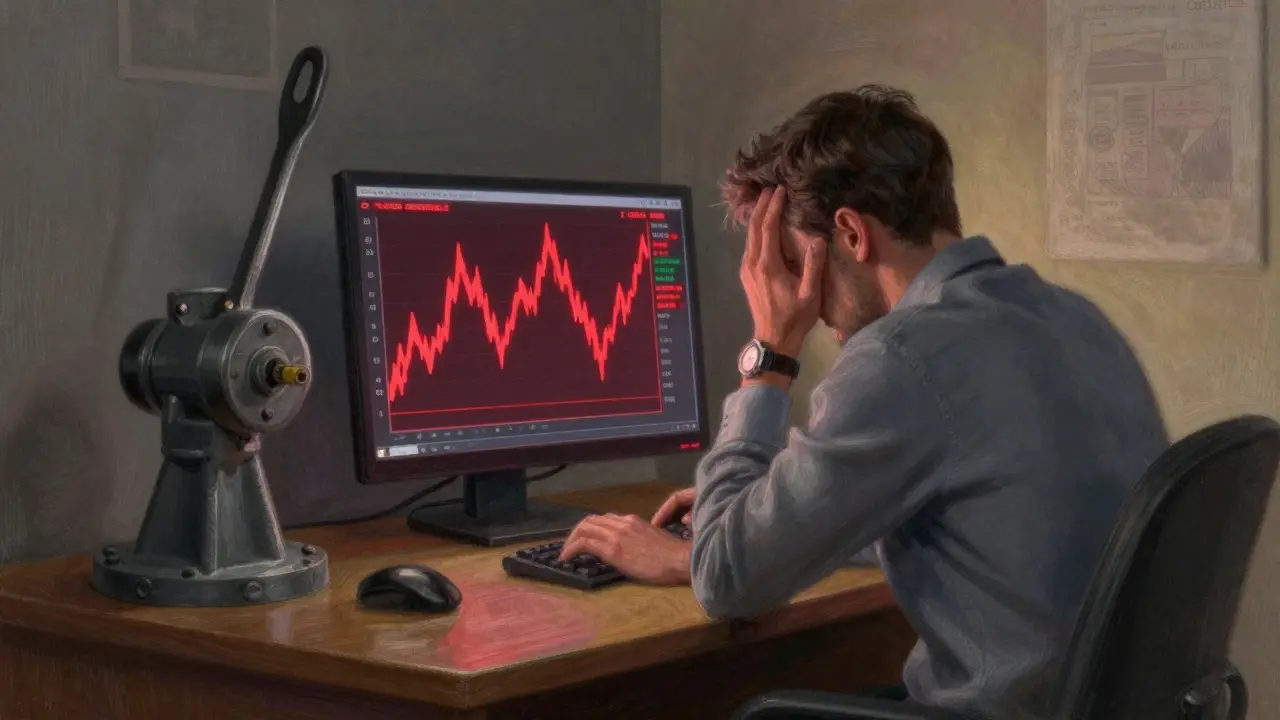
Imagine you've just bought a promising altcoin. It starts climbing, and you're feeling great. But then, you look away for an hour, and the price crashes. You're left wondering: "Why didn't I sell when it was at the top?" or "Why did I lose so much of my initial investment?" This is where stop-loss vs trailing stop strategies come into play. Whether you are trading Bitcoin or a niche DeFi token, knowing how to protect your capital is the difference between a professional trader and someone gambling on a coin flip.
| Feature | Stop-Loss | Trailing Stop |
|---|---|---|
| Trigger Price | Fixed / Static | Dynamic / Moves with Price |
| Primary Goal | Limit maximum loss | Lock in profits while allowing growth |
| Market Best For | Volatile or Sideways Markets | Strong Trending Markets |
| Manual Effort | Requires manual update to lock gains | Automatic updates based on peak price |
Understanding the Standard Stop-Loss
A Stop-Loss is a predetermined price level that triggers an automatic sell order when a security's price drops to that point . Think of it as your financial emergency brake. If you buy Ethereum at $3,000 and set a stop-loss at $2,700, you've decided that a 10% loss is the maximum you're willing to tolerate. If the price hits $2,700, the exchange immediately sells your position.
The beauty of this tool is its simplicity. It removes the emotional struggle of "hoping" the price will bounce back. By setting a hard exit point, you protect your portfolio from a catastrophic crash. However, the downside is that it's static. If Ethereum moons to $4,000, your stop-loss is still sitting at $2,700. To protect your new profits, you'd have to manually move that order higher, which is a chore if you're managing multiple assets.
The Magic of the Trailing Stop
If a stop-loss is an emergency brake, a Trailing Stop is like a shadow that follows the price upward. Instead of a fixed price, you set a percentage or dollar amount distance from the current market price.
Here is how it works in the real world: Suppose you buy a token at $100 and set a 5% trailing stop.
- If the price stays at $100, your trigger is $95.
- If the price rises to $120, your trigger automatically climbs to $114 (5% below the new peak).
- If the price then drops to $114, the order executes, and you walk away with a $14 profit per coin.
The critical rule is that the trigger price only moves in one direction: up (for long positions). It never moves back down. This "ratchet effect" allows you to ride a massive bull run without having to guess where the top is, while ensuring you don't give back all your gains if the market suddenly reverses.

When to Use Which? Picking Your Strategy
Choosing between these two isn't about which is "better," but about the current state of the market. If you are dealing with a choppy market-where prices jump up and down without a clear direction-a trailing stop can be your worst enemy. In a volatile environment, a small 2% dip (which is normal for crypto) could trigger your trailing stop and kick you out of a position right before the price skyrockets.
For high-volatility scenarios or short-term scalping, stick to a fixed stop-loss. It gives you the emotional clarity to know exactly how much you're risking. On the other hand, if you've identified a strong uptrend-perhaps because of a major network upgrade or a surge in adoption-the trailing stop is your best friend. It lets you stay in the game for as long as the trend lasts.
The Technical Side: Execution and Risks
You should be aware that both of these are typically Stop Orders, meaning once the price is hit, they become market orders. In a flash crash, this can lead to "slippage." Slippage happens when the price drops so fast that your order is filled at a much lower price than your trigger. For example, if your stop is at $100 but the market gaps down to $90 in a millisecond, you might actually sell at $90.
Additionally, while almost every Cryptocurrency Exchange supports basic stop-losses, trailing stops are more complex. They require the exchange to constantly monitor the peak price of your asset in real-time. If you're using a basic decentralized exchange (DEX) or a very simple trading app, you might find that trailing stops aren't available, forcing you to manage your exits manually.

Pro Tip: The Hybrid Approach
Many professional traders don't choose just one; they use a sequence. They start with a standard stop-loss to protect their initial investment. Once the price hits a certain profit target (say, a 20% gain), they switch to a trailing stop.
This hybrid method accomplishes two things: it limits the initial risk and then switches to "profit protection mode." It takes the pressure off the trader to constantly check the charts and allows the math to do the work. If the asset continues to climb, the trailing stop keeps moving up. If it crashes, you've already locked in your initial 20% win.
The Psychology of the Exit
The hardest part of trading isn't the entry-it's the exit. Behavioral finance shows that humans hate losing more than they love winning. Watching a trailing stop trigger during a minor dip can feel like a mistake, leading some traders to disable the tool entirely, only to be wiped out by a larger crash later.
Remember, a stop-loss isn't a failure; it's a calculated business expense. By accepting a small, controlled loss today, you ensure you have the capital to trade tomorrow. Whether you use a fixed point or a dynamic shadow, the goal is the same: survive long enough to hit the big wins.
What happens if the market gaps down past my stop price?
Since stop-loss and trailing stops usually trigger market orders, you may experience slippage. If the price skips over your trigger point during a crash, your order will be filled at the next available market price, which could be lower than your intended stop.
Can I use trailing stops on a DEX?
Most standard Decentralized Exchanges (DEXs) do not support native trailing stops because they require a centralized order book to track prices in real-time. However, some advanced DeFi protocols and trading bots are starting to offer these features through smart contracts.
Is a 5% trailing stop too tight for crypto?
For many cryptocurrencies, 5% is very tight. Because crypto is naturally volatile, a 5% dip can happen in minutes without changing the overall trend. Depending on the coin's volatility, traders often use 10% to 25% to avoid being stopped out prematurely.
Does a trailing stop ever move down?
No. In a long position, the trailing stop price only moves upward as the asset's price hits new highs. If the asset price drops, the stop price stays exactly where it was at the last peak.
Which is better for long-term holding (HODLing)?
If you are a true long-term investor, neither may be ideal as they can force you out of a position during a temporary dip. However, if you want to protect your portfolio from a bear market, a wide trailing stop (e.g., 30%) can help you exit a peak while still allowing for normal market fluctuations.





Slippage is the real killer here...!!! Always check the order book depth first...!!!
Mid.
I feel like there is this whole deeper meaning to how we attach ourselves to these numbers, you know... it is like we try to build a digital wall against the inevitable chaos of the universe, but in the end, the market just flowes where it wants and we are just tiny little fish swimming in a sea of algorithms and hope, maybe we should just let go of the need to control every single cent and just vibbe with the ride, though honestly a trailing stop sounds like a decent way to keep from totally losing my mind when everything goes south in the middle of the night.
Wow, groundbreaking stuff. Truly.
The exchanges probably manipulate the trigger prices anyway to liquidate the retail traders before the pump. It is all a game run by the big players to keep us in line. Don't trust the automated tools too much because they are designed by the same people who want your money.
Get those gains locked in, people! Stop playing it safe and start playing it smart! A trailing stop is a total game-changer for anyone looking to ride those moon-mission rockets to the stratosphere without getting burned by a sudden crash!
Stop losses are useless.
Finally someone says it! Stop-losses are just for people who are too scared to actually trade. If you believe in the asset, you hold. Simple as that. Why would I let some algorithm sell my bag just because the price dipped for five minutes? It is absolute madness!
Actually, managing risk is the only way to survive in the long run. If you just hold through a 90% drop, you aren't investing, you're hoping. A tight stop-loss can be a mistake, but having no exit strategy at all is a recipe for disaster.
I think it is great that we are talking about this. For those just starting out, remember that there is no one-size-fits-all answer. Take your time to learn how these tools interact with the specific coins you like. We are all in this together!
The algorithm is probably tracking our a-ctivities to see who is using trailing stops so they can trigger a fake dip. It is so obviuos. Just a way to shake out the weak hands before the real move.
One must realize that the pursuit of wealth through such mechanical means is often a reflection of one's inner greed. 🧐 To rely solely on a trailing stop is to surrender one's consciousness to a machine, forgetting that the true value of an asset lies in its utility and moral alignment with the future of humanity. 💸
I usually just set a wide stop and forget about it. It keeps the stress levels down.
The hybrid approach mentioned is definitely the move here. Start with a fixed stop to protect the principal and then switch to trailing once you're in the green. It's the only logical way to manage a volatile portfolio without constantly staring at the screen.
Trailing stops are pretty handy for those big runs.
It is an absolute travesty that some traders would dare to ignore the sheer elegance of a well-placed trailing stop! The audacity of those who believe in simply "HODLing" through a crash is truly staggering. I find it personally offensive that such primitive strategies are still being discussed in a professional capacity!
Keep it up everyone! Using these tools is just about getting a bit more comfortable with the market. Don't get too discouraged if you get stopped out early a few times, it is all part of the learning curve. Just keep tweaking your percentages and you'll find what works for you!
I really think that everyone should just try a bit of everything and see what makes them feel most at peace with their money because at the end of the day we are all just trying to make a better life for ourselves and our families and that is the most important thing. I've tried both and I found that for me, the trailing stop is just way more relaxing because I don't have to worry about the price suddenly plummeting while I am at work or sleeping, and I think that kind of peace of mind is worth more than a few percentage points of profit anyway.
Wait, if the trailing stop only moves up, what happens in a sideways market where it hits the stop but then immediately recovers? You're just out of the trade and missed the next leg up. Seems like a huge flaw for non-trending assets.