

Record Keeping Requirements in Blockchain Systems

When you think of blockchain, you probably picture cryptocurrency transactions or smart contracts. But beneath the surface, one of the most important-and often overlooked-features of blockchain is its ability to enforce record keeping. Unlike traditional databases where records can be edited or deleted, blockchain was built from the ground up to make records permanent, tamper-proof, and transparent. This isn’t just a technical quirk; it’s a legal and operational advantage that’s reshaping how businesses handle compliance, audits, and accountability.
Why Blockchain Changes Everything About Records
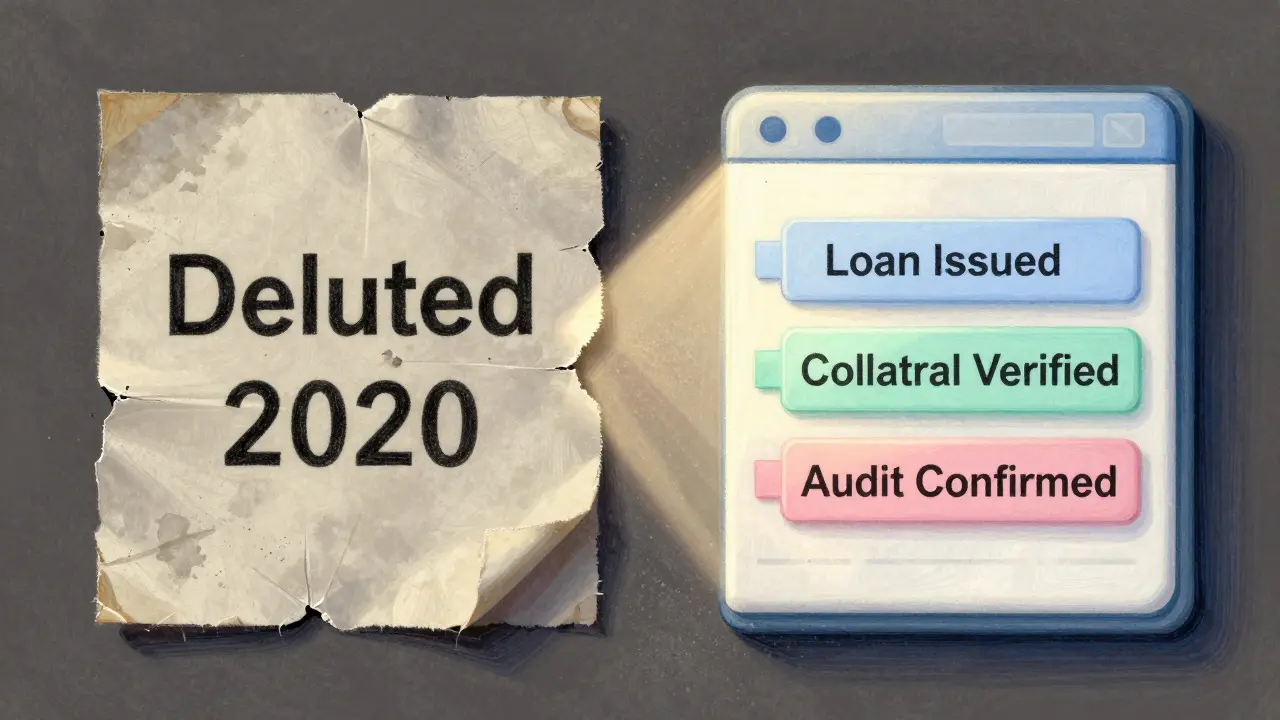
Traditional record keeping relies on paper files, spreadsheets, or centralized digital systems. These can be altered, lost, or manipulated. A manager might accidentally overwrite a file. A hacker might delete logs. A company might claim it "never had that record." But blockchain doesn’t work that way. Every transaction or record added to a blockchain is time-stamped, cryptographically signed, and linked to the one before it. Once it’s confirmed by the network, it can’t be changed without redoing every single block after it-which is computationally impossible on a well-designed chain. This creates what’s called an immutable audit trail. It’s not just about storing data. It’s about proving that the data has never been touched. Take a supply chain company tracking goods from a factory in Vietnam to a warehouse in Perth. With paper receipts, there’s room for error, fraud, or lost documents. With blockchain, every handoff is recorded: who received the shipment, when, where, and under what conditions. That record stays forever. If a dispute arises years later, you don’t guess-you check the chain.How Regulatory Bodies Are Adapting
Regulators in the U.S., Australia, and the EU are starting to recognize blockchain’s potential for compliance. The Bureau of Industry and Security (BIS) in the U.S., for example, requires export records to be stored in a way that prevents alteration after entry. Blockchain naturally satisfies this. So do financial reporting standards like GIPS, which demand that firms keep every version of their policies and procedures. On a blockchain, you don’t just archive old versions-you preserve them in a verifiable, chronological order. In healthcare, Connecticut requires licensed social workers to keep clinical records for seven years after the last treatment. Each entry must be signed and dated with the professional’s license number. On a blockchain, this becomes automatic: a digital signature tied to a licensed identity, timestamped, and stored with zero risk of tampering. No more lost files. No more disputes over whether a note was added after the fact. Even the IRS has started to acknowledge blockchain’s value. If you’re a business owner, you need to keep tax records for at least four years. Blockchain can store every invoice, receipt, and payment in a format that’s instantly verifiable during an audit. No more digging through email threads or scanned PDFs. Just pull up the transaction history on the chain.What Records Must Be Kept on Blockchain?
Not everything needs to go on-chain. But for records that matter legally or financially, here’s what should be stored:- Transaction logs-every transfer of assets, tokens, or data, including sender, receiver, amount, timestamp, and digital signature.
- Smart contract executions-all code runs, inputs, outputs, and outcomes, especially for financial agreements or automated compliance checks.
- User identity verifications-KYC (Know Your Customer) documents, license scans, or biometric proofs linked to wallet addresses.
- Access logs-who viewed, modified, or exported data, and when. This is critical for internal audits and regulatory inspections.
- Compliance certifications-audit reports, third-party attestations, or regulatory filings attached as immutable files.

Retention Periods: How Long Do You Keep Them?
Blockchain doesn’t change the legal deadlines-it just makes meeting them easier. Here’s what you need to know:- Four years for U.S. employment tax records (IRS).
- Three years for payroll records under the Fair Labor Standards Act (EEOC).
- Seven years for clinical records in Connecticut (state health board).
- Indefinitely for export control records under BIS-because they must be available on request, forever.
Real-World Challenges
It’s not all smooth sailing. Blockchain record keeping comes with its own headaches:- Storage cost-every record on-chain takes up space. Public chains like Ethereum aren’t cheap for storing large files.
- Integration-connecting your ERP, accounting, or HR system to a blockchain isn’t plug-and-play. You need middleware, APIs, and careful design.
- Legal recognition-some courts still don’t automatically accept blockchain records as evidence. You may need an expert witness to explain how it works.
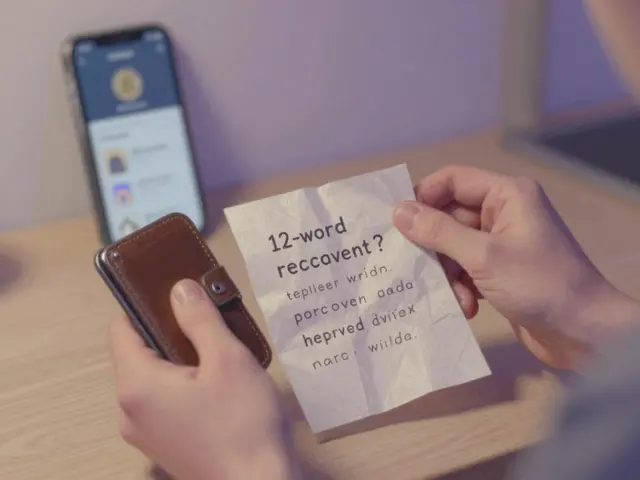
- Key management-if you lose the private key to your blockchain wallet, you lose access to the records. No password reset. No help desk.
What Happens If You Don’t Keep Records?
The consequences aren’t theoretical. In 2023, a U.S.-based crypto firm was fined $2.7 million for failing to maintain transaction logs tied to customer trades. Regulators couldn’t prove whether the firm had engaged in wash trading or market manipulation because records were deleted after 30 days. The firm claimed it didn’t know it had to keep them. The regulator replied: "Blockchain doesn’t erase records. Your system did. That’s your fault." In Australia, a mining company using blockchain for safety inspections was cleared of liability after a worker injury because the chain showed the worker had been trained, the equipment had passed inspection, and all safety protocols were followed. The records were unchangeable. The truth was clear.Getting Started
If you’re building or managing a blockchain-based system, here’s how to nail record keeping:- Identify which records are legally required-check your industry’s regulations (tax, employment, export, healthcare, etc.).
- Map each record to a blockchain event-every audit trail should start with a transaction or smart contract call.
- Use digital signatures-tie every record to a verified identity (person, device, or organization).
- Store hashes on-chain, files off-chain-this keeps costs low and speeds up access.
- Document your retention policy-write it down, share it with your team, and make sure it matches what’s coded into your system.
- Test your audit capability-pretend a regulator shows up tomorrow. Can you pull up all records from the last five years in under an hour?
Final Thought: It’s Not About Technology. It’s About Trust.
Blockchain record keeping isn’t just a tool. It’s a cultural shift. It moves you from "I hope we have the record" to "Here’s the record-and it’s proof." In a world where trust is scarce, immutable records are the ultimate currency. Whether you’re a small business owner, a financial firm, or a healthcare provider, the question isn’t whether you can afford to use blockchain for records. It’s whether you can afford not to.Do blockchain records replace traditional record keeping?
Not entirely. Blockchain is best for high-value, legally sensitive records that need to be tamper-proof and verifiable. Traditional systems still work for internal notes, drafts, or non-regulated documents. The smart approach is to use blockchain as your audit backbone-keeping critical records on-chain and everything else in your existing systems.
Can blockchain records be used as legal evidence in court?
Yes, increasingly so. Courts in the U.S., UK, Singapore, and Australia have accepted blockchain-stored records as evidence, especially when they’re timestamped, signed with digital certificates, and backed by third-party verification services. However, you may still need an expert to explain how the system works-so documentation matters.
What’s the difference between blockchain and a regular database for records?
A regular database lets admins edit or delete entries. Blockchain doesn’t. Once a record is confirmed, it’s permanent. Also, blockchain records are distributed across many computers, not stored in one place. That makes them resistant to hacking, corruption, or accidental deletion.
Is blockchain record keeping expensive to implement?
It depends. Public blockchains like Ethereum can be costly for large volumes of data. Private or consortium chains (like Hyperledger Fabric) are cheaper and more efficient for enterprise use. Many businesses start small-recording just key transactions or compliance events-and scale up as needed. The real cost is in not doing it: fines, lawsuits, and lost trust.
What happens if a blockchain is hacked?
If the blockchain itself is hacked-say, a 51% attack-it’s extremely rare on major networks. But if someone steals your private key and signs fake records, those records become part of the chain. That’s why key security is critical. Use hardware wallets, multi-sig approvals, and strict access controls. The blockchain doesn’t lie, but the person using it might.
Do I need to store everything on the blockchain?
No. Storing full documents (like PDFs or videos) on-chain is inefficient and expensive. Instead, store a cryptographic hash of the file on-chain. Keep the actual file in secure cloud storage. The hash acts like a fingerprint-you can verify the file hasn’t changed without storing the whole thing.





I've seen this play out in nonprofit audits. Blockchain doesn't just store records-it gives you peace of mind. No more midnight panic when someone asks for a document from 2019. It's just... there. Like a digital time capsule you didn't know you needed until you lost one.
The immutability of blockchain records fundamentally alters the cost-benefit calculus of compliance. Traditional systems entail significant overhead due to reconciliation, version control, and audit trails. Blockchain reduces this to cryptographic verification via Merkle trees and consensus validation, thereby optimizing operational efficiency at scale.
Let’s be real-most companies aren’t using blockchain for records. They’re using it as a marketing buzzword. The real cost? Paying developers to build something no one asked for while their spreadsheets rot in the background. This isn’t innovation. It’s theater.
Imagine this: a child born today gets their first medical record on-chain-vaccines, allergies, surgeries-all tied to their identity. By the time they’re 80, their entire health history is verifiable, portable, and secure. No more lost files. No more ‘I think I had that shot.’ This isn’t tech-it’s legacy.
This is the future 🚀 No more begging HR for old pay stubs. No more ‘we lost the contract.’ Blockchain makes accountability boring-and that’s beautiful.
i love this but what about data privacy? like if my id is on chain forever? what if i change my name? or move countries? its not like you can just delete it 😅
I work in healthcare. This isn’t sci-fi. We’re already doing this. One clinic in Iowa started recording patient consent forms on a private chain. No more lost signatures. No more ‘did she sign this?’ Just… proof. It changed everything.
You say blockchain is tamper-proof. But if the private key is stolen? Then the whole chain becomes a weaponized lie. It’s not magic. It’s just a fancy ledger with a false sense of security. And don’t get me started on energy waste.
This is the shift we’ve been waiting for! Imagine a world where fraud is impossible because the truth is permanently recorded. No more excuses. No more gray areas. Just facts. And that’s not just efficient-it’s empowering. Let’s build it!
You’re all missing the point. Blockchain doesn’t solve record keeping. It exposes how broken everything else is. If you need blockchain to prove you didn’t delete a file… you had bigger problems already.
I run a small accounting firm. We started storing tax receipts on a private chain last year. Client complaints dropped 70%. No more ‘where’s my W-2?’ calls. No more scanning and emailing. Just a link. Simple. Clean. And honestly? It made us look way more professional than we are.
Oh great. Another Silicon Valley fantasy where only rich companies can afford to ‘prove’ they didn’t lie. Meanwhile, small businesses are still using Word docs and hoping for the best. This isn’t progress-it’s a luxury feature for the elite. And don’t even get me started on how this benefits the 99%.
There’s a deeper layer here. It’s not about storage. It’s about truth as a social contract. We used to trust institutions. Then we stopped. Blockchain doesn’t restore trust-it makes trust irrelevant. You don’t need to believe me. You just need to verify the hash. And that changes everything about power.
I find it fascinating that anyone would believe a distributed ledger solves legal ambiguity. Courts still require admissible evidence. A blockchain hash is not a notarized document. Until legislation evolves, this remains a technical novelty with zero legal weight.
Wait-so if I store my medical records on-chain, and then I die, who inherits the private key? My family can’t access it? What’s the point if it’s locked forever? This sounds like digital hoarding.
I’ve spent years helping companies transition from paper to digital. This? This is the real leap. Not because it’s flashy. But because it’s quiet. No one notices the blockchain working. Until they need it. And then? It’s the only thing that didn’t fail.
Implementing blockchain record-keeping requires a paradigm shift in organizational culture. It necessitates rigorous governance frameworks, immutable identity protocols, and cross-functional alignment between legal, IT, and compliance teams. Without these, technical implementation is merely performative. The infrastructure is secondary to the institutional will to enforce permanence.
My uncle runs a family construction business. He’s 68, hates computers. But last year, we started logging permits and inspections on a simple blockchain app. He didn’t understand the tech. But he loved that he could show a client, ‘Here’s the roof inspection from 2017.’ No file. No email. Just a tap. He said, ‘That’s the first time I ever felt proud of my paperwork.’
If you’re storing personal data on a public chain, you’re not being transparent-you’re being reckless. GDPR doesn’t care how fancy your hash is. If you can’t erase personal info, you’re violating the law. This isn’t innovation. It’s liability.
This is why we need standards. Not just tech. Standards. Who decides what gets recorded? Who audits the auditors? Without governance, blockchain just becomes a more expensive way to archive chaos.