
Future of Nonce in Blockchain: What Comes After Proof-of-Work?
Jonathan Jennings
Blockchain Development: What It Really Takes to Build Decentralized Systems
When you hear blockchain development, the process of creating decentralized applications and networks that operate without central authority. Also known as web3 development, it's not just writing code—it's designing systems where no single entity can shut them down, alter rules, or steal data. Most people think it’s about Bitcoin or Ethereum smart contracts, but real blockchain development is deeper. It’s about how data is stored, verified, and shared across thousands of independent computers—each acting as a blockchain node, a computer that stores a full copy of the blockchain and validates transactions independently. Without nodes, the whole thing collapses. That’s why running one isn’t optional for true decentralization—it’s the foundation.
Building on top of that, you need tools that solve real problems. state channels, off-chain pathways that let users transact instantly and cheaply without broadcasting every action to the main blockchain, are one of those tools. They’re how apps like Lightning Network make micropayments possible. Then there’s decentralized applications, software that runs on peer-to-peer networks instead of company servers. These aren’t just websites with a crypto wallet attached—they’re apps that can’t be taken down, censored, or altered by anyone, including their creators. That’s why platforms like SundaeSwap or Web3.World exist: to give users control. But most fail because they forget one thing: users need simplicity. If your dApp is slow, expensive, or confusing, no amount of decentralization matters.
And here’s the truth most guides won’t tell you: blockchain development isn’t about fancy tech—it’s about trade-offs. You can’t have speed, security, and decentralization all at once. That’s why Cube Exchange offers zero fees but no regulation. Why TRIV gives you leverage but no investor protection. Why Amaterasu Finance died: no one used it because the experience sucked. Real blockchain development means choosing what matters most for your users. Is it security? Then run a node. Is it cost? Then use state channels. Is it trust? Then avoid exchanges with zero reviews and fake volume.
What you’ll find below isn’t a list of tutorials. It’s a collection of real-world case studies—some successful, most not—showing what happens when blockchain development meets reality. From airdrops that vanished to exchanges that were scams, these posts cut through the hype. You’ll see what works, what doesn’t, and why.
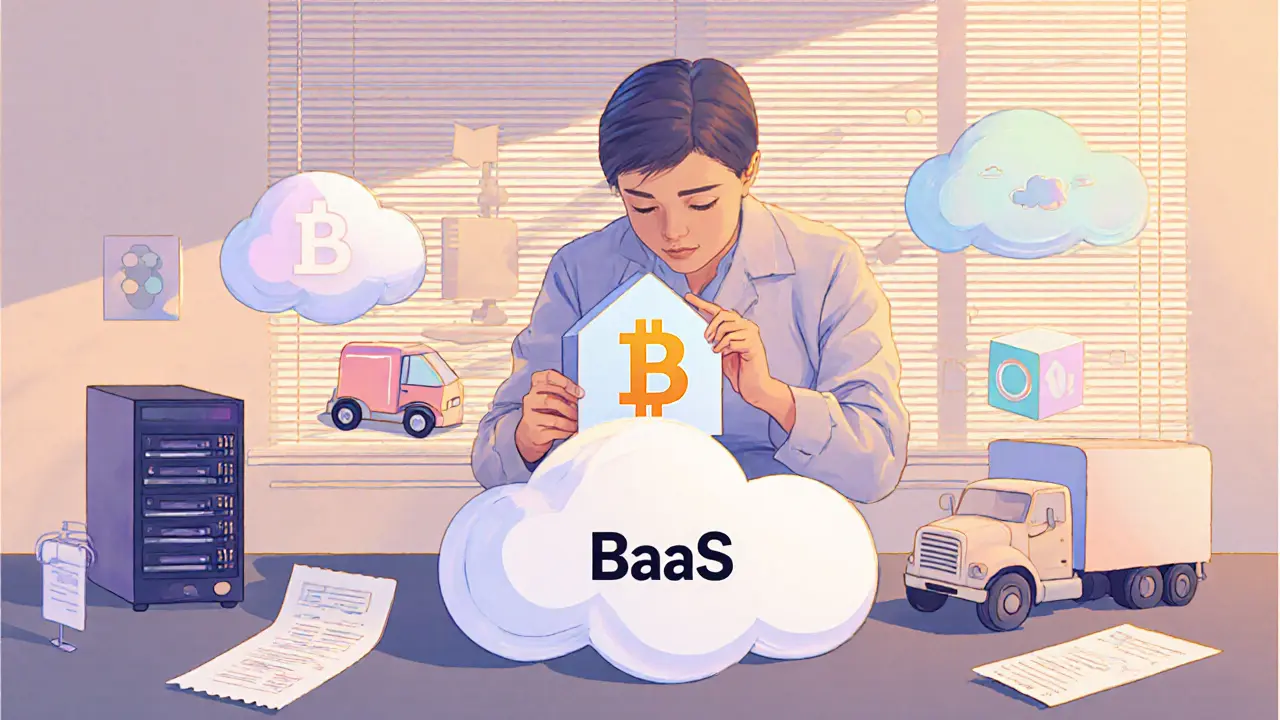
BaaS offers speed and low cost for enterprise blockchain projects, while custom blockchains deliver control and compliance for regulated industries. Learn which approach fits your business in 2025.
Jonathan Jennings Nov 16, 2025