

WNT Wicrypt NFT & Device Drop Airdrop: What Actually Happened and Why It Faded
Jonathan Jennings
Crypto Exchange Scam: How to Spot and Avoid Fake Crypto Platforms
When you hear crypto exchange scam, a fraudulent platform designed to steal users’ funds by pretending to be a legitimate trading service. Also known as fake crypto exchange, it often looks professional—complete with fake testimonials, cloned websites, and promises of high returns. But behind the polished design is a trap: no real trading, no customer support, and no way to withdraw your money. These scams aren’t rare. In 2024 alone, over $1.2 billion was lost to crypto exchange scams, according to blockchain analysis firms. And most victims didn’t get fooled by a badly made site—they got tricked by ones that looked exactly like Binance or Coinbase.
What makes a crypto exchange, a platform where users can buy, sell, or trade cryptocurrencies. Also known as crypto trading platform, it legitimate? It’s not about how fancy the logo is. It’s about transparency. Real exchanges publish their trading volume, have public security audits, list their team members, and are registered with financial regulators. If an exchange says it has $12 billion in daily volume but only offers 7 trading pairs? That’s a red flag. If it has no mobile app, no KYC process, or no history of customer support? That’s a warning. And if the founders’ names disappear from the website after you deposit? That’s a scam.
You’ll find real cases in the posts below—like THDax, a crypto exchange with zero trading volume, deleted pages, and reports of founders fleeing with user funds, or BCEX Korea, a platform claiming massive volume but actually trading less than $3 million daily. These aren’t edge cases. They’re textbook examples of how scams mimic legitimacy. Other posts cover regulated crypto exchange, a platform legally licensed to operate in a jurisdiction like the EU or Indonesia, with clear compliance rules and user protections, and how to verify one before depositing a cent. You’ll also see how crypto exchange review, an independent analysis of an exchange’s features, security, and trustworthiness can save you from losing everything.
This isn’t about fear. It’s about awareness. You don’t need to be a tech expert to spot a scam. You just need to ask the right questions: Where’s the audit? Who runs this? Can I withdraw? If the answers are fuzzy, walk away. The posts below give you real data—not hype—to help you tell the difference between a platform that’s trying to help you trade, and one that’s trying to take your money.
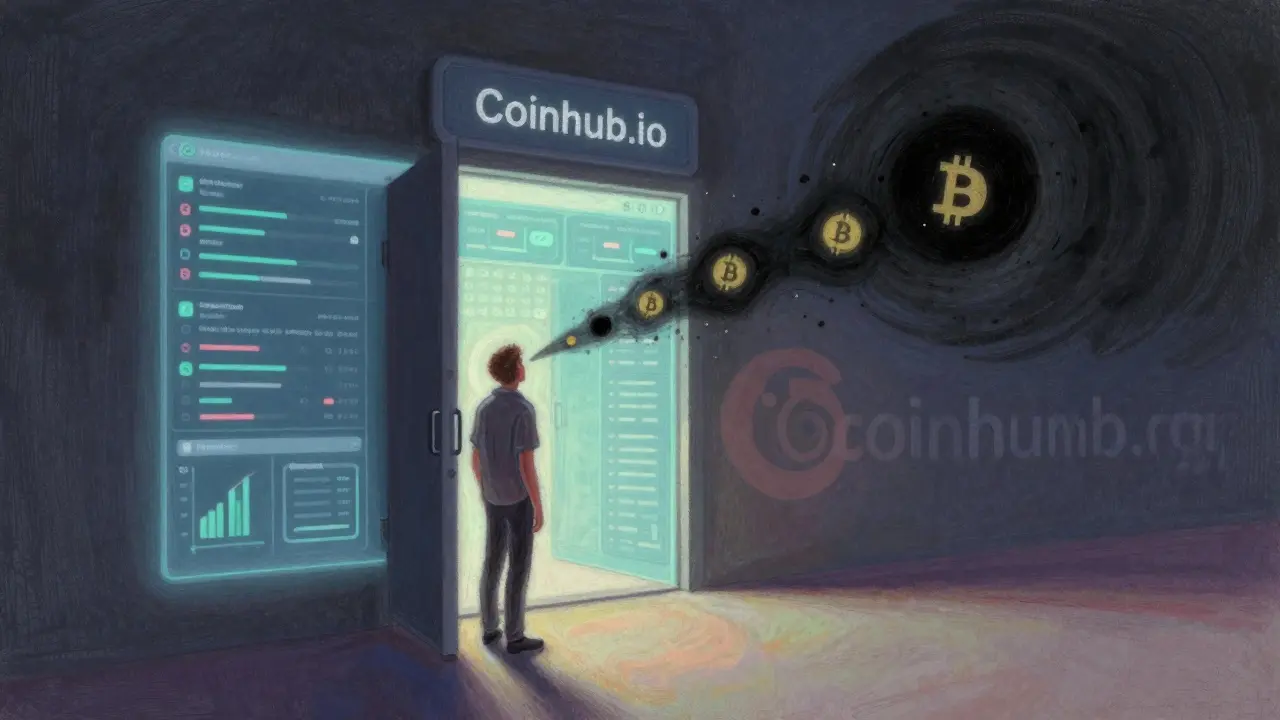
Coinhub.io is not a real crypto exchange-it's a scam site copying the name of a legitimate portfolio app. Learn why this domain is dangerous, how to spot fake exchanges, and where to trade safely instead.
Jonathan Jennings Jan 21, 2026
LongBit crypto exchange is not real. It's a scam site designed to steal your crypto. Learn how to spot fake exchanges, avoid phishing traps, and protect your funds with proven security practices.
Jonathan Jennings Dec 27, 2025
Crypcore is not a legitimate crypto exchange. No verified platform exists under this name. What you're seeing is likely a scam or confusion with the CrypCore (CRYP) token. Avoid it entirely.
Jonathan Jennings Nov 9, 2025
Crypcore is not a real crypto exchange. It's either a scam or a confused reference to the CrypCore token. No verified platform exists. Avoid it completely and stick to trusted exchanges like Kraken or Bybit.
Jonathan Jennings Nov 9, 2025