

What is AB DEFI (ABI)? A Deep Dive Into the Solana-Based Token

Imagine waking up to find a digital asset you bought for a dollar has suddenly skyrocketed to over $10,000, only to crash back down to nearly nothing a few weeks later. This isn't a hypothetical scenario; it's the actual price history of AB DEFI is a cryptocurrency launched in 2024 that operates on the Solana blockchain. Also known as ABI, this token serves as a prime example of the extreme volatility and risk associated with low-cap assets in the modern crypto market. While it claims to offer innovative technology, the reality is a project with very few users and a price chart that looks like a mountain peak followed by a cliff.
The Basics of AB DEFI (ABI)
To understand what ABI is, we first have to look at its home. It is built on the Solana blockchain, a network famous for its high speeds and low costs. Because it uses Solana, the token theoretically benefits from the network's ability to handle 65,000 transactions per second with fees as low as $0.00025. However, having a fast highway doesn't mean there are any cars on it; ABI's actual usage remains incredibly low.
The total supply of ABI is capped at a tiny 7,500 tokens. This scarcity is a double-edged sword. On one hand, a low supply can drive prices up if demand increases. On the other hand, it makes the token incredibly easy to manipulate. In May 2024, ABI hit a staggering all-time high of $10,126.56. By late June, it had collapsed to around $1.08-a drop of 99.99%. For most investors, this was a textbook case of a liquidity trap.
Tokenomics and Distribution
If you want to know who holds the power in a crypto project, look at the tokenomics. The distribution of AB DEFI is highly concentrated, which is often a red flag for experienced traders. The 7,500 tokens were split into three specific buckets:
- Presale (60%): 4,500 ABI were allocated to early buyers.
- Liquidity (30%): 2,250 ABI were set aside to ensure people could actually trade the coin on exchanges.
- Marketing (10%): 750 ABI were reserved to promote the project.
There is a strange contradiction in the data here. While some reports from CoinMarketCap suggest that 4,500 ABI are circulating among roughly 271 wallet holders, other sources like Binance have previously claimed there was zero circulating supply. When the numbers don't add up, it usually means the project lacks transparency, making it a gamble rather than an investment.
| Attribute | Value |
|---|---|
| Blockchain | Solana |
| Total Supply | 7,500 ABI |
| All-Time High | $10,126.56 (May 2024) |
| Contract Address | CSrKRU8dGbjaSiMdsSLFczN4inKRPqCBkDDutqPJpJU2 |
| Market Cap (June 2024) | ~$15.66K |

Is There Any Actual Utility?
This is where things get vague. Some analysis describes ABI as a "new type of currency with innovative technology." However, if you look through the official documentation, there is no mention of a specific product, a functioning app, or a service that only ABI can provide. It lacks a clear roadmap, meaning there are no announced milestones for the team to hit.
In the world of Decentralized Finance (or DeFi), utility is everything. Projects like Uniswap or PancakeSwap provide actual services-like swapping tokens or lending money. AB DEFI, by contrast, exists primarily as a vehicle for speculative trading. Most of the conversation around the coin happens in Telegram groups or on Reddit, where users discuss "pumps" and "100x returns" rather than the technical merits of the project.
The Risks of Low-Cap Altcoins
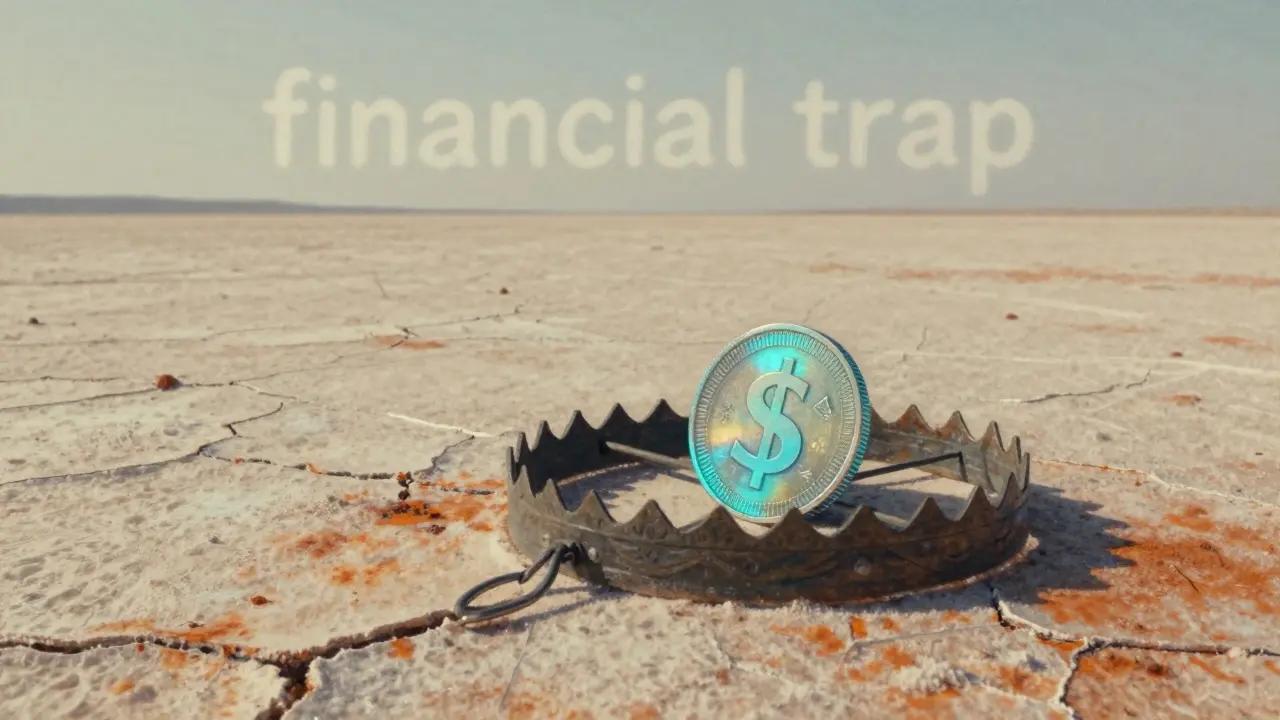
Investing in a token with a market cap of $15.66K is fundamentally different from buying Bitcoin or Ethereum. When a token has such low liquidity, a single large trade can send the price swinging by 60% or more in a few hours. This is exactly what happened with ABI. The 24-hour trading volume has been reported as low as $150, which is less than 1% of its total market cap. In healthy markets, you want to see much higher volume relative to the market cap to ensure you can actually sell your coins without crashing the price.
Industry analysts from Messari have pointed out that tokens under $100K market cap are prone to manipulation. The pattern seen with ABI-a massive price surge followed by a near-total wipeout-is a classic sign of a "pump and dump" scheme. This happens when a small group of people drive up the price to lure in new buyers, then sell all their holdings at once, leaving the latecomers holding a worthless asset.
How to Handle Highly Volatile Assets
If you are still tempted by the gamble of low-cap tokens, you need a strategy to protect yourself. First, never invest more than you are willing to lose completely. Second, check the "order book depth." On exchanges like MEXC, ABI's order books have been thin, meaning there aren't enough buyers and sellers to support large trades. If the bid/ask spread is too wide, you'll lose money the moment you enter the trade.
To get started with tokens on Solana, you'll need a compatible wallet like Phantom or Sollet. While the technical side of swapping tokens is easy, the financial side is treacherous. You aren't just betting on a technology; you're betting that someone else will be willing to buy your tokens for more than you paid for them in the future.
Is AB DEFI (ABI) a safe investment?
No, it is considered extremely high risk. With a history of 99.99% price crashes, minimal trading volume, and a lack of a verifiable development team, it exhibits the classic signs of a speculative asset or a pump-and-dump scheme. Most professional risk assessments categorize it as having a high probability of abandonment.
Where can I buy ABI coins?
ABI has been available on a limited number of exchanges, including Bitget, MEXC, and Gate.io. However, due to very low liquidity, trading these coins can be difficult and may result in significant slippage.
What makes AB DEFI different from other Solana tokens?
The primary differentiator is its extreme price volatility and an unusually small total supply of only 7,500 tokens. While it claims to have "unique use cases," there is currently no documented utility that separates it from other speculative tokens on the Solana network.
Why did the price of ABI crash so hard?
The crash was likely due to a lack of fundamental support for the initial $10,000 price tag. When early investors or "whales" sold their positions into the hype, the low liquidity meant there weren't enough buyers to stop the price from plummeting.
Who is the team behind AB DEFI?
There is no verifiable information about the founding team or the development organization. This anonymity is common in speculative projects but adds significant risk for investors since there is no accountability for the project's roadmap.





The lack of a verifiable dev team is a massive red flag in this space. If you can't even find a GitHub repo or a linked LinkedIn profile for the founders, you're basically gambling on a black box. Most people don't realize that Solana's ease of deployment is a double-edged sword; it's great for real innovation but it's a paradise for people wanting to launch a token in five minutes and vanish with the liquidity.
OH MY GOD!! 99.99% drop is just absolutely insane!!! Imagine the absolute horror of checking your portfolio and seeing your money just vanish into thin air like magic!! Totaly unacceptable that people are still falling for these scams in 2024!!
I've seen this pattern so many times... its basically the cycle of greed and fear personified. People see the price going up and they forget that liquidity is the only thing that actually matters. If there's no one to buy your tokens at the top, you're just holding a very expensive digital ticket to nowhere. Its a lesson in the philisophy of value-true value comes from utility, not from scarcity created by a tiny supply cap. Most of these low-cap plays are just psychological games played by whales to trap retail investors. Just be carefull out there guys, the market is a cruel teacher.
Total scam!!! Stay away!!!
Keep your heads up everyone. Just use this as a way to learn. Next time, check the volume before you buy!
The 7,500 total supply is just wild...!!! Have you guys looked at the whale concentration on the Solana explorer...??? It's almost certainly a few wallets controlling the whole thing, which makes the "market price" completely fake since there's no organic trading happening!!!
I would suggest checking the slippage settings on DEXs when dealing with such low liquidity. Even if the price looks okay, a market order on a token like ABI will often eat 20-30% of your position immediately due to the thin order book.
It's honestly disgusting how these projects pretend to have "innovative technology" while providing zero proof. It's a moral failure of the industry that these pump-and-dump schemes are marketed as legitimate investments to unsuspecting people. We really need better regulations because this is just theft wrapped in a fancy blockchain wrapper.
There is something deeply tragic about the hope people place in these digital tokens. It's like a modern-day alchemy, trying to turn a few dollars into a fortune through sheer luck. While the financial loss is real, the emotional toll of the crash is what truly lingers. May we all find a more stable path to prosperity!
Exactly. If you are looking for actual DeFi growth, focus on projects with TVL (Total Value Locked) and a working product. Looking at the ABI specs, it's clear this was designed for a quick spike. I always tell beginners to stick to a diversified portfolio and treat these micro-caps like a lottery ticket-only spend what you're okay with losing entirely.
The sheer audacity of claiming a token is an investment when it lacks a roadmap is laughable. Only a fool would ignore the lack of transparency regarding the circulating supply. It is quite evident that this is a playground for the gullible.
i tried to swap some of these a while ago and the slipage was insane... literally couldnt even exit my position without losing half the value instantly. its a total trap lol.
The discrepancy between CoinMarketCap and Binance data is a critical failure. Transparency is non-negotiable.
Stay strong everyone!!!! Just remember that your value isn't defined by your portfolio!!!! We will get through these market crashes together and come out smarter on the other side!!!!