

What is MYSTCL (MYST)? A Guide to the ERC-404 Token on Base
There is a lot of noise in the crypto world right now. New standards pop up, tickers get reused, and it’s easy to buy the wrong thing by mistake. If you are looking at MYSTCL, often tracked under the ticker MYST, you need to pause and look closer. This isn’t just another meme coin or a standard utility token. It is an experimental asset built on a newer technical standard called ERC-404, living on the Base network.
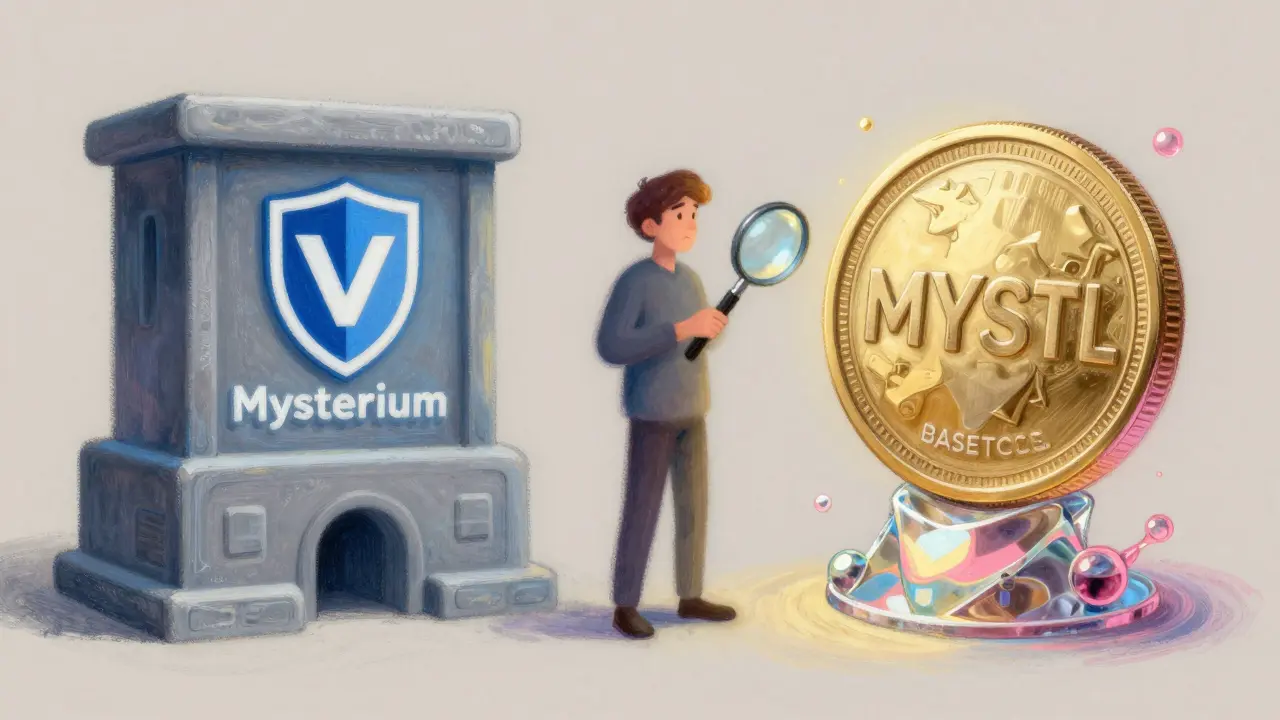
The biggest trap here? Confusing it with Mysterium Network. Both use the symbol "MYST." One is a decentralized VPN project with millions in market cap; the other is a micro-cap art token with a fixed supply of 7,000 units. Mixing them up could cost you your entire investment. Let’s break down exactly what MYSTCL is, how the weird ERC-404 standard works, and whether this speculative asset has any real value.
Understanding the MYSTCL Identity Crisis
Before we talk about technology, we have to clear up the name confusion. When you search for "MYST" on major exchanges like Coinbase or Binance, you will almost certainly find Mysterium Network. This is a legitimate, older project that provides bandwidth for a decentralized VPN. Its token is an ERC-20 utility token used to pay for data services. It has a circulating supply of over 20 million tokens and a multi-million dollar market cap.
MYSTCL is completely different. It is a low-cap, experimental token launched on the Base network, which is an Ethereum Layer-2 scaling solution built by Coinbase. While Mysterium focuses on privacy and internet infrastructure, MYSTCL positions itself at the intersection of digital art and fractionalized NFTs. The team behind MYSTCL claims to have worked with a commercial artist who has previously collaborated with brands like Volkswagen, McDonald's, and Reebok. However, they do not name the artist or provide a traditional company structure. This lack of transparency is common in the experimental crypto space but adds a layer of risk you should be aware of.
What is the ERC-404 Standard?
To understand MYSTCL, you need to understand the tech stack it sits on. Most tokens you know follow the ERC-20 standard (like USDT or SHIB) or the ERC-721 standard (like Bored Apes). ERC-20 tokens are fungible, meaning one token is identical to another. ERC-721 tokens are non-fungible, meaning each one is unique.
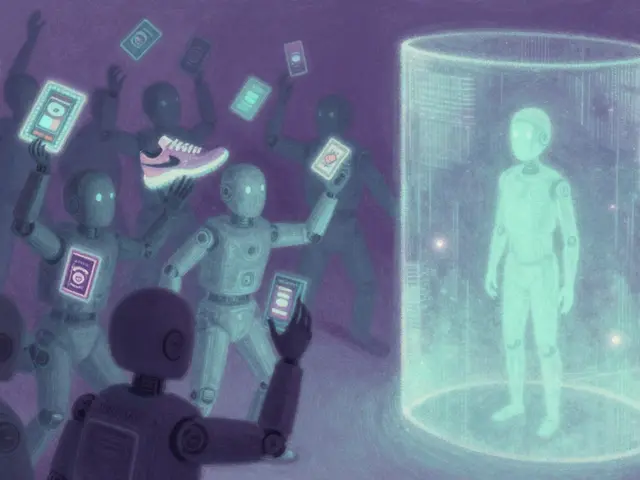
ERC-404 is a hybrid standard that tries to blend these two worlds. It was popularized in early 2024 by a project called Pandora. The idea is simple: create a single smart contract that acts as both an ERC-20 token and an ERC-721 NFT collection. In practice, this means you can trade fractions of an NFT using a fungible token interface. If you hold enough of the MYSTCL token, the contract may mint an underlying NFT for you. If you send some away, the NFT might burn. This allows for easier trading of high-value digital assets without needing complex fractionalization protocols.
MYSTCL is explicitly labeled as an "ERC-404 token built on Base." This makes it one of the few examples of this experimental standard outside of the original Ethereum mainnet launch. However, because ERC-404 is not an official Ethereum Improvement Proposal (EIP) and is still considered experimental, there are fewer security audits and less developer support compared to established standards.
Tokenomics and Supply Constraints
One of the defining features of MYSTCL is its extreme scarcity. Unlike most cryptocurrencies that have supplies in the billions, MYSTCL has a hard cap. According to data from aggregators like Bybit and CoinMarketCap, the maximum supply is exactly 7,000 tokens. The circulating supply is also listed as 7,000, suggesting that all tokens were minted at launch and no new ones can be created.
This small supply creates a specific dynamic for price action. With only 7,000 units available, even small amounts of buying pressure can cause significant percentage swings in price. However, this also means liquidity is likely very thin. You might see a price spike if someone buys 100 tokens, but selling those same 100 tokens could crash the price just as fast because there aren't many buyers waiting on the order book.
| Feature | MYSTCL (MYST) | Mysterium Network (MYST) |
|---|---|---|
| Network | Base (Layer-2) | Ethereum (and bridges) |
| Token Standard | ERC-404 (Hybrid NFT/Fungible) | ERC-20 (Utility) |
| Max Supply | 7,000 | 32,433,365 |
| Primary Use Case | Digital Art / Speculative Collectible | Decentralized VPN Bandwidth Payment |
| Market Cap Rank | ~#6,000+ (Micro-cap) | ~#1,400 (Mid-cap) |
Price History and Volatility Risks
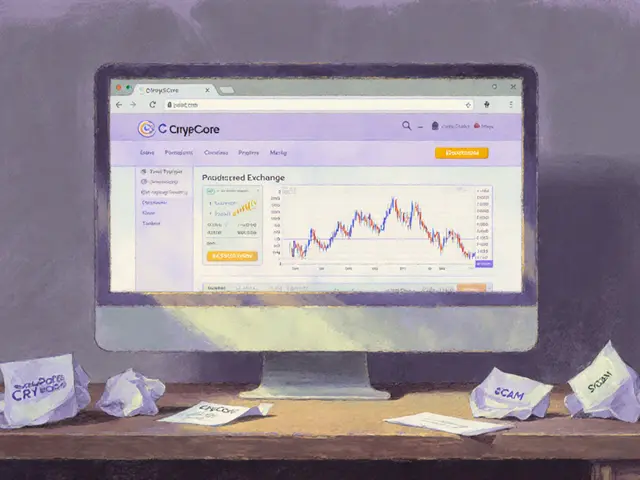
If you look at the historical charts for MYSTCL, you will see wild swings that are typical of micro-cap assets. Data from CoinGecko shows an all-time high (ATH) of roughly $2,047 per token in March 2024. At that peak, the total market cap would have been around $14 million. However, the price has since collapsed significantly. By April 2025, it hit an all-time low (ATL) of $34.31. More recent snapshots show prices fluctuating between $10 and $40, depending on the exchange and liquidity pool.
This represents a drawdown of over 96% from its peak. Why did it drop? Likely due to the natural cycle of hype surrounding new token standards like ERC-404. Early adopters bought in during the novelty phase, and once the excitement faded, liquidity dried up. Currently, trading volume on major trackers is often reported as zero or near-zero. This is a red flag for anyone looking to enter or exit a position. Low volume means you might not be able to sell your tokens at the quoted price because there simply aren't enough buyers.
Security and Due Diligence Gaps
When evaluating any crypto asset, especially one with an experimental standard, security is paramount. Here is where MYSTCL raises several eyebrows. Major aggregators like CoinGecko and CoinMarketCap do not link to a public GitHub repository, a whitepaper, or a list of team members. There is no mention of third-party security audits for the smart contract.
In the world of smart contracts, code is law. If there is a bug in the ERC-404 implementation-such as a rounding error when minting/burning NFTs or a vulnerability allowing the owner to drain funds-holders have no recourse. Because the contract is deployed on Base, you can technically view the code on Blockscout or Basescan, but without a verified source code link provided by the team, verifying its safety requires advanced technical skills. For the average investor, this lack of transparency is a significant risk factor.
How to Buy and Store MYSTCL
If you decide the risks are worth taking, you cannot buy MYSTCL on major centralized exchanges like Coinbase Pro or Kraken. It is primarily traded on decentralized exchanges (DEXs) on the Base network. Here is the general process:
- Set up a Wallet: You need a Web3 wallet that supports the Base network, such as MetaMask or Coinbase Wallet.
- Bridge ETH to Base: Transfer Ethereum (ETH) from the mainnet to the Base Layer-2. This costs very little gas compared to mainnet transactions.
- Find the DEX: Navigate to a Base-native DEX like Aerodrome or Uniswap. You will need the correct contract address for MYSTCL. Be extremely careful to copy-paste the address from a trusted aggregator like CoinGecko, not from a random comment section.
- Swap: Swap your Base ETH for MYSTCL. Given the low liquidity, expect high slippage. Set your slippage tolerance carefully to avoid getting exploited by bad bots.
Storing the token is straightforward since it behaves like an ERC-20 token in your wallet interface. However, remember that if the ERC-404 standard evolves or if the underlying NFTs become valuable, you may need to interact with specific dApps to claim or view the associated NFT components.
Is MYSTCL a Good Investment?
We need to be realistic. MYSTCL is a speculative asset with no clear revenue model, no transparent team, and a history of extreme volatility. Its value is driven entirely by community sentiment, the perceived value of the associated art, and the novelty of the ERC-404 standard. It does not offer staking rewards, governance rights, or utility payments like its namesake, Mysterium.
For experienced degens who enjoy hunting for micro-caps and understanding experimental code, MYSTCL might be an interesting case study. For the average investor looking for stability or long-term growth, the risks far outweigh the potential rewards. The chance of the token going to zero-or becoming permanently illiquid-is high. Always do your own research (DYOR), verify contract addresses, and never invest more than you can afford to lose.
Is MYSTCL the same as Mysterium Network?
No, they are completely different projects. Mysterium Network is a decentralized VPN service with a large market cap and ERC-20 token. MYSTCL is a micro-cap, experimental ERC-404 token on the Base network focused on digital art. They share the ticker "MYST" but have no organizational or technical connection.
What is the max supply of MYSTCL?
The maximum supply of MYSTCL is capped at 7,000 tokens. This fixed supply contributes to its high volatility and scarcity profile.
Where can I buy MYSTCL?
MYSTCL is not listed on major centralized exchanges. It is traded on decentralized exchanges (DEXs) on the Base network, such as Aerodrome or Uniswap. You will need a Web3 wallet and ETH bridged to Base to purchase it.
Is MYSTCL safe to invest in?
MYSTCL carries high risk. It lacks public audits, transparent team information, and significant liquidity. The price has dropped over 96% from its all-time high. It should only be considered by investors who understand smart contract risks and can afford to lose their entire investment.
What does ERC-404 mean?
ERC-404 is an experimental token standard that combines features of ERC-20 (fungible tokens) and ERC-721 (NFTs). It allows users to trade fractional ownership of NFTs seamlessly. MYSTCL uses this standard to blend art collectibles with tradable tokens.



you people are absolutely delusional if you think this is anything other than a rug pull waiting to happen. the erc-404 standard is basically just a fancy way for devs to hide their incompetence behind buzzwords and nobody checks the code because theyre too busy looking at charts. i have audited contracts like this before and its always the same shit, backdoors everywhere, mint functions that look normal but actually drain your wallet if you hold more than x amount. dont be an idiot and send money into a black hole.
look i know tobias is being his usual toxic self but he has a point about the tech. erc-404 is wild though. imagine holding a token that turns into an nft if you hold enough. it’s like fractional ownership without the hassle of a separate protocol. i’ve been watching base network activity explode lately and this might be one of those early plays that catches on. the supply is tiny so volatility will be insane either way. just don’t ape in with rent money.
i mean isn't it beautiful how we create these digital artifacts and then pretend they have intrinsic value? we are literally trading air wrapped in code and calling it art. the fact that someone paid $2000 for a fraction of a jpeg is hilarious to me but also kind of sad. maybe we are all just lonely and want to own something unique even if it's just data on a server somewhere
samara you sound like a boomer who doesn't understand web3. this isn't about loneliness it's about property rights in the digital age. the elitism here is that only smart people can navigate the contract addresses while the rest get rekt. i bought some mystcl last week and i'm sitting pretty. you're just mad you missed out because you're too busy philosophizing about 'air'.
Gavin! Oh Gavin!! You really think you’re sitting pretty?! Have you checked the liquidity pool recently?! It’s thinner than my patience for your arrogance!!! I’m trying to help you here, buddy, but you’re swimming in shark water with no fins!!! The slippage on a sell order right now would eat your entire position!!! Wake up!!!
lol gavin u prob got rugged already. the chart looks like a heart attack monitor. i tried buying some but the gas fees on base were weirdly high for a swap. also why does the artist matter if the team is anon? seems sketchy af. just another meme coin with extra steps.
bro listen up. the real philosophy here is risk management. most people lose money because they dont DYOR. this token is a microcap experiment. if you cant afford to lose it dont touch it. i see so many newbies getting wrecked by hype cycles. stay strong and keep learning about smart contracts. knowledge is power and ignorance is expensive.
Bradley is right. The moral failure here is the lack of transparency. An anonymous team launching a hybrid token standard without audits is predatory behavior. We need regulation to stop these charlatans from exploiting retail investors. This isn't innovation, it's theft dressed up as technology. I report every scam I see. Do your part.
Oh wow, Robert, put down the soapbox. It’s not theft, it’s free market speculation. If you don’t like the risk, go buy bonds. Calling it predatory because it’s risky is just weak. I love the drama of these tokens. The crash from $2000 to $30 was the best show I’ve seen all year. Pure entertainment.
I actually find the ERC-404 concept fascinating! It bridges the gap between fungible and non-fungible assets seamlessly. While the specific project MYSTCL might be volatile, the underlying tech could revolutionize how we trade digital collectibles. Imagine buying a fraction of a rare physical asset via NFT tokenization. The potential is massive!
H F is onto something 🚀 The tech is cool even if the execution is shaky. I’ve been experimenting with Base L2 and the speed is incredible. Just make sure you verify the contract address on Basescan before swapping. One wrong character and you’re sending ETH to the void. Stay safe out there folks! 💎🙌
It is rather amusing to observe the uneducated masses flocking to such dubious instruments of financial speculation. The pretension of calling oneself a 'degen' whilst ignoring basic principles of due diligence is truly pathetic. One should approach such ventures with the utmost skepticism and formal rigor, not emotional exuberance.
kiran u talk too much. simple truth is this token is trash. nobody cares about the art. just numbers going up and down. i lost money on pandora and im not doing it again. stay away from these experimental standards unless u are a dev. otherwise u are just chump change for insiders.
i feel like everyone is missing the bigger picture here which is that we are creating a new economy based on trustless systems but we still rely on trust for the developers to not screw us over and it creates this weird tension where we want decentralization but we also want safety nets and maybe the solution is better community governance models instead of just relying on code alone
Ashley you make valid points. Trust is key. I try to stay positive but the risks are real. Always double check links. Support each other in the comments. Let's keep the conversation respectful and informative for newcomers who might be confused by the jargon.
This crypto nonsense is ruining our financial stability. Why do Americans obsess over these digital scams when we have real infrastructure needs? It’s shameful. Stick to traditional investments and support local businesses instead of gambling on foreign-coded tokens. Get a real job.
Zara, that’s a bit harsh. Crypto is global. The technology developed here often benefits traditional finance later. I’m curious about the ERC-404 implementation details though. Does it use a proxy pattern for upgrades? That would be a major red flag for a fixed-supply token. Anyone know?
The alpha is in the liquidity provision strategies on Aerodrome. Most users just swap and ignore the veAERO incentives. If you provide LP for MYSTCL/ETH pair you might earn significant yields despite the token volatility. It’s a game theory problem. Impermanent loss is real but rewards can offset it if you time it right.
Jocelyn is smart. India is leading in blockchain adoption. These western critics don't understand the utility. We use crypto for remittances and DeFi yield farming. MYSTCL is small but the ecosystem on Base is growing fast. Keep building 🇮🇳🚀
I tried to buy some but my metamask kept showing errors. Is it because i am using an old version? Also the website looked kinda spammy with popups. Maybe i should wait until its on binance or something safer. feels risky to interact directly with dapps sometimes
Pauline please update your wallet software immediately. Security is paramount. Using outdated clients exposes you to known vulnerabilities. Furthermore, interacting with unaudited contracts requires extreme caution. It is advisable to consult with a financial advisor before engaging in such speculative activities.
everyone is so naive. this is a pump and dump scheme. the influencers are paid to shill it. look at the holder distribution. top wallets hold 40%. they will dump on you. i stay away from anything that smells like desperation. boring is good. boring keeps you alive.
Michelle is projecting her own fear. Of course it’s risky, that’s why the returns are potentially high. But let’s be honest, the ERC-404 standard is largely a gimmick. It solves a problem that didn’t exist. Fractional NFTs already worked fine with ERC-1155 or standard ERC-20 wrappers. This is just marketing fluff.
Wow, Matt, you really tore into the tech! But hey, I appreciate the passion! It’s important to question everything! However, remember that innovation often comes from messy experiments! Don’t let cynicism blind you to possibility! Just protect your capital! Stay awesome!